
What the day feels like
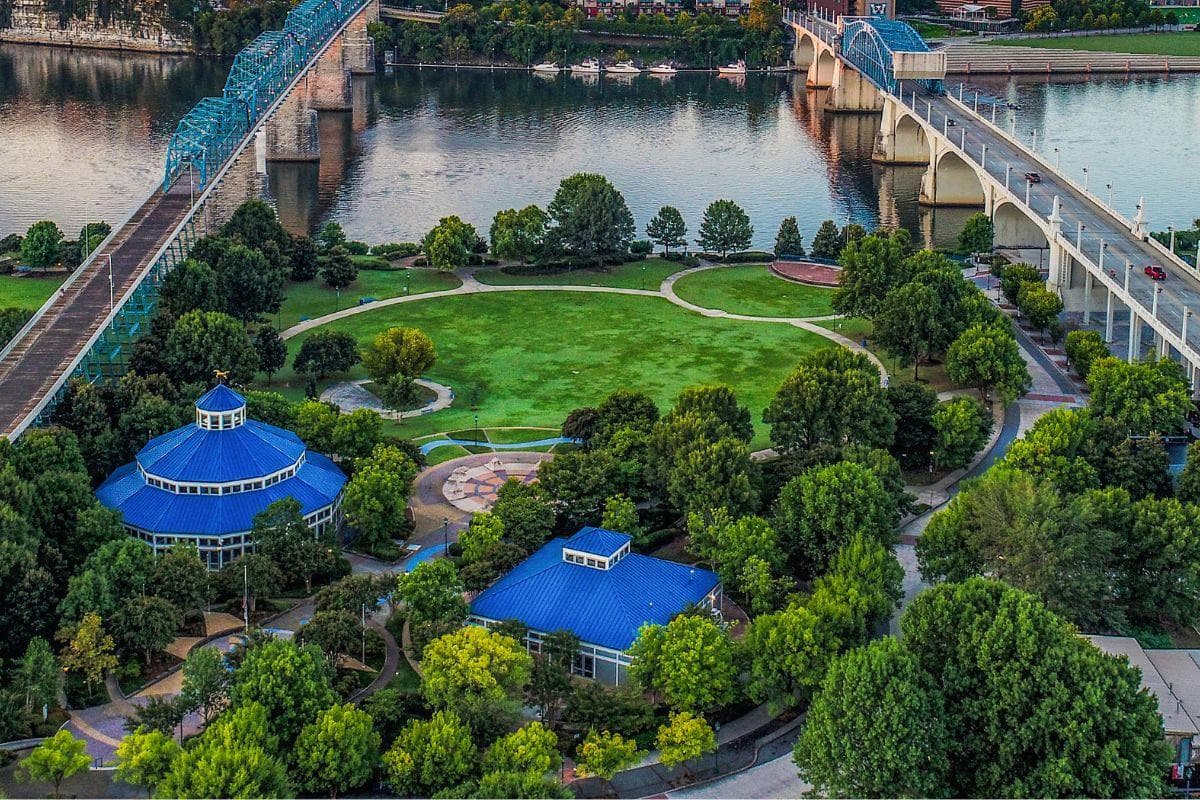
The Tennessee River eases past the North Shore as if it were the city’s metronome—steady, inevitable, calling people back to the water. On an early Saturday, Coolidge Park wakes slowly: joggers trace the riverwalk, toddlers test the spray from a fountain, and the carousel’s painted horses settle into a familiar, creaky rhythm. From the wooden boards of the Walnut Street Bridge, you can feel the city’s pulse—footsteps, laughter, the distant rumble of a freight train—and understand why Chattanoogans call this strip of green one of the city’s liveliest lungs.
Coolidge Park is compact in size but generous in experience. Located on Chattanooga’s North Shore, its riverfront promenade is less about long climbs and more about exchanging the outright wilderness for a close, tactile relationship with urban nature: river currents that practically dare you to sit and watch, sycamores that block the sun like old friends, and a restored Dentzel carousel whose hand-carved animals spin with a century of small-town stories.
The park sits at the intersection of Chattanooga’s industrial past and its present reinvention. Once an area defined by mills and rail, the North Shore and the riverfront were reclaimed over decades as public space—part civic revival, part ecological repair. Walk the Tennessee Riverwalk east toward the Walnut Street Bridge and you cross one of the city’s most democratic thoroughfares: a pedestrian span that reconnects downtown to the neighborhoods and brings views of Lookout Mountain folded into the horizon. Nearby, guided experiences—from Segway tours that glide across the bridge to trolley routes that stop at the Coker Automotive Museum and Sculpture Fields—strap modern movement to a very old landscape.
Geologically, the city is a hinge between ridgeline and river. The river’s gentle meanders at this point have deposited broad floodplains historically used for both transport and industry; today those sands and silts are the foundation for urban greenways and parklands. The river doesn’t just shape the land here—it shapes the rhythms of daily life in Chattanooga. Summers smell like the river and warm asphalt; autumns dress the city in a slate of soft golds.
What makes Coolidge Park work for travelers is its flexibility. It’s a low-stakes destination with several high-reward options: family-friendly playgrounds and the century-old carousel for kids and nostalgic adults alike; sweeping river views for runners and photographers; and guided tours for people who prefer to fold local stories into their walk. The Segway tour that starts here is ideal for travelers who want distance without the exertion—gliding across Walnut Street Bridge, looping the North Shore’s shops on Frazier Avenue, and returning along the riverwalk to watch kayakers plot quiet courses near the bank. For a deeper cultural primer, the city trolley stops at the Coker Automotive Museum and Sculpture Fields, a quick way to stitch Coolidge Park into Chattanooga’s broader narrative of art, design, and industrial history.
Practicality is part of the park’s charm. Routes are flat and well-paved; the riverwalk is stroller- and wheelchair-friendly in large sections. But even an accessible place demands preparation. In summer, the North Shore can be hot and humid—bring water and shade; in shoulder seasons, layers and a light rain shell will keep you comfortable through sudden weather shifts. If you’re booking a Segway, remember the operator requires check-in 30 minutes prior and enforces a 100–280 lb weight range. Tours typically last an hour to two, leaving plenty of time to linger on the bridge, ride the carousel, or pop into a nearby café for local coffee and a plate of Southern biscuits.
Local food and culture are part of the experience. Frazier Avenue’s compact row of bakeries, brewpubs, and eateries means you can easily stitch a meal between riverfront time and a tour. In spring and fall, the park hosts rotating events—concerts, markets, and occasional art installations—that make a daytime visit feel like a neighborhood festival.
For photographers, Coolidge Park is forgiving. Golden-hour light spills across the river and silhouettes the bridge in soft contrast; the carousel’s carvings are intimate study pieces for shallow-depth portraits; and long exposures from the bridge smooth the river into glass. Keep a polarized filter handy to manage glare off the water and to saturate the otherwise-easy-to-wash-out greens.
How to plan: arrive early on weekends to secure parking along Frazier Avenue or nearby paid lots, or take the city trolley into the area. Time your ride on the Walnut Street Bridge to coincide with the late-afternoon light if you want the best photos; book Segway tours in advance during summer and holiday weekends when they sell out. If you’re traveling with kids, allocate an hour for the carousel and another for the playground—both are small, intense pleasures that make a family outing feel complete.
The charm of Coolidge Park is in its balance: a place where a quick, easy stroll can become a cultural primer, and where the river’s presence turns modest green space into a place worth lingering. Whether you arrive by tour trolley, silently on a Segway, or on foot from downtown, the park is an invitation to slow down, listen to the river’s steady cadence, and let the city’s layered history unfold one bridge step at a time.
Trail wisdom
Small choices, better day.
Check Segway requirements
Segway tours require check-in 30 minutes before start time and have a 100–280 lb weight limit—arrive early with ID.
Layer for sudden weather
Bring a light waterproof layer—riverfront winds make temperatures feel cooler, especially after sunset.
Hydrate and park smart
Water stations are limited; bring a refillable bottle and use paid lots or street parking on Frazier Avenue on busy days.
Time the golden hour
Photographers should aim for late afternoon to capture warm light across the Walnut Street Bridge and the Tennessee River.
Local knowledge
Read the place, not just the route.
Watch for native species including river otters (occasionally), great blue herons.
Keep an eye out for wildlife during the transition between areas and habitats. Respect distance guidelines.
The riverwalk and park management focus on native plantings and responsible river access—stay on designated paths and dispose of trash properly to protect the riparian habitat.
Follow the guide's instructions on size limits, ethical handling, and leave-no-trace practices.
Sunset vantage points near the bridge’s north end. Quiet benches along the riverwalk east of the park for birdwatching
Locally recommended viewpoints and quiet spots known best to local operators.
The North Shore’s riverfront shifted from industrial use to public parkland over the 20th century, anchored by community-led revitalization projects.
Maritime roots and regional tradition shape the waterways and working coasts.
Seasonal guide
Four versions of the same landscape.
Spring
Best forwildflowers and mild weather · family outings · riverwalk runs
Challengessporadic rain showers · pollen for sensitive visitors
Spring brings mild temperatures and blooming riverside plantings—ideal for strolls and outdoor events, but keep a light rain layer handy.
Summer
Best forevening concerts · playground and carousel · long riverwalks
Challengeshigh heat and humidity · crowds on weekends
Summer is festival season; come early or plan evening visits to avoid heat and high daytime crowds.
Fall
Best forcool-weather walks · photography · food truck events
Challengesshorter daylight hours · occasional windy days
Fall is the optimal season for crisp air and soft light—perfect for photos and longer visits to nearby attractions.
Winter
Best forquiet river views · off-season deals · clear, crisp cityscapes
Challengescolder winds off the river · reduced carousel/tour hours
Winters are quieter and cool; dress warmly and check operating hours for tours and the carousel before going.
Pack with intention
What to bring.
Good to know
Common questions.
Yes—the park itself is free to access. Some attractions inside the park, like the carousel or guided tours, charge separate fees.
Plan the edges
The details that make the day easier.
Coolidge Park features a restored Dentzel carousel—an early-20th-century hand-carved carousel that’s a centerpiece of the park experience.
North Shore dining blends Southern comfort and craft beverage culture—think local breweries, coffee roasters, and seasonal popup food trucks lining Frazier Avenue after a riverfront walk.
Use refillable bottles, stay on paths to protect riverbanks, and support local businesses to keep the North Shore’s community-driven restoration efforts sustainable.
Explore by topic
Follow the threads.
Keep exploring
Make the story part of the trip.
Set out from Bass Harbor for a private, customizable day on Blue Hill Bay — lighthouses, puffins, seals, and the chance to feel Acadia from the water. Small groups, local captains, unforgettable views.
In four hours you can move from shaded canyon ferns to wind-scoured coastal ridgelines, guided by someone who knows where the light—and the hidden views—live. This private half-day hike on the Monterey Peninsula or Big Sur is compact, curated, and perfect for travelers who want depth without a multiday commitment.
 Related story
Beneath a sky of shifting light, Skaftafell’s ice reads like a map of time. This three-hour guided glacier hike mixes technical instruction with geology and culture: compact, safe, and unforgettable.