
What the day feels like
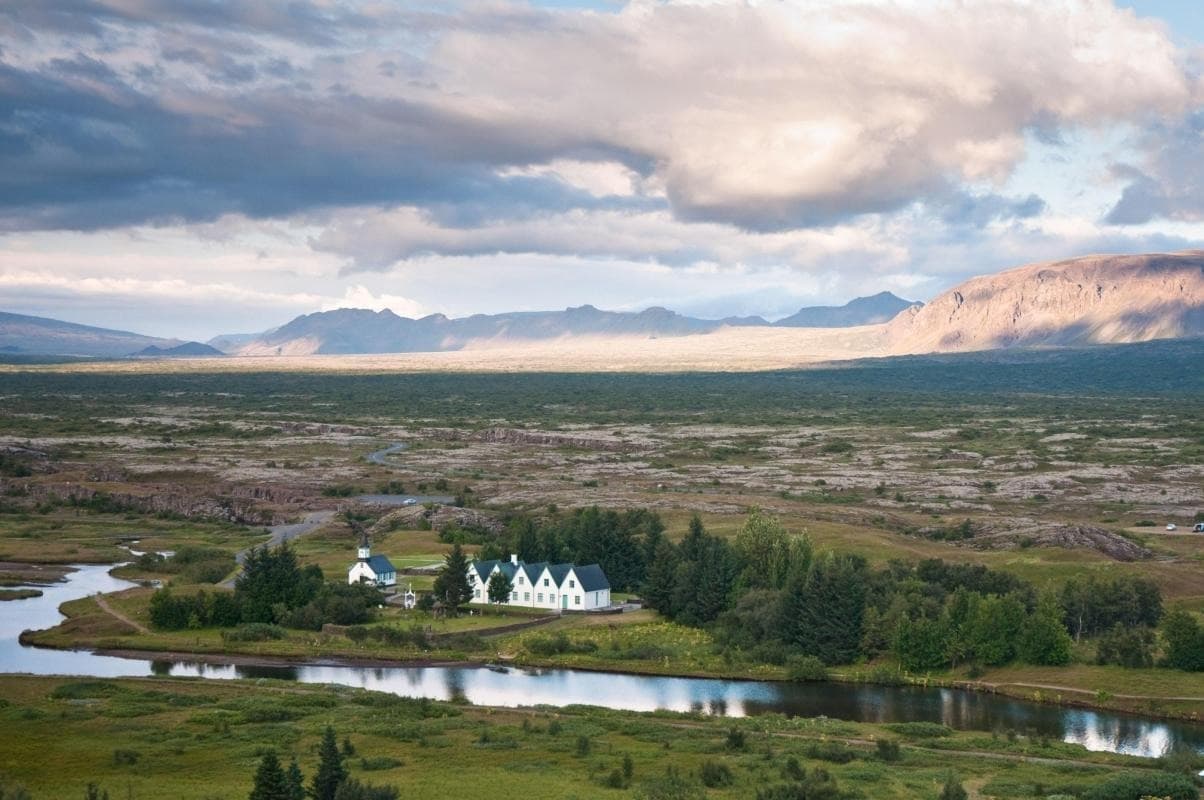
The first steps into Thingvellir feel like walking into a map that’s been peeled apart. The path drops gently into Almannagjá gorge, a cleft rimmed with weathered lava and sprigs of bright moss, and the sound of your boots is swallowed by the cool hush that lives between two tectonic plates. To the east, the land leans toward the Eurasian plate; to the west, the North American plate drifts away. The stones here are patient and blunt as old witnesses, and the rift is more than geology — it’s a living seam in the Earth that shapes landscape and story alike.
Thingvellir (Þingvellir) is a place stitched with layers: geological drama, Viking-age lawmaking, and a quiet, modern protection as Iceland’s only UNESCO World Heritage Site. That mix is visible in the landscape. Basalt fields, fissures filled with crystalline groundwater, and low plateaus give way to the tidy human lines of visitor paths, the small church where parishioners still gather, and the mossy rise of Lögberg (Law Rock), where the world’s oldest parliamentary assembly, the Alþingi, met from 930 AD.
Hiking here is unusually generous: trails run from short interpretive walks of a few hundred meters to a network of routes that stretch across the park’s Þingvellir Valley. A typical loop through the main sights — Almannagjá gorge, Öxarárfoss waterfall, and the viewing ridge above the Þingvallavatn lake — is 2–4 kilometers of easy to moderate hiking on packed gravel and boardwalks. The terrain is mostly level, with occasional soft climbs to get the best sightlines over the rift and out across Iceland’s largest natural lake.
What draws many travelers beyond the history is Silfra, the narrow fissure filled with some of the clearest water on earth. Visibility in Silfra exceeds 100 meters; the water runs directly from glacial melt filtered through lava for decades, chilling it to around 2–4°C year-round. Snorkelers and divers slip into a world of unreal clarity and swim between continents — literal and figurative. It’s technical in its comforts: you’ll go in a drysuit or thick thermal gear provided by operators, and guides ensure you’re safe in the thermally cold but utterly lucid flow.
Birdlife threads the park without fanfare. Arctic terns, arctic foxes in the surrounding wilds, and migratory waterfowl make seasonal appearances, and the park’s relatively open sightlines make wildlife encounters informal rewards between the geological and cultural highlights. Photography here is straightforward: wide-angle lenses for the rift vistas and a telephoto for birds on the lake.
Practicalities are part of the allure. Thingvellir is an easy 40–50 minute drive from Reykjavik, making it an ideal day trip or a first stop on the Golden Circle route. The main visitor area has parking, restrooms, and an interpretive center; several marked trails and boardwalks minimize impact and protect the fragile moss and soils beneath your boots. That accessibility is balanced by rules: stick to trails and leave the fissures alone — the porous lava and rare plants are vulnerable to trampling.
Timing changes the mood. Midday sun in July makes the rift sparkle and fills the visitor center with tour groups; late afternoon light thins the crowds and gilds the pond-silver of Þingvallavatn. Winter strips the scene to monochrome, and the park takes on a severe, skeletal beauty, with fewer services and frozen spray at Öxarárfoss. For Silfra, visibility stays legendary year-round, but water temperature means drysuit tours are non-negotiable and often booked in advance.
Plan smart: sensible footwear, layered insulation, and a waterproof shell turn an unpredictable Iceland day into a comfortable one. If you’re here to snorkel Silfra, book with a certified operator and expect a safety briefing, drysuit fitting, and a cold, crystalline immersion that’s unlike any pool or ocean swim you’ve ever taken.
For travelers who want texture beyond the trail, Thingvellir rewards a slow approach. Catch the site of the old Alþingi and imagine orators calling the law. Walk the rift at dawn with a thermos of coffee and listen to the wind outline the plates. Combine a Silfra snorkel in the morning with an afternoon walk to Öxarárfoss and an evening meal back in Reykjavik of slow-roasted lamb and skyr — contemporary comforts after a day of elemental landscape.
Thingvellir is efficient in its lessons. It teaches the patience of stone, the speed of moving plates, and the stubbornness of law. It is a park where the technical details matter: trail surfaces, cold-water safety, and restraint in fragile places. But it also gives the uncomplicated thrill of being in a place that is both geologic theater and living history. For anyone planning an Icelandic trip, Thingvellir is where the compass needle seems to loosen and the world opens along a seam you can walk into and touch.
Trail wisdom
Small choices, better day.
Stay on the boardwalks
Fragile moss and thin soils recover poorly from trampling; follow marked trails to protect the landscape and avoid unstable ground.
Book Silfra in advance
Dry-suit snorkel and dive slots sell out, especially in summer; reserve through a certified operator to secure a morning time slot.
Layer for changing weather
Wind and rain can arrive fast; bring a breathable shell and insulating midlayer even on sunny mornings.
Aim for early or late light
Visit outside peak tour hours for quieter trails and better photography light on the rift and Öxarárfoss.
Local knowledge
Read the place, not just the route.
Watch for native species including Arctic tern, Arctic fox (in surrounding areas).
Keep an eye out for wildlife during the transition between areas and habitats. Respect distance guidelines.
The park prioritizes trail-based access and restricts off-path movement to protect fragile mosses and the porous lava landscape; guided operators follow strict safety and environmental practices for Silfra tours.
Follow the guide's instructions on size limits, ethical handling, and leave-no-trace practices.
The quiet shoreline of Þingvallavatn for evening birdwatching. Short path to lesser-known fissures north of the main Almannagjá area
Locally recommended viewpoints and quiet spots known best to local operators.
Thingvellir hosted the Alþingi from 930 AD — one of the world’s oldest continuous parliaments — and was a key cultural center in medieval Iceland.
Maritime roots and regional tradition shape the waterways and working coasts.
Seasonal guide
Four versions of the same landscape.
Spring
Best forMigratory birds · Fewer crowds
ChallengesUnpredictable weather · Lingering mud on trails
Spring brings bird migration and fresh moss tones; trails can be wet and temperatures fluctuate, so bring waterproofs.
Summer
Best forExtended daylight · Easier hiking · Peak water-activity access
ChallengesHigher visitor numbers · Booked-out Silfra tours
Warmest and most accessible season with long daylight; plan ahead for parking and guided activities.
Fall
Best forAutumn color · Crisp air for photography
ChallengesEarly sunsets · Variable road conditions
A quieter shoulder season with dramatic skies; dress in layers as temperatures tumble toward evening.
Winter
Best forNorthern lights · Snow-sculpted rifts
ChallengesLimited services · Icy trails and short daylight
The park is stark and beautiful but colder and less accessible; only suitable for prepared visitors and guided activities.
Pack with intention
What to bring.
Good to know
Common questions.
No entrance fee for the national park itself, but paid parking and fees for guided activities (like Silfra snorkeling) may apply.
Plan the edges
The details that make the day easier.
Thingvellir was designated a UNESCO World Heritage Site in 2004 because of its unique cultural and geological significance and as the historic site of the Alþingi, founded in 930 AD.
Pair the park visit with Icelandic lamb stew or skyr in Reykjavik; nearby farm stops offer fresh dairy and traditional rye breads — a reminder that this geological theater sits amid working landscapes and small communities.
- Distance from Reykjavik
- ~45–60 km; parking available at visitor center; main loop 2–4 km; Silfra snorkeling requires guide; visitor center open seasonally.
Stick to marked trails, use certified guides for water activities, and avoid touching moss or collecting rocks — the park’s fragile ecosystems recover slowly.
Explore by topic
Follow the threads.
Keep exploring
Make the story part of the trip.
Set out from Bass Harbor for a private, customizable day on Blue Hill Bay — lighthouses, puffins, seals, and the chance to feel Acadia from the water. Small groups, local captains, unforgettable views.
In four hours you can move from shaded canyon ferns to wind-scoured coastal ridgelines, guided by someone who knows where the light—and the hidden views—live. This private half-day hike on the Monterey Peninsula or Big Sur is compact, curated, and perfect for travelers who want depth without a multiday commitment.
 Related story
Beneath a sky of shifting light, Skaftafell’s ice reads like a map of time. This three-hour guided glacier hike mixes technical instruction with geology and culture: compact, safe, and unforgettable.