
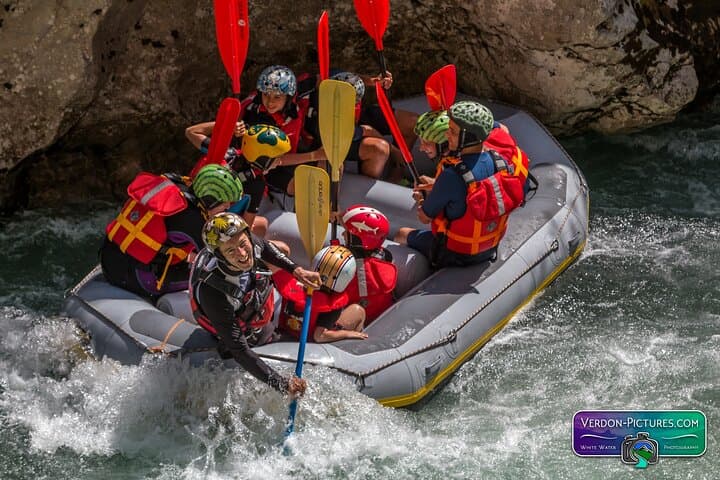
What the day feels like
You push off from Castellane and the limestone walls answer with a low, canyonous hum—the river’s voice building behind the first paddle strokes. Sunlight flakes through stands of alder and pine, catching on spray as the raft drops into the current. For the next three hours the Verdon alternates between glassy pools that dare you to jump in and whitewater sections that shove you forward with a grin. This is not a placid float; it’s a compact, physical thrill that pairs the immediacy of the river with the slow patience of geology. By the time Pont de Soleil comes into view, you’ve rinsed whatever city dust you arrived with and come away knowing the Verdon in a new language: the sound of rapids, the feel of limestone under your palms, the relief of cold water on a hot Provençal afternoon.
The Verdon Gorge—often called Europe’s Grand Canyon—was carved over millions of years as the river cut through Jurassic limestone. The resulting walls plunge as deep as 700 meters in places, a dramatic backdrop for a route that’s human-scale and immediate. The commercial trip from Castellane to Pont de Soleil covers 14 km of river and packs a pleasing variety of terrain: surfable waves, technical drops, calm stretches for swimming, and river-side beaches where guides will call a stop so the group can cool off. Local guides read the river like a map, scouting eddies and choosing lines through clusters of boulders. You’ll hear them speak with quiet reverence about the cliffs where griffon vultures nest and point out rusted relics of old shepherd trails that once threaded these slopes.
Culture in this part of Provence is quiet and resilient. Castellane itself is an ochre-aired village that lives on mountain tourism, lavender, and a slow culinary rhythm—stone-baked breads, daube provençale, and local rosé. Historically the gorge isolated communities; today, it draws them together. Families pioneer paddling businesses here, and conservation groups collaborate with operators to limit erosion, protect nesting raptors, and manage access to fragile riverbanks. Your day on the water is as much an environmental handshake as it is an adrenaline fix: local guides are the stewards of both a route and a landscape.
Why choose this trip? The route is compact—reachable from Castellane in minutes—yet offers a satisfying mix of whitewater and scenic immersion that doesn’t require advanced skills. That makes it an ideal day out for a broad range of travelers: families with older children who can swim, small groups of friends, or solo travelers looking to join a guided raft and meet other adventurers. The sport is approachable but real: there are jumps, swims, and technical sections that reward timing and teamwork.
Practicalities matter here. The advertised duration is about 3.5 hours on the water (the full outing including transfers and briefings runs longer), and the route runs mid-summer at its most buoyant and inviting. Expect a manual confirmation to secure your spot; small-group operations limit numbers and prioritize safety. The activity is priced from around USD 76 per person and includes guide fees and safety equipment—ask what’s covered when you book.
If you’re planning the trip, choose footwear that stays on in current and protects toes from sharp rocks; water shoes or sturdy sandals with straps are the most useful. Bring a short wetsuit or neoprene top if you’re visiting in the shoulder months—spring evenings and early summer mornings can still carry a chill. Hydration is simple math: sun plus exertion equals extra water. Leave heavy cameras on shore unless you’ve got a waterproof housing; your guide can often suggest the best on-raft photo opportunities.
Safety is straightforward and managed. Guides brief for the whole group before launch: how to paddle, how to brace, and how to swim to the boat should you end up in the water. Basic swimming skills are recommended; operators typically require a minimum age and will ask about swimming comfort on booking. Learners should not be intimidated—the rapids here are fun and forgiving, and a good guide turns chaotic water into a sequence of manageable moves.
Bookings should be made in advance during July and August, when the Verdon sees most of its summer traffic. If you want a quieter experience, target late spring or early fall when flows remain lively but crowds thin and mornings keep a cool edge. And wherever you drop in, tread lightly. The Verdon’s limestone banks are ecologically fragile: don’t pull into vegetated shorelines and favor marked access points.
For travelers who want to deepen their experience, combine the rafting with short hikes on the canyon rim or a visit to the perched village of Moustiers‑Sainte‑Marie. End your day back in Castellane with a Provençal dinner—bring a taste for simple, ingredient-forward cooking and local wines that pair perfectly with a sun-weary appetite. Or linger at a café and watch the late light hit the cliffs; it’s a quiet counterpoint to the afternoon’s rush.
If the idea of a 14 km descent through sheer limestone walls appeals, read firsthand notes from past trips and reserve a spot early. Whether you’re chasing adrenaline or just a very good afternoon on a river, the Verdon’s descent from Castellane to Pont de Soleil delivers a taut, scenic, and restorative slice of Provence that’s equal parts geology, rivercraft, and summer ritual. Learn more and secure a guided run here: <a href="https://app.advcollective.com/local-experts/rafting-the-verdon-gorges-14-km-descent-from-castellane-to-pont-de-soleil">rafting the Verdon Gorges, 14 km descent from Castellane to Pont de Soleil</a>.
Trail wisdom
Small choices, better day.
Wear secure water footwear
Closed-toe water shoes or strapped sandals protect toes from rocks and keep your footing during swims and river exits.
Bring a dry bag
Keep essentials—phone, sunscreen, spare layers—in a small dry bag to protect them during splashes or swims.
Hydrate before and after
River fun masks exertion; drink water before launch and carry a small bottle for after the run.
Listen to your guide
Follow commands for paddling, bracing, or safe exits—guides are reading currents and protecting the group.
Local knowledge
Read the place, not just the route.
Watch for native species including Griffon vulture, European otter (occasionally).
Keep an eye out for wildlife during the transition between areas and habitats. Respect distance guidelines.
Local operators cooperate with regional park rules to limit bank erosion, avoid sensitive nesting sites, and encourage biodegradable products on the water.
Follow the guide's instructions on size limits, ethical handling, and leave-no-trace practices.
Small river beaches near Pont de Soleil for post-run dips. Balcons de la Mescla viewpoint for a quieter canyon perspective
Locally recommended viewpoints and quiet spots known best to local operators.
The Verdon Gorge was sculpted as the river cut through Jurassic limestone over millions of years; the area is now protected as part of the Parc naturel régional du Verdon.
Maritime roots and regional tradition shape the waterways and working coasts.
Seasonal guide
Four versions of the same landscape.
Spring
Best forLush scenery · Fewer crowds
ChallengesCooler water · Variable flows
Spring brings green cliffs and lively flows; wear a wetsuit top and expect some chilly water temperatures early in the season.
Summer
Best forWarm water for swims · Peak operating season
ChallengesHigher crowds · Strong sun
Summer is the prime season—warm air and perfect swim stops—but book in advance and bring strong sun protection.
Fall
Best forCalmer crowds · Golden light
ChallengesCooler mornings · Shorter days
Fall offers crisp mornings and dramatic light; flows can still be excellent but the water cools down, so layer up.
Winter
Best forOff-season quiet
ChallengesMost operators closed · Cold water
Winter is largely the guide’s quiet season; water is cold and commercial trips are uncommon, but the landscape is stark and beautiful.
Operator details
What the booking data adds.
Included
- ✓Private transportation
- ✓Neoprene suit, helmet and life jacket
Not included
- —Tips
Good to know
- ✓Not recommended for travelers with spinal injuries
- ✓Not recommended for pregnant travelers
- ✓Not recommended for travelers with poor cardiovascular health
- ✓Travelers should have at least a moderate level of physical fitness
Pack with intention
What to bring.
Good to know
Common questions.
The on-water descent is about 3–3.5 hours; expect the full outing including transfers and briefing to take more time.
Plan the edges
The details that make the day easier.
The Verdon Gorge stretches about 25 km and in places reaches depths of roughly 700 meters, leading to its nickname as the 'Grand Canyon of Europe.'
After the run, head back to Castellane for Provençal fare—try a daube or pissaladière with a chilled local rosé. The village cafés are relaxed and perfect for swapping river stories; Sunday markets offer regional cheeses and lavender products.
- Closest airport
- Nice Côte d'Azur (NCE) ~140 km
- ~2–2.5 hours; Driving distance from Castellane
- meeting points are minutes from town; Cell service: intermittent in the gorge; Permits: none for recreational runs, but guided trips are standard and pre-booking is recommended.
The Verdon is part of a protected regional park—pack out all trash, avoid trampling riparian vegetation, and use biodegradable sunscreen to protect aquatic habitats.
Explore by topic
Follow the threads.
Keep exploring
Make the story part of the trip.
Set out from Bass Harbor for a private, customizable day on Blue Hill Bay — lighthouses, puffins, seals, and the chance to feel Acadia from the water. Small groups, local captains, unforgettable views.
In four hours you can move from shaded canyon ferns to wind-scoured coastal ridgelines, guided by someone who knows where the light—and the hidden views—live. This private half-day hike on the Monterey Peninsula or Big Sur is compact, curated, and perfect for travelers who want depth without a multiday commitment.
 Related story
Beneath a sky of shifting light, Skaftafell’s ice reads like a map of time. This three-hour guided glacier hike mixes technical instruction with geology and culture: compact, safe, and unforgettable.