
What the day feels like
By late afternoon the canyon shifts. Heat shimmers off the basalt cliffs, and the Thompson River — wide, impatient, and vividly alive — pushes at the hull of the motorized raft beneath your feet. Spray catches the light like quicksilver; the guide leans forward, speaks once, and the raft surges through a series of ledges that make every head swivel. This is not the slow, pastoral float of postcard rivers. The Thompson dares you. It asks you to match its speed.
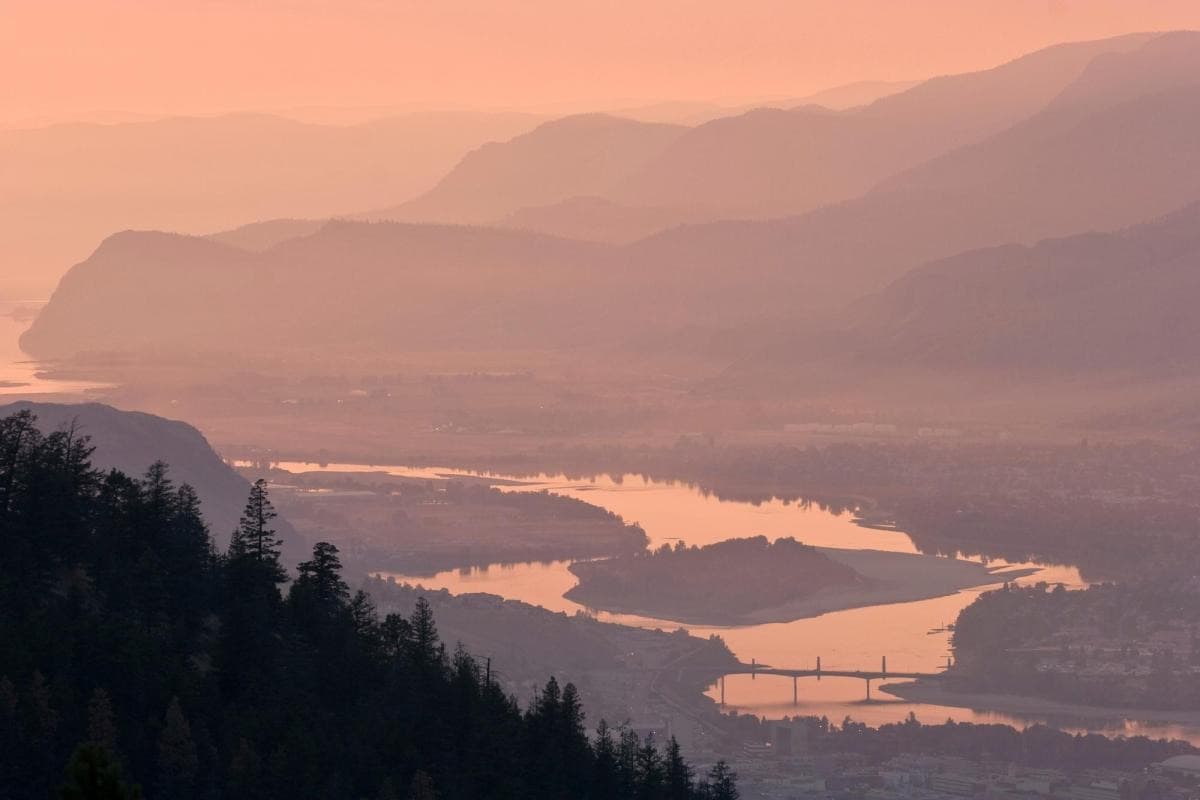
The Thompson River that threads through British Columbia’s interior is an exercise in contrasts. For most of its length the river cuts through semi-arid valleys, exposed canyons, and islands of riparian forest. Near Lytton — where rafters launch and finish the most popular commercial runs — the climate is almost Mediterranean and the rock walls rise sharply, creating corridors of fierce current and big, satisfying waves. That’s why operators run a motorized “power trip” here: it keeps the pace high, amplifies the river’s character and covers ground — 36 km (22.4 mi) in roughly 3.5 hours — that would otherwise take much longer.
If you come with time, the two-day Fantasy Island Getaway is the river’s longform argument. From Ashcroft to Lytton you’ll trace 80 km (49.7 mi) of river that alternates between roaring steps and lazy braided channels, landing on gravel bars and small islands for campfire meals and mornings that belong entirely to the river. The name is apt: low, rocky “islands” in mid-channel become temporary sanctuaries — places to cook, to swim, to sleep under a sky that seems hyper-real after a day trapped inside canyon walls.
This waterway is also human history. The Thompson River takes its name from David Thompson, the early 19th-century explorer and mapmaker who charted large parts of western Canada. Long before him, the river was — and remains — the lifeblood of the Nlaka'pamux and Secwepemc peoples who stewarded the valley for millennia. Practically every bend carries cultural meaning, ancient fishing places and travel routes that predate roads by thousands of years.
Geologically, the corridor tells a simpler story: water wears rock. The river has carved steep basalt walls and left behind gravel benches and islands where the current slows. That variety is the reason operators stage both adrenaline-filled afternoon power trips and more contemplative overnight itineraries: one stretch can be a parade of waves and ledges; the next, a braided mosaic ideal for exploring on foot.
Why should you go? For starters, this is rafting that feels purposeful: it moves you through varied terrain at meaningful speed while still giving you places to stand on shore and stretch. A motorized raft strips some of the upper-body grind from river travel — you don’t need to be a seasoned oarsman to experience big water. At the same time, the Thompson’s waves reward attention; manoeuvring through them is visceral and satisfying.
Practical logic matters out here. Operators based in Lytton provide all technical gear, snacks, and instruction; the afternoon power trip is a single-day jump-in that’s ideal for people short on time, while the Fantasy Island Getaway runs on weekends from mid-July through Labour Day with tent camping, guided shore excursions and river-side meals. The river’s optimal window for guided trips is summer: flows drop from spring highs and temperatures are friendly, but that same heat can turn the valley into an oven. Hydration, sun protection and early reservations are non-negotiable.
On the river, dress like you mean it: quick-dry layers, a reliable water bottle, and shoes that you don’t mind getting wet. The guides will hand you a lifejacket and helmet, but a waterproof phone pouch and a small daypack will keep your essentials accessible. For the two-day trip, expect comfortable, communal camp kitchens rather than luxury glamping — part of the point is the simple pleasure of a hot meal after a long day on fast water.
This is also a place to practice low-impact travel. The Thompson supports salmon runs and wildlife that depend on clean flows and intact banks. Commercial operators work under provincial permits; choosing a reputable outfitter helps protect spawning beds and riparian vegetation. If you become fond of the river — and many do — consider returning in shoulder seasons for quieter photography days, or supporting local Nlaka'pamux-led cultural experiences in nearby communities.
Getting there is straightforward but remote in feeling. Lytton is the practical hub: a small town with a tourism base, a handful of cafes and the confluence that makes the place geographically important. From major nearby centers like Kamloops, the drive is a couple hours; rail and bus options are limited and should be planned in advance.
Whether you’re chasing the physical rhythm of big water, the compact wilderness of island camping or the clarity of a summer canyon, the Thompson delivers. The river gives in measurable ways — distance, waves, scenery — and asks for a single counter-offer: your attention. Move with the current, respect the river’s tempo, and you’ll find the Thompson is more than a run to tick off a list. It’s a corridor where geology, culture and motion come together into a short, unforgettable argument for getting outside.
Trail wisdom
Small choices, better day.
Hydrate early and often
Temperatures in the Lytton valley can spike; bring at least 2–3 liters and refill between stops on multi-day trips.
Wear secure footwear
Closed-toe river shoes or sandals with straps prevent lost footwear during swims and shore landings.
Protect electronics
Use a dry bag or waterproof phone pouch—the guides will be moving fast and spray is constant on motorized runs.
Book weekends early
Fantasy Island Getaway departures run mid-July to Labour Day and sell out; reserve well in advance.
Local knowledge
Read the place, not just the route.
Watch for native species including Bald eagle, Bighorn sheep.
Keep an eye out for wildlife during the transition between areas and habitats. Respect distance guidelines.
River health is tied to spawning salmon and intact riparian zones—choose licensed outfitters, pack out waste and avoid disturbing shorelines and spawning beds.
Follow the guide's instructions on size limits, ethical handling, and leave-no-trace practices.
River islands used as camp and exploration sites on the Fantasy Island route. Confluence lookout above Lytton where the Thompson meets the Fraser
Locally recommended viewpoints and quiet spots known best to local operators.
The Thompson River is named for explorer David Thompson; the valley is traditional territory of the Nlaka'pamux and Secwepemc peoples.
Maritime roots and regional tradition shape the waterways and working coasts.
Seasonal guide
Four versions of the same landscape.
Spring
Best forHigh, dramatic flows · Wildlife viewing
ChallengesColder water temps · Higher, faster currents
Spring brings higher flows and dramatic whitewater; commercial rafting typically shifts to guided, technical runs—expect colder conditions and fewer multi-day options.
Summer
Best forMotorized power runs · Multi-day island camping
ChallengesHigh heat in the valley · Peak tourism demand
Summer is prime: lower flows, warmer weather and full service from outfitters—ideal for both the 3.5-hour power trip and the 2-day Fantasy Island Getaway.
Fall
Best forPhotography · Quieter trips
ChallengesShorter daylight · Cooler nights for camping
Fall mellows the crowds and offers crisp light; multi-day trips may be less frequent but solitary river miles and golden canyon colors make it worthwhile.
Winter
Best forPhotography of stark canyons · Off-season planning
ChallengesLimited commercial rafting · Cold temperatures
Most guided rafting winds down by autumn; winter is better for planning your return and exploring nearby cultural centers than for on-river activity.
Pack with intention
What to bring.
Good to know
Common questions.
No; the motorized afternoon power trip is guided and designed for mixed-ability groups, while multi-day trips are supported by experienced guides who handle technical river work.
Plan the edges
The details that make the day easier.
The Thompson River is the largest tributary of the Fraser River, and its name honors explorer and cartographer David Thompson.
Lytton is a small service hub with strong Indigenous culture and ranching roots; sample local cafe fare, check for Nlaka'pamux cultural events and support community-run visitor initiatives.
- Base
- Lytton. Nearest major service hub: Kamloops (~2 hrs). Trips: afternoon power run (36 km, 3.5 hrs) and 2-day Fantasy Island (80 km). Book mid-July–Labour Day for multi-day departures.
Choose licensed guides who follow river stewardship practices, avoid disturbing spawning areas, pack out all waste and minimize campfire impacts on gravel islands.
Explore by topic
Follow the threads.
Keep exploring
Make the story part of the trip.
Set out from Bass Harbor for a private, customizable day on Blue Hill Bay — lighthouses, puffins, seals, and the chance to feel Acadia from the water. Small groups, local captains, unforgettable views.
In four hours you can move from shaded canyon ferns to wind-scoured coastal ridgelines, guided by someone who knows where the light—and the hidden views—live. This private half-day hike on the Monterey Peninsula or Big Sur is compact, curated, and perfect for travelers who want depth without a multiday commitment.
 Related story
Beneath a sky of shifting light, Skaftafell’s ice reads like a map of time. This three-hour guided glacier hike mixes technical instruction with geology and culture: compact, safe, and unforgettable.