
What the day feels like
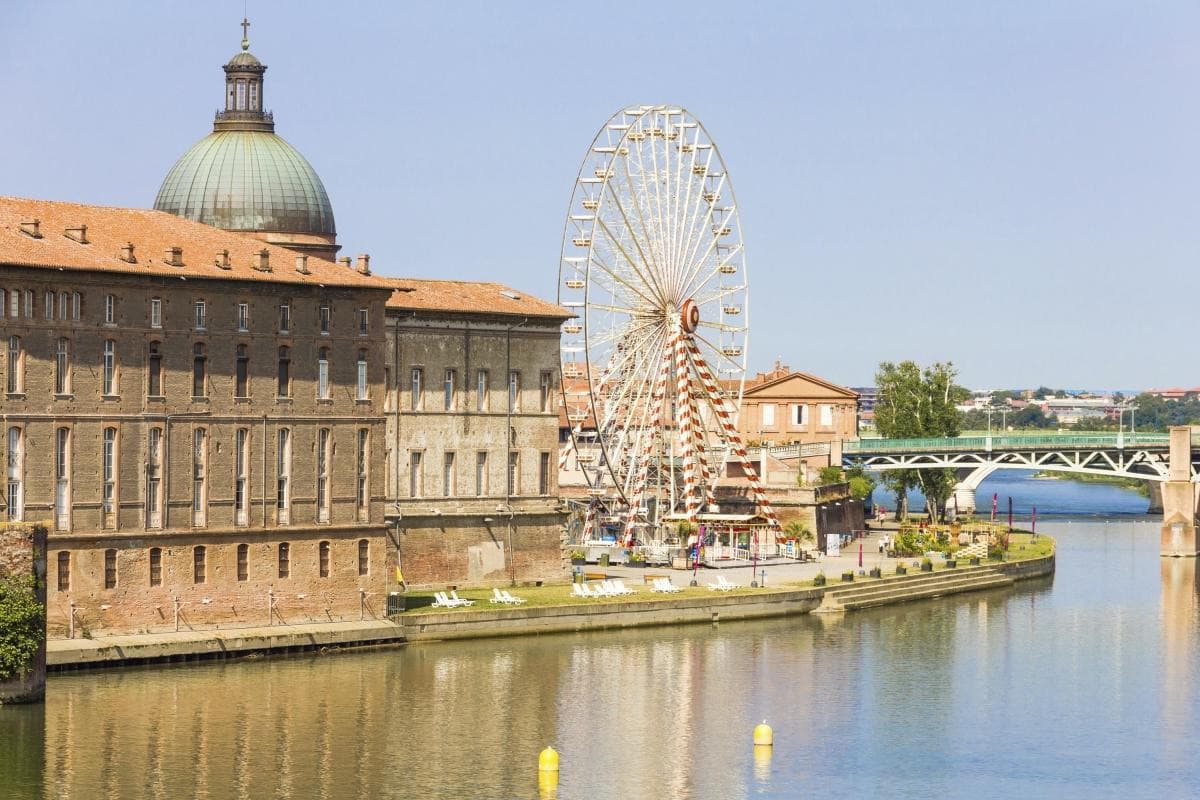
You know a place is alive when its river becomes more than water — when it keeps time with the city. In Toulouse, the Garonne does exactly that. It threads through the city like a bright ribbon, reflecting the warm, terra-cotta facades that give this place its nickname, La Ville Rose. On a cool morning the river is a mirror; by afternoon, joggers, cyclists and café tables crowd its banks and the bridges become natural stages for the city's daily drama.
A ride or walk along the Garonne is less an isolated outdoor outing than an urban rite of passage. The route is a blend: broad paved promenades where electric bikes glide easily, shaded stretches through parks where the river nudges reeds, and vantage points on bridges that stop you and demand you look — downstream toward the wide sweep of the river as it continues west, upstream toward the tighter channels that thread through Toulouse's old quarter.
History and geology are folded into the ride. The Garonne's valley was carved during Ice Age shifts and its course has shaped human settlement here for millennia; Roman Toulouse rose on its banks and medieval trade routes used the river to move pastel — the rare blue dye that made Toulouse wealthy in the Middle Ages. The Pont Neuf and the neoclassical sweep of Le Capitole are the civic punctuation marks, but the river is the connective grammar; it's where goods, people and ideas have moved for centuries.
Culture is river-borne too. Toulouse's riverside life reconstructs a particular Southern French cadence: languid lunches in midweek, rugby talk that surfaces everywhere, and the low hum of conversation — often over cassoulet or a plate of charcuterie — at riverside guinguettes. Local guides will point out how the pink bricks of the buildings change undertone in different light, how the bridges each carry their own story, and where the city edges toward quiet pockets like Île du Ramier, a long sliver of green near the center that feels, briefly, like a village in a city.
Practically speaking, there are two ways most travelers experience the Garonne in Toulouse: on foot and on two wheels. Guided walking tours focus on history and architecture, dropping in at Basilique Saint-Sernin, Couvent des Jacobins and Le Capitole while threading the riverbanks into the narrative. Electric bike tours lean into pace and perspective: in two to four hours you cover more ground, hop across bridges for unique angles on the city, and feel the gentle assist of the motor when you climb to viewpoints.
Walking is intimate; you slow down to read plaques, duck into boutiques, and linger at cafés. Cycling broadens the view and is surprisingly democratic here — the city has invested in bike paths along the bank, and e-bikes make it welcoming to most fitness levels. Both experiences give you access to the same highlights but different rhythms: walking invites close inspection, cycling invites a map-like sense of place.
If you're planning a trip, time of year changes the tenor. Spring opens the banks with blossom and mild temperatures; summer brings long evenings and busy terraces; fall gilds the parks and pulls back crowds; winter is quiet and raw, but on clear days the light on the bricks is piercing. For photography, aim for golden hour on the Pont Neuf or the footbridges near Le Capitole; the river's glassy surface turns buildings into doubled subjects.
Logistically the Garonne is friendly: most guided experiences begin in the city center and return you there, and bike rentals are plentiful with high-quality e-bikes available for short excursions. Bring hydrating water and a compact rain shell — weather can change quickly. If you like to linger, pack or plan for a late lunch at a riverside bistro; Toulouse cuisine rewards a slower schedule.
Safety is straightforward: obey bike lanes and local traffic patterns, lock bikes when you stop, and watch for cobbled or wet surfaces that can be slick. Respect the river: swimming in the Garonne in the city is not generally recommended — currents and water quality vary — but the views and the active life on the banks more than compensate.
The Garonne in Toulouse is not an alpine summit or a whitewater run; it is an urban ribbon that offers a river-shaped way to learn a city. It asks you to shift speed, to notice brickwork and bridges, to sample foods that have fed the region for generations. If you want a travel experience where outdoor movement and cultural context are inseparable, start on the riverbank and let Toulouse reveal itself with each bridge you cross.
Trail wisdom
Small choices, better day.
Choose an electric bike for hills and distance
E-bikes reduce effort on bridges and let you cover 8–20 km comfortably in a 2–4 hour loop.
Watch for slick stones near the water
Riverfront paths can be cobbled or wet; use a grippy tire and moderate speed.
Hydrate and time your breaks
Plan a café stop around mid-ride; riverside terraces are ideal for recharging and refueling.
Lock and secure your bike
Use a sturdy lock when leaving bikes at cafés or viewpoints; theft can occur in busy areas.
Local knowledge
Read the place, not just the route.
Watch for native species including Grey heron, Mute swan.
Keep an eye out for wildlife during the transition between areas and habitats. Respect distance guidelines.
Local groups monitor water quality and promote riverside biodiversity; avoid feeding wildlife and follow posted rules to help protect habitats.
Follow the guide's instructions on size limits, ethical handling, and leave-no-trace practices.
Île du Ramier — a long central island park popular with locals. Prairie des Filtres — riverside green with relaxed picnic culture
Locally recommended viewpoints and quiet spots known best to local operators.
Toulouse rose on the Garonne’s banks from Roman times; in the Middle Ages the river carried pastel dye and goods that made the city prosperous.
Maritime roots and regional tradition shape the waterways and working coasts.
Seasonal guide
Four versions of the same landscape.
Spring
Best forBlossom-lined walks · Mild e-bike rides · Photography in soft light
ChallengesUnpredictable showers · Crowds on sunny weekends
Spring is arguably the best time to bike or walk the Garonne: temps are mild, banks are in bloom and the city hums without summer crowds.
Summer
Best forLong evenings · Terrace dining · Extended riverfront strolls
ChallengesHigh temperatures · Busy tourist crowds
Summer brings long days and lively terraces along the river, but bring sun protection and start early to avoid heat peaks.
Fall
Best forColorful foliage · Calmer paths · Cultural events
ChallengesShorter daylight hours · Cooler river breezes
Autumn offers crisp air and glowing brickwork; it’s quieter and perfect for longer photo sessions on bridges.
Winter
Best forQuiet cityscapes · Low-season hotel rates · Sharp light photography
ChallengesCold winds off the river · Limited outdoor terraces
Winter is quiet and introspective along the Garonne; dress warmly and enjoy near-empty promenades and crisp light.
Pack with intention
What to bring.
Good to know
Common questions.
Most guided e-bike tours are 2–4 hours, covering key riverbanks and city highlights with stops for viewpoints and cafés.
Plan the edges
The details that make the day easier.
The Garonne is about 602 km (374 miles) long and is one of the major rivers of southwest France, flowing from the Spanish Pyrenees through Toulouse to the Gironde estuary.
Toulouse marries river life with hearty Southwest French cuisine — look for cassoulet, duck confit and seasonal markets; rugby fandom and pastel-dyed heritage are woven into local identity.
- Where
- City center, Toulouse. Starting points near Le Capitole. Duration: 2–4 hours. Best transport: walking or e-bike. Reservations: recommended for guided tours and e-bikes.
Choose guided operators who maintain bikes, support local conservation groups, and encourage low-impact riverfront use; avoid single-use plastics and respect wildlife habitats.
Explore by topic
Follow the threads.
Keep exploring
Make the story part of the trip.
Set out from Bass Harbor for a private, customizable day on Blue Hill Bay — lighthouses, puffins, seals, and the chance to feel Acadia from the water. Small groups, local captains, unforgettable views.
In four hours you can move from shaded canyon ferns to wind-scoured coastal ridgelines, guided by someone who knows where the light—and the hidden views—live. This private half-day hike on the Monterey Peninsula or Big Sur is compact, curated, and perfect for travelers who want depth without a multiday commitment.
 Related story
Beneath a sky of shifting light, Skaftafell’s ice reads like a map of time. This three-hour guided glacier hike mixes technical instruction with geology and culture: compact, safe, and unforgettable.