
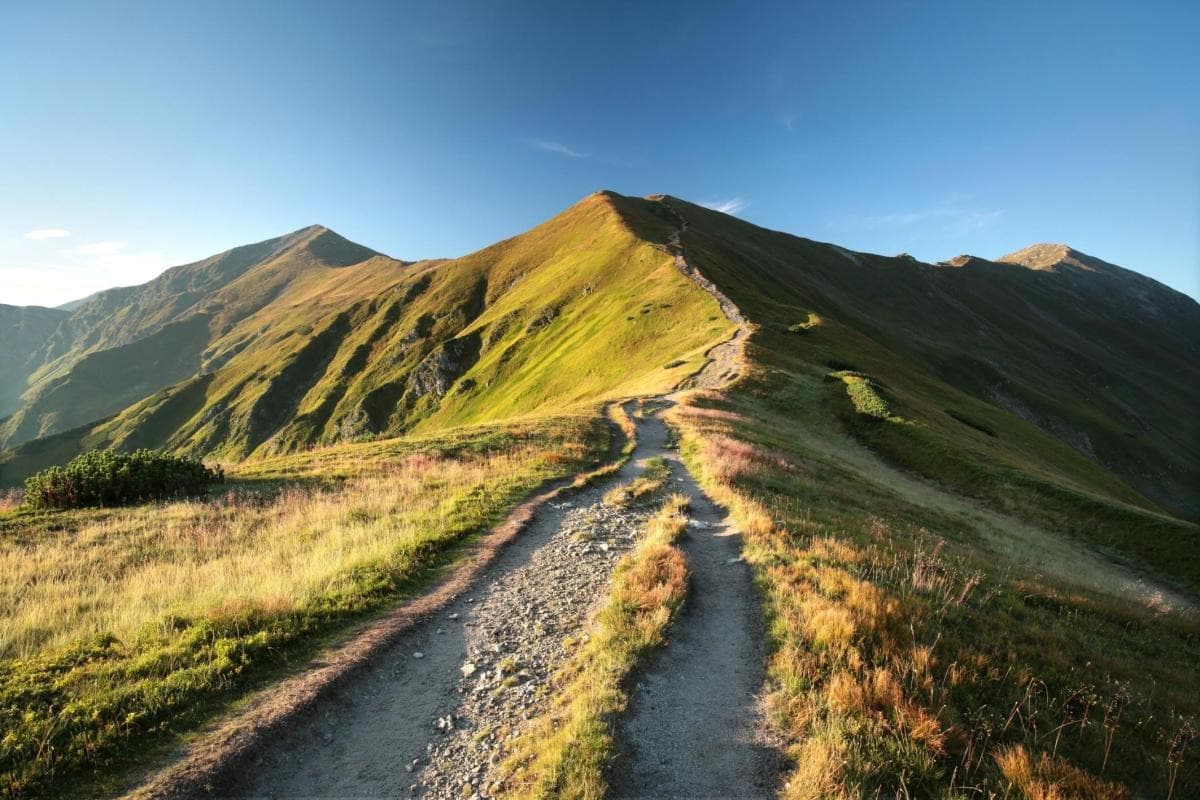
What the day feels like
The morning air tastes of stone and pine. A ribbon of gravel—polished by centuries of hooves, boots and the slow passage of mountain water—unfolds ahead, leading toward a bowl of lacquered blue. Morskie Oko sits like a held breath beneath the serrated skyline of the High Tatras; the wind slips across the lake and tugs at your jacket as if to dare you closer. In town, the accents are lowland and warm: vendors on Krupówki chirp about oscypek, the smoked sheep’s cheese, while the hills above Zakopane keep a stony silence, their snow fields lingering into May at higher elevations.
Tatra National Park (Tatrzański Park Narodowy) is compact by alpine standards but insists on intensity. The Polish side of the Tatras compresses sharp geology, a living mountain culture, and a network of trails that are textbook in variety: long valley walks that flatten the body and sharpen the mind, knife-edge ridges where exposure becomes character-building, and high cirques that collect snow long after the valleys have thawed. For travelers coming from Kraków, a day trip can look like a checklist—funicular to Gubałówka for panoramic photo ops, a stroll down Krupówki for the smells of grilled mountain sausage, a soak in thermal pools after a day’s hike—but the park resists checklisting. It asks you to walk into the landscape, to slow down and let the mountains show themselves in gestures: a ravine humming with meltwater, a herd of mountain sheep ghosting along a scree slope, the sudden hush when clouds drift in and make the world small and green.
The most canonical hike on the Polish side is the road-and-trail to Morskie Oko. From the Palenica Białczańska trailhead, the route runs roughly 8–9 km one-way (about 17–18 km round trip), climbing some 500 meters to the lake rim. The first stretch is a well-built gravel track—historically used by horse-drawn carriages—that allows you to settle into a rhythm, to watch the valley walls climb and the forest open. At the far end, the trail narrows and climbs through boulder fields before arriving at the lake: a perfectly framed alpine basin where the reflections of granite peaks double everything.
Beyond the trails, the Tatras wear culture on their sleeve. Zakopane is the mountain’s village: timber villas in the “Zakopane style,” craftsmen shaping decorative details, and markets full of local textiles and the aforementioned oscypek. Nearby Chochołów preserves a row of traditional wooden houses, a reminder that these mountains have shaped ways of life as much as they have weather. And when your legs are done, the local thermal baths—pool complexes fed by mineral springs—offer the sort of relief that turns tired hikers into soft-voiced enthusiasts.
Practicality sits beside romance here. Trails are well-marked but conditions change quickly—snow can linger high into late spring and sudden storms build in summer afternoons. The park is strictly managed: stay on marked trails, respect seasonal closures, and carry out your rubbish. Mountain rescue in the Tatras is professional and real—TOPR is a watchword for safety—and in an emergency call the European emergency number (112).
How to plan a Tatra day: if you’re based in Kraków, expect a 2–2.5 hour transfer to Zakopane. Start early to beat the busloads at Palenica and to catch the morning light on the peaks. For Morskie Oko, allow 5–7 hours if you intend to hike at a comfortable pace and linger at the lake; guided day-hikes compress the logistics—pick a local mountain guide for steeper ridge routes such as the ascent toward Rysy or for navigation in uncertain weather. For a gentler day, ride the funicular to Gubałówka for a quick ridge walk and stellar panoramas, then lose the crowds on quieter trails north of town.
Gear is straightforward but not optional: sturdy boots with good grip, a breathable shell, and layers for the altitude swing. In winter or early spring, crampons and an ice axe become necessary on higher routes—local guides will tell you when. Hydration is simple—carry two liters and a filter or purification tablets if you plan longer backcountry days—and bring cash for small stalls and local buses.
The rewards are immediate and varied: the glass-blue stillness of Morskie Oko framed by jagged summits; the warm, smoky bite of oscypek wrapped in cranberry jam on Krupówki; the restorative soak in thermal waters as steam rises into a mountain sunset. The Tatras demand respect—both for your own safety and for the fragile alpine environment—but reward the traveler with a landscape that feels lived-in and wild at once. Whether you tighten your boots for a ridge day with a local guide, or you keep it simple with a lakeside picnic and a quiet descent, Tatra National Park rewards attention. The mountains speak in gestures; listen close and they’ll tell you their stories.
Trail wisdom
Small choices, better day.
Start before sunrise
Begin early to avoid the midday crowds at Palenica Białczańska and to get clear morning light on the peaks.
Bring layers and a waterproof shell
Weather shifts fast—temperatures drop with elevation and afternoon storms are common in summer.
Respect park rules
Stay on marked trails, don’t pick plants, and avoid disturbing wildlife—Tatra NP is strictly managed.
Consider a guide for technical routes
If you plan ridge scrambles or winter travel, hire a certified mountain guide familiar with the Tatras.
Local knowledge
Read the place, not just the route.
Watch for native species including Chamois (mountain goat-antelope), Tatra marmot.
Keep an eye out for wildlife during the transition between areas and habitats. Respect distance guidelines.
The park enforces strict trail use to protect fragile alpine habitats—stay on marked routes, avoid feeding wildlife and use local guides to reduce impact.
Follow the guide's instructions on size limits, ethical handling, and leave-no-trace practices.
Chochołów traditional wooden village and its long wooden houses. Quiet valley sidetracks above Kuznice away from main Morskie Oko crowds
Locally recommended viewpoints and quiet spots known best to local operators.
Tatra National Park was established in 1954 to protect the distinctive flora and fauna of Poland’s High Tatras; Zakopane’s ‘Zakopane style’ of architecture dates from the late 19th century.
Maritime roots and regional tradition shape the waterways and working coasts.
Seasonal guide
Four versions of the same landscape.
Spring
Best forWildflower lower valleys · Milder crowds · Snow-capped views
ChallengesLingering snow on high trails · Cold mornings
Late spring offers thawing valleys and dramatic contrast between green meadows and snow on the summits—expect patches of ice above 1,500 m.
Summer
Best forFull trail access · Long daylight hours · Thermal baths after hikes
ChallengesAfternoon storms · Peak-season crowds on popular trails
Summer is trail season—start early to avoid crowds and afternoon thunderstorms that build rapidly over the range.
Fall
Best forAutumn colors · Stable weather windows · Photography
ChallengesShorter days · Cold nights
September and early October are ideal: crisp air, fewer visitors, and golden larches on the higher slopes.
Winter
Best forSnowshoeing · Ski touring (advanced) · Quiet landscapes
ChallengesAvalanche risk · Need for winter equipment and skills
Winters are wild—beautiful and potentially hazardous; if you go, go with a guide and the right kit.
Pack with intention
What to bring.
Good to know
Common questions.
No general hiking permit is required for marked trails, but certain areas or winter routes may have seasonal restrictions—check park notices and trail closures before you go.
Plan the edges
The details that make the day easier.
Tatra National Park was established in 1954; Rysy (2,499 m) is the highest point in Poland and Morskie Oko is the largest and one of the deepest lakes on the Polish side of the Tatras.
Zakopane’s highlander (Górale) culture is tangible—try oscypek, visit timber architecture, and look for handcrafted wool goods. Many local eateries serve hearty stews and dumplings suited to post-hike appetites.
- Nearest major city
- Kraków (2–2.5 hrs by car
- bus). Base town
- Zakopane. Popular trailhead: Palenica Białczańska (Morskie Oko). Park rules: stay on marked trails, carry out waste. Emergency: call 112; TOPR handles mountain rescues.
Support local guides and businesses, stay on trails to protect alpine vegetation, and avoid single-use plastics; these small choices reduce your footprint in a fragile mountain ecosystem.
Explore by topic
Follow the threads.
Keep exploring
Make the story part of the trip.
Set out from Bass Harbor for a private, customizable day on Blue Hill Bay — lighthouses, puffins, seals, and the chance to feel Acadia from the water. Small groups, local captains, unforgettable views.
In four hours you can move from shaded canyon ferns to wind-scoured coastal ridgelines, guided by someone who knows where the light—and the hidden views—live. This private half-day hike on the Monterey Peninsula or Big Sur is compact, curated, and perfect for travelers who want depth without a multiday commitment.
 Related story
Beneath a sky of shifting light, Skaftafell’s ice reads like a map of time. This three-hour guided glacier hike mixes technical instruction with geology and culture: compact, safe, and unforgettable.