
What the day feels like
The Glenn Highway unspools north from Anchorage, a silver ribbon between spruce forest and mountain wall. Morning light slides down the Chugach and the Talkeetnas lean closer with every mile, their shoulders still brushed with snow even in June. On this small-group day out, the city recedes in the rearview and Alaska steps forward—alive, immediate, and closer than you think. You’ll feed reindeer nose-to-hand, ride a winding road into Hatcher Pass where the tundra breathes, and end the day strolling a forested trail where the Eagle River braids through its valley. It’s a sampler that feels like a full course: approachable, photogenic, and honest about the conditions that shape life here.
First stop: the Reindeer Farm in Palmer. The air is the cool kind that wakes you up, and a row of mountains frames a landscape knit with barns and hayfields. Palmer’s farming roots go deep, and you sense it in the neat rows and wind-worn silos. Then a whiskery muzzle finds your palm, velvet-soft antlers tilt like question marks, and you’re grinning. Reindeer crowd the fence with comic curiosity, their hooves tapping a soft rhythm while alpacas blink like stoic spectators. A moose might ambush you with a slow-blink stare that says, Go ahead—bring the snacks. It’s hands-on without being chaotic, the staff attentive to both animals and people. Children light up; adults do too, and nobody pretends otherwise.
From there, the van points toward the high country. Hatcher Pass is a road that climbs with intent, tracing the spine of the Talkeetnas into a world where rock and tundra trade places and the sky feels a size larger. As you curl past willow thickets and boulder-studded slopes, the Little Susitna River keeps you company—shouldering its way over granite, hurrying around bends, daring you to match its pace. Independence Mine’s weathered buildings appear like a time capsule perched in the hills, a nod to the 1930s gold rush that once thrummed here. Summit Lake sits ahead like a polished coin on the pass; in summer, wildflowers stitch color through the tundra, while fall turns the hillsides to burnished gold.
A short, easy walk along the lake or the Little Su opens the lungs and quiets the mind. The tundra gives a little underfoot and the wind—never shy in this pass—reminds you to zip your jacket. You don’t conquer Hatcher Pass; it hums, and you tune to its key. If you want more context, explore our guide with local perspectives and route ideas at this Mat-Su highlight: <a href="https://app.advcollective.com/local-experts/mat-su-valley-hatcher-pass-local-wildlife-tour" target="_blank">Hatcher Pass wildlife tour insights from local experts</a>.
Back in the valley, Palmer’s tidy grid and painted storefronts offer a pause. The town was shaped by a New Deal experiment—the 1935 Matanuska Colony—when farm families from the Midwest were relocated here to test if northern agriculture could thrive. It did, in its own way. You can taste the legacy in summer produce stands and feel it in the community pride.
The day finishes on the forested paths of the Eagle River Nature Center, where trails are flat and friendly. Spruce and birch lean in, and boardwalks skip across wet ground where beavers engineer patient changes to the wetlands. A moose sometimes steps onto the trail like a late-arriving chaperone; ravens comment from above; the river, broad and muscular, keeps moving even when you stop. These are trails for walking, listening, and noticing. Your guide adds color—glacial geology explained with a handful of pebbles, berry identification delivered with a smile, and wildlife etiquette that keeps encounters safe for everyone.
It’s a six-to-seven-hour loop that distills the Anchorage area’s variety without demanding big mileage or technical skill. The terrain is mostly easy: packed paths at the nature center, farm walkways, short alpine strolls in Hatcher Pass. Weather is part of the story—layers are your friend, and so is a light rain shell. The van ride between stops becomes a rolling classroom and a place to watch Alaska’s scale unfold. And if you’re designing a bigger itinerary in the Mat-Su, use this regional primer for deeper planning: <a href="https://app.advcollective.com/local-experts/mat-su-valley-hatcher-pass-local-wildlife-tour" target="_blank">Mat-Su Valley and Hatcher Pass guide</a>.
Why this tour works: it’s anchored in authentic encounters. The animals aren’t a distant checkmark—you meet them. The mountains aren’t a postcard—you walk among them. The forest isn’t an abstract—the river breathes at your elbow. Travelers who want a taste of Alaska without committing to a strenuous trek will find the right pace here. Families will appreciate the variety and the chance to spread out at each stop. Photographers will find clean horizons and dynamic light, especially in the long stretch of summer evenings.
Practical notes for planners: Summer offers the best access to Hatcher Pass and the most dependable footing on trails. Fall is photogenic and crisp, with fewer visitors and striking color. Spring can be messy but rewarding—snow linger, meltwater sings, and wildlife is active. In winter, the pass often closes at the summit, but the lower valley still delivers, and the nature center becomes a quiet snow-globe. Always check conditions; Alaska likes to remind you who’s in charge.
Remember, this is a small-group tour with round-trip transportation, snacks, and bottled water included. Comfortable walking shoes, a warm layer, and a camera are the essentials. You’ll be close to Anchorage all day but it won’t feel that way—the mountains will make sure of it.
Trail wisdom
Small choices, better day.
Layer Like an Alaskan
Weather shifts fast between Palmer’s farm fields, Hatcher Pass, and Eagle River. Pack a breathable base, warm midlayer, and waterproof shell—even in July.
Mind the Pass Road
The Hatcher Pass road can be narrow with potholes and wind. Your guide drives, but expect bumps and cooler temps at the summit.
Wildlife Etiquette
At the farm, follow staff directions; in the wild, give moose at least 50 yards and never step between a cow and calf.
Bug Plan = Better Plan
Carry insect repellent in summer—mosquitoes find the wet meadows around Eagle River and the Little Su irresistible.
Local knowledge
Read the place, not just the route.
Watch for native species including Moose, Bald eagles.
Keep an eye out for wildlife during the transition between areas and habitats. Respect distance guidelines.
Hatcher Pass Management Area and Chugach State Park protect fragile tundra and riparian habitats; stay on established trails and pack out all trash.
Follow the guide's instructions on size limits, ethical handling, and leave-no-trace practices.
Independence Mine’s interpretive loop—short, photogenic, and rich with mining history without committing to a long hike. Bodenburg Butte near Palmer—an hour’s up-and-down that delivers big valley views if you extend your day
Locally recommended viewpoints and quiet spots known best to local operators.
Palmer grew from the 1935 Matanuska Colony project, while Hatcher Pass boomed during a 1930s gold revival centered on Independence Mine.
Maritime roots and regional tradition shape the waterways and working coasts.
Seasonal guide
Four versions of the same landscape.
Spring
Best forActive wildlife · Snow-capped views
ChallengesMuddy or icy trails · Unpredictable weather
Expect lingering snow in Hatcher Pass and meltwater along trails; layers and waterproof footwear pay off.
Summer
Best forWildflowers · Long daylight hours
ChallengesMosquitoes · More visitors
Prime access to Hatcher Pass with colorful tundra blooms and stable footing; bring sun protection and bug spray.
Fall
Best forGolden tundra · Crisp, clear air
ChallengesEarly snow possible · Shortening days
Vivid colors sweep the pass and crowds thin; start earlier for the best light and pack a warm hat and gloves.
Winter
Best forSnowy scenery · Quiet trails
ChallengesRoad closures at the summit · Limited daylight and ice
Lower elevations remain accessible while the pass often closes; microspikes and extra insulation help.
Pack with intention
What to bring.
Good to know
Common questions.
Expect several short walks: flat paths at Eagle River Nature Center, farm walkways in Palmer, and optional easy strolls in Hatcher Pass.
Plan the edges
The details that make the day easier.
In 1935, 203 families were relocated to Palmer as part of the New Deal’s Matanuska Colony project, shaping the town’s enduring agricultural character.
Post-tour, try Palmer Alehouse for local brews and mountain views or Turkey Red for Alaska-grown fare. Back in Anchorage, 49th State Brewing pairs glacier views with reindeer sausage and halibut tacos. If you love artisan fibers, stop by Oomingmak in Anchorage to see qiviut (musk ox) knitwear—an only-in-Alaska souvenir.
- Closest airport
- Ted Stevens Anchorage International (ANC). Pickup: Anchorage hotels (varies by operator). Drive times: Anchorage to Palmer ~45–60 minutes; Palmer to Hatcher Pass ~30–45 minutes; Hatcher Pass to Eagle River ~60–75 minutes. Cell service: Spotty in Hatcher Pass; good in towns. Permits
- fees
- Reindeer Farm entrance included; nature center access handled by guide.
The alpine tundra in Hatcher Pass heals slowly—stay on durable surfaces and avoid trampling vegetation. Observe wildlife at safe distances and pack out everything, including micro-trash.
Explore by topic
Follow the threads.
Keep exploring
Make the story part of the trip.
In four hours you can move from shaded canyon ferns to wind-scoured coastal ridgelines, guided by someone who knows where the light—and the hidden views—live. This private half-day hike on the Monterey Peninsula or Big Sur is compact, curated, and perfect for travelers who want depth without a multiday commitment.
 Related story
Beneath a sky of shifting light, Skaftafell’s ice reads like a map of time. This three-hour guided glacier hike mixes technical instruction with geology and culture: compact, safe, and unforgettable.
 Related story
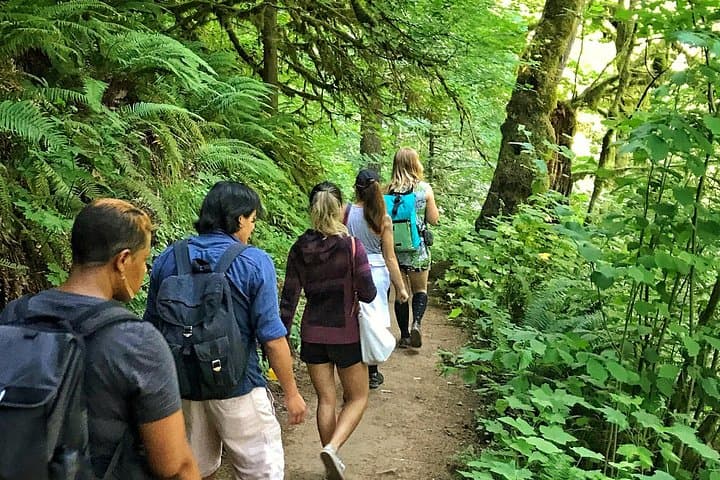
Lose the city for a few hours without leaving it: this 5-mile, 900-foot-gain Forest Park loop threads old-growth pockets, city viewpoints, and cultural landmarks for a compact taste of Portland’s wild side. Expect moss, roots, and stories.