
What the day feels like
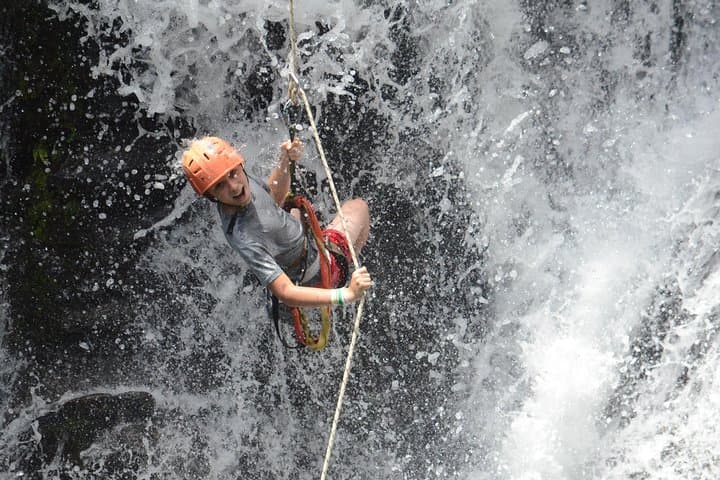
You step off the muddy trail and into a different meter of sound: leaves rubbing like quiet applause, a canopy filtering the sun into a green hush, and, ahead, water punching a white line down black rock. The guide knots your harness with quick, practiced hands and jokes about the howler monkeys’ morning commute. For the next four hours you’re in a compact spine of Costa Rican rainforest—descending waterfalls, clambering over boulder gardens, and learning to trust your rope and your feet. It’s not a high alpine expedition; it’s a tropical, kinetic apprenticeship in vertical movement that ends with a grin and the scent of salt from the nearby Pacific.
This tour, staged from Quepos close to Manuel Antonio, packs the best elements of Costa Rican adventure tourism into a half-day format. The landscape is young in geological terms: volcanic uplift and relentless Pacific weather have carved steep ravines through volcanic and sedimentary bedrock, and small rivers have kept scraping them into the stepped drops you rappel. The result is waterfalls of modest but steady height—enough for adrenaline and photographic drama—set inside lowland rainforest that hosts the country’s famously dense biodiversity.
Historically this stretch of Puntarenas Province has oscillated between fishing town, banana plantation, and burgeoning adventure tourism hub. Quepos began as a fishing village; today, it’s the staging ground for guided canyoning that carefully threads between private reserves and public parklands. Manuel Antonio National Park, created in 1972, sits just up-coast, offering a sharp contrast: manicured trails and beaches in the park, wild riparian corridors where canyoning operators run shuttle vans and safety briefings.
Culturally the excursion is straightforward and communal. Guides are bilingual, practical, and trained in rescue protocols—many are local, raised in the humidity and gardens of the region, blending natural-history insights with ropecraft. The vibe is friendly and familial: couples on honeymoons, small groups of friends, and families with teenagers can all find an appropriate line between thrill and safety.
What to expect physically: the itinerary is a 3–4 hour window that includes a short hike in, gear fitting, a progressive series of rappels (often several drops in the range of 15–30 meters / 50–100 feet depending on water levels), and an exit scramble that pushes you back to the trailhead. Terrain is wet, rocky, and occasionally slippery—good balance and a nimble step go a long way. Guides provide helmets, harnesses, ropes, and instruction; no prior technical experience is necessary, though comfort with heights and basic coordination makes the morning easier.
Why you should go: it’s efficient. In the time many outlets spend on long bus runs, you’ll do something kinetic and memorable; the rainforest and waterfall setting make the whole experience feel bigger than the clock. Photographers will find dynamic compositions—blurred water against glossy leaves—while families will appreciate the structured progression from easy descents to more committed rappels. Safety standards among reputable Quepos operators are high; the rating and review record for this particular tour show consistent guest satisfaction.
Practical edge: plan around the weather. The dry season (roughly December–April) keeps water levels predictable and trails less churned. Bring closed-toe shoes with good tread, a small dry bag for your phone or camera, and at least one liter of water. Expect intermittent cell service in the canyon; your guide will carry emergency comms. Most operators offer hotel pickup in Manuel Antonio and Quepos, and the whole operation is designed for easy access—no multi-day planning required.
On the sustainability front, operators have to balance access with habitat protection. Choose companies that limit group size, stick to fixed lines where appropriate, and brief guests on wildlife etiquette—the rainforest wants distance and dignity. After the ropes come off, reward yourself with a late lunch in Manuel Antonio: fresh ceviche, a cold beer, and a vantage on the Pacific that feels earned.
In short, this half-day waterfall rappelling tour is an ideal primer for travelers who want action without an overnight commitment: it’s scenic, well-run, and rooted in the natural and cultural landscape of Puntarenas. If you leave with wet shoes, a new rope-handshake with your guide, and an appetite for more vertical play, you’ve done it correctly.
Trail wisdom
Small choices, better day.
Shoes That Grip
Wear closed-toe trail shoes with sticky rubber—water and algae make wet rocks deceptively slick.
Hydrate Early
Drink at least 1–2 liters before the hike; tropical humidity increases sweat and fatigue faster than you expect.
Secure Your Tech
Use a small waterproof case or dry bag—phones and cameras won’t last long without protection in the spray.
Listen to the Guide
Guides offer short but crucial rope and footwork coaching—follow instructions for both safety and speed.
Local knowledge
Read the place, not just the route.
Watch for native species including Howler monkeys, Toucans.
Keep an eye out for wildlife during the transition between areas and habitats. Respect distance guidelines.
Operators work under local guidelines to minimize trail erosion and wildlife disturbance—choose companies that limit group size and follow Leave No Trace practices.
Follow the guide's instructions on size limits, ethical handling, and leave-no-trace practices.
Small cascades above the main rappels that make excellent solo-photo compositions. A short post-tour trail viewpoint that looks southwest toward the Pacific and Manuel Antonio beaches
Locally recommended viewpoints and quiet spots known best to local operators.
Quepos evolved from a small fishing village into a tourism hub; Manuel Antonio National Park was established in 1972 and helped focus conservation and visitor infrastructure in the area.
Maritime roots and regional tradition shape the waterways and working coasts.
Seasonal guide
Four versions of the same landscape.
Spring
Best forLower crowds · Stable water levels
ChallengesOccasional rain squalls · Early green season humidity
Spring (March–May) straddles dry and rainy seasons—expect warm days and manageable water flow with late-afternoon showers possible.
Summer
Best forLush rainforest photos · Fewer US travelers
ChallengesHigher river flow · Slipperier routes
Summer (June–August) is green season: the forest is vivid but water volumes and trail muddiness increase—trust guides to pick safe lines.
Fall
Best forDramatic skies · Fewer tour groups
ChallengesHigher chance of storms · Shortened windows between downpours
Fall (September–November) sees the most rain; some rappels may be rerouted for safety during heavy flows.
Winter
Best forDry trails · Predictable water levels
ChallengesMore tourists in Manuel Antonio · Higher daytime temperatures
Winter (December–February) is the dry season—ideal for stable canyoning conditions but expect more visitors and sun exposure.
Operator details
What the booking data adds.
Included
- ✓Taxes & Fees
- ✓A/C Minivan Round Trip Transportation + 4WD Safari Ride
- ✓7 IN 1 ACTIVITIES COURSE: Waterfall, Tree Top and Inclined Rappelling / 3 Zip Lines / Monkey Drop / Tree Climbing / Skill Suspension Bridge
- ✓All Required Safety and Operational Equipment
- ✓Lunch + Snacks + Fruits + Iced Tea & Bottled Water
Not included
- —Picture Packages / Gratuities
Good to know
- ✓Not recommended for travelers with spinal injuries
- ✓Not recommended for pregnant travelers
- ✓Not recommended for travelers with poor cardiovascular health
- ✓Travelers should have at least a moderate level of physical fitness
- ✓No se permiten Infantes (Menores de 3 Años)
Pack with intention
What to bring.
Good to know
Common questions.
No. Guides teach basic rope technique and belays; tours are designed for beginners and progress at a controlled pace.
Plan the edges
The details that make the day easier.
Manuel Antonio National Park, established in 1972, is one of Costa Rica’s earliest national parks and helped catalyze eco-tourism in the Puntarenas region.
After the ropes come off, head to Manuel Antonio for lunch—try El Avión for seafood and a view carved into an old airplane fuselage, or Café Milagro for rooster-fired coffee. Quepos offers fresh ceviche stands and local craft beers for a low-key celebration.
- Closest international airport
- Juan Santamaría (SJO) in San José; domestic flights to Quepos (XQP) available. Driving from San José: ≈3 hours; from Manuel Antonio town: 20–30 minutes. Cell service: intermittent in the canyon; guides carry radios. Permits: none for tourists—tour operator handles access to private reserves.
Choose operators that limit group size, avoid single-use plastics, and brief guests on wildlife etiquette—pack out any trash and avoid touching vegetation or animals.
Explore by topic
Follow the threads.
Keep exploring
Make the story part of the trip.
Set out from Bass Harbor for a private, customizable day on Blue Hill Bay — lighthouses, puffins, seals, and the chance to feel Acadia from the water. Small groups, local captains, unforgettable views.
In four hours you can move from shaded canyon ferns to wind-scoured coastal ridgelines, guided by someone who knows where the light—and the hidden views—live. This private half-day hike on the Monterey Peninsula or Big Sur is compact, curated, and perfect for travelers who want depth without a multiday commitment.
 Related story
Beneath a sky of shifting light, Skaftafell’s ice reads like a map of time. This three-hour guided glacier hike mixes technical instruction with geology and culture: compact, safe, and unforgettable.