
What the day feels like
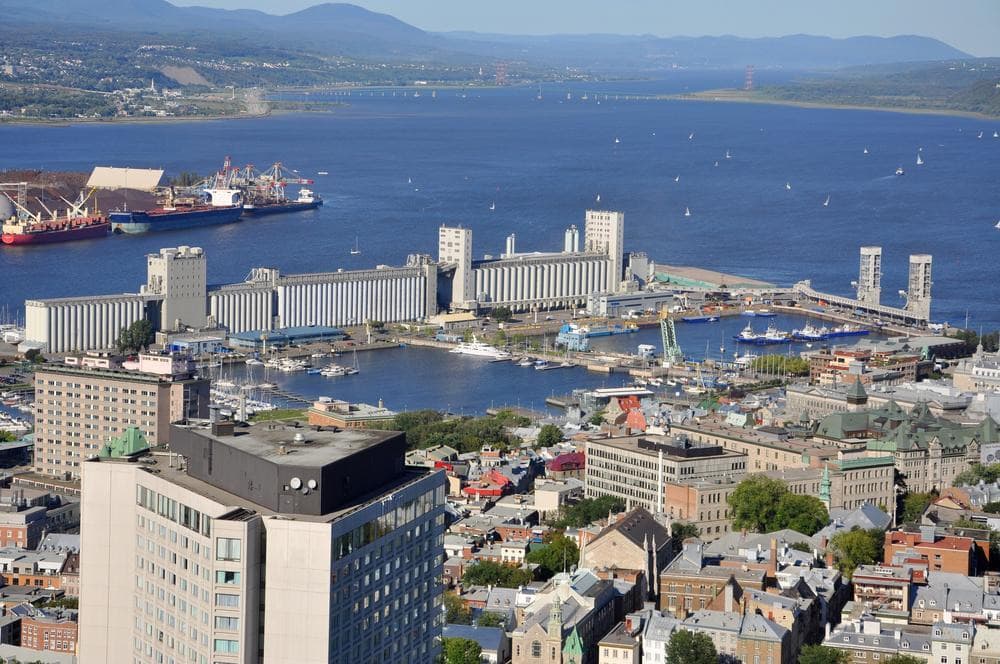
You arrive at the Port of Quebec on an overcast morning and the river greets you like an old friend daring you to walk its edge. Cargo cranes stand like industrial sentries, but look past them and the city opens: terraced stone walls, a skyline stitched with copper spires, and the Château Frontenac perched like a watchful storyteller on Cap Diamant. The air carries the faint, sweet smoke of maple and the sharper tang of river brine; gulls wheel overhead as if mapping the routes you will take.
The Port of Quebec sits at the hinge of two worlds: the raw, liquid strength of the St. Lawrence and the immovable history of Old Quebec. That tension—water pulling you out to sea and ramparts insisting you stay ashore—makes this a rare urban adventure. Walk the docks at dawn and you can almost hear the city telling its origin story: Samuel de Champlain planted a trading post here in 1608, and generations later the fortified Upper Town remains North America’s only intact fortified colonial city, a UNESCO World Heritage Site.
Geology and geography shaped the place. Cap Diamant, the cliff that cradles Old Quebec, is a stubborn escarpment of Laurentian rock that forced settlers to stack streets one above another and build stairs instead of avenues. The St. Lawrence, wide and mercurial, has been a highway and a hazard—its currents have pushed and pulled centuries of commerce, migration, and war into the port below. Today it hums with ferries, cruise ships, tugs, and pleasure boats, each altering the skyline like punctuation.
Culture here is tactile: French signage, cafés spilling onto cobbled alleys, bakers kneading dough by the hour, and markets where farmers and fishmongers trade stories with customers. The Port is not a single attraction but a staging ground for walking and biking tours that thread through the neighborhood fabric. A two-hour Quebec City Walking Tour or the Old Quebec Classique with a funicular ride will take you from Terrasse Dufferin’s sweeping views to the narrow alleys of Quartier Petit Champlain and the intimate stone square of Place Royale. For a more kinetic start, the Lower Town Historical Bike Tour pedals you along the green banks of the Saint-Charles River into creative neighborhoods like Limoilou, where murals and spiral staircases punctuate daily life.
These tours are practical by design: expect downhill walking on cobbles, short but steep climbs up Cap Diamant (the funicular can save your knees), and narrow lanes that demand attention. Guides will pause to weave history into place—how the Fortifications of Québec shaped colonial North America, or how Canadian and U.S. histories intersect in unexpected ways. Private history tours extend the storyline with richer context, making connections between global events and local streets.
If you want to plan the day like a local: start early to beat crowds at Place Royale, take mid-morning coffee in Petit Champlain, and time your terrace walk for late afternoon when the light hits the Château Frontenac just so. In summer you’ll want a light jacket for riverside breezes; in winter, good boots and thermal layers are non-negotiable. The funicular is sometimes busy—operators will arrange a cab if it’s down, but build 10–20 extra minutes into your schedule.
Practicalities are straightforward. Tours run from brisk two hours to a relaxed 2.5-hour private history walk. Most itineraries are walkable for casual fitness levels, but cobblestones and stairs can be unforgiving—sturdy footwear matters more than fashion. Guides often recommend 15–20% tipping for excellent service and local operators emphasize small-group experiences to keep neighborhoods livable.
Beyond logistics, the Port is an invitation to slow exploration. Peek into the Grand Marché to taste artisan cheeses and maple syrup, hunt for street art like the Mural des Québécois, and cross to Limoilou to ride a neighborhood wave of cafes and thrift shops. At the river’s edge, let the current feel like a dare: follow it to ferry terminals, or turn inland and find a history that insists you look closely.
Why go? Because Quebec City compresses so many travel pleasures into one compact loop—heritage architecture, strong local food, river vistas, and neighborhoods that reward wandering. Take a walking tour to get the narrative, then use a bike tour to discover the neighborhoods where locals live. Bring curiosity, a pair of reliable shoes, and a willingness to let the St. Lawrence set the day’s rhythm. The Port of Quebec is a city that nudges you toward stories you can walk into, and once you take one step, it’s hard not to keep going.
Trail wisdom
Small choices, better day.
Choose sensible shoes
Cobblestones and steep stairways are everywhere—wear supportive, grippy footwear to avoid slips.
Use the funicular wisely
If the climb up Cap Diamant looks steep, the funicular saves energy; check schedules and have cash or card ready.
Bring a small reusable bottle
Refill stations and cafés are common; avoid single-use plastics and stay hydrated while exploring.
Timing matters for photos
Golden hour on Terrasse Dufferin gives the best light on Château Frontenac and the river.
Local knowledge
Read the place, not just the route.
Watch for native species including harbor seals occasionally near the river mouth, gulls and migratory songbirds along the waterfront.
Keep an eye out for wildlife during the transition between areas and habitats. Respect distance guidelines.
Port activity affects river ecology—choose certified local operators, avoid littering, and support markets that source sustainably.
Follow the guide's instructions on size limits, ethical handling, and leave-no-trace practices.
Limoilou spiral staircases and mural alleyways. Grand Marché de Québec—local produce and artisan stalls
Locally recommended viewpoints and quiet spots known best to local operators.
Quebec City was founded in 1608 by Samuel de Champlain; Old Quebec is a UNESCO World Heritage Site that preserves North America's only intact fortified colonial city.
Maritime roots and regional tradition shape the waterways and working coasts.
Seasonal guide
Four versions of the same landscape.
Spring
Best forearly-season blossoms · lighter crowds · riverside walks
Challengesunpredictable rain · cold mornings
Spring thaws bring crisp air and fewer tourists—pack a waterproof layer and expect brisk river breezes.
Summer
Best foroutdoor terraces · full market scenes · long daylight hours
Challengescrowds · hot afternoons in July
Summer is lively and busy; book guided tours in advance and aim for morning slots to avoid peak crowds.
Fall
Best forleaf color · mild weather · photography
Challengesshortening days · occasional rain
Early fall—especially September—balances comfortable temps, brilliant foliage, and thinner visitor numbers.
Winter
Best forfestive atmosphere · snow-dusted architecture
Challengesice on cobbles · very cold temperatures
Winter transforms the city into a postcard; expect snow and plan for traction on stairs and cobbles.
Pack with intention
What to bring.
Good to know
Common questions.
Typical public walking tours last about two hours; private or in-depth history tours run around 2.5 hours.
Plan the edges
The details that make the day easier.
Old Quebec, including the Port area and fortifications, was designated a UNESCO World Heritage Site in 1985 for its well-preserved example of a fortified colonial city.
Quebec City is steeped in French-Canadian culture—sample local staples like poutine, tourtière, and maple-forward pastries and linger in bistros where language, music and food create an unmistakable sense of place.
- Meeting
- Tourist information center for public tours; Languages: English and French available; Typical tour times: 2–2.5 hours; Tipping: 15–20% customary.
Favor walking and biking tours, dine at markets sourcing local producers, and avoid single-use plastics to help protect the St. Lawrence estuary and neighborhood character.
Explore by topic
Follow the threads.
Keep exploring
Make the story part of the trip.
Set out from Bass Harbor for a private, customizable day on Blue Hill Bay — lighthouses, puffins, seals, and the chance to feel Acadia from the water. Small groups, local captains, unforgettable views.
In four hours you can move from shaded canyon ferns to wind-scoured coastal ridgelines, guided by someone who knows where the light—and the hidden views—live. This private half-day hike on the Monterey Peninsula or Big Sur is compact, curated, and perfect for travelers who want depth without a multiday commitment.
 Related story
Beneath a sky of shifting light, Skaftafell’s ice reads like a map of time. This three-hour guided glacier hike mixes technical instruction with geology and culture: compact, safe, and unforgettable.