
What the day feels like
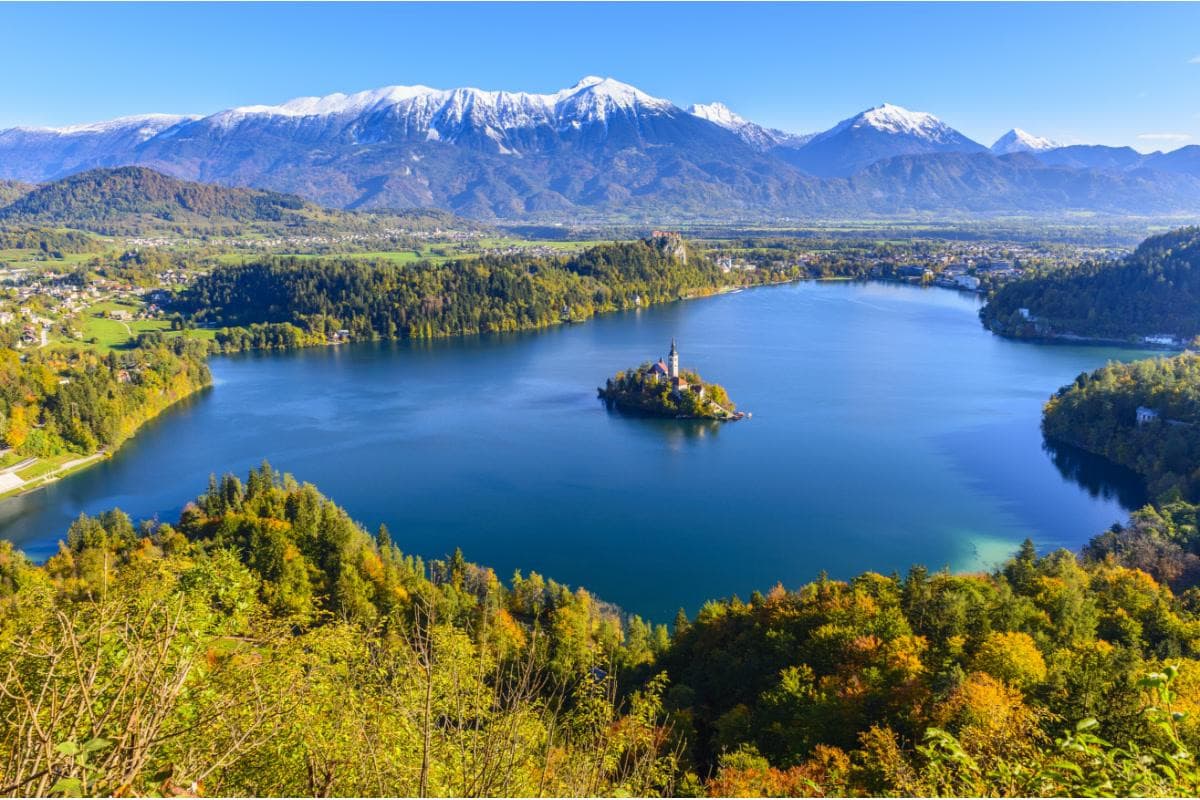
You arrive at Lake Bled before most people do, when the island church is a distant silhouette and the castle atop its medieval crag is catching the first light. Mist still lingers low over the water and the hills wear their early-morning blue. From the parking strip along the lake the trail up to Ojstrica is easy to miss: a rough path that dives into beech and spruce before turning steep and narrow. Then, in a single, breathless moment, the forest parts and the island, the castle and the Julian Alps snap into perfect, cinematic alignment. This is Ojstrica—the compact, sharp bluff that frames the most reproduced view of Slovenia.
Ojstrica is not a summit in the classical sense. It is a viewpoint: a short, steep race up a rocky shoulder that rewards a little effort with one of Europe’s most satisfying panoramas. The geology here is a karstic mix of limestone and dolomite. Over millennia, water has worked these rocks into ledges and teeth; forest soils cling in thin layers and a few hardy pines lean toward the lake as if trying to get a better look. Historically, the Bled area has been a crossroads—Roman roads once passed nearby and the medieval castle that presides over the town dates to the 11th century. The human presence is gentle compared with the scale of the surrounding mountains, and Ojstrica’s lure has always been visual: painters, postcard makers and more recently drone photographers keep drawn to this precise vantage.
Culture around Bled is small-town but refined. Locals are proud of their kremšnita—Bled cream cake—and of the traditional wooden pletna boats that still shuttle visitors to the island. Beekeeping and alpine shepherding are woven into the local identity; the mountain meadows that unwrap around Ojstrica in summer once fed grazing flocks and still bloom with alpine gentians and edelweiss in higher meadows of the surrounding ranges.
If you come for the view you will probably combine Ojstrica with a handful of other classic Bled experiences. A morning there pairs perfectly with a quiet pletna row to the island and a climb up to Bled Castle for different vantage lines. For adrenaline-seekers, Lake Bled Tandem Paragliding is an obvious complement—the flight starts from higher take-off sites and drops you into a bird’s‑eye relationship with the same island and castle that looked so miniature from the cliff. If your trip is part of a longer adventure, an 8-day Hiking and Bike Tour through Slovenia gives you the chance to understand how Ojstrica fits into a wider, richly varied landscape of karst valleys, forested ridges and handfuls of vineyard-dotted lowlands.
Practicalities: the trail to the Ojstrica viewpoint is short—expect roughly 1–1.2 km round-trip with about 100–150 meters of elevation gain depending on where you start from the lakeshore. Most hikers reach the ledge in 15–30 minutes if they keep a steady, careful pace. The path is steep in parts, with roots and stone steps; rain makes sections slippery and some of the final scramble near the cliff edge requires sure footing and no fear of exposure. There is no official guardrail at the viewpoint; exercise caution and supervise children and dogs closely.
Timing is everything here. Sunrise and golden hour are spectacular, with soft light draping the island and the Alps behind it. Midday brings crowds—Ojstrica is Bled’s most famous vista—and harsher light for photography. If you want solitude, aim for early morning or late afternoon in shoulder seasons. For paragliding, pilots watch thermals and wind; flights often launch late morning through afternoon when conditions stabilize, and a typical tandem outing offers up to 20–30 minutes in the air with return transfers from Bled included.
Gear and preparation are simple: good hiking shoes, a wind layer and water will cover most visits. If you are pairing the hike with a paragliding flight, bring secure pockets for your phone or camera; pilots will brief you about loose items. For multi-day visitors using the hike-and-bike package, pack light but smart—technical socks, breathable layers and a small repair kit for the bike will save time and frustration.
Why go? Ojstrica is the kind of short, honest adventure that rewards specificity. It does one thing extremely well: align you with a view that hooks into the imagination. It fits a variety of travelers—families, solo walkers, photographers, paraglider passengers and long-distance hikers alike—because the effort is modest and the pay-off immediate. More than that, Ojstrica acts as a touchstone for the region. From that ledge you can begin to understand Slovenia’s compact, layered geography: low karst lakes, medieval human artifacts, and then the silent, jagged sweep of the Alps.
Respect the place and it will repay you. Stay on paths to protect fragile undergrowth, carry out any trash, and follow local guidance about paragliding and seasonal trail closures. With a good pair of shoes and a mindful plan for timing, Ojstrica delivers one of Europe’s most efficient moments of awe—small on effort, huge on reward.
Trail wisdom
Small choices, better day.
Start at first light
Hike Ojstrica at sunrise to avoid crowds and catch soft, photographable light over the island and castle.
Wear grippy footwear
The trail is steep and rocky—sturdy hiking shoes with good tread make the short climb far safer.
Secure loose items
If you plan to paraglide afterward, stow loose items and bring a zippered pocket or small dry bag to protect electronics.
Give the ledge space
The viewpoint is narrow and exposed; keep a respectful distance from the cliff edge and watch children and pets.
Local knowledge
Read the place, not just the route.
Watch for native species including Roe deer, Chamois (in higher, nearby alpine areas).
Keep an eye out for wildlife during the transition between areas and habitats. Respect distance guidelines.
Trail maintenance and visitor education have been increased to protect fragile limestone soils and woodland understory; stick to paths and avoid trampling vegetation.
Follow the guide's instructions on size limits, ethical handling, and leave-no-trace practices.
Vintgar Gorge— a 1.6 km gorge walk with waterfalls and wooden walkways. Mala Osojnica—an alternative viewpoint with a slightly different silhouette of Bled Island
Locally recommended viewpoints and quiet spots known best to local operators.
Bled’s castle dates to the 11th century and the island’s Church of the Assumption has been a pilgrimage site for centuries, shaping local cultural identity.
Maritime roots and regional tradition shape the waterways and working coasts.
Seasonal guide
Four versions of the same landscape.
Spring
Best forWildflowers · Fewer crowds · Cool hiking
ChallengesMuddy trails · Late snow at higher elevations
Spring brings blooming meadows and comfortable temperatures but the trail can be wet—bring waterproof shoes and expect variable conditions.
Summer
Best forClear views · Paragliding thermals · Long daylight hours
ChallengesCrowds · Hot midday sun
Summer is peak season for views and flights; start early to beat the crowds and pack sun protection.
Fall
Best forAutumn color · Crisp air · Photography
ChallengesShorter days · Potential early snow
Fall offers crisp, dramatic light and fewer people—reserve sunrise slots and dress in warm layers for morning chill.
Winter
Best forQuiet trails · Snow-capped panoramas · Castle views
ChallengesIce and snow on steep sections · Limited paragliding operations
Winter yields striking snowy vistas but the trail can be icy—use crampons or microspikes and avoid the ledge in high wind.
Pack with intention
What to bring.
Good to know
Common questions.
From the lakeshore to the viewpoint expect roughly 15–30 minutes each way; total round-trip distance is about 1–1.2 km with roughly 100–150 m of elevation gain.
Plan the edges
The details that make the day easier.
Ojstrica is the photo angle most associated with Lake Bled postcards; the viewpoint is reachable on a focused 15–30 minute climb from the lakeshore, which is why it became the classic image of the area.
Taste Bled’s specialty, kremšnita (layered cream cake), at a lakeside café and watch the wooden pletna boats glide to the island; local guides often share beekeeping stories and alpine herb lore on village walks.
- Distance
- ~1–1.2 km round-trip • Elevation gain: ~100–150 m • Time: 20–45 minutes • Difficulty: moderate • Nearest town: Bled • No fees for the trail • Paragliding: book with local operators for transfers to take-off sites.
Stick to designated trails, avoid single-use plastics, and choose licensed paragliding operators who follow local wildlife and noise guidelines to minimize impact.
Explore by topic
Follow the threads.
Keep exploring
Make the story part of the trip.
Set out from Bass Harbor for a private, customizable day on Blue Hill Bay — lighthouses, puffins, seals, and the chance to feel Acadia from the water. Small groups, local captains, unforgettable views.
In four hours you can move from shaded canyon ferns to wind-scoured coastal ridgelines, guided by someone who knows where the light—and the hidden views—live. This private half-day hike on the Monterey Peninsula or Big Sur is compact, curated, and perfect for travelers who want depth without a multiday commitment.
 Related story
Beneath a sky of shifting light, Skaftafell’s ice reads like a map of time. This three-hour guided glacier hike mixes technical instruction with geology and culture: compact, safe, and unforgettable.