
What the day feels like
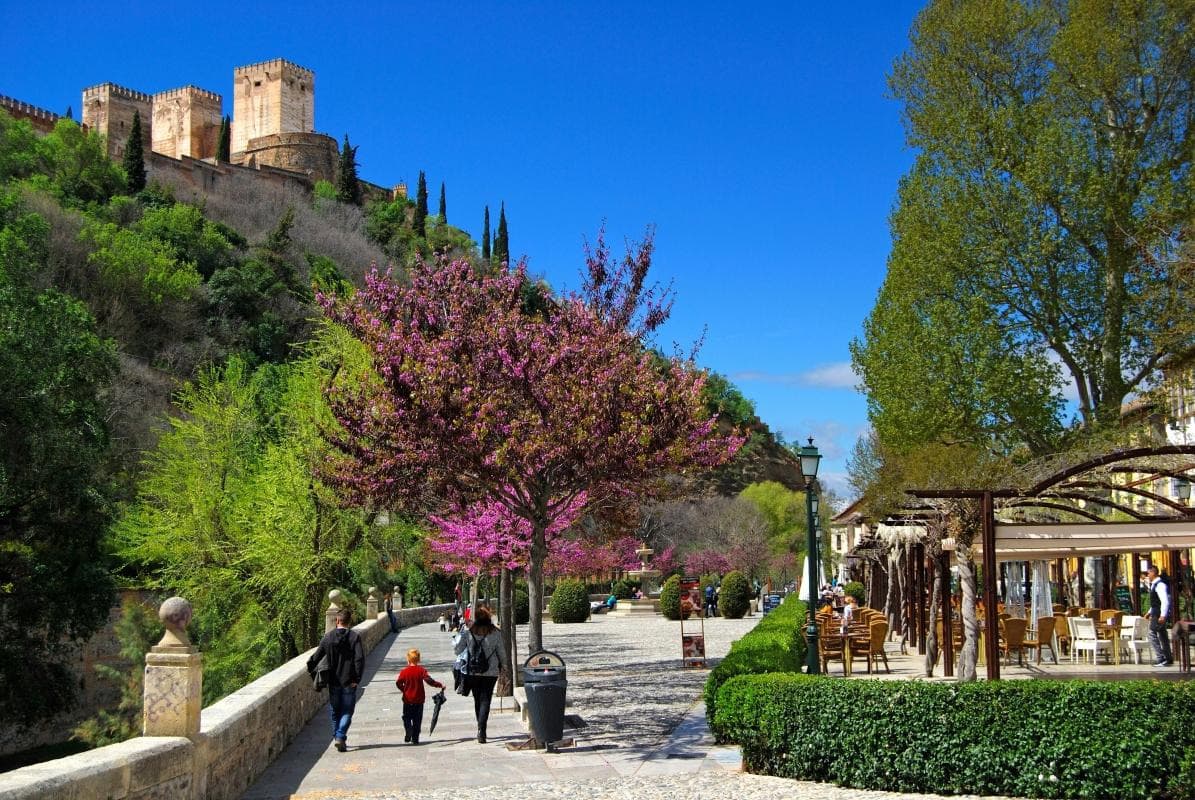
You step down from the white-washed maze of the Albaicín and a ribbon of cobblestone unfurls along the Darro River — low, murmuring, reflecting the burnt-orange façade of the Alhambra above. This is Paseo de los Tristes: a narrow promenade that feels less like a street and more like a theater aisle that runs at the foot of history. On one side, the city presses in with its teterías (tea-houses), bohemian terraces and the occasional guitar; on the other, the fortress-palace of the Nasrid sultans holds court above, its towers catching the light like embers. The current of the river seems to dare you forward, and the stones underfoot—worn by centuries of processions, pilgrims and lovers—steady you along.
Walking here is the best possible primer on Granada. The name Paseo de los Tristes — literally "Promenade of the Sad Ones" — comes from its role as the route along which funeral processions descended to the valley and the old cemetery in Sacromonte. That quiet history gives the place a soft, reflective mood that’s quickly softened again by the city’s livelier offerings: flamenco that bleeds from cave-doorways in the Sacromonte neighborhood, the scent of orange blossom from private carmenes, and the chatter of locals spilling into tapas bars on Calle Elvira.
Geology and history meet in compact form. The stream here is the Darro, one of Granada’s oldest arteries; its narrow gorge carved a corridor the city adopted and built along. The Alhambra and the Albaicín together form a UNESCO World Heritage ensemble that tells the story of medieval Iberia — Nasrid craftsmanship, hydraulic ingenuity (look for ancient aljibes, or cisterns, hidden in the quarter), and layers of Roman and Christian history stacked like masonry. Paseo de los Tristes sits at that intersection: a functional riverside path, a mirror for the Alhambra, and a place where Granada’s cultural rhythms are easiest to read.
For travelers who want to feel the city more than simply see it, several ways to experience Paseo de los Tristes fit different appetites. A classic walking tour through the Albaicín and Sacromonte (options include “Walking tour in Granada city: Albaicín, city center, Sacromonte” and several private or small-group variants) will orient you to hidden alleys, the hydraulic aljibes, Corral del Carbón, and the best viewpoints. If your story is photography, book the “Photographic tour of Granada with a professional photographer” to capture the Alhambra framed by trees and river, and to learn composition and light techniques specific to sunset and blue hour in the city. For a slightly faster, playful option, the Segway or electric-bike tours let you cover more ground (and hit the Mirador de San Nicolás for that iconic panoramic shot) without spending the late afternoon’s energy on steep alleys.
For those seeking a more rural pulse, the 15-km "Hike Granada's River Tour" follows the city’s main artery beyond the tourist centers into fields, forgotten monuments and riverside green. It’s a good reminder that the urban experience here is inseparable from the surrounding landscapes: the Sierra Nevada looms in the distance, its snowy shoulders visible in winter and spring.
Practical detail keeps this stroll honest. Expect uneven cobbles and short flights of steep stone steps connecting terraces, so grippy footwear matters. The best time to be on Paseo de los Tristes is early morning light or the hour before sunset—Golden Hour here creates layered, cinematic light across the Alhambra and the river. Summer afternoons grow hot and dry; and while the promenade itself is short (a pleasant 10–20 minute stroll end-to-end), a full exploration that climbs to Mirador de San Nicolás and loops through Sacromonte will take two to three hours.
Local culture is woven into the walk: stop for a sweet tea in a tetería, follow a cobbled lane to a cave tablao for an intimate flamenco set (look for small, local shows rather than tourist spectacles), and respect that many of the alleys here are residential. If you’re booking experiences, consider a small-group walking tour or a private guide who can place events and names — Mariana Pineda, the aljibes’ engineers, the gypsy communities of Sacromonte — into context. Guides also help you time the light, avoid busy windows for photos, and locate quieter terraces for espresso or tapas.
In a city full of grand edifices and panoramic postcards, Paseo de los Tristes is quietly comprehensive: it introduces the Alhambra from below, presents the practical architecture of everyday Granada, and opens onto the higher, wilder barrios that keep the city breathing. Whether you arrive with a camera, a curiosity for Flamenco, or simply a sense of wanting to move through place rather than past it, the paseo offers a compact itinerary of Granada’s best impulses: history, music, and the steady pull of the landscape.
If you go: wear shoes that grip, bring a small water bottle, plan to climb to Mirador de San Nicolás for sunset, and leave room in your afternoon to lose yourself on the Sacromonte side streets. The stones will slow you down; the view will make it worth the walk.
Trail wisdom
Small choices, better day.
Grip the cobbles
Wear shoes with good traction—stone steps and wet cobbles can be slippery, especially after rain.
Aim for Golden Hour
Plan to arrive an hour before sunset for the warm light on the Alhambra and fewer crowds at Mirador de San Nicolás.
Hydrate and snack locally
Carry a refillable water bottle and sample a tetería or tapas bar—local cafés are short walks from the paseo.
Respect residential areas
Many lanes off the paseo are lived-in; keep voices low at night and avoid blocking doorways when photographing.
Local knowledge
Read the place, not just the route.
Watch for native species including common swift (seen in summer swooping above the river), urban songbirds and occasionally raptors on the Alhambra walls.
Keep an eye out for wildlife during the transition between areas and habitats. Respect distance guidelines.
The area is part of a UNESCO World Heritage zone; visitors are asked to stay on paths, avoid littering, and support local guides and small businesses to help maintain the neighborhood’s vitality.
Follow the guide's instructions on size limits, ethical handling, and leave-no-trace practices.
Cuesta del Chapiz — small gardens and quiet cisterns with Alhambra glimpses. Calle Elvira teterías — authentic tea-houses where locals linger
Locally recommended viewpoints and quiet spots known best to local operators.
Paseo de los Tristes traces the Darro River and was historically used for funeral processions descending to the Sacromonte valley; the route sits beneath the Nasrid-era Alhambra and within the Albaicín quarter.
Maritime roots and regional tradition shape the waterways and working coasts.
Seasonal guide
Four versions of the same landscape.
Spring
Best forblossoms and mild weather · photography at sunset · longer daytime walks
Challengesunpredictable rain showers · cooler evenings
Spring brings pleasant temperatures and orange blossom scent—ideal for multi-hour walks and sunset photos, but pack a light rain layer.
Summer
Best forearly-morning walks · late-night flamenco · long daylight hours
Challengeshot afternoons · crowded viewpoints
Summer is busy and hot; head out early or plan for evening explorations when the city cools and flamenco sets begin.
Fall
Best forcrisp light for photos · fewer tourists · comfortable hiking to Mirador de San Nicolás
Challengesshortening days · occasional rain
Autumn balances cooler air with lingering warmth—great for walking tours and extended photography sessions.
Winter
Best forsnow-capped Sierra Nevada vistas · quiet streets · intimate indoor flamenco
Challengesshort days · cold evenings and possible rain
Winter offers dramatic Alhambra backdrops against snowy peaks; dress warmly for evenings and check show schedules.
Pack with intention
What to bring.
Good to know
Common questions.
Yes—the promenade and public viewpoints like the Carrera del Darro and many streets are open without an entrance fee; paid attractions such as the Alhambra have separate tickets.
Plan the edges
The details that make the day easier.
The Paseo de los Tristes follows the Darro River and earned its name because funeral processions once descended this route toward the old cemetery in Sacromonte.
Sip mint tea in a tetería on Calle Elvira, seek out a small Sacromonte cave for flamenco, and sample Granada’s free tapas culture where a drink often comes with a small plate.
- Nearest city
- Granada. Access: walkable from Plaza Nueva or take a short taxi. Hours: public 24
- sunset. Costs
- promenade is free, Alhambra and some flamenco shows require tickets. Language: Spanish; many guides speak English.
Choose locally operated guides, avoid single-use plastics, stay on established paths, and respect residential zones to help preserve the Albaicín and Alhambra’s UNESCO-listed streets.
Explore by topic
Follow the threads.
Keep exploring
Make the story part of the trip.
Set out from Bass Harbor for a private, customizable day on Blue Hill Bay — lighthouses, puffins, seals, and the chance to feel Acadia from the water. Small groups, local captains, unforgettable views.
In four hours you can move from shaded canyon ferns to wind-scoured coastal ridgelines, guided by someone who knows where the light—and the hidden views—live. This private half-day hike on the Monterey Peninsula or Big Sur is compact, curated, and perfect for travelers who want depth without a multiday commitment.
 Related story
Beneath a sky of shifting light, Skaftafell’s ice reads like a map of time. This three-hour guided glacier hike mixes technical instruction with geology and culture: compact, safe, and unforgettable.