
What the day feels like
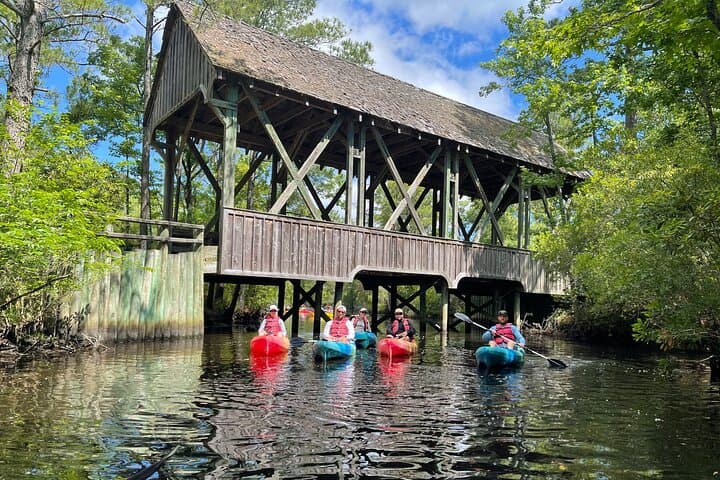
The world narrows to the width of a kayak. Low fog lifts off the salt marsh like a curtain and the only sounds are the whisper of paddle blades and the distant call of a heron. You push away from the grassy bank, and the creek narrows to a mirror. On either side, live oaks and yaupon lean over the water, their roots knuckled into peat and oyster shell. This is the Kitty Hawk maritime forest—a narrow, stubborn band of canopy that clings to the Outer Banks—and the best way to meet it is quietly, on the water.
A two-hour guided paddle here turns the ordinary into the intimate. The route threads tidal creeks and marsh channels, moving from open estuary into the dappled shade of maritime woods where Spanish moss flutters like a ghost of old storms. In calm weather you’ll average roughly 3–5 miles round-trip, though currents and tides do most of the math for you: incoming tides can boost your return, while ebb tides ask you to work for every inch. The terrain is flat but deceptively technical—narrow channels, submerged roots, and sudden shallow flats demand steady edging and attention.
The maritime forest is a coastal ecosystem with its own personality. It’s not a deep inland woodland but a coastal armor—salt-tolerant, wind-pruned, and silent under stormy skies. Geologically, the Outer Banks are barrier islands in motion: sand, wind and waves continually reshape the shore, and behind the beaches the marshes collect the islands’ runoff and the forest roots stabilize the land. These forests were once more common along the Atlantic coast; today they’re among the most threatened habitats because development and rising seas squeeze them from both sides.
Culturally, these waters have been highways and lifelines for centuries. Indigenous peoples navigated creeks and estuaries before European contact; later, fishermen and oystermen read the same channels for fish and shellfish. Within a short drive of the launch, you’ll pass landmarks tied to a different kind of history: the dunes at Kill Devil Hills where the Wright brothers tested controlled flight. That juxtaposition—human invention up against the slow, patient work of tides and trees—is part of what makes a paddle here feel like a kind of time travel.
A guided tour adds value beyond logistics. Local guides point out fiddler crabs and diamondback terrapins, explain how to read tidal sheets, and steer a course that keeps paddlers out of fragile marsh grass. If you want to go on your own, consider hiring a local outfitter for gear and a quick orientation; otherwise, plan well for tides and wind, and aim for mid- to high-tide launches when channels are deepest.
Why go? Because the Outer Banks are famous for beaches; inflatable paddleboards and motorboats make those beaches loud at times. But inside the maritime forest the pace changes. You travel at the speed of breath and paddle strokes, and the landscape returns that intimacy—oystercatchers probing mud, deer tracks on a spit, and the smell of salt and pine. For birders, photographers, and anyone who wants a close look at coastal ecology without the surf-zone noise, this is a rare pocket of quiet.
Practical notes: the tour is approximately two hours, includes beginner-friendly instruction, and typically uses stable kayaks or paddleboards. Expect shallow water, tidal shifts, and narrow channels—bring a PFD, reef-friendly footwear, sun protection, and a small dry bag for phone and camera. Check tides and call ahead on windy days; a 15–20 mph northeast wind can turn the return leg into a test of endurance.
Wildlife encounters are reliable in season: great blue herons and egrets stalk the shallows, ospreys hover, and raccoons wheel the mudflats at low tide. In spring and early summer you might see migrating warblers in the canopy; in fall, the marsh’s muted golds and rusts feel like an homage to the island’s resilience. Respect nesting areas and maintain distance—many shorebirds and marsh species are sensitive to disturbance.
For people used to long mountain days, this paddle is deceptively fulfilling: compact, sensory, and surprisingly restorative. It’s also an accessible intro to paddling in tidal environments; most guests with basic fitness and no prior experience can manage the route under guided instruction. And once you’ve threaded the creeks and rested in a hammock of branches that smells faintly of bayberry, you’ll understand why local guides call this “seeing the island from its ribs.”
If you go, arrive early to avoid afternoon wind and peak sun. Hydrate, bring a hat that clips on, and leave jewelry below deck—oyster beds love dangly things. Whether you’re looking for a peaceful morning paddle or a primer in coastal ecology, the Kitty Hawk maritime forest delivers a focused, memorable taste of the Outer Banks that stays with you long after the tides shift.
Book a guided tour or learn more about local outfitters at this guided marsh paddle page: <a href="https://app.advcollective.com/local-experts/kayak-the-kitty-hawk-maritime-forest-guided-marsh-and-creek-paddle-in-the-outer-banks">Kayak the Kitty Hawk Maritime Forest Guided Marsh and Creek Paddle</a>.
Trail wisdom
Small choices, better day.
Time your tide
Launch near mid- to high-tide for deeper channels and easier passage through creeks.
Wear reef-friendly shoes
Expect oyster beds and muddy flats—closed-toe water shoes protect feet and grip slippery surfaces.
Clip your hat
Wind can snatch loose hats—use a chin cord or clip to keep sun protection secure.
Respect the marsh
Stay in channels to avoid trampling marsh grass and disturbing nesting birds.
Local knowledge
Read the place, not just the route.
Watch for native species including Great Blue Heron, Diamondback Terrapin.
Keep an eye out for wildlife during the transition between areas and habitats. Respect distance guidelines.
This maritime forest and adjacent marshes are sensitive to coastal development and sea-level rise; stick to channels, avoid trampling vegetation, and follow guide instructions to protect habitat.
Follow the guide's instructions on size limits, ethical handling, and leave-no-trace practices.
Tidal creek side pools that hold juvenile fish and crabs at low tide. A narrow spit where deer prints and oyster shell collect at sunrise
Locally recommended viewpoints and quiet spots known best to local operators.
The Outer Banks’ barrier islands have long been maritime highways—from Indigenous canoe routes to colonial fisheries—and the Kitty Hawk forest marks a traditional edge between sea and settlement.
Maritime roots and regional tradition shape the waterways and working coasts.
Seasonal guide
Four versions of the same landscape.
Spring
Best forMigratory birds · Mild temperatures
ChallengesMud at low tide · Occasional rain
Spring brings migrating warblers and active shellfish beds—temperatures are moderate but bring layers for wet mornings.
Summer
Best forWarm water paddling · Longer daylight
ChallengesHeat and sun exposure · Bug activity at dawn/dusk
Summer offers the warmest water and reliable guide schedules—start early to avoid midday heat and insects.
Fall
Best forCalmer winds · Fall colors in marsh and canopy
ChallengesShorter days · Cooling water temperatures
Fall can be the calmest season for paddling with crisp air and golden marsh tones—bring an extra layer for chillier returns.
Winter
Best forQuiet waterways · Migratory waterfowl
ChallengesCold temperatures · Potential for strong coastal winds
Winter paddles are brisk and quiet—dress warmly in layers and be prepared for abrupt wind shifts.
Operator details
What the booking data adds.
Included
- ✓Kayak, Paddle, and Life Jacket
Good to know
- ✓Wheelchair accessible
- ✓Infants and small children can ride in a pram or stroller
- ✓Service animals allowed
- ✓Infants are required to sit on an adult’s lap
- ✓Suitable for all physical fitness levels
Pack with intention
What to bring.
Good to know
Common questions.
No. Tours are designed for beginners and include instruction on basic strokes, steering, and safety before launch.
Plan the edges
The details that make the day easier.
Maritime forests are rare coastal ecosystems; the Outer Banks’ maritime forests are among the last intact stands in North Carolina and provide crucial habitat and erosion control.
After a paddle, head into Kitty Hawk or nearby Kill Devil Hills for fresh seafood and local brews—try a waterfront spot for oysters and a local brewery patio. Visit a local outfitter for stories and gear: many are longtime island residents who double as naturalists.
- Closest airport
- Norfolk International (ORF) ~1.5-hour drive; Driving distance from town: launch sites are within Kitty Hawk
- Kill Devil Hills; Cell service
- typically usable but spotty in the marsh; Permits: none usually required for guided tours—check with your outfitter.
This coastal habitat is vulnerable—pack out all trash, stay within marked channels, avoid disturbing nesting birds, and use reef-safe sunscreen to protect the ecosystem.
Explore by topic
Follow the threads.
Keep exploring
Make the story part of the trip.
Set out from Bass Harbor for a private, customizable day on Blue Hill Bay — lighthouses, puffins, seals, and the chance to feel Acadia from the water. Small groups, local captains, unforgettable views.
In four hours you can move from shaded canyon ferns to wind-scoured coastal ridgelines, guided by someone who knows where the light—and the hidden views—live. This private half-day hike on the Monterey Peninsula or Big Sur is compact, curated, and perfect for travelers who want depth without a multiday commitment.
 Related story
Beneath a sky of shifting light, Skaftafell’s ice reads like a map of time. This three-hour guided glacier hike mixes technical instruction with geology and culture: compact, safe, and unforgettable.