
What the day feels like
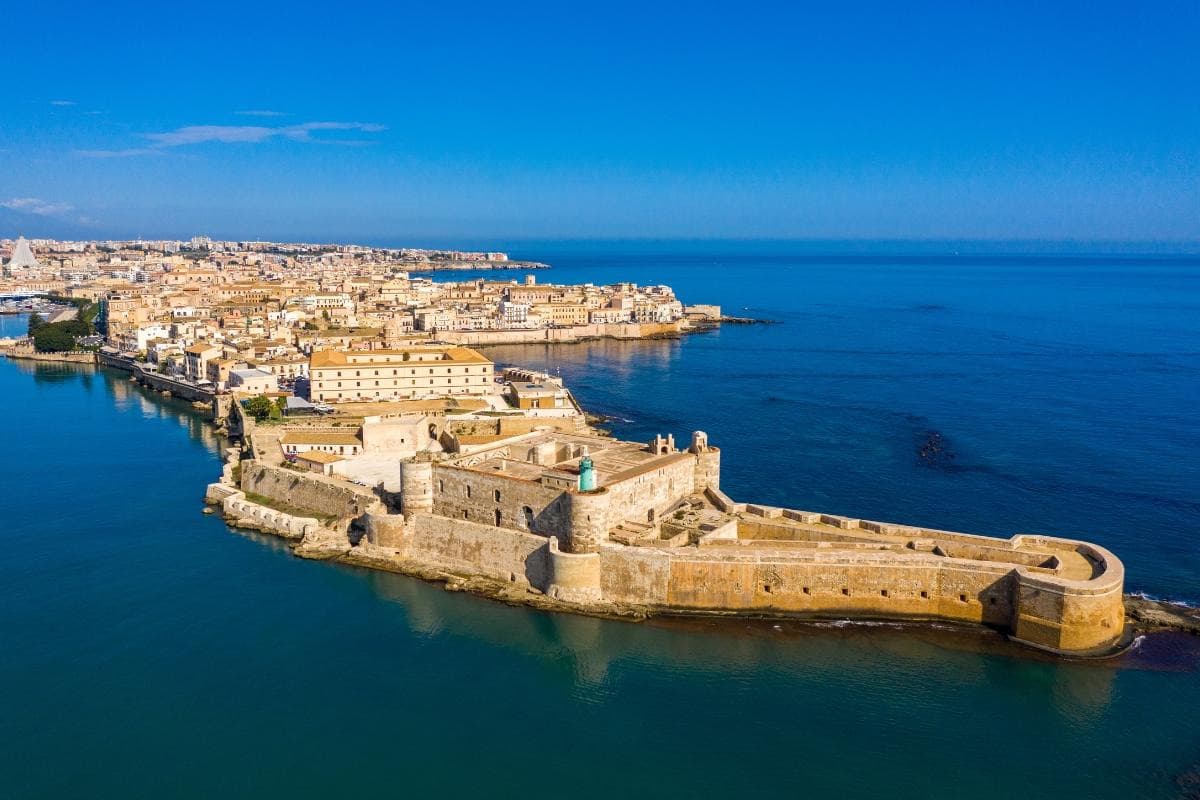
You step off the narrow causeway and the island receives you with a hush and a gull’s cry. The harbor is a necklace of boats whose reflections stutter on water so clear you can see the stonefish that haunt the shallows. Sun-polished limestone alleys spill down to small piazzas; a cathedral once a Greek temple holds the square like an old keeper of secrets. This is Ortygia — the compact, magnetic heart of Syracuse — where walking and sailing are not just activities but the best ways to read the story of Sicily.
Ortygia’s geography is straightforward and stubborn: a one-kilometre-long island of limestone and Baroque facades pinned to the southeast Sicilian coast. Underfoot are cobbles rounded by centuries of feet. The island’s geological backbone — the same calcarenite that builds Syracuse’s classical ruins — catches the light and throws it back in a million tiny flares. The sea arrives in creases: the wide Porto Grande, the thin canal by the Fonte Aretusa, the neat swallow of inlet where fishing boats unload their morning haul.
History here is tactile. Greeks settled the islet in the 8th century BCE and made Syracuse one of the Mediterranean’s most powerful city-states. You can still sense that lineage as you circle the Duomo, which was carved from a 5th-century temple to Athena and later refashioned into a cathedral with Baroque flourishes. Walk a few steps farther and you hit the market alley where fishmongers have hawked their catch for generations — the soundtrack a mixture of shouted prices, the knife’s scrape, and the smell of citrus.
But Ortygia is not a single-epoch museum. It lives in layers. Byzantine mosaics smolder under Norman arches; Spanish-era palazzi watch over Neoclassical balconettes; modern cafés spill espresso onto stone thresholds. That palimpsest is the island’s charm: you can spend the morning in the Neapolis archaeological park a few kilometres inland then, by noon, be snorkeling off a boat that explores sea caves formed in the same limestone the ancients quarried.
The match of land and sea here is why the product offerings around Ortygia work so well. Short private boat tours — many leaving from the small marina — show you Ortigia’s coastline from a perspective the alleys can’t give. You’ll pass coral-streaked caves, stalactite rims, and the pointed Dolphin Rock; boats often pause for a quick swim in a pocket of crystalline water. For a softer tempo, book a guided walking tour that folds in the Neapolis Archaeological Park or a combined trip to the glorious Baroque town of Noto. Evening options — the Ortigia by Night strolls — turn the island into a living stage: alleyways glow, chefs open their doors, and legends about saints and sirens come alive.
Practicalities are kind but blunt: Ortygia is compact and eminently walkable. A full circuit along the outer promenade is roughly 2–3 kilometres, largely flat but threaded with uneven stones and stairways. Elevation gains are negligible; the physical demand is low but your ankles will notice the cobbles. Boat trips range from 1-hour circumnavigations to half‑day explorations that include swimming stops; if you plan to swim from the boat, pack a compact snorkel, reef-safe sunscreen, and a towel that dries fast.
Timing matters. The best light for photos and cool air for walking arrives in late afternoon and early evening; mornings are ideal for markets and quieter streets. In summer, the island hums with visitors — book boat tours and popular restaurants in advance. Shoulder seasons (May–June, September–October) balance weather and crowds and are the optimal window for combining land and water activities.
Safety is straightforward: watch the sun on the stone (it reflects intensely), mind the sea currents when you jump from a boat into open water, and keep cash for smaller shops; many family-run delis still prefer euros over cards. For culture, slow down and let the island dictate the pace — stop at the Fonte Aretusa, where papyrus plants fringe a freshwater spring that feeds into the sea, or climb the narrow stair into a trattoria for a plate of pasta alle sarde.
Sustainability is part of the experience. Boat operators often adhere to no-anchoring zones near sensitive seabeds; respect those rules, avoid single-use plastics on day trips, and support local markets rather than larger resorts. The island’s charm depends on its scale and community — help keep it that way.
Ortygia is one of those places that rewards the curious traveler: the market vendor who will explain how to eat a fresh ricotta-stuffed cannolo properly, the retired fisherman who points out where dolphins sometimes ride the bow, the small museum that preserves a mosaic rescued from a forgotten villa. Whether you arrive to trace history, taste the sea, or feel the island’s light on your face, Ortygia offers a condensed, confident slice of Sicily — one best seen on foot and from the water that shapes it.
Trail wisdom
Small choices, better day.
Wear sturdy shoes
Cobblestones and narrow stairways are everywhere — choose grippy, broken-in shoes to protect your ankles.
Book water tours ahead
Private boat trips and popular swim stops fill up in summer; reserve morning slots for calmer seas.
Carry small change
Many market stalls and neighborhood cafés prefer cash for quick purchases and fresh snacks.
Protect marine life
Use reef-safe sunscreen and follow boat operator guidance on anchoring and swimming near caves.
Local knowledge
Read the place, not just the route.
Watch for native species including dolphins (occasionally seen offshore), loggerhead sea turtles (in surrounding waters).
Keep an eye out for wildlife during the transition between areas and habitats. Respect distance guidelines.
Tourism and boat traffic stress nearshore ecosystems; choose operators who follow no-anchoring rules and use reef-safe products.
Follow the guide's instructions on size limits, ethical handling, and leave-no-trace practices.
Fonte Aretusa papyrus pool (small freshwater spring at the canal). The narrow via Roma neighborhood for family-run bakeries and handmade pastries
Locally recommended viewpoints and quiet spots known best to local operators.
Ortygia is the original island settlement of ancient Syracuse; the Cathedral was built over a 5th-century BC temple to Athena, preserving the city’s Greek legacy.
Maritime roots and regional tradition shape the waterways and working coasts.
Seasonal guide
Four versions of the same landscape.
Spring
Best forwalking tours · boat discovery · market produce
Challengesunpredictable showers · cooler sea temperatures
Spring offers mild weather, blooming citrus trees, and excellent light for photos; water will be cool but swimmable on warmer days.
Summer
Best forswimming · evening dining · extended boat trips
Challengescrowds · high temperatures · booked tours
Long sunny days and warm seas make summer ideal for swimming and night walks, but expect more tourists and higher prices.
Fall
Best forsea caves · baroque sightseeing · food festivals
Challengesshorter daylight hours · some seasonal closures
Autumn brings warm sea temperatures and fewer crowds, making it a top time for combined land-and-sea itineraries.
Winter
Best forquiet exploration · museum visits · local culture
Challengescooler weather · reduced boat services
Winters are quiet and atmospheric; many boat tours scale back but the island’s history and cuisine remain vivid.
Pack with intention
What to bring.
Good to know
Common questions.
Ortygia is compact — roughly 1–2 kilometers across. A focused walk to see the Duomo, the market, Fonte Aretusa, and the waterfront takes 2–3 hours; allow a full day to linger at museums and take a boat trip.
Plan the edges
The details that make the day easier.
Ortygia is the historic nucleus of Syracuse; its cathedral stands on the remains of a 5th-century BC Temple of Athena, and the broader Syracuse area (including Pantalica) is a UNESCO World Heritage Site.
Ortygia’s food is unabashedly coastal: fresh fish grilled simply, ricotta-filled pastries, and granita served with brioche are local musts. The daily market offers everything from freshly caught sea bream to capers and citrus that define Sicilian cuisine.
- Getting there
- Ferry or car to Syracuse; park outside the island. Money: Card accepted but carry cash. Connectivity: Free Wi‑Fi in some piazzas; cell coverage reliable. Language: Italian; English widely understood in tourist services.
Choose certified local boat operators that respect marine protected areas, avoid single-use plastics on day trips, and support neighborhood markets and family-run eateries to keep tourism benefits local.
Explore by topic
Follow the threads.
Keep exploring
Make the story part of the trip.
Set out from Bass Harbor for a private, customizable day on Blue Hill Bay — lighthouses, puffins, seals, and the chance to feel Acadia from the water. Small groups, local captains, unforgettable views.
In four hours you can move from shaded canyon ferns to wind-scoured coastal ridgelines, guided by someone who knows where the light—and the hidden views—live. This private half-day hike on the Monterey Peninsula or Big Sur is compact, curated, and perfect for travelers who want depth without a multiday commitment.
 Related story
Beneath a sky of shifting light, Skaftafell’s ice reads like a map of time. This three-hour guided glacier hike mixes technical instruction with geology and culture: compact, safe, and unforgettable.