
What the day feels like
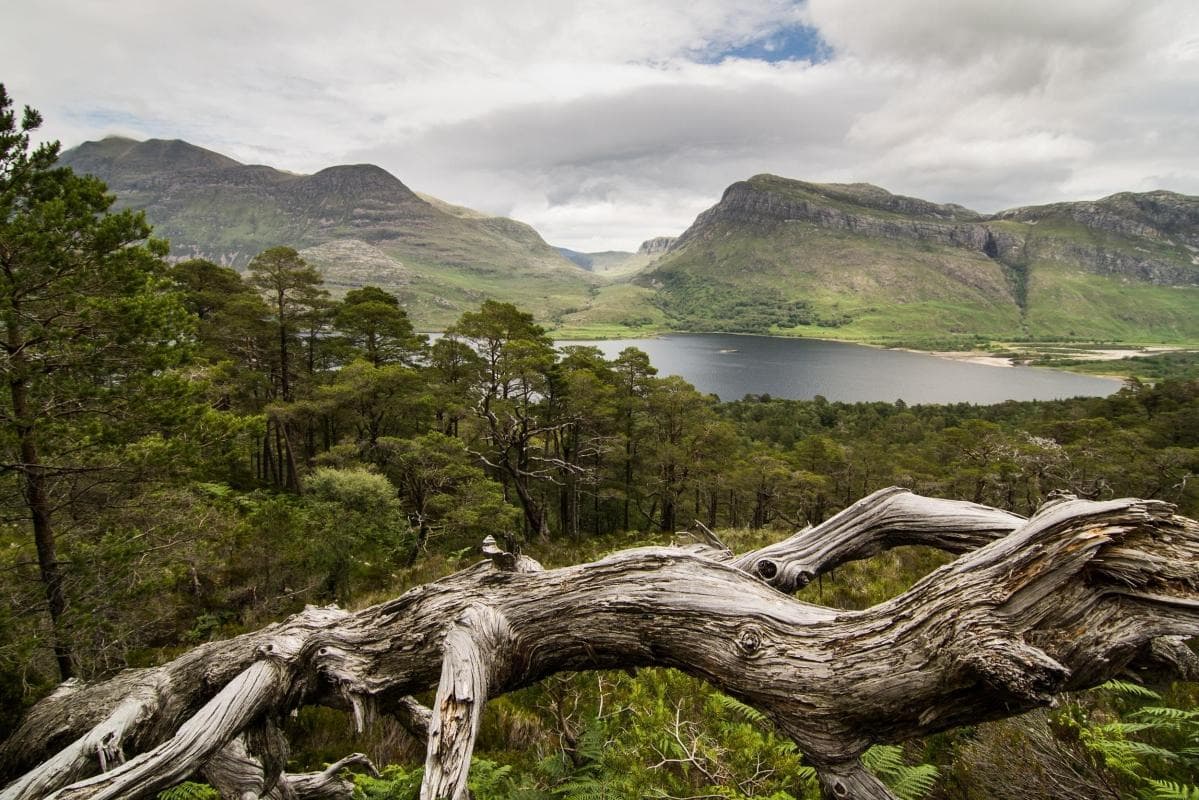
The morning air on the A832 tastes like iron and peat smoke. Mist drapes the shoulders of the ridge like a shawl as you step out of a small carpark near Kinlochewe and look up at Beinn Eighe: a broken skyline of serrated quartzite, buttressed by crags and long, knife-edged ridgelines. At first glance Beinn Eighe is austere—rock and wind and a hard green stitched with pockets of ancient Caledonian pine—but move closer and the place begins to speak. Burnt orange sphagnum moss cushions your soles, curlew call from hidden burns, and the river in the valley dares you onward with white-capped urgency.
Beinn Eighe National Nature Reserve sits at the meeting point of geology and time. The reserve protects a cross-section of the Highlands: Torridonian sandstone and Torridonian quartzite form the dramatic ridges, while underlying schists and white mica lenses create complex corries and scree slopes. Ice ages carved the shoulders and left behind deep corries that trap snow well into summer. Equally important is the biology: remnants of Caledonian pinewood cling to steep gullies, and the alpine ledges host rare arctic–alpine plants that pay little mind to latitude but everything to microclimate.
The area’s human story is compact and telling. Small crofting townships and Gaelic place names reveal centuries of rural resilience—land shaped by sheep, fire, and the ebb of population. In the 20th century, conservationists recognized the area’s value; Beinn Eighe was established as a national nature reserve in 1951 to protect its unique alpine and woodland habitats. Today, stewardship is a local practice as much as a legislative one. Estate workers, rangers and volunteer groups collaborate on peatland restoration, invasive species control and thoughtful visitor management so that this place remains wild for the next century.
For travelers, Beinn Eighe offers a range of experiences that suit both the day-tripper and the committed mountaineer. At the reserve’s lower elevations, boardwalked trails and short loops—typically 3–6 km, 1–2 hours—wind through pine remnants and along streams. These are a good primer for the site: expect uneven paths, some boggy stretches, and viewpoints across Loch Maree where the water sits like a slate mirror. For those chasing a classic Highland day, the Beinn Eighe ridge is the headline. The full ridge traverse is an exposed alpine scramble across rocky pinnacles—roughly 10–13 km and depending on route choice, 6–9 hours with 700–950 m of ascent. Navigation is non-negotiable here; mist can fall quickly, and the worst of the terrain rewards concentration as much as stamina.
The ridge pays back work with views that feel earned. From the higher points you can see Loch Maree dotted with wooded islands, and on clear days the Applecross peninsula and the Minch sit like a silver promise to the west. Wildlife is part theater: red deer will lift their heads from heather, golden eagles may wheel along thermals, and ptarmigan tuck into rock hollows. Botanists will note lichens and specialist alpine species clinging to rock faces—small miracles against raw stone.
Practical planning hinges on honest appraisal. Weather in the Highlands is famously variable; summer can give you four seasons in an afternoon. For the ridge, you want sturdy boots with good ankle support, a waterproof breathable jacket, map and compass (or GPS as backup), and the skills to use them. If you’re not confident route-finding on steep, loose rock, hire a local guide or join a small-group tour from Inverness—several run itineraries that include Beinn Eighe Ridge and neighboring highlights like Loch Maree and Applecross. These trips are an efficient way to see remote places without needing to navigate single-track roads or manage complex logistics.
Timing matters. Early summer (late May–June) brings long daylight and peak alpine flowers; mid- to late autumn shows dramatic colors and a quieter trail network but shorter days. If you choose the ridge, start early: fewer people, more stable afternoon weather, and greater chance to watch the light open across the lochs.
Leave no trace is not a slogan here, it’s practical. Stay on established paths where they exist to protect fragile moss and peat; take out what you bring in; and consider local economies—stop at Kinlochewe or Applecross for a meal, and your purchase supports crofters and small businesses that keep this landscape viable.
For an afternoon, Beinn Eighe is a classroom in geology and resilience; for longer trips it’s a place that tests your legs and rewards you with true solitude. Whether your aim is a gentle loop through pine glades and riverside bogs or a nervy ridge scramble across quartzite teeth, plan thoughtfully and move with respect. Here, the land has a deliberate pace. If you learn to listen, you’ll come away with more than photographs—you’ll leave with a sense that, for a few hours or a day, you walked where time itself seems to have left the door open.
Trail wisdom
Small choices, better day.
Respect the Ridge
The Beinn Eighe ridge is exposed and requires route-finding and scrambling—if you lack experience, join a guided tour or pick a lower trail.
Layer for Changeable Weather
Bring a breathable waterproof and warm mid-layer—conditions can change dramatically even in summer.
Watch Your Footing on Scree
Many approaches include loose rock; use boots with grippy soles and descend carefully to avoid slips.
Protect Fragile Habitats
Stay on established paths—bog and moss take decades to recover from trampling and are important for carbon storage.
Local knowledge
Read the place, not just the route.
Watch for native species including Red deer, Golden eagle.
Keep an eye out for wildlife during the transition between areas and habitats. Respect distance guidelines.
Ongoing peatland restoration and native woodland protection are priorities—stay on paths and support local conservation groups to minimize impact.
Follow the guide's instructions on size limits, ethical handling, and leave-no-trace practices.
Loch Maree’s wooded islands viewpoint—quiet, often empty vista for photography. The low-level Allt a' Ghlas trail through remnant Caledonian pinewood
Locally recommended viewpoints and quiet spots known best to local operators.
Designated a national nature reserve in 1951, Beinn Eighe protects important Caledonian pinewood remnants and arctic–alpine habitats.
Maritime roots and regional tradition shape the waterways and working coasts.
Seasonal guide
Four versions of the same landscape.
Spring
Best forWildflowers and bird migration · Easier river-crossings
ChallengesBoggy trails · Lingering snow in corries
Late spring brings snowmelt and early alpine blooms; trails can be wet and route choices limited by snow pockets.
Summer
Best forLong daylight and alpine flora · Full access to ridge routes
ChallengesMidges in warm damp weather · Unpredictable afternoon storms
Summer is the optimal window for long days and clearer ridge conditions—expect midges at dawn/dusk and plan for sudden weather changes.
Fall
Best forAutumn color and quieter trails · Good visibility on clear days
ChallengesShorter daylight · Colder nights and early snow at higher elevations
Autumn offers dramatic hues and fewer people; start early and be ready for cooler temperatures higher up.
Winter
Best forSnowscapes and winter mountaineering · Ice-climbing approaches in specific gullies
ChallengesAvalanche risk on steep slopes · Requires winter gear and navigation skills
Winter transforms Beinn Eighe into a serious mountaineering arena—only attempt with proper winter kit and avalanche awareness.
Pack with intention
What to bring.
Good to know
Common questions.
A full traverse typically takes 6–9 hours depending on route, fitness and conditions; shorter loops through the reserve can be 1–3 hours.
Plan the edges
The details that make the day easier.
Beinn Eighe was designated a National Nature Reserve in 1951 and protects rare arctic–alpine flora and remnants of Caledonian pinewood.
Local crofting communities, Gaelic place names and coastal seafood define the region—stop in Applecross or Kinlochewe for fresh seafood, homemade soups and small-batch Hebridean spirits.
- Nearest base
- Kinlochewe (small services). Access: A832 single-track roads; public transport limited—best by car or guided tour from Inverness. Difficulty: range from easy loops to exposed ridge scrambles. Mobile signal: patchy.
Stick to marked routes, avoid disturbing nesting birds, and support local guide services—sustainable tourism funds local conservation and maintains access for future visitors.
Explore by topic
Follow the threads.
Keep exploring
Make the story part of the trip.
Set out from Bass Harbor for a private, customizable day on Blue Hill Bay — lighthouses, puffins, seals, and the chance to feel Acadia from the water. Small groups, local captains, unforgettable views.
In four hours you can move from shaded canyon ferns to wind-scoured coastal ridgelines, guided by someone who knows where the light—and the hidden views—live. This private half-day hike on the Monterey Peninsula or Big Sur is compact, curated, and perfect for travelers who want depth without a multiday commitment.
 Related story
Beneath a sky of shifting light, Skaftafell’s ice reads like a map of time. This three-hour guided glacier hike mixes technical instruction with geology and culture: compact, safe, and unforgettable.