
What the day feels like
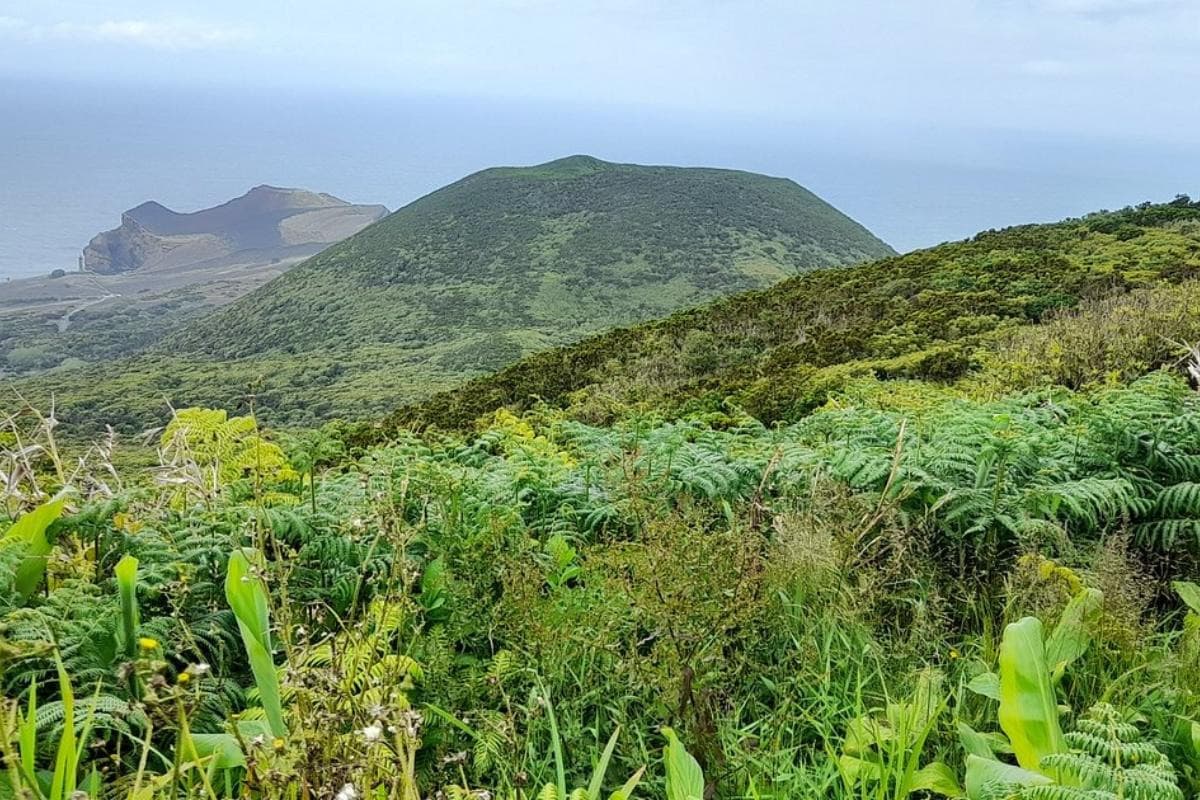
You round a cattle fence, the Atlantic a slab of pewter to your left, and the path narrows into a spine of broken basalt and wind-swept heather. Above, the sky pulls clean and high; below, the island folds away in terraces of green and charcoal where old lava flows met the sea. At the crest of Cabeco do Canto, the world feels pared down to essentials: wind, rock, and a horizon that insists you pay attention.
Cabeco do Canto sits on Faial Island in the central Azores, a modest peak by alpine standards but grand in geological story. The island is a child of fire — a wedge of volcanic material thrown up along the Mid-Atlantic Ridge. Every step here is layered in time: ancient basaltic plates, more recent ash deposits, and the 20th-century scars of Capelinhos, the 1957–58 eruption that rewrote Faial’s coastline. Walking the ridge is less about summit selfies and more about reading the landscape; the terrain tells you where lava shoved, where the sea pulled back, and where humans have quietly tended a life between storms and harvests.
Historically, Faial’s identity has long been nautical. Horta, the island’s harbor town and the closest base for this hike, is a stopover for transatlantic yachts and was once a crucial coal and provisioning stop for 19th-century packet ships. The marina is still a living postcard of painted hulls and sailors’ scrawl; Peter Café Sport remains a pilgrimage stop for anyone with salt on their boots. Inland, terrace farming and small clusters of basalt-built houses speak to an island population that adapted to hard soils and a wet climate. Trails like the one to Cabeco do Canto were born of shepherds’ feet and have been tamed, in places, for hikers.
Geologically, the hike gives you a compact course in volcanism. The ridge offers views of Faial’s central caldera to the east — a watery bowl ringed by laurisilva and pasture — and the more recent, lunar field of Capelinhos to the west. On clear days you can pick out Pico across the channel, its black cone rising like an exclamation from the ocean. The path itself shifts between grassy tracks, rocky outcrops, and short staircases of scoured basalt; expect uneven footing and the occasional loose stone that will make you concentrate on each step.
In terms of wildlife and nature, the island is more subtle than the mainland: Cory’s shearwaters wheel over the cliffs, dolphins are regular visitors offshore, and small, hardy plant communities have adapted to salt spray and wind. The sense is not of wilderness in the North American sense but of a tightly composed island ecology where sea and land are braided.
Practical edge: the route to Cabeco do Canto is best approached from Horta, where you can organize a short transfer or taxi to the trailhead. The hike itself is a half-day affair for most walkers — a concentrated burst of panoramic reward for a modest investment of energy. Terrain, exposure to wind, and a handful of steep sections mean you should come with the right kit and a weather plan. Many travelers combine the ridge walk with a visit to the Capelinhos Volcano Interpretation Centre and an evening at Peter Café Sport, turning one crisp day into a satisfying cross-section of Faial life.
Why go? Cabeco do Canto is for people who want an island hike that delivers sweeping views without the commitment of multi-day trekking. It’s intimate — you’re rarely out of sight of the sea — and it’s instructive: geography, history, and culture converge along a narrow path. The route rewards patience; sit on a windswept rock, and you’ll watch the light creep across Pico, see fishing boats stitch new lines in the water, and feel the Atlantic’s scale in a way no harbor can reproduce.
Timing and preparation are straightforward but not negligible. Faial is exposed. Mornings often hold calm; afternoons can bring gusts and showers. Start early to catch glassy seas and clearer light, and plan a backup if the forecast turns. Locals will tell you the same: check the sky, pack layers, and respect the weather’s mood.
Beyond logistics, Cabeco do Canto is a lesson in slow travel. There are no roadside cafes on the ridge; rewards are caloric and immediate — a view, a seabird call, the smell of wet rock. That makes the hike ideal for travelers who like reading maps, talking to locals, and layering their day with a museum visit, a swim at Praia do Norte, or dinner in Horta’s harbor district.
At its best, a walk to Cabeco do Canto is elemental: wind that tries to lift your hat, basalt that keeps its cool underfoot, and an ocean that dares you to measure distance. It’s a short, smart adventure for anyone who wants a concentrated dose of Azorean geology and a reminder that some of the most memorable landscapes are compact, precise, and slightly wild.
Trail wisdom
Small choices, better day.
Start early for calmer winds
Morning hours usually offer gentler winds and clearer visibility across the channel to Pico.
Sturdy footwear for mixed terrain
Expect basalt steps and loose scree; mid-height hiking boots with grippy soles keep you comfortable and confident.
Bring a waterproof shell
Weather can change quickly; a lightweight waterproof protects both you and your pack from sudden showers.
Respect grazing land and private fences
Follow marked paths and close gates behind you—many trails cross pasture used by local farmers.
Local knowledge
Read the place, not just the route.
Watch for native species including Cory’s shearwater, Common dolphin.
Keep an eye out for wildlife during the transition between areas and habitats. Respect distance guidelines.
The Azores enforce protections for marine mammals and encourage low-impact hiking—stay on trails, pack out waste, and respect grazing areas.
Follow the guide's instructions on size limits, ethical handling, and leave-no-trace practices.
Caldeira do Faial rim — a quieter stretch of the central caldera with lapilli fields and panoramic viewpoints. Capelinhos Interpretation Centre — a short drive that explains the island’s most recent eruption and offers lunar coastal landscapes
Locally recommended viewpoints and quiet spots known best to local operators.
Faial’s landscape is shaped by frequent volcanism; the Capelinhos eruption of 1957–58 added new land and transformed the island’s western coast.
Maritime roots and regional tradition shape the waterways and working coasts.
Seasonal guide
Four versions of the same landscape.
Spring
Best forwildflowers · birdwatching · cool-weather hiking
Challengesmuddy trails after rain · unpredictable showers
Spring brings blooming slopes and active seabird colonies, but expect showery days and soft ground in places.
Summer
Best forclear views · long daylight · combined island activities
Challengesstrong afternoon winds · more visitors
Summer is the most reliable for clear vistas and combining hikes with boat trips, though winds can strengthen later in the day.
Fall
Best fordramatic light · fewer crowds · mild temperatures
Challengesincreased rain events · shortening daylight hours
Autumn offers crisp air and luminous sunsets; bring layers for cool mornings and damp afternoons.
Winter
Best forstorm-watching · off-season solitude · whale-spotting from shore
Challengesfrequent heavy rain · strong winds · limited services
Winter is raw and atmospheric — dramatic seas and quiet trails — but plan around rough weather and fewer open services.
Pack with intention
What to bring.
Good to know
Common questions.
Most routes to the ridge are completed in 2–4 hours round trip depending on your starting point and pace.
Plan the edges
The details that make the day easier.
Faial’s landscape was dramatically altered by the Capelinhos volcanic eruption of 1957–58, which added new land and created a distinctive lunar terrain now preserved and interpreted at a nearby museum.
Horta’s harbor culture is as much part of the experience as the trails—enjoy a caldeirada (Azorean fish stew) after your hike and wander Peter Café Sport where sailors’ graffiti lines the walls.
Stick to marked trails, respect grazing land, choose local guides and services, and support conservation efforts that protect marine mammals and island habitats.
Explore by topic
Follow the threads.
Keep exploring
Make the story part of the trip.
Set out from Bass Harbor for a private, customizable day on Blue Hill Bay — lighthouses, puffins, seals, and the chance to feel Acadia from the water. Small groups, local captains, unforgettable views.
In four hours you can move from shaded canyon ferns to wind-scoured coastal ridgelines, guided by someone who knows where the light—and the hidden views—live. This private half-day hike on the Monterey Peninsula or Big Sur is compact, curated, and perfect for travelers who want depth without a multiday commitment.
 Related story
Beneath a sky of shifting light, Skaftafell’s ice reads like a map of time. This three-hour guided glacier hike mixes technical instruction with geology and culture: compact, safe, and unforgettable.