
What the day feels like
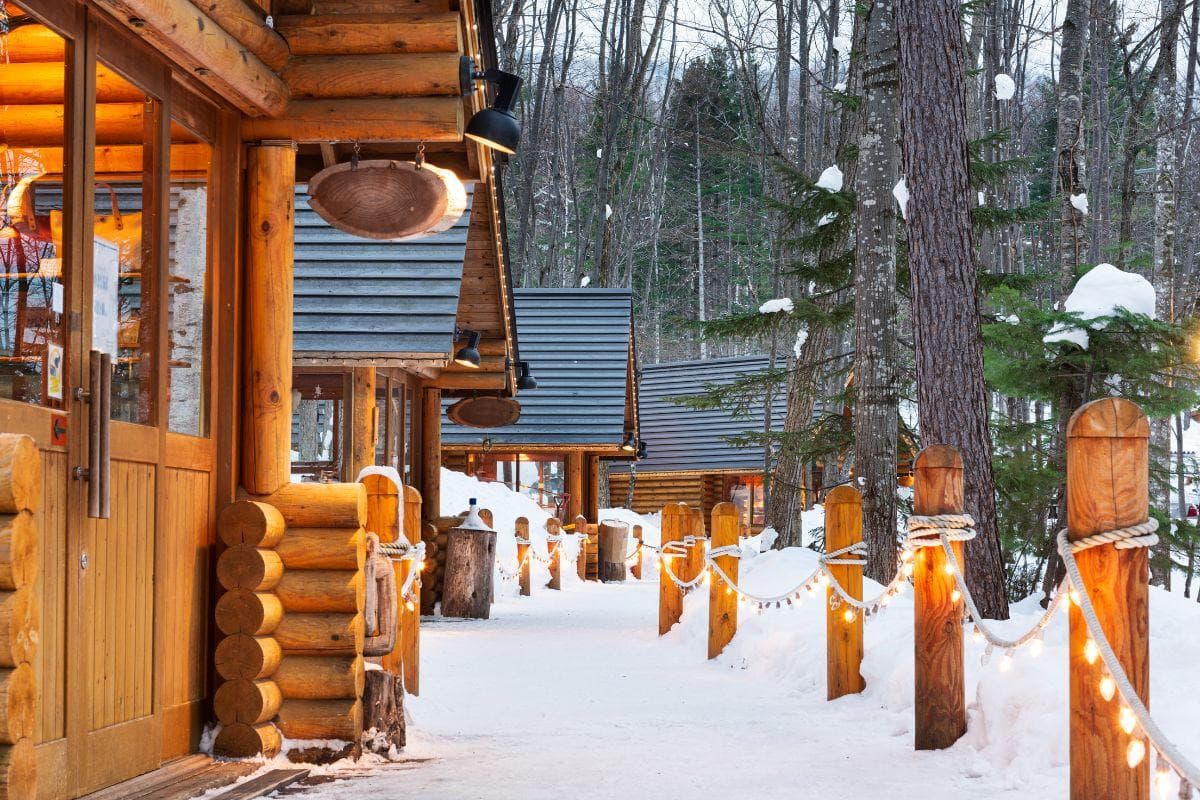
You step off the bus into a hush that feels deliberate, as if the forest itself has lowered its voice to let the log cabins speak. A path of compacted earth and a scatter of snow crunch beneath your boots. Lanterns glow like soft eyes at the edges of tall pines. This is Ningle Terrace—an intimate cluster of timber cottages tucked beside the New Furano Prince Hotel, where artisans open their doors and the forest leans in close.
Ningle Terrace is not a theme park or an outdoor mall; it’s a purposely small village made of hand-built wood structures, each a single-purpose workshop or gallery. Inside, a potter turns clay into bowls, a leatherworker stitches by lamplight, and a glassblower shapes molten beads the color of the sky. The layout demands a slow pace. You move between shops with the same unhurried attention that the makers here afford their work: a rhythm that pulls you out of checklist mode and into noticing—grain of wood, stitch tension, the tiny scar where a tool slipped.
Geology and climate shape the mood. Furano sits in central Hokkaido’s valley country, a basin carved by old glacial flows and river terraces. The region’s volcanic soils are the reason lavender thrives on the surrounding slopes, and why the trees here grow straight and tall: they’re adapted to cold, long winters and short, brilliant summers. In summer, Ningle’s pathways smell green and resinous, punctuated by the farther-off sweetness of lavender. In winter, the village becomes a shrine of light—snow muffling sound, cabin windows gilded with candles and strings of tiny bulbs.
Ningle Terrace has become part of Furano’s cultural identity. It was developed as an artisan enclave to introduce visitors to Hokkaido crafts—handmade goods that reflect the island’s materials and seasons. That local craft ethic mirrors Furano’s larger agricultural culture: lavender fields at Farm Tomita and Shikisai-no-Oka, the blue mystery of Biei’s Blue Pond, and the low, stoic farms that make Furano melons famous. Together, these places tell a concise story of Hokkaido: weather-hardened landscapes, seasonal work, and products that arise from both.
Why visit? For photographers and makers, Ningle Terrace is a compact masterclass in texture and light. For families, it’s a cozy detour between wide-open rural stops. And for anyone who appreciates the slow economy of handmade objects, a walk here is an easy way to meet the people who still make things by hand. It’s also a practical hub: the Terrace is commonly combined with Blue Pond, Shirahige Falls, and Asahiyama Zoo on a single-day itinerary from Sapporo—making it a polished stop among Hokkaido’s headline sights.
Practicalities: Ningle Terrace is best experienced at two tempos. The short visit—30–90 minutes—lets you browse shops, buy a small souvenir, and step outside for photos. A longer visit stretches into a few hours if you want to chat with artisans, watch demonstrations, or time your stop for the blue hour when lamps and snow create warm, low-contrast light.
In summer, the paths are dry, the cabins framed by green and the lavender on surrounding slopes is in bloom; in winter, assume snow-packed trails and a layer of ice beneath. Footwear that grips is sensible year-round; waterproof outerwear is essential in winter. There’s no heavy hiking here—this is a gentle, low-elevation stroll focused on sensory detail and slow commerce, not distance or altitude.
Combine smartly. A common full-day route from Sapporo takes in Asahiyama Zoo, Biei’s Blue Pond, and then Ningle Terrace in Furano—each stop showcasing a different side of Hokkaido’s nature and culture. If you’re self-driving, leave Sapporo early (roughly 2–3 hours by car) to maximize light at each stop; if you prefer guided transport, small-group and private tours are widely available and will tailor the timing.
Timing and buying: Ningle Terrace is busiest late afternoon and at dusk when lights come on. If you want quiet, aim for early morning when craftspeople open their doors and the light is soft. Many shops are small and cash-friendly—carry some yen. For winter visits, check seasonal maintenance closures: some shops may close for a week in late autumn for upkeep.
Comfort and etiquette: Artisans appreciate curious visitors but also space—ask before photographing inside a workshop and treat items like museum pieces until you reach the counter. Gift shops carry a range of prices: smaller items like ornaments and soaps make excellent, affordable souvenirs; larger, bespoke pieces can be commissioned with lead times. If you buy a handmade object, you’re directly supporting local economies and the craft traditions of Hokkaido.
Final note: Ningle Terrace excels at one thing—it makes you slow down. The forest here is an active participant, shading the cottages, muffling footsteps, and holding snow like a patient audience. When you leave, you carry a small object, a memory of warm light and pine, and a clearer sense of how place and craft can hold a conversation.
Combine Ningle Terrace with a morning at the luminous Blue Pond and an afternoon exploring farm fields or Asahiyama Zoo’s penguin parade, and you have a day that moves across Hokkaido’s seasons without ever leaving the theme of thoughtful, place-based experiences.
Trail wisdom
Small choices, better day.
Go early or at dusk
Early morning avoids crowds and lets you see artisans opening up; dusk brings the Terrace’s lanterns alive for richer photos.
Carry cash
Many small workshops prefer cash for modest purchases—have yen on hand to avoid missed buys.
Dress for the season
Summer is cool; winter brings deep snow—wear waterproof, grippy footwear and layered insulation.
Combine nearby sights
Pair Ningle Terrace with Biei’s Blue Pond or Asahiyama Zoo for a balanced day of craft, landscape, and wildlife.
Local knowledge
Read the place, not just the route.
Watch for native species including Ezo red fox, sika deer.
Keep an eye out for wildlife during the transition between areas and habitats. Respect distance guidelines.
Support local sustainability by buying locally made items, avoiding plastics, and staying to marked paths to protect the forest floor and winter understory.
Follow the guide's instructions on size limits, ethical handling, and leave-no-trace practices.
Visit the terrace’s back paths at dawn for nearly private light and quiet forest views. Stop by a nearby workshop that offers hour-long hands-on craft sessions (seasonal—check availability)
Locally recommended viewpoints and quiet spots known best to local operators.
Ningle Terrace was developed alongside the New Furano Prince Hotel to showcase Hokkaido artisans and create a compact, year-round craft village that anchors Furano’s tourism circuit.
Maritime roots and regional tradition shape the waterways and working coasts.
Seasonal guide
Four versions of the same landscape.
Spring
Best forearly blooms · fewer crowds · cool walks
Challengesmuddy paths · variable weather
Spring thaws bring wet trails and brightening green; expect fluctuating temps and quiet shops before peak season.
Summer
Best forlavender fields nearby · long daylight · open workshops
Challengestourist crowds in July · occasional rain
Summer offers the fullest sensory palette—lush forest, nearby lavender in bloom, and accessible artisan demonstrations.
Fall
Best forautumn foliage · cool, crisp light · less crowded afternoons
Challengesshortening daylight · early shop closures
Fall is jewel-toned and calm—perfect for photography but plan shorter daylight windows for travel between stops.
Winter
Best forlantern-lit evenings · snow scenes · holiday-market atmosphere
Challengesicy paths · limited parking in heavy snow
Winter transforms the terrace into a snow-lit village—stunning visuals but come prepared with traction and warm layers.
Pack with intention
What to bring.
Good to know
Common questions.
Most visitors spend 30–90 minutes browsing shops and taking photos; longer if you plan to watch demonstrations or commission work.
Plan the edges
The details that make the day easier.
Furano’s lavender fields at Farm Tomita are one of Hokkaido’s signature sights, typically peaking in mid-July—Ningle Terrace is often combined with lavender tours in summer.
Furano’s food culture centers on agricultural products—lavender sweets, melons, and dairy (think local cheeses and ice cream). Bring room in your itinerary for a bakery stop or lavender soft-serve between visits to nearby sights.
- Location
- New Furano Prince Hotel grounds, Furano. Typical visit: 30–90 minutes. Closest city: Furano; transport: private car, tour buses, or guided day trips from Sapporo. Payment: cash preferred. Accessibility: limited in heavy snow.
Purchase locally made goods to support regional artisans; follow marked paths to protect the forest understory and avoid single-use plastics when possible.
Explore by topic
Follow the threads.
Keep exploring
Make the story part of the trip.
Set out from Bass Harbor for a private, customizable day on Blue Hill Bay — lighthouses, puffins, seals, and the chance to feel Acadia from the water. Small groups, local captains, unforgettable views.
In four hours you can move from shaded canyon ferns to wind-scoured coastal ridgelines, guided by someone who knows where the light—and the hidden views—live. This private half-day hike on the Monterey Peninsula or Big Sur is compact, curated, and perfect for travelers who want depth without a multiday commitment.
 Related story
Beneath a sky of shifting light, Skaftafell’s ice reads like a map of time. This three-hour guided glacier hike mixes technical instruction with geology and culture: compact, safe, and unforgettable.