
What the day feels like
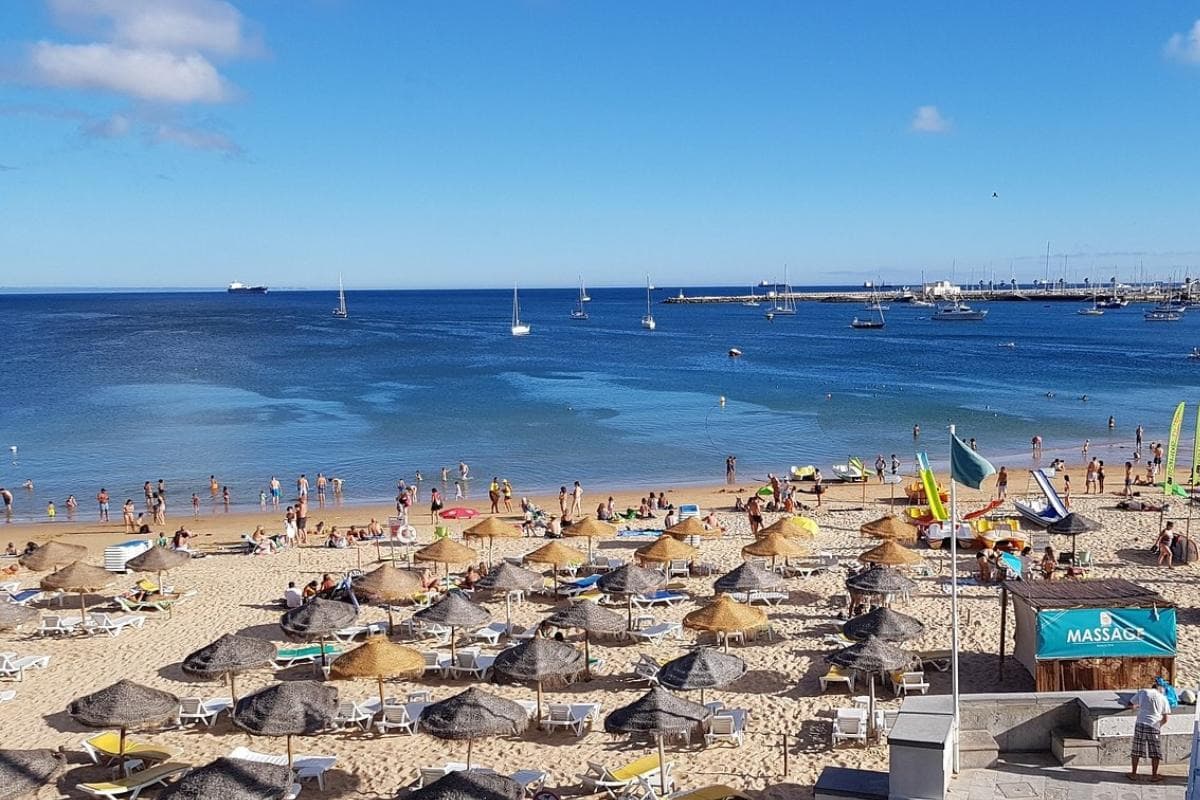
The Atlantic arrives at Praia da Duquesa like a guest—direct, cool and impossibly blue. Early on a September morning the water looks lacquered; the beach is a shallow crescent tucked against low limestone cliffs that catch the light and throw it back in pale gold. Local fishermen pull their boats ashore nearby, gulls spiral in the breeze, and the promenade hums with the slow, civilized energy that defines Cascais. If Lisbon is loud and urgent, Duquesa is its clean-limbed seaside cousin: smaller, quieter, and built for careful attention.
Praia da Duquesa is not a blockbuster stretch of sand for sunbathing rowdily beneath umbrella towers. It’s a compact beach—roughly 200–300 meters long—framed by jagged headlands and dotted with rock pools that reveal shrimps, blennies and the occasional sea urchin at low tide. The bay is sheltered enough that the surf usually stays playful rather than ferocious, making it one of the nicer places near Cascais for a confident swim or a gentle snorkel. The seabed drops off gradually in places and can be stonier in others; reef shoes are a practical call.
Geologically the coast here belongs to the Portuguese Estremadura limestone belt—layers of marine sediments uplifted and carved by tide and wind. Those same processes produced the fissures and small sea caves that punctuate the shoreline. A short walk east along the promenade will take you to more dramatic, wind-slashed features and, eventually, the larger draws of Cascais: the marina, the old town and Boca do Inferno’s theatrical blowhole.
Cascais itself began as a fishing settlement and evolved into a royal retreat in the 19th century when Portugal’s monarchy started spending summers here. The town’s elegant villas and tree-lined avenues are reminders that international visitors have long prized this stretch of coast for its light and mild microclimate. Today the culture blends old and new—fishermen still mend nets, boutique cafés line the marina and seafood restaurants do a brisk trade in grilled fish and saffron rice.
Why choose Duquesa over the bigger beaches nearby? It’s the feeling of proportion—the coast’s scale feels human here. You can swim in transparent water, stand on a sun-warmed rock and watch the Atlantic play with light, and be in a neighborhood café for a strong bica (espresso) within twenty minutes. It’s also practical. Duquesa is a great half-day stop on a Cascais itinerary: arrive in the morning for a swim and tide-pool exploration, then walk into town for lunch, or combine it with a coastal bike ride.
Practical details: the beach is essentially flat—no notable elevation gain—and the terrain alternates between fine sand and exposed rock. There’s usually modest surf; wind can pick up in the afternoon making conditions choppier. Lifeguard coverage varies by season—summer months have more consistent patrols—so check local signage before swimming. The closest parking and transit options are in central Cascais, a 5–10 minute walk from the beach, making Duquesa accessible for day-trippers coming from Lisbon (roughly 30–40 minutes by car, 40–50 by train to Cascais plus a short bus or walk).
What to plan for: early mornings and late afternoons are quieter and offer the best light for photography and low tide exploration. Midday is when families and tourists arrive, and café tables fill. If you’re aiming to snorkel, pick a day with light winds and check tide charts: low neap tides reveal the best tide pools. For those who prefer to stay dry, the coastal walk east toward the marina gives increasingly panoramic views and a steady stream of cafés for a post-walk bifana or grilled sea bream.
Tips for comfort and safety are straightforward: reef shoes or sturdy sandals protect against sharp rocks, reef breaks and slipperiness; high-SPF sunscreen and a sun hat are musts—Atlantic rays can be deceptive; a small dry bag keeps phones and snacks sand-free; and remember to respect local signage about protected areas or nesting birds where posted. Bring cash for small purchases—most places accept cards, but tiny kiosks sometimes don’t.
Beyond the practical, there’s a small, everyday magic to Duquesa. Children crouch over pools with plastic buckets; retirees stroll the promenade and chat about the tide; evening brings a soft, collective exhale as the sun drops behind the cliffs. It’s the kind of place that asks very little of you—drop your shoes, walk the rock-strewn edge, let the sea dare you into a quick swim—and rewards that small attention with a clear, Atlantic-brightness that feels good to carry away.
If your trip is about a slice of coastal Portugal rather than a single headline photo, make space for Duquesa on a Cascais day. It’s the kind of discovery that doesn’t shout but stays with you: a compact, honest stretch of shore, equal parts geology lesson and seaside ritual, where the Atlantic’s personality is relaxed but unmistakable.
Trail wisdom
Small choices, better day.
Feet-first recon
Wear reef shoes for the rocks and tide pools—the sand is soft but edges and submerged rocks are common.
Swim with caution
Check local signage and avoid swimming alone on windy afternoons when currents pick up.
Time your visit
Arrive at low tide for the best tide-pool exploration and early morning for calm water and fewer crowds.
Pack light and local
Bring a small dry bag, refillable water bottle and some cash for nearby cafés and beach kiosks.
Local knowledge
Read the place, not just the route.
Watch for native species including Common dolphin (occasionally offshore), Shore crab and intertidal fish species in pools.
Keep an eye out for wildlife during the transition between areas and habitats. Respect distance guidelines.
Respect marked dune and nesting areas, avoid removing shells or marine life from tide pools, and use refillable water bottles to reduce single-use plastic.
Follow the guide's instructions on size limits, ethical handling, and leave-no-trace practices.
Tide pools at the western headland—best at low tide. A short walk east to Cascais marina for seafood and people-watching
Locally recommended viewpoints and quiet spots known best to local operators.
Cascais developed from a fishing village into a royal summer retreat in the 19th century, which shaped its elegant town center and seaside culture.
Maritime roots and regional tradition shape the waterways and working coasts.
Seasonal guide
Four versions of the same landscape.
Spring
Best forTide-pool exploration · Quiet coastal walks · Wildflower viewing on the cliffs
ChallengesCooler water temperatures · Unpredictable wind
Spring brings mild air temperatures and fewer crowds—ideal for exploring rock pools and walking the coastal path, though the water can still be chilly.
Summer
Best forSwimming and snorkeling · Family beach days · Evening promenade cafés
ChallengesCrowds at midday · Stronger sun and intermittent lifeguard schedules
Summer is peak season for clear, warm swimming and relaxed café life; arrive early to avoid the busiest hours and use high-SPF protection.
Fall
Best forCalmer seas for snorkel · Photography of dramatic skies · Off-season coastal walks
ChallengesCooling water and shorter daylight hours · Occasional storms from the Atlantic
Fall offers clear water and fewer tourists; afternoons can be especially pleasant, with crisp light and good visibility for snorkeling.
Winter
Best forStorm watching from the promenade · Quieter, reflective walks · Off-season birdwatching
ChallengesCool, windy weather · Limited lifeguard presence and services
Winter is for storm-spectating and solitude—pack layers and waterproof outerwear for brisk coastal walks.
Pack with intention
What to bring.
Good to know
Common questions.
Take the commuter train to Cascais (roughly 40–50 minutes), then walk or catch a local bus/short taxi ride to the Duquesa area—about 5–10 minutes from the town center.
Plan the edges
The details that make the day easier.
Cascais became a favored summer retreat of Portugal’s royal family in the 19th century, which transformed the town from a fishing village into an upscale resort—an evolution still visible in its architecture.
Cascais offers a confident seaside cuisine—try grilled sardines or sea bream at a marina-side restaurant and pair it with local vinho verde; cafés serve excellent bicas for a strong espresso pick-me-up after a coastal walk.
- Closest city
- Cascais (5–10 min walk); Train from Lisbon: 40–50 min; Beach length: ~200–300 m; Best times: early morning or low tide; Lifeguards: seasonal.
Respect tide pools and nesting zones, use reef-safe sunscreen, and support local businesses to help preserve the coastal economy and ecosystems.
Explore by topic
Follow the threads.
Keep exploring
Make the story part of the trip.
Set out from Bass Harbor for a private, customizable day on Blue Hill Bay — lighthouses, puffins, seals, and the chance to feel Acadia from the water. Small groups, local captains, unforgettable views.
In four hours you can move from shaded canyon ferns to wind-scoured coastal ridgelines, guided by someone who knows where the light—and the hidden views—live. This private half-day hike on the Monterey Peninsula or Big Sur is compact, curated, and perfect for travelers who want depth without a multiday commitment.
 Related story
Beneath a sky of shifting light, Skaftafell’s ice reads like a map of time. This three-hour guided glacier hike mixes technical instruction with geology and culture: compact, safe, and unforgettable.