
What the day feels like
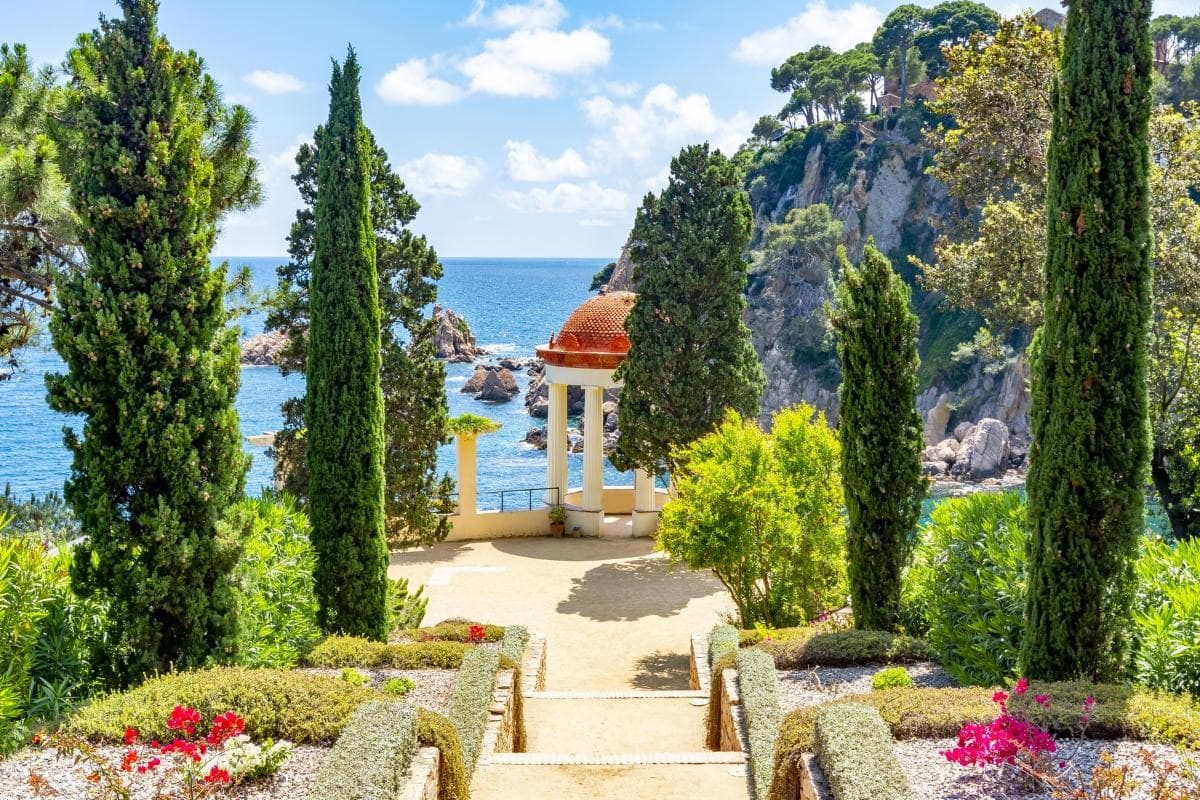
By the time the funicular sighs to a stop and you spill onto Montjuïc’s terraces, Barcelona has already begun to loosen its edge: the grid of streets softens into parkland, the hum of traffic thins and the city’s geometry gives way to a scatter of trees and stone. The Botanical Garden of Barcelona sits in this quieter seam, a deliberate patchwork of terraces carved into the hillside where Mediterranean-climate plants—places like California, Chile, South Africa, Australia and the Mediterranean basin—are arranged to tell a botanical geography.
This is not a manicured Victorian parterre; it’s a working garden that expects you to walk. Paths slope and switchback, sometimes paved with smooth flagstone, sometimes crumbling into packed earth, and the soundscape shifts from the distant clang of trams to the small, precise noises of bees and water. The view keeps returning—there are glimpses of the harbour, the Sagrada Família off to the northeast, and the open Mediterranean beyond—so wherever you pause, the city’s scale is a quiet companion.
History and design here are practical. The modern garden was inaugurated in the late 20th century as part of Barcelona’s renewed cultural investment on Montjuïc, but its program is older: use plants to teach, to conserve and to connect urban dwellers with the world’s dry-climate flora. Collections are organized not by taxonomy but by geography, so strolling means crossing continents. A cluster of silver-leaved shrubs from South Africa’s fynbos stands a few terraces from the prickly silhouettes of Australian eucalyptus. California’s chaparral—hardy, sun-loving shrubs—fits easily beside plants from the Iberian peninsula, and each enclave is labeled with its origin and ecological notes for curious walkers.
Geology and microclimate matter here. Montjuïc’s volcanic and sedimentary layers create terraces with different drainage and sunlight patterns; the garden exploits that variety to mimic the natural niches of the plants. Some paths are bright and wind-swept; others are sheltered, cool and mossy. You’ll notice how water—rare in the garden’s dry-climate roster—has been used sparingly but strategically: cisterns, stone channels and shaded basins that show how Mediterranean landscapes retain moisture.
The Botanical Garden of Barcelona is also connected to the city. After a morning among the plantings, it’s easy to cross to the National Art Museum of Catalonia (MNAC), descend to the Olympic ring or wander the Poble-sec tapas bars. For travelers who prefer a low-carbon approach, the Barcelona Card—valid for unlimited public transit and discounts at select museums—makes it simple to stitch the garden into a broader Montjuïc afternoon without wrestling with taxis or parking.
Practical flow: give yourself 60–90 minutes for a focused walkthrough, up to half a day if you like to read plaques, sit and sketch, or pair the visit with MNAC or Montjuïc Castle. Paths are mostly gentle, but be ready for stairs and short steeper stretches—this is a hillside garden. Shoes with traction, plenty of water and a small sun hat will keep the walk enjoyable on summer afternoons. If you’re shooting photos, aim for morning light when terraces are cool and shadows add depth to the plant textures; late afternoon brings warmer tones and quieter crowds.
The garden’s personality is quietly pedagogical. Botanists and volunteers can often be seen pruning, labeling or answering questions; seasonal labels point out phenological rhythms like flowering times and seed maturation, which is useful if you’re planning a visit focused on blooms. For families, there’s room to wander without the stress of traffic; for botanists, the garden’s curated sections offer a concentrated field trip across five Mediterranean-climate regions in a few hundred meters.
Practical tips for planning: access Montjuïc by metro and funicular (Pelayo/Paral·lel area) or the 55 bus; if you have the Barcelona Card, it covers the transit leg and can save on entry or combined museum plans elsewhere in Barcelona. Visit in spring for the most prolific blooms and comfortable temperatures; late afternoon in summer avoids the heat but brings more visitors. The garden has modest visitor facilities—benches, shade, and interpretive signage—but limited food options, so pack a light snack and water if you plan a long stay.
There’s also a small, quieter political undercurrent: Montjuïc has been a stage for many of Barcelona’s public projects, from the 1929 International Exposition to the 1992 Olympics. The botanical garden is one of those projects that quietly bolsters civic quality of life: preservation, education and the pleasure of walking among plants that have adapted to the same sun and salt that shape Barcelona itself.
Why it matters: in a city known for Gaudí’s architecture and bustling beaches, the Botanical Garden of Barcelona is a reminder that travel is as much about pace as place. Here the city meets ecology—plants arrive from distant coasts and find a place on a Catalan hill, and visitors leave with a clearer sense of how climate and culture shape landscapes. Whether you’re a plant nerd, a photographer chasing light, or a traveler wanting a restorative hour away from the crowds, Montjuïc’s living map rewards curious feet and patient eyes.
Trail wisdom
Small choices, better day.
Go early for cooler light
Morning visits mean softer light for photos and fewer people on narrow terraces.
Use public transit
Take the metro and funicular to Montjuïc to avoid parking and conserve energy for walking the terraces.
Bring water and a hat
Many sections are exposed and Mediterranean sun is intense; shade is limited in summer.
Pair with nearby attractions
Combine the garden with MNAC or Montjuïc Castle in a half-day loop to maximize the hillside experience.
Local knowledge
Read the place, not just the route.
Watch for native species including Mediterranean bees and pollinators, common urban birds such as sparrows and finches.
Keep an eye out for wildlife during the transition between areas and habitats. Respect distance guidelines.
The garden focuses on conservation and education for dry-climate species, using water-wise practices and interpretive signage to promote sustainable urban gardening.
Follow the guide's instructions on size limits, ethical handling, and leave-no-trace practices.
Small terraced viewpoints above the upper collections that frame the harbor.. A quiet cluster of Mediterranean island plants that are often overlooked by casual visitors.
Locally recommended viewpoints and quiet spots known best to local operators.
Located on Montjuïc, the modern botanical garden was established as part of late-20th-century projects to rehabilitate the hill and showcase Mediterranean flora from around the world.
Maritime roots and regional tradition shape the waterways and working coasts.
Seasonal guide
Four versions of the same landscape.
Spring
Best forwildflower blooms · comfortable walking · photography
Challengesoccasional showers · increased visitors on weekends
Spring brings the most varied blooms and mild temperatures—ideal for a full stroll through the geographic collections.
Summer
Best forlong daylight hours · late-afternoon light · pairing with evening city views
Challengesheat and strong sun · crowds in peak months
Expect hot, sunny terraces; visit early or late and plan water and sun protection.
Fall
Best forpleasant temperatures · color changes in some species · fewer tourists
Challengesshorter days · some plant dormancy
Fall is comfortable for walking and quieter than summer, with interesting late-season textures.
Winter
Best fortranquil visits · clear atmosphere for views · milder Mediterranean winter
Challengescooler temperatures · some closures or reduced hours
Winters are mild and peaceful—good for contemplative visits but bring a warm layer for breezy terraces.
Pack with intention
What to bring.
Good to know
Common questions.
Most visitors spend 60–90 minutes; allow half a day if you want to read labels, photograph extensively, or combine with nearby MNAC or Montjuïc attractions.
Plan the edges
The details that make the day easier.
The Botanical Garden of Barcelona arranges its collections by geographic Mediterranean-climate regions—so a single walk takes you through plant communities from five continents.
After the garden, descend to Poble-sec for Catalan small plates—try a plate of bombas and a vermut to taste the neighborhood energy that contrasts with Montjuïc’s calm.
- Location
- Montjuïc, Barcelona | Duration: 1–3 hours | Access: metro + funicular or bus | Best time: spring mornings | Facilities: benches, interpretive signs, limited food
Respect plant labels and stay on paths; avoid picking seeds or flowers; support urban conservation by learning about drought-tolerant landscaping and local volunteer programs.
Explore by topic
Follow the threads.
Keep exploring
Make the story part of the trip.
Set out from Bass Harbor for a private, customizable day on Blue Hill Bay — lighthouses, puffins, seals, and the chance to feel Acadia from the water. Small groups, local captains, unforgettable views.
In four hours you can move from shaded canyon ferns to wind-scoured coastal ridgelines, guided by someone who knows where the light—and the hidden views—live. This private half-day hike on the Monterey Peninsula or Big Sur is compact, curated, and perfect for travelers who want depth without a multiday commitment.
 Related story
Beneath a sky of shifting light, Skaftafell’s ice reads like a map of time. This three-hour guided glacier hike mixes technical instruction with geology and culture: compact, safe, and unforgettable.