
What the day feels like
You reach the ridge just as late afternoon slides into gold. The city below—compact blocks of tile roofs and faded Sino-Portuguese facades—softens into bands of shadow. A breeze carries the scent of the sea and frying garlic from a distant market. A troop of macaques watches you from a low branch, curious and unapologetic, as tourists spread out cameras and local families share snacks. This is Monkey Hill, a small forested crown above Phuket Town where a short climb rewards you with one of the island's clearest perspectives and an intimate encounter with Thailand's resilient urban nature.
Monkey Hill, locally called Khao To Sae, is compact enough to visit between market runs or as a sunset detour from Phuket Old Town. The hill itself is not dramatic in elevation—think of it as a quick, punchy outing rather than a daylong trek. The path alternates between paved roads, rough concrete steps, and shaded forest tracks that cross stands of bamboo and scrub, giving the whole route a park-like feel. At the summit, a simple observation platform and a handful of temples overlook a sweep of the town, the channel to Phuket’s eastern coast, and the glittering hint of the Andaman Sea.
Geologically the hill is part of Phuket's weathered granite backbone, carved into gentle domes and ridges. Its rock and soil retain enough moisture to hold a surprising green cover through much of the year, feeding vine tangles and fig trees that become the macaques' favorite perches. Culturally, the hill sits at the edge of the urban weave of Phuket Town, where living history blends with everyday life. Vendors from nearby markets make the trip up to sell drinks and snacks; students and office workers use the hill for quick training sessions; elders come for a walk and a view they have watched change over decades.
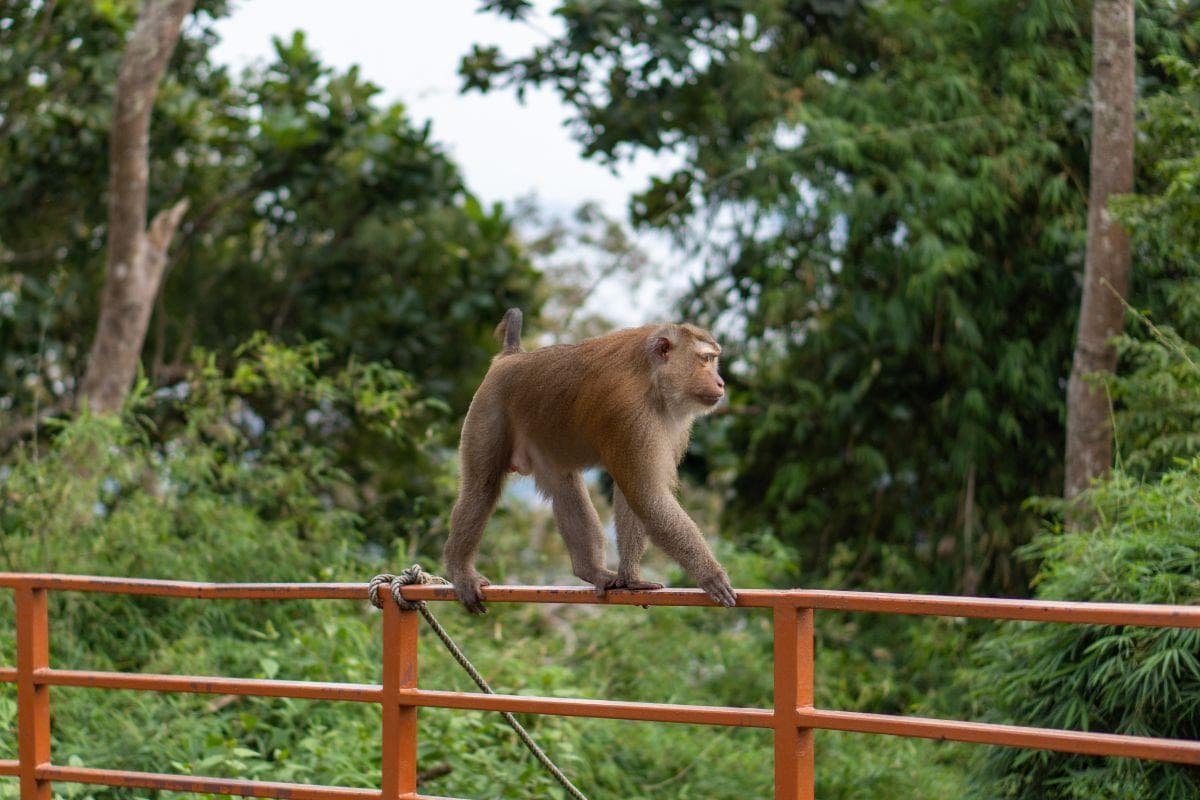
The monkeys are the hill's headline act. These rhesus macaques are habituated to people, and while they can be disarmingly tame, they are wild animals. They will approach food, investigate bags, and sometimes snatch unattended items. That's part of the compact ecology here: the intersection of tourism, local feeding practices, and the animals' own adaptability. Municipal signage and many tour guides urge visitors not to feed the monkeys; doing so changes their behavior and puts both animals and visitors at risk. Observing from a distance, with a cautious respect for wildlife rules, makes the experience both safer and more meaningful.
Practically speaking, Monkey Hill is an ideal half-day activity. The ascent is short but steeper than it looks: expect a roughly 1 km climb with about 120–160 meters of elevation gain, typically taking 20–40 minutes depending on your pace and how often you stop for photos. The trail mixes shaded sections and exposed switchbacks, so timing matters. Early morning and late afternoon are the best windows for cooler temperatures and flattering light. The viewpoint is particularly cinematic at sunset, which explains why several local sunset tours include Monkey Hill as a stop alongside Promthep Cape and Khao Rang.
Many visitors pair a Monkey Hill walk with a stroll through Phuket Old Town or an evening at Chillva Market. Private customizable tours—common on the island—make it easy to stitch these stops together: Big Buddha, Monkey Hill, a market meal, and a twilight sweep of the town can form a satisfying day that blends nature, culture, and food. If you go independently, bring a small bottle of water, protective footwear, and a secure bag for your camera; zip pockets or anti-theft packs work best.
Safety and etiquette are simple but important. Never approach or corner a monkey, avoid eye contact if one becomes aggressive, and never feed them. Keep plastic bags and food out of reach; these animals quickly learn to associate humans with snacks. If a monkey shows interest in your gear, stay calm, back away slowly, and avoid sudden movements. Local guides can read monkey behavior quickly, so booking a short guided visit is a smart choice for first-timers.
Monkey Hill rewards visitors who slow down. Sit on a bench and watch the troop dynamics—juveniles wrestling, older females grooming, bold males keeping the perimeter. Look back through the viewfinder and the panorama organizes itself into layers: the tiled roofs of Phuket Town, clusters of palms, and the flat blue of the channel. The compact nature of the hike makes it ideal for families and travelers with limited time who still want a taste of green space and a memorable animal encounter.
If you want to build a day out of it, plan for nearby flavors. Chillva Market and the weekend night market both offer the island's best late-afternoon street fare: grilled seafood, Hokkien noodles, roti pancakes, and coconut ice cream. Pairing a hillside viewpoint with market snacks gives you a classic Phuket evening—sweat, scent, sight, and a little spot of the wild above town.
In short, Monkey Hill is a micro-adventure: quick to reach, rich in sensory detail, and easy to fold into a broader Phuket itinerary. It asks for practical preparation—a sturdy pair of shoes, mindful behavior around wildlife, and timing for cooler light—and returns a compact, vivid experience that showcases why Phuket is more than beaches. It is an island of people and place, where even a short hill can tell a long story.
Trail wisdom
Small choices, better day.
Watch your pockets
Monkeys on Monkey Hill are known to grab loose items and snacks; use zipped or anti-theft packs and keep food out of sight.
Go at golden hour
Arrive 45–60 minutes before sunset for cooler temperatures and the best light from the viewpoint.
Wear grippy shoes
Expect concrete steps, some uneven trail sections, and occasional slippery leaves—trail runners or hiking sandals with traction are ideal.
Respect signage and guides
Local rules discourage feeding wildlife; hiring a local guide helps you read monkey behavior and keeps the visit low-impact.
Local knowledge
Read the place, not just the route.
Watch for native species including Rhesus macaque (macaques), Tropical songbirds such as bulbuls.
Keep an eye out for wildlife during the transition between areas and habitats. Respect distance guidelines.
Avoid feeding wildlife and use local guides when possible; responsible visitor behavior helps prevent habituation and reduces human-wildlife conflict.
Follow the guide's instructions on size limits, ethical handling, and leave-no-trace practices.
A small temple near the summit with quiet benches and shade. Early-morning views toward the east coast when the city is still waking
Locally recommended viewpoints and quiet spots known best to local operators.
Monkey Hill sits adjacent to Phuket Town and reflects the island's blend of natural ridgelines and urban expansion; the hill has long served as a local green space and viewpoint.
Maritime roots and regional tradition shape the waterways and working coasts.
Seasonal guide
Four versions of the same landscape.
Spring
Best forQuieter trails · Morning walks · Birdwatching
ChallengesOccasional rain showers · Rising humidity
Spring sees warmer days and fewer crowds than peak winter; expect humid conditions by mid-afternoon and occasional tropical downpours.
Summer
Best forEarly-morning hikes · Short wildlife encounters · Market visits in the evening
ChallengesHigh heat and humidity · Frequent heavy rain
Summer brings intense heat and regular storms; aim for early starts and plan indoor options if weather turns.
Fall
Best forLonger daylight · Safer hiking weather · Sunset photography
ChallengesIntermittent rains during transition · Sticky humidity
Fall is a pleasant shoulder season with improving conditions and strong sunsets—good for late-afternoon visits.
Winter
Best forClear skies · Cool breezes · Peak visibility
ChallengesHigher visitor numbers · Busy markets
Thailand's dry 'winter' offers the most comfortable weather and best views, but also the island's highest visitor levels.
Pack with intention
What to bring.
Good to know
Common questions.
Expect a 20–45 minute ascent depending on pace; plan 1–2 hours for the round trip including time at the viewpoint.
Plan the edges
The details that make the day easier.
Monkey Hill (Khao To Sae) in Phuket Town is home to a resident population of rhesus macaques that have long adapted to living alongside the urban fabric of Phuket.
Pair your climb with a late-afternoon market run—try Phuket Hokkien noodles, grilled seafood skewers, and coconut ice cream at Chillva or the weekend market to taste the island’s everyday flavors.
- Know before you go
- short 20–45 minute climb, no major technical skills required, watch monkeys and secure belongings, best at sunrise or sunset, accessible from Phuket Town by short taxi ride.
Do not feed the monkeys, carry out any trash, and prefer local guides and vendors to support the community while reducing direct human-wildlife interactions.
Explore by topic
Follow the threads.
Keep exploring
Make the story part of the trip.
Set out from Bass Harbor for a private, customizable day on Blue Hill Bay — lighthouses, puffins, seals, and the chance to feel Acadia from the water. Small groups, local captains, unforgettable views.
In four hours you can move from shaded canyon ferns to wind-scoured coastal ridgelines, guided by someone who knows where the light—and the hidden views—live. This private half-day hike on the Monterey Peninsula or Big Sur is compact, curated, and perfect for travelers who want depth without a multiday commitment.
 Related story
Beneath a sky of shifting light, Skaftafell’s ice reads like a map of time. This three-hour guided glacier hike mixes technical instruction with geology and culture: compact, safe, and unforgettable.