
What the day feels like
The helicopter banked like a camera slowly turning to find its subject. Below us, Molokai unfolded in ragged stitches of green and basalt — a coastline scoured into sheer cliffs that drop into the Pacific like a dropped curtain. Offshore, the water changed from deep ultramarine to a ribbon of turquoise where reefs braided the sea. For sixty minutes this is the island’s verdict: austere, ancient, and remarkably private. You feel both lifted above it and part of its story.
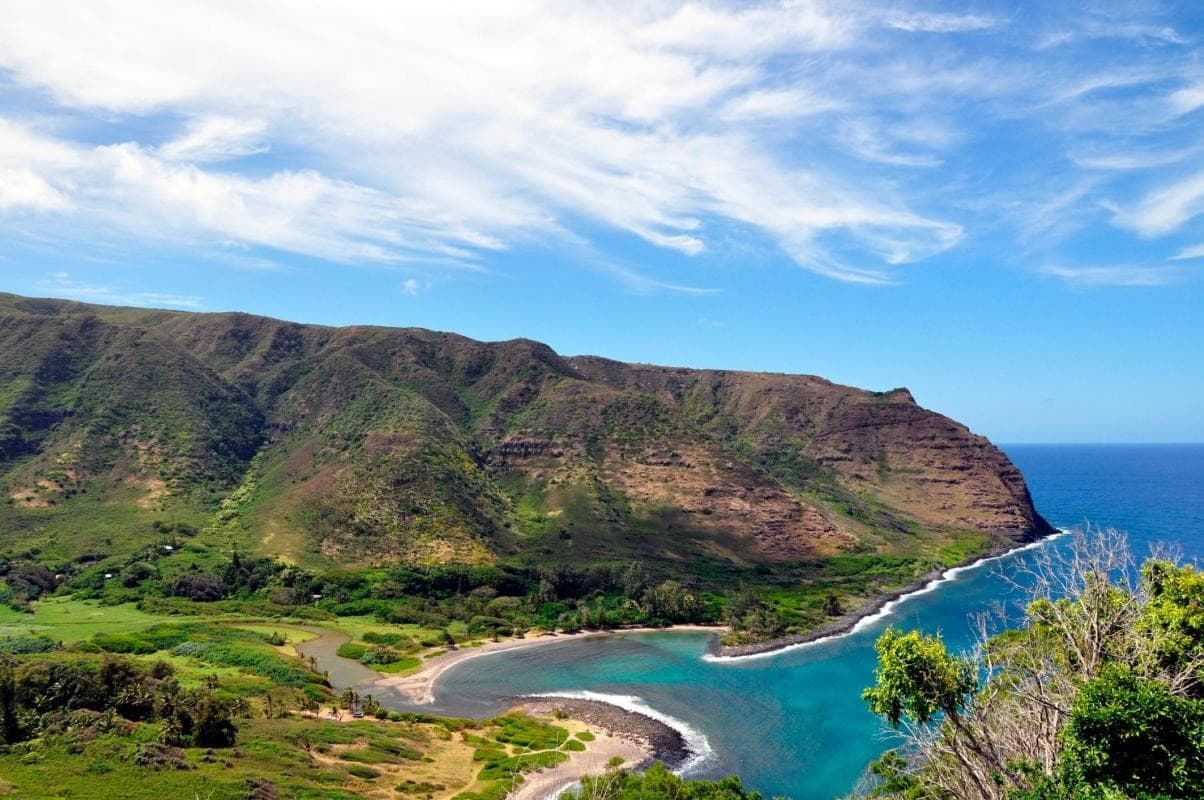
Molokai is the Hawaii most guidebooks whisper about. It’s not a luxury-resort postcard but a place that keeps its pace. From the air, the island’s most dramatic feature is impossible to ignore: the north shore sea cliffs, which rise to nearly 3,900 feet — among the tallest in the world. They are the result of an ancient, catastrophic collapse of East Molokai Volcano, a geological event that left a scarp of rock and a coastline that reads like a chapter of tectonics. The cliffs, the long white beaches to the west, and Halawa Valley’s pocket of rainforest and waterfall all make compelling scenes for any short flight from Maui.
History here is present in the landscape. Kalaupapa Peninsula, a low-lying spike on the north coast framed by those cliffs, is where the Kingdom of Hawai‘i exiled people with Hansen’s disease in the 19th century. The peninsula is now Kalaupapa National Historical Park, preserved for its difficult history and the work of Father Damien, the Belgian missionary who tended to the community. From the helicopter you can see the peninsula’s green lawns and the lonely shoreline where people once lived in forced isolation — a sober counterpoint to the island’s pastoral calm.
Molokai’s culture is less performative than in other islands. You’ll find Hawaiian language used casually, families who have lived there generations, and a working landscape of ranches and taro lo‘i (flooded fields) rather than chain restaurants and sprawl. Halawa Valley on the east end hosts guided hikes led by local cultural practitioners who narrate stories of ali‘i (chiefs), wahi kapu (sacred places), and plants used for canoe-making and medicine. Papohaku Beach, on the island’s west end, is a nearly three-mile swath of sand where wind and surf shape the day; it’s a place that insists you slow down.
The West Maui and Molokai 60-minute helicopter tour is calibrated to show you these contrasts: the knife-edged cliffs, the lonely Kalaupapa spit, Halawa’s waterfall, and the soft lowlands and beaches that give Molokai its “Friendly Isle” nickname. Flights usually depart from Maui, so plan to be lodging in West Maui towns like Lahaina or the Kahului area if you want a shorter transit. Expect pilot narration; sometimes, heli-mounted skids make for a defined vantage point, and crew will point out reefs, whale pods in season, and the locations of old villages.
Beyond the aerial view, the island invites a handful of focused adventures. Hike Halawa Valley with a local guide to reach a waterfall and learn about taro cultivation; rent a 4x4 or drive slowly to Papohaku for a beach day; take a cultural tour in Kaunakakai to meet local artisans. Remember that access to Kalaupapa is limited; park visits require arrangements through the National Park Service and are constrained to preserve the community and site sensitivity.
Practicalities: book the helicopter early for the best hours — morning flights tend to have smoother air and clearer light for photography. Window seats matter less in a small chopper than being on the side that faces the coastline; ask the operator which side gives the best views and double-check weight and baggage limits. Bring a small, securely fastened camera with a mid-range zoom (24–70mm or 24–105mm) for landscape shots; a longer lens is useful for marine life but can be unwieldy inside a heli.
Dress in layers and sunscreen. Even though you’ll be airborne, sun reflects from water and rock, and winds at altitude can be chilly. Molokai’s infrastructure is deliberately limited — fuel, groceries, and services are concentrated in Kaunakakai — so if you plan to land, pack essentials. Respect local rhythms: many businesses close early, and cultural tours require advance notice. Noise and traffic are real concerns for residents; keep your visit light on footprint, support local guides and eateries, and avoid drone use over sensitive sites.
Molokai rewards a certain kind of traveler: the curious who prefer depth over gloss, those who want to see the raw architecture of an island shaped by fire and water, and travelers who understand that quiet is a luxury. The helicopter tour is an efficient, spectacular way to place the island in context — a one-hour primer that seduces you into wanting to learn more, to set foot on the soil you’ve just admired from above.
If you go: book morning flights for clearer skies, combine the aerial tour with a Halawa Valley hike or a guided Kalaupapa visit (book early), and spend at least a night on the island if you can — the light at dawn and dusk over the cliffs is a different kind of hush you won’t get from a single flight.
Molokai doesn’t dazzle with the speed of Waikiki or the beachfront resorts of Maui, but from sixty minutes in the air you can see why many visitors choose to stay: the island is a ledger of Hawaiian history, a cathedral of cliffs and ocean, and a place that rewards slow attention.
Trail wisdom
Small choices, better day.
Book morning flights
Morning departures typically offer calmer air and clearer light for photos and smoother flying conditions.
Request the best side
Ask the operator which side of the aircraft gives the best views of Molokai’s north shore and Kalaupapa to secure the prime window seat.
Respect restricted sites
Kalaupapa access is controlled; do not plan independent landings there and follow National Park Service guidelines.
Pack light and secure
Bring a small camera with a neck strap and secure loose items — helicopter wind can send hats and lens caps flying.
Local knowledge
Read the place, not just the route.
Watch for native species including Humpback whale, Spinner dolphin.
Keep an eye out for wildlife during the transition between areas and habitats. Respect distance guidelines.
Molokai prioritizes low-impact tourism and community-led stewardship; visitors are asked to respect restricted areas, avoid drones over cultural sites, and support local enterprises.
Follow the guide's instructions on size limits, ethical handling, and leave-no-trace practices.
Halawa Valley guided hike with a local cultural practitioner. Papohaku Beach — long, often empty white-sand shoreline
Locally recommended viewpoints and quiet spots known best to local operators.
Molokai’s Kalaupapa Peninsula was the site of a 19th-century settlement for people with Hansen’s disease; Father Damien’s care there is a key part of the island’s history.
Maritime roots and regional tradition shape the waterways and working coasts.
Seasonal guide
Four versions of the same landscape.
Spring
Best forSmooth flying conditions · Waterfall flows in Halawa · Whale watching (late season)
ChallengesOccasional trade-winds · Tour bookings fill early
Spring offers stable trade winds, strong waterfall flows in the valleys, and lingering humpback activity offshore; it’s an excellent time for aerial clarity.
Summer
Best forCalmer seas · Long beach days at Papohaku · Fewer trade-wind clouds
ChallengesStronger sun and heat · Drier waterfalls
Summer brings warm, clear weather and perfect beach conditions, though some waterfalls and stream-fed features may diminish.
Fall
Best forPhotogenic light at golden hour · Shoulder-season crowds · Good surf viewing
ChallengesVariable trade winds · Possible rain in valleys
Fall balances clearer skies with sometimes gusty winds; colors are warm and crowds are thinner than summer.
Winter
Best forDramatic seas and surf · Peak whale season (Dec–Mar) · Powerful waterfall flows
ChallengesRougher seas and wind · Lower visibility on storm days
Winter delivers dramatic ocean conditions and strong valley waterfalls; flights are superb on calm days but more likely to be affected by storms.
Pack with intention
What to bring.
Good to know
Common questions.
The featured West Maui and Molokai tour is a 60-minute flight that covers West Maui, Molokai’s cliffs and Kalaupapa, with pilot narration.
Plan the edges
The details that make the day easier.
Molokai’s north shore sea cliffs rise to nearly 3,900 feet, formed by the catastrophic collapse of East Molokai Volcano — some of the tallest sea cliffs on Earth.
Molokai’s community is proud of its Hawaiian traditions — expect taro-based dishes, small family-run eateries serving fresh fish and poi, and local halau (hula schools) that preserve stories and chant. Support community guides and farmer stalls when possible.
- Duration
- 60-minute helicopter flight. Departure: Maui (West Maui area). Closest overnight base: Lahaina
- Kahului. Access
- helicopter or ferry; Kalaupapa requires NPS permits. Book early for morning windows.
Choose operators with noise-reduction practices, book guided cultural tours that pay locals directly, avoid drone filming over sensitive sites, and follow Leave No Trace principles in valleys and beaches.
Explore by topic
Follow the threads.
Keep exploring
Make the story part of the trip.
Set out from Bass Harbor for a private, customizable day on Blue Hill Bay — lighthouses, puffins, seals, and the chance to feel Acadia from the water. Small groups, local captains, unforgettable views.
In four hours you can move from shaded canyon ferns to wind-scoured coastal ridgelines, guided by someone who knows where the light—and the hidden views—live. This private half-day hike on the Monterey Peninsula or Big Sur is compact, curated, and perfect for travelers who want depth without a multiday commitment.
 Related story
Beneath a sky of shifting light, Skaftafell’s ice reads like a map of time. This three-hour guided glacier hike mixes technical instruction with geology and culture: compact, safe, and unforgettable.