
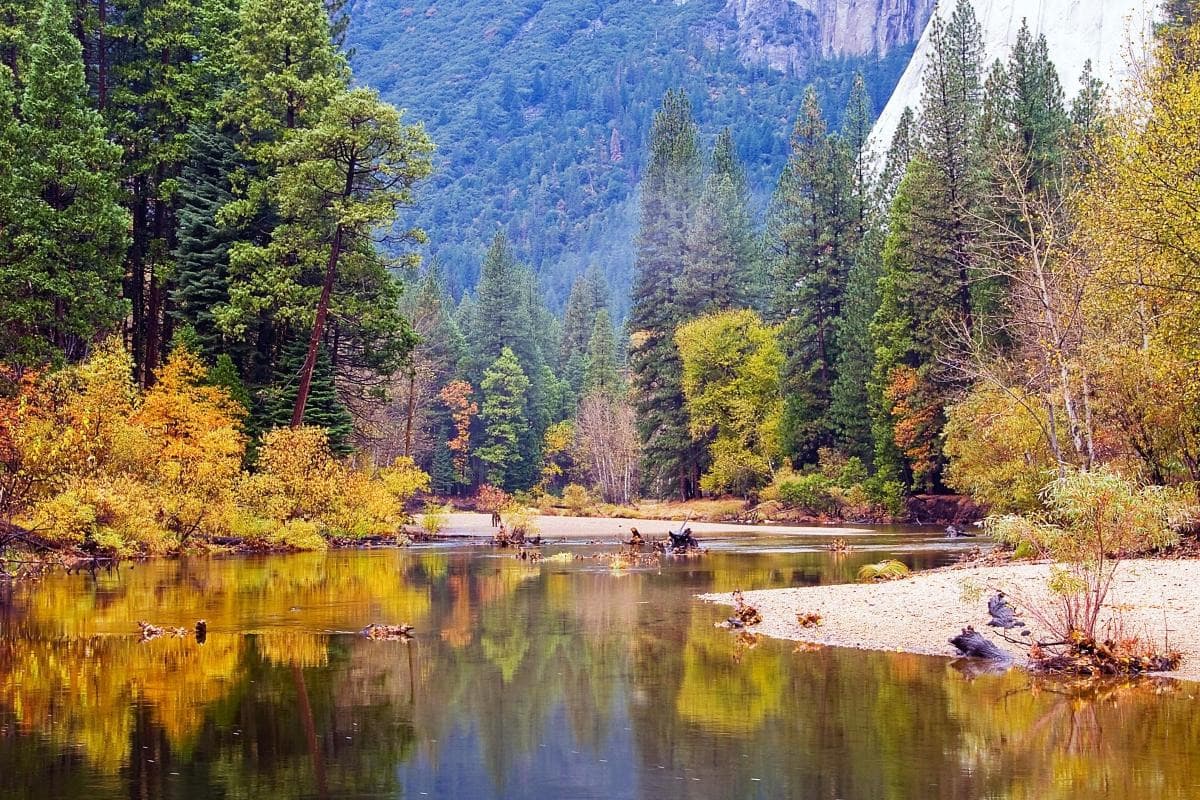
What the day feels like
The Merced River moves like a living seam through Yosemite: a narrow ribbon that swells with spring snowmelt, eddies through meadow and granite, and sings under bridges in the valley where visitors gather to watch light crawl across El Capitan. Step close enough and you can feel it—cold, relentless, insistent. It does not merely sit in the landscape; it shapes it, gouging channels, whispering through willows, and daring you to test its current at a shallow crossing.
On a first morning beside the Merced, the river announces itself with sound—the high, clean notes of water over cobble and the deep, bass resonance of a channel moving through bedrock. Walk the short, flat trails that trace the river through Yosemite Valley and you’ll pass campsites tucked into cottonwoods, fishermen standing patiently in hip-waders, and riffles where kids on summer weekends hop from stone to stone. Later in the season, the river’s pulse eases; in spring, it runs like a freight train made of melted Sierra snow, throwing spray off boulders and animating every waterfall that drains into it.
Geology and history are braided here. The Merced’s watershed originates high on the Sierra crest, its headwaters fed by the same snowpack that generated the glaciers that scoured Yosemite Valley into the U-shaped amphitheater you now admire. Glacial ice did the heavy carving; the Merced polished, carried, and deposited. Indigenous Ahwahnechee people stewarded these waters long before European contact, and today the river remains central to the park’s ecology and the visitor experience.
A practical visitor quickly learns that the Merced is many things at once: a place for trout fishing in calm spring-fed stretches; a corridor for classic Yosemite hikes such as the Mist Trail, which climbs beside the river’s tributary cascades toward Vernal and Nevada Falls; and, when flows permit, a stage for guided rafting that offers a different, lower-angle perspective on the valley walls. The valley’s campgrounds—Upper, Lower, and North Pines—sit within easy reach of the river, making dawn coffee on a riverbank an everyday luxury.
The river rewards both curiosity and caution. Fishing enthusiasts target rainbow and brown trout in quieter reaches—remember to buy a California fishing license and know seasonal regulations. Hikers can plan short riverside walks or longer excursions that gain elevation quickly; for instance, the Mist Trail to Vernal Fall is famously steep in portions and becomes mist-drenched in high runoff. For those seeking solitude, pocket tributaries and willow-fringed side channels offer quieter shoreline and birding opportunities.
Timing is everything. Visit in late spring—May to June—if you want the river at its theatrical best: roaring flows, full waterfalls, and a landscape electrified by wildflowers. Come in late summer for calmer water suitable for low-key wading, fishing, and reflective photography. Winter brings a hush and icy beads on the low branches, but some roads and facilities may be closed.
Practicalities: footwear that handles slick granite and stream crossings, layered clothing for wide diurnal swings, and an awareness of the river’s seasonal power are essentials. If you plan to fish, pack a valid California license and a selection of small nymphs and dry flies; river sections near Yosemite Valley respond to small-profile presentations. If you join a rafting trip or try a self-guided float (where permitted), choose a day with lower flow and follow park guidance—Merced currents can be deceptively strong.
Respect the river. Stay on designated trails to protect riparian vegetation, pack out everything you bring, and never enter swift water above your skill level. The river is as fragile as it is forceful: its health depends on snowpack, upstream management, and visitor behavior.
Why travel here? The Merced River is an elemental way to know Yosemite beyond its granite icons. It invites modest outdoor ambition: a sunrise paddle in calm eddies, an afternoon drift-walk listening for the American dipper’s tail-bobbing, a short hike that rewards with a thunderous waterfall. It’s a place where geology, history, and human rhythms converge, and where practical preparation yields uncommonly direct access to one of America’s most treasured landscapes.
Trail wisdom
Small choices, better day.
Respect seasonal flows
Spring snowmelt can make the Merced fast and hazardous—avoid entering the river during high runoff and watch for changing levels after storms.
Shoes with traction
Granite and wet cobble are slippery; wear shoes or boots with aggressive soles and consider neoprene river shoes for wading.
Pack a California fishing license
If you plan to fish, purchase a license beforehand and follow catch limits and seasonal regulations.
Early starts beat crowds
Set out at sunrise for calmer trails, better light for photography, and more river solitude.
Local knowledge
Read the place, not just the route.
Watch for native species including mule deer, river otter.
Keep an eye out for wildlife during the transition between areas and habitats. Respect distance guidelines.
River health hinges on snowpack and visitor behavior—stay on trails, pack out waste, and minimize shoreline disturbance to protect riparian habitats.
Follow the guide's instructions on size limits, ethical handling, and leave-no-trace practices.
Swinging Bridge for late-afternoon reflections and quieter river views. Short side channels and willow pockets along El Portal Road for birding and solitude
Locally recommended viewpoints and quiet spots known best to local operators.
The Ahwahnechee people lived along the Merced for generations; later, glacial carving and river processes shaped Yosemite Valley’s iconic cliffs and falls.
Maritime roots and regional tradition shape the waterways and working coasts.
Seasonal guide
Four versions of the same landscape.
Spring
Best forspectacular waterfalls · whitewater rafting (guided) · wildflowers
Challengeshigh, dangerous flows · slick trails and heavy mist near falls
Spring brings the Merced to full voice—dramatic flows and active waterfalls, but also hazardous currents and soggy trails.
Summer
Best forfishing and wading · camping by the river · flatwater paddling in shallow sections
Challengeslower water levels can expose hazards · crowds in Yosemite Valley
Warm, drier conditions make summer ideal for fishing and camping, though river flow drops and popular spots fill up.
Fall
Best forclear, crisp light for photography · quieter trails · catch-and-release trout fishing
Challengescooler nights and variable water temperature · shorter daylight hours
Fall calms the valley—flows moderate, foliage shifts, and the river settles into a measured rhythm.
Winter
Best forsnowy riverbank scenes · solitude and muted winter light
Challengesroad or facility closures · icy conditions and cold water temperatures
Winter renders the Merced stoic and quiet—beautiful but requiring winter travel skills and awareness of closures.
Pack with intention
What to bring.
Good to know
Common questions.
Swimming is possible in calm, shallow stretches but is risky during high runoff; always assess currents and avoid swimming near rapids or under waterfalls.
Plan the edges
The details that make the day easier.
The Merced River drains a large portion of the central Sierra Nevada and was integral—along with glacial action—in forming Yosemite Valley’s characteristic U-shape and its towering granite walls.
Yosemite Village offers ranger talks, a small selection of cafes and the Ansel Adams Gallery; local concession-run amenities connect visitors to interpretive programming and guides familiar with Merced River dynamics.
- Nearest major access
- Yosemite Valley (road access varies seasonally). Permits required for backcountry and campground reservations. Carry a California fishing license and observe river warnings during high runoff.
Minimize bank erosion by staying on trails, avoid building rock dams, use established campsites, and pack out all trash to protect riparian ecosystems.
Explore by topic
Follow the threads.
Keep exploring
Make the story part of the trip.
Set out from Bass Harbor for a private, customizable day on Blue Hill Bay — lighthouses, puffins, seals, and the chance to feel Acadia from the water. Small groups, local captains, unforgettable views.
In four hours you can move from shaded canyon ferns to wind-scoured coastal ridgelines, guided by someone who knows where the light—and the hidden views—live. This private half-day hike on the Monterey Peninsula or Big Sur is compact, curated, and perfect for travelers who want depth without a multiday commitment.
 Related story
Beneath a sky of shifting light, Skaftafell’s ice reads like a map of time. This three-hour guided glacier hike mixes technical instruction with geology and culture: compact, safe, and unforgettable.