
What the day feels like
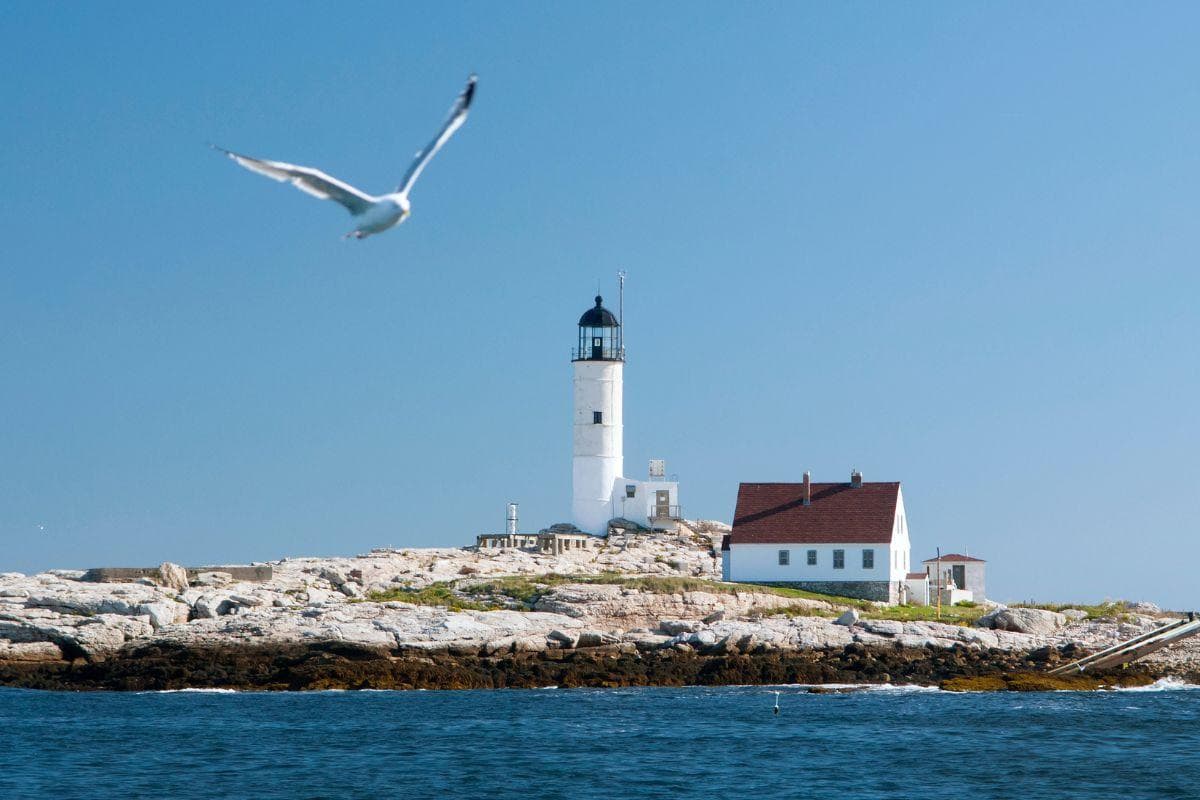
The ride out is the first chapter. The harbor at Portsmouth broadens and the city’s brick facades shrink into a line of red and white; gulls thread the wake like punctuation. In minutes the water begins to change—glass-steel reflections turn to quick, choppy swells, and the islands appear like the knuckles of an old mariner poking above the Atlantic. Up close, the Isles of Shoals are not a single thing but a cluster of personalities: broad, wind-puffed ledges that collect sun and seals; sheltered coves for studying limpets and sea stars; and low ridges holding the ghosts of fishermen’s cottages and lamp-lit lighthouses.
This archipelago, scattered roughly six miles off the Seacoast of New Hampshire and southern Maine, is both a living lab and a long-running story of human and natural history. The largest island, Appledore, hosts the Shoals Marine Laboratory, where students bundle in and descend with buckets and microscopes to study the intertidal surge. Other isles—Smuttynose, White, Gosport—carry quieter, older chapters: 19th-century fishing stations, folklore about shipwrecks and isolation, and in Smuttynose’s case, a notorious 1873 murder that has fed local legend ever since.
Granite and gneiss, shaped by glaciers and bored by the salt and wind, form the islands’ bones. But the textures are what hold your attention: tide pools rimmed in green and jewel-toned anemones; cliff faces foamed by spray where waves cast salt like confetti; and grasses bowed forever toward the prevailing west wind. The Isles are a compressed coastal ecology—seabird colonies, harbor seals hauled out on ledges, and the slow rhythms of tides that make and unmake beaches on an hourly schedule.
A visit here is necessarily maritime. Most island time is spent between boat and shore: short hikes on well-worn paths, sharp exposures to the elements, and close-up encounters with sea life that crowd tidal pools. Trails are short—think miles, not tens of miles—but the terrain is uneven, slick with algae, and often exposed; a one-mile loop might take you an hour if you keep stopping to peer into a pool or stand with binoculars watching a tern screaming along the breeze.
Culture and creativity thread through the Isles’ weathered stones. Appledore became a magnet for artists and writers in the 19th century—Celia Thaxter’s poems and garden on Appledore helped establish the islands’ mythic cachet—and later painters like Childe Hassam found the flat light and vivid seascapes irresistible. Today the islands combine that bohemian lineage with active scientific study; the Shoals Marine Laboratory brings students and researchers each summer, turning trails into classrooms.
Practicalities are part of the charm. There are no elaborate visitor centers—expect composting toilets, posted rules, and a small number of buildings clustered near landing sites. Land access is limited: some islands are privately owned or have seasonal restrictions for nesting birds. Most organized visitors arrive by boat from Portsmouth, Rye, or Kittery on scheduled ferries and charters. Because of the short distances, weather and tide are determinative; calm, clear days make the difference between a pleasant outing and a wet, crowded retreat.
What to do once you’re there: wander the shorelines at low tide to reveal intertidal microcosms; hike short ridgelines for panoramic sea views; listen for the barking of seals across a channel; join an interpretive walk with a naturalist or a historian if offered; and bring a camera for dramatic wide-angle seascapes at sunrise or late afternoon. Kayaking between close islands is possible in calm conditions but should only be attempted with local guidance—the currents can be trickier than they look.
Timing is everything. Late spring and summer deliver the liveliest wildlife: breeding terns, fledgling gulls, and the highest concentration of researchers and guided programs. Shoulder seasons offer moodier skies and fewer visitors, but the water is colder and charters run less often. Expect winds to be stronger in the afternoon and to drop near dawn and dusk—plan boat crossings accordingly.
Preparation is straightforward: sturdy slip-resistant shoes for rock-hopping, layered clothing for wind and sun, a waterproof shell, and a small daypack with water and snacks. Respect posted closures—bird nesting can close large swaths in early summer—and observe simple leave-no-trace rules: pack out what you pack in, avoid stepping on fragile algal mats, and keep a respectful distance from wildlife.
Why go? The Isles of Shoals compress coastal New England into a single, concentrated experience. It’s where natural history, maritime legend, and everyday science meet on a cluster of bare rocks. For travelers who want something beyond a postcard—contact with a living shoreline that demands curiosity and humility—the Isles are a place that rewards slow attention.
If you plan a trip, aim for an early ferry to catch the sea in its less boisterous state, carry binoculars and a tide chart, and lean into the islands’ small-scale pacing. Here, the ocean doesn’t merely provide a backdrop; it does the decisive work: scouring, shaping, and offering a relentless, honest kind of beauty. The Isles will let you study them if you show up ready to learn.
Trail wisdom
Small choices, better day.
Check tides before landing
Low tides reveal the best tidepooling and safer shoreline routes; incoming tides can narrow beaches and complicate landings.
Wear grippy shoes
Slick granite and algae-covered ledges require shoes with sticky rubber soles—avoid smooth-soled sneakers or flip-flops.
Bring sun and wind protection
Expose to sun and wind is constant—wide-brim hat, reef-safe sunscreen, and a windproof shell matter more than fashion.
Respect wildlife buffers
Bird colonies and seal haul-outs are sensitive—keep distance, don’t approach nesting areas, and follow posted closures.
Local knowledge
Read the place, not just the route.
Watch for native species including Harbor seals, Common and Arctic terns (seasonal).
Keep an eye out for wildlife during the transition between areas and habitats. Respect distance guidelines.
The islands include protected nesting habitats and research sites—visitors should stay on designated paths, avoid disturbing wildlife, and follow posted closures to reduce impact.
Follow the guide's instructions on size limits, ethical handling, and leave-no-trace practices.
Tidepools on the north side of Appledore exposed at low tide. Late-afternoon ledges on Smuttynose for quiet seal watching
Locally recommended viewpoints and quiet spots known best to local operators.
The Isles supported fishing stations for centuries and later became a 19th-century artists' and writers' colony; Appledore’s Celia Thaxter contributed to the islands’ literary legacy.
Maritime roots and regional tradition shape the waterways and working coasts.
Seasonal guide
Four versions of the same landscape.
Spring
Best forMigratory seabird watching · Fewer crowds
ChallengesCooler, changeable weather · Limited ferry schedules
Spring brings migratory birds and quiet trails; come layered and expect brisk mornings and variable sea conditions.
Summer
Best forMarine lab programs and guided walks · Warmest water and longest days
ChallengesNesting bird closures · Higher visitor numbers
Summer is the busiest and most biologically active season—ideal for tidepooling and interpretive trips but plan for restricted areas.
Fall
Best forMoody seascapes and photography · Fewer tourists
ChallengesColder water and wind · Shorter daylight
Fall delivers dramatic skies and quieter islands; bring warm layers and expect earlier ferry cutoffs as the season wanes.
Winter
Best forStorm-watching from shore (with a safe operator) · Solitude
ChallengesLimited or no regular boat service · Very rough seas and cold temperatures
Winter visits are rare and weather-dependent; most operators suspend regular runs and many facilities close for the season.
Pack with intention
What to bring.
Good to know
Common questions.
Most visitors reach the islands via scheduled ferries or private charters from Portsmouth, Rye, or Kittery; check local operators for seasonal schedules and departure points.
Plan the edges
The details that make the day easier.
The Shoals Marine Laboratory on Appledore Island, operated by Cornell University and the University of New Hampshire, has run summer research and education programs since 1966.
Portsmouth’s maritime restaurants and fish houses provide a proper send-off and return—lobster rolls and fried clams are local standards—while galleries and historic walking tours in town pair well with an Isles day trip.
- Departure
- Portsmouth
- Kittery; Duration
- half-day–full-day; Facilities: minimal (toilets, few shelters); Access: ferry or private charter; Permits: check for nesting closures and private-island restrictions.
Minimize disturbance by staying on trails and off nesting areas, pack out all trash, use reef-safe sunscreen, and choose operators who follow wildlife-friendly viewing practices.
Explore by topic
Follow the threads.
Keep exploring
Make the story part of the trip.
Set out from Bass Harbor for a private, customizable day on Blue Hill Bay — lighthouses, puffins, seals, and the chance to feel Acadia from the water. Small groups, local captains, unforgettable views.
In four hours you can move from shaded canyon ferns to wind-scoured coastal ridgelines, guided by someone who knows where the light—and the hidden views—live. This private half-day hike on the Monterey Peninsula or Big Sur is compact, curated, and perfect for travelers who want depth without a multiday commitment.
 Related story
Beneath a sky of shifting light, Skaftafell’s ice reads like a map of time. This three-hour guided glacier hike mixes technical instruction with geology and culture: compact, safe, and unforgettable.