
What the day feels like
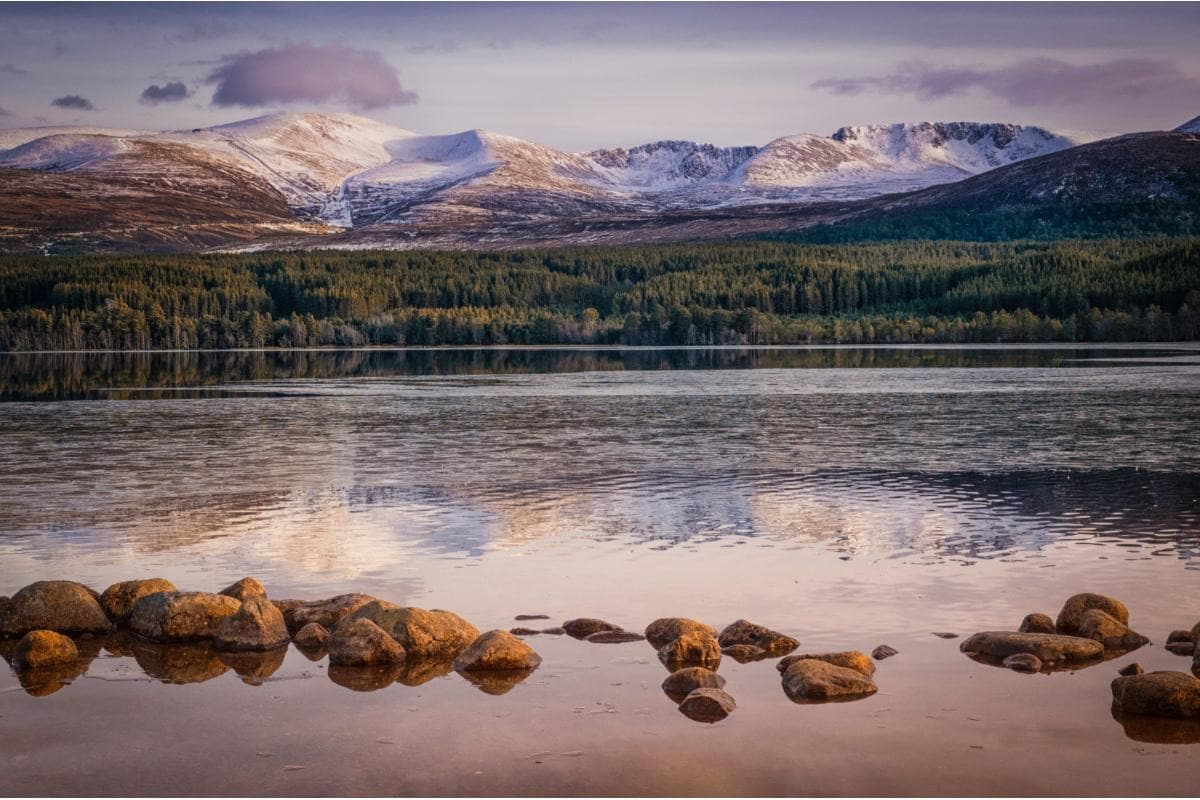
The wind wakes you before the loch does. It sweeps down from the Cairngorms—cold, clean, and honest—ruffling a lake that, at first glance, looks more like a northern sea. Loch Morlich’s wide, pale-sand shoreline cups the water in a crescent beneath the great shoulder of Cairn Gorm. Behind you, a belt of Caledonian pine leans into the slope, their trunks a dark, steady chorus against the bright open sky. Ahead, the mountains hold the horizon: humps of tors, ridges bruised with late-morning shadow. It’s a place that asks you to slow down and pick a way to move—paddle, stroll, climb, or simply sit and let the wind outline the day.
Loch Morlich is not a postcard novelty; it’s geography and history stepping into one another. The loch sits inside Glenmore Forest Park and Cairngorms National Park, on land carved and scoured by ice during the last glaciation. The sandy beach is a product of meltwater and sediment trapped as glaciers retreated, and the surrounding Scots pines are remnants of the ancient Caledonian forest—an ecosystem that once stretched across much of northern Scotland. Historically, this landscape threaded together clan routes, deer stalking estates, and later, Victorian-era outdoor tourism. Today, the area is a practical playground for outdoor enthusiasts and a living classroom about Scotland’s wild heart.
What makes Loch Morlich special is its combination of elements: a lake big enough to host serious wind, a sheltered shoreline for beginners, and a forest with a network of easy trails that connect to higher mountain routes. In summer you’ll see families trying stand-up paddleboards and learners in bright spraytops on sheltered water, while kiters and windsurfers find gusty corners along the open loch. On land, there are loop walks that trace the shoreline (roughly 4–6 miles depending on your route), short climbs into the forest for better views, and longer approaches up into the Cairngorms if you’re after elevation and alpine terrain.
The activities available around Loch Morlich fit the place as naturally as the pines. Guided walking tours through the Cairngorms often stop here for a beach stretch, coffee, and a chance to stretch legs after viewing Ruthven Barracks, Loch an Eilein, or the Highland Folk Museum. Private discovery walks take you deeper into Glenmore’s quieter trails, where red squirrels bounce and rare capercaillie hide in the deep duff of the pines. On the water, rental centers near the beach make kayaking and paddleboarding accessible; for wind-driven sports, the loch’s open fetch is an honest tutor—safety briefings and wetsuits recommended.
Practicalities are straightforward, but the elements are not to be underestimated. Weather in the Cairngorms changes fast: a bright-starting summer day can turn windy and wet in an hour. Footwear should be solid—trail shoes for the shoreline path, waterproof boots if you push into the forest, and neoprene or a drysuit if you intend to spend time on the water. Even summer water temperatures are cold enough to make immersion serious; for watersports, wear a wetsuit or buoyant dry layers and carry a whistle and means to call for help.
If you’re planning a day: aim for morning to snag calmer water for a SUP or kayak, or late afternoon for softer light and fewer people on the beach. A popular shoreline loop is family-friendly—mixed sand and compact trail, minimal elevation gain (think under 100 meters), and plenty of spots to stop for a picnic. For a half-day push, take the steepish track up through the forest toward Ryvoan Pass and the Lochan Uaine (the Green Loch) for a quieter alpine pond and tree-framed views of the corries above.
Wildlife is part of the rhythm here—red squirrels are a near-daily sight in Glenmore, ospreys fish on summer days at nearby lochs, and if you’re very lucky and very quiet you may glimpse deer feeding at the forest edge. Culturally, the village of Aviemore, a short drive north, is the natural base: welcoming pubs, bakery stops, and local distilleries where a dram or two rounds off a day of wind, water, and walking.
For first-time visitors, a few honest tips: respect the wind (it will push you and it will pull you), dress in layers, and assume the water is much colder than it looks. Bring small cash for the farm shops and distillery tastings on the way back, and if you have time, pair the beach with a short excursion to the Cairngorm Mountain funicular for a high, panoramic view that explains why the high peaks look the way they do.
Loch Morlich is an invitation: to learn a new paddle skill, to walk beneath a fossil forest of pines, to feel how mountain air tastes against saltless sand. It’s approachable but honest, friendly but capable of humbling you with weather. Come prepared, choose how you’ll move, and let this mountain beach reveal why the Cairngorms are more than a backdrop—they’re the reason people keep coming back.
Trail wisdom
Small choices, better day.
Start early for calm water
Morning wind tends to be lighter—ideal for paddleboarding and beginner kayakers; afternoons often see stronger gusts.
Layer for variable weather
Bring breathable base layers and a waterproof shell; temperatures can drop quickly at higher elevations.
Respect cold water hazards
Even in summer, immersion risk is real—use a wetsuit for watersports and wear a buoyancy aid.
Protect the pinewood
Stick to marked trails and avoid disturbing ground vegetation to preserve fragile Caledonian forest regeneration.
Local knowledge
Read the place, not just the route.
Watch for native species including Red squirrel, Osprey.
Keep an eye out for wildlife during the transition between areas and habitats. Respect distance guidelines.
Local groups work to restore Caledonian pinewood and manage visitor impact; follow marked trails and avoid disturbing regeneration areas to help conservation.
Follow the guide's instructions on size limits, ethical handling, and leave-no-trace practices.
Lochan Uaine (Green Loch) via Ryvoan Pass – a small, emerald-colored pond framed by pines.. Forest paths behind the beach leading to quieter sheltered coves and picnic spots.
Locally recommended viewpoints and quiet spots known best to local operators.
Loch Morlich sits within Glenmore Forest Park and the Cairngorms National Park; the landscape shows clear glacial shaping and has long been part of Highland travel and estate history.
Maritime roots and regional tradition shape the waterways and working coasts.
Seasonal guide
Four versions of the same landscape.
Spring
Best forWildflower displays · Birdwatching (migratory species)
ChallengesUnpredictable rain and wind · Cold water temperatures
Spring brings fresh green shoots across the Caledonian pines and active birdlife—pack waterproofs and expect fresh, cool conditions.
Summer
Best forPaddleboarding and kayaking · Family beach days
ChallengesHigher visitor numbers · Strong afternoon winds
Summer is peak activity season: warm days, accessible watersports, but plan early to avoid crowds and midday gusts.
Fall
Best forAutumn color in the pines · Quiet hiking
ChallengesShorter daylight hours · Chiller temperatures aloft
Fall’s golden light makes the beach and forest glow; cooler mornings and longer shadows reward early starts.
Winter
Best forSnow-dusted mountain views · Peaceful solitude
ChallengesIcy trails and deep snow at elevation · Limited services
Winter offers dramatic, empty landscapes; take crampons and extra caution if venturing into higher ground.
Pack with intention
What to bring.
Good to know
Common questions.
Yes, but beware that water is cold year-round and weather can change quickly; if swimming, stay close to shore and use a wetsuit for added safety.
Plan the edges
The details that make the day easier.
Loch Morlich lies within Cairngorms National Park, the UK’s largest national park, established in 2003.
Aviemore’s cafés and pubs offer hearty Highland fare—local venison, oatcakes, and a strong dram from nearby distilleries make for a satisfying post-adventure meal; Rothiemurchus farm shop nearby is great for local produce.
- Closest town
- Aviemore (5–10 minute drive); parking at Glenmore; basic facilities on site; watersports rentals seasonally available; part of Cairngorms National Park—follow Code of Conduct for wild camping and hiking.
Stick to trails, pack out all litter, avoid single-use plastics on the beach, and support local guides and outfitters who contribute to forest restoration and wildlife monitoring.
Explore by topic
Follow the threads.
Keep exploring
Make the story part of the trip.
Set out from Bass Harbor for a private, customizable day on Blue Hill Bay — lighthouses, puffins, seals, and the chance to feel Acadia from the water. Small groups, local captains, unforgettable views.
In four hours you can move from shaded canyon ferns to wind-scoured coastal ridgelines, guided by someone who knows where the light—and the hidden views—live. This private half-day hike on the Monterey Peninsula or Big Sur is compact, curated, and perfect for travelers who want depth without a multiday commitment.
 Related story
Beneath a sky of shifting light, Skaftafell’s ice reads like a map of time. This three-hour guided glacier hike mixes technical instruction with geology and culture: compact, safe, and unforgettable.