
What the day feels like
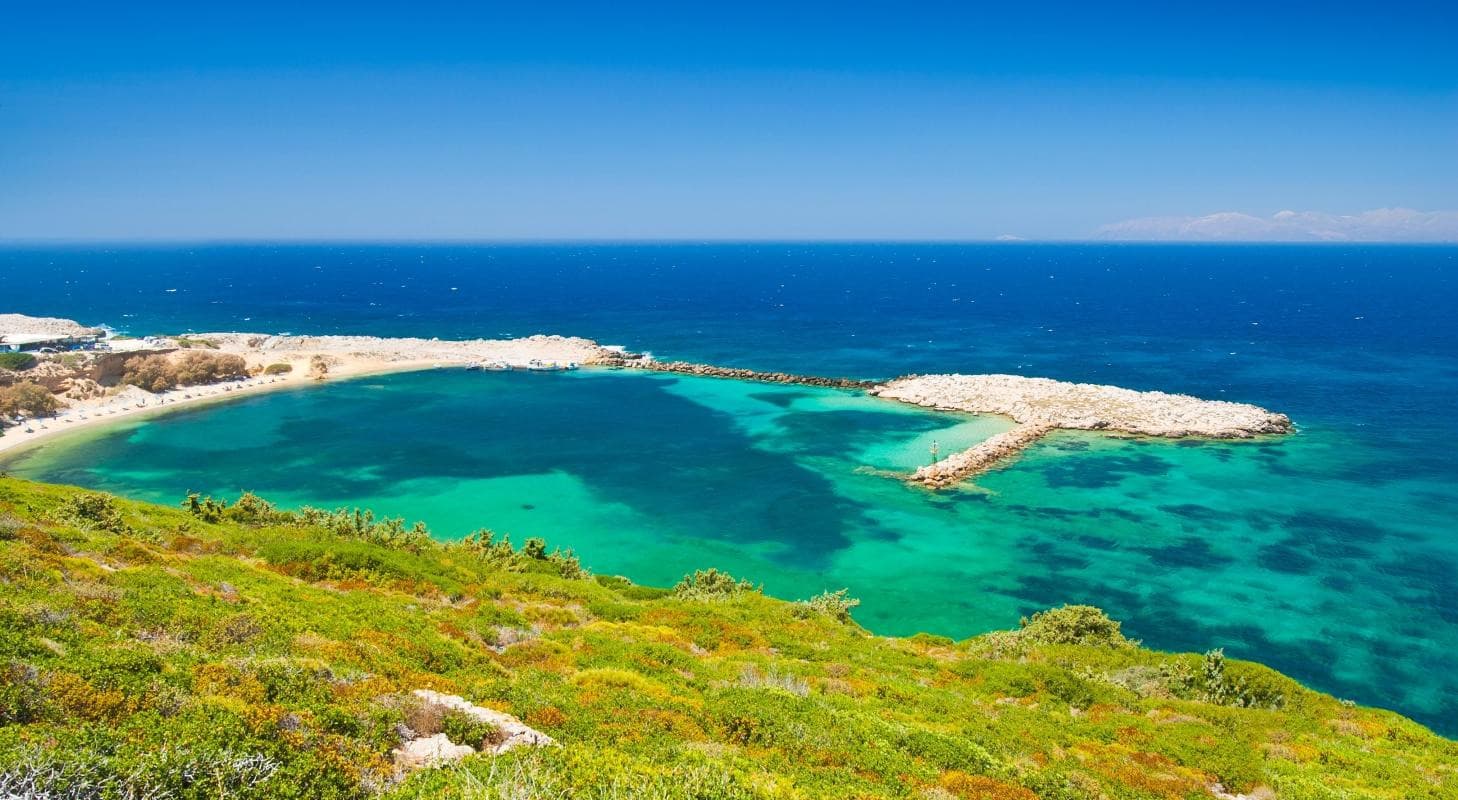
The sea here is precise — a cool, unhurried blue that rolls into a narrow cliff-walled inlet and asks you to slow down. You step down a short stone stair into a pocket of water that feels private, even on an island where the coastline has been grazed by centuries of travelers. Sunlight picks out the white veins in the limestone; the wind toys with sailboats at the cove mouth; the taverna’s wood smoke and lemon-scented grilling float up from the rocks. This is Limnionas Beach, a taught, honest day by the sea on the southwest edge of Kos, and the sort of place that rewards the curious — those who came for the water but stay for the landscape and the food.
Approaching Limnionas often happens as part of a circuit. A full-day jeep safari from Kos passes Plaka’s umbrella pines and the honey-laden stalls of the Honey Museum before climbing to Agios Ioannis Chapel. From the chapel, the coastline opens like a map: Cavo Paradiso’s broad sand, then the narrow, protected lip of Limnionas — a natural bowl hewn by waves and time. The jeep and the beach feel like complementary experiences: the vehicle helps you read the island inland — soils, stone walls, beekeepers, and chapels — while the bay gives Kos’s geology and coastal history a quiet endpoint.
Geology is legible here. Limnionas sits where Miocene limestone meets the Aegean; vertical faces and flat rocky shelves are the fingerprints of uplift and erosion, and the shore is more platform than beach. You won’t find long ribbons of sand; instead there are flat sunbathing ledges and small, pebbly coves where the water is startlingly clear. That clarity comes from the rocky seabed and minimal river runoff. The water has a personality — it invites contemplative floating and deliberate snorkeling rather than crashing play.
Kos itself is layered with history. The island is ancient, once a crossroads of Greeks, Romans, Byzantines and Ottomans; the physician Hippocrates is said to have taught here. Those histories are visible in small ways: a ruined wall on a hill, the chapel above Limnionas with views that could be strategic watchposts of another age, and the traditional architecture in the villages you pass on the jeep route. Culture is local and immediate: beekeepers tending hives in Plaka Forest, fishermen mending nets, and tavern owners who know each regular by name and how they like their grilled fish.
Why go? Limnionas is a lesson in economy. It’s not about a broad-tourist beach party; it’s about the precise pleasures of clear water, dramatic cliffs, and uncomplicated food. Combine it with the jeep safari and the day becomes a compact version of Kos: inland shade and forest scent, a lesson in beekeeping and local production, a panoramic chapel stop, then the reward of salt, sun, and a long lunch at a seaside taverna.
Practicalities are straightforward. From Kefalos village, Limnionas is a short drive (10–20 minutes on narrow coastal roads); from Kos Town expect 45–60 minutes. If you arrive by jeep tour, the vehicle deposits you at the cove, and the taverna often has a small mooring area for the local fishing boats. The approach down to the water is via stone steps and flat rock; bring footwear with grip if you plan to scramble the ledges. The sea shelves drop quickly in places, so non-swimmers should stick to shallow spots and lifejackets if offered.
Timing matters. Arrive early for calm water and fewer day-trippers; late afternoon brings softer light over the cliffs and cooler breezes. Summer (June–September) is reliably warm with calm seas, though July–August can be crowded island-wide — Limnionas still feels quieter than larger beaches. Spring brings wildflowers inland and pleasantly warm water for the brave; autumn offers warm seas with thinning crowds.
On the plate, expect grilled fish and a focused menu of local dishes — squid, octopus, Greek salad, and bread washed down with local wine. The jeep safari’s stop for honey is more than a gimmick: the island’s thyme and pine produce distinct, floral honey, and pairing that with local cheese is a small revelation.
Safety and etiquette are simple but important: respect the rocks — they’re sharp when wet — and treat local facilities with care; many of the small tavernas are family-run and rely on seasonal business. Conserve water and bring refillable bottles; the island’s resources are finite, and the locals notice waste. If you snorkel, avoid touching the seabed; the ecosystems are fragile and the clarity is part of what makes Limnionas special.
If you’re thinking logistics: combine Limnionas with a half- or full-day land route that includes Plaka Forest and the Honey Museum to get both the island’s inland and coastal stories. Pack basic snorkel gear, reef shoes, and a sun layer. Plan for a long lunch at the water’s edge — the taverna here turns sitting into part of the itinerary.
Limnionas is the kind of place that rewards attention. It doesn’t shout. Instead it hands you cool water, a clean horizon, a handful of rocks to climb, and a single taverna that will make a simple meal into a memorable punctuation mark. In a way, the cove is Kos in miniature: geological clarity, layered human history, small-scale food culture, and an invitation to slow down. For travelers who want a day on the water that’s anchored in place — and who appreciate the extra context of a jeep circuit through honeyed forests and chapel-swept ridgelines — Limnionas is the quiet, accurate choice.
Trail wisdom
Small choices, better day.
Wear reef shoes
The shoreline is rocky and can be sharp; reef shoes protect your feet both on approach and while swimming.
Time your visit
Arrive early to enjoy calmer water and fewer visitors; late afternoon offers softer light and cooling breezes.
Bring snorkeling basics
Water is clear and the rocky seabed is interesting — even a simple mask and snorkel enhance the visit.
Respect the taverna
The seaside eatery is family-run; plan to eat there if you use their facilities and arrive hungry for grilled fish.
Local knowledge
Read the place, not just the route.
Watch for native species including Mediterranean geckos and lizards, various coastal seabirds such as herons and gulls.
Keep an eye out for wildlife during the transition between areas and habitats. Respect distance guidelines.
The cove’s clarity depends on limited runoff and careful local stewardship; avoid single-use plastics and respect marine life to help preserve the bay.
Follow the guide's instructions on size limits, ethical handling, and leave-no-trace practices.
Plaka Forest picnic spots beneath umbrella pines. Agios Ioannis Chapel viewpoint for a coastal panorama
Locally recommended viewpoints and quiet spots known best to local operators.
Kos has ancient roots — famously associated with Hippocrates — and local chapels and farm terraces reflect a layered history of island life.
Maritime roots and regional tradition shape the waterways and working coasts.
Seasonal guide
Four versions of the same landscape.
Spring
Best forwildflowers inland · quiet snorkels · cool hikes
Challengessea may be cooler · some services open seasonally
Spring brings blooming hillsides and pleasant temperatures — water can still be brisk but the coast is peaceful.
Summer
Best forswimming · long beach lunches · calm seas
Challengespeak crowds in July–August · strong sun exposure
Summer is ideal for warm water and predictable weather; arrive early to avoid crowds and midday heat.
Fall
Best forwarmer sea after summer · fewer tourists · golden light photography
Challengesoccasionally windier days · reduced services late in season
Autumn keeps the sea warm and the crowds thin — a great shoulder-season choice for relaxed visits.
Winter
Best forshort coastal hikes · off-season cultural exploration · wild storm watching
Challengescooler temperatures · many beachfront businesses closed
Winter is quiet and dramatic; the bay is atmospheric but swimming is seldom comfortable and amenities may be limited.
Pack with intention
What to bring.
Good to know
Common questions.
Limnionas is about a 45–60 minute drive from Kos Town by car; organized jeep safaris often include it as a late-day stop.
Plan the edges
The details that make the day easier.
Kos is traditionally considered the birthplace of Hippocrates, the father of Western medicine — the island has been a cultural and medical center since antiquity.
Local honey, grilled seafood, and small chapels define the rhythm here — stop at the Honey Museum en route and taste thyme-infused honey with local cheese for a true island bite.
- Nearest base
- Kefalos (10–20 min drive); facilities: small taverna and basic amenities; best access: by car or organized jeep safari; payment: cash preferred at small vendors.
Support family-run tavernas and local producers, carry reusable bottles, and avoid anchoring on sensitive seabeds — these small actions preserve Limnionas’s clarity and charm.
Explore by topic
Follow the threads.
Keep exploring
Make the story part of the trip.
Set out from Bass Harbor for a private, customizable day on Blue Hill Bay — lighthouses, puffins, seals, and the chance to feel Acadia from the water. Small groups, local captains, unforgettable views.
In four hours you can move from shaded canyon ferns to wind-scoured coastal ridgelines, guided by someone who knows where the light—and the hidden views—live. This private half-day hike on the Monterey Peninsula or Big Sur is compact, curated, and perfect for travelers who want depth without a multiday commitment.
 Related story
Beneath a sky of shifting light, Skaftafell’s ice reads like a map of time. This three-hour guided glacier hike mixes technical instruction with geology and culture: compact, safe, and unforgettable.