
What the day feels like
Steam rises from the valley like an exhale, a slow, mineral-scented breath that hangs in the cool mountain air. You stand on a narrow rainforest ridge above Laudat, the island’s green throat, and a blue-gray mist curls through the tree canopy below—smoke from fumaroles, the earth’s low voice. The trail ahead drops into wet leaf litter and braided roots, then leans up toward ridgelines that look out over thunderheads and the Caribbean horizon. This is Dominica’s interior: raw, steam-driven, and insistently alive.
Laudat is the gateway—a small village tucked into the Roseau Valley at the edge of Morne Trois Pitons National Park and within strolling distance of the hot springs and waterfalls that mark the park’s geothermal heart. But the destination that pulls most trekkers to Laudat is the Boiling Lake, the second-largest boiling lake in the world and a place that feels both geological oddity and elemental spectacle. Getting there isn’t a stroll; it’s a full-sensory hike that threads rainforest, river crossings, volcanic badlands and the Valley of Desolation before the trail opens on a sheet of vapor and a simmering, slate-gray pool.
Dominica’s geology is straightforward in its drama: an island carved by volcanic action, lifted and folded, then sculpted by water. The Boiling Lake sits in a collapsed fumarole within a collapsed caldera; its heat is fed by a shallow geothermal system that also fuels hot springs and geyser-like vents. UNESCO recognized Morne Trois Pitons as a World Heritage site for this combination of rainforest complexity and active geothermal features—a patchwork of jungle, rivers, hot springs and endemic species that survive in precarious harmony.
Culturally, Laudat is modest and locally anchored. The town’s relationship with the landscape is practical—agriculture, small-scale hospitality, guiding—and spiritual: many locals speak of the land with reverence, and community guides have long been the keepers of safe passage up these steamy slopes. The Waitukubuli National Trail, Dominica’s 185 km backbone, threads communities like Laudat into a larger story—coastal walks to mountain ridgelines, a walkable biography of the island.
On the trail the forest feels like a character with moods. At first it’s a patient host—mossed roots and orchids, a chorus of birds—then it grows more volcanic, scraping away the green with sulfurous vents and bare, gravelly ground as you near the Valley of Desolation. Rivers will test you: rocky crossings that shift with the season. For many hikers the final reveal—steam rising at the lip of a boiling, churning pool—lands with a kind of stunned hush. There’s no animating narrative here beyond the earth doing what it does best: heat, bubble, and shape everything around it.
Practically: the standard hike to Boiling Lake from Laudat is a challenging day trip. Expect roughly 13–16 km (8–10 miles) round-trip and 6–9 hours on trail depending on pace and weather, with 600–900 meters (2,000–3,000 ft) of cumulative ascent. Trails are uneven and often muddy; river crossings and steep stair-like sections are common. In short: bring good footwear, stay hydrated, and hire a local guide if you’re not confident in tropical mountain trails. Local guides aren’t just a luxury—they know route conditions, where to ford rivers safely, and how to interpret shifting trail markers in dense forest.
Timing matters. Start early—pre-dawn departures from Laudat are common—because afternoon thunderstorms are frequent in the Caribbean interior, and visibility drops quickly in mist. The dry season (roughly December through April) provides the most stable conditions; the hurricane season and heavier rains (roughly June–November) bring swollen rivers and slippery slopes. Dress in layers—mountain mornings can be cool while the rainforest holds heat and humidity—and bring a waterproof shell for sudden showers.
The Boiling Lake experience pairs well with other island hikes. For multi-day adventurers the Waitukubuli Trail offers an extended way to read Dominica’s landscapes, village life, and coastal edges over 17 days, and shorter sections can be woven into a longer exploration of the island. Back in Laudat, reward comes in small things: a hot cup of mountain coffee, a plate of Creole stewed saltfish, and the friendly practicality of hosts who know the land.
Safety and stewardship are inseparable here. Stay on marked paths; geothermal areas are unstable and hot pools can be scalding. Respect local guide advice about crossings and route choices. Dominica’s ecosystems are fragile—composting soils under the rainforest canopy don’t recover quickly from trampling—so Leave No Trace principles aren’t theoretical; they’re necessary.
Why walk here? Because Laudat and the Boiling Lake are an education in contrasts: the rainforest’s hush against the lake’s loud steam; a quiet village that serves as the portal to volcanic spectacle. For hikers who like technical trails but also crave natural wonder—an encounter with a world that still feels a bit raw—this is one of the Caribbean’s most authentic mountain experiences. Plan well, hire local expertise, and bring patience; the island will repay you with vistas, geology, and a primal sense of place that lingers long after you’ve dried out your socks by the guesthouse fire.
Trail wisdom
Small choices, better day.
Start before sunrise
Depart Laudat early to avoid afternoon storms and to give yourself ample daylight for river crossings and slow sections.
Hire a local guide
Guides know river fords, trail markers, and safe routes around geothermal vents—vital for safety and local economy.
Wear grippy boots
Expect muddy slopes and uneven roots; waterproof hiking boots with good tread make the day far more comfortable.
Hydrate and carry snacks
Plan for 6–9 hours on trail—bring 2–3 liters of water and calorie-dense snacks for energy on steep climbs.
Local knowledge
Read the place, not just the route.
Watch for native species including Sisserou parrot (Amazona imperialis) – endemic and elusive, Dominica anole and other rainforest lizards.
Keep an eye out for wildlife during the transition between areas and habitats. Respect distance guidelines.
Trails are managed within a national-park framework; hiring local guides and staying on marked tracks helps preserve fragile soils and endemic species.
Follow the guide's instructions on size limits, ethical handling, and leave-no-trace practices.
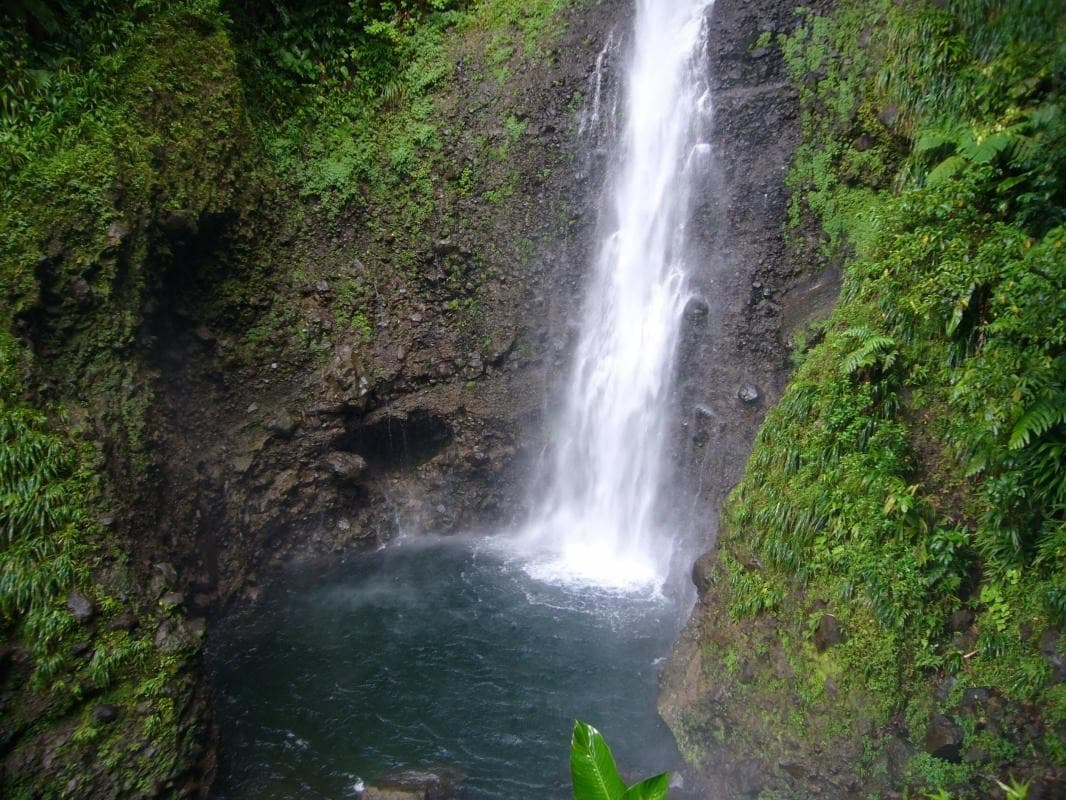
Trafalgar Falls—two dramatic cascades a short drive from Laudat. Natural hot pools near Laudat for a restorative soak after hiking
Locally recommended viewpoints and quiet spots known best to local operators.
Morne Trois Pitons National Park was designated a UNESCO World Heritage Site for its exceptional volcanic landforms and biodiversity, protecting this landscape and its communities.
Maritime roots and regional tradition shape the waterways and working coasts.
Seasonal guide
Four versions of the same landscape.
Spring
Best forwildflower blooms · moderate trail conditions · fewer crowds
Challengesintermittent showers · muddy sections early in the season
Spring (Mar–May) brings warming days and floral life; trails can be soft but generally stable—good weather windows are common.
Summer
Best forlush rainforest · birdwatching · extended daylight
Challengesheavy rainfall · hot, humid conditions · higher river levels
Summer (Jun–Aug) is verdant and vibrant but wetter—expect sticky humidity and faster river flows after storms.
Fall
Best fordramatic skies · off-peak travel · intense greenery
Challengeshurricane season risk (Sep–Nov) · unpredictable weather
Fall can be spectacular but carries hurricane-season volatility—monitor forecasts and plan flexible travel days.
Winter
Best fordrier trails · clearer vistas · stable conditions
Challengescooler mountain mornings · higher demand in peak season
Winter (Dec–Feb) is the island’s drier period and often the best window for a reliable Boiling Lake hike.
Pack with intention
What to bring.
Good to know
Common questions.
Expect about 13–16 km (8–10 miles) round-trip, typically 6–9 hours depending on pace and conditions.
Plan the edges
The details that make the day easier.
Boiling Lake is the second-largest boiling lake in the world and the only one of its size in the Caribbean; it sits within the Morne Trois Pitons UNESCO World Heritage site.
Laudat’s small guesthouses serve mountain-grown coffee and Creole dishes—try stewed saltfish or mountain provisions—and guides often double as cooks and storytellers, linking trail lore to local life.
Support local guides and accommodations, pack out waste, and avoid bathing in fragile geothermal pools to protect endemic species and delicate soil structures.
Explore by topic
Follow the threads.
Keep exploring
Make the story part of the trip.
Set out from Bass Harbor for a private, customizable day on Blue Hill Bay — lighthouses, puffins, seals, and the chance to feel Acadia from the water. Small groups, local captains, unforgettable views.
In four hours you can move from shaded canyon ferns to wind-scoured coastal ridgelines, guided by someone who knows where the light—and the hidden views—live. This private half-day hike on the Monterey Peninsula or Big Sur is compact, curated, and perfect for travelers who want depth without a multiday commitment.
 Related story
Beneath a sky of shifting light, Skaftafell’s ice reads like a map of time. This three-hour guided glacier hike mixes technical instruction with geology and culture: compact, safe, and unforgettable.