
What the day feels like
You crest Kuiseb Pass at dawn and the world changes. The road, a ribbon of pale gravel, peels away from the cold Atlantic fog-swathed coast and climbs into an austere amphitheater of rock and wind-sculpted sand. Below, the Kuiseb River carves a dry, braided line; above, dinosaur-red sand dunes edge away like a tide frozen mid-crest. The pass is less a single attraction than a seam—where ocean-cooled air meets the dry, ancient pulse of the Namib, and where landscapes shift so abruptly they make you reassess scale.
Kuiseb Pass sits on the C14 between Walvis Bay and the Namib’s interior. Travelers on self-drive adventures and guided circuits—routes featured in itineraries such as 5 Day Guided Tour of Namibia Sossusvlei to Swakopmund and the 10 DAYS BEAUTY OF NAMIBIA | Guided Lodge—use the pass as a threshold. The road here was carved during the early 20th century to link coastal ports and inland farms; today it’s a corridor for photographers, overlanders, and anyone drawn to the idea that a single drive can contain so many ecosystems.
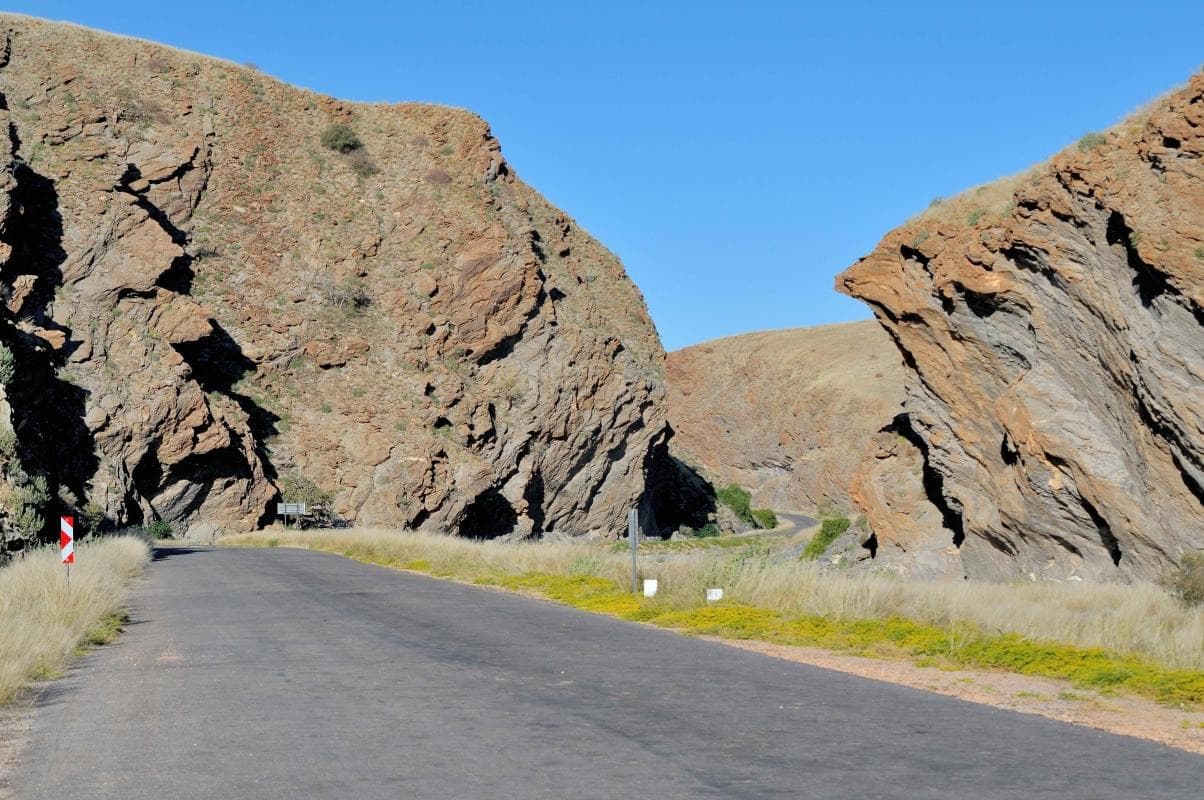
Geologically the pass tells a long story. The Kuiseb River, intermittent but formidable, has acted for millennia as a sediment and dune regulator. Sands from the great Namib Sand Sea move southwards, but the Kuiseb’s bed and occasional floods halt the dunes’ northward creep—making this river the ecological border between the hyper-arid sand sea to the south and gravel plains to the north. The canyon walls and alluvial fans you pass are pages in that book: dark schist and granite layered by wind and episodic water, streaked with varnished rock and the occasional fossilized shell reminding you the Atlantic was closer once.
Culture and human history here are compact but potent. The coastal towns—Walvis Bay and nearby Swakopmund—were shaped by German colonial traders and later by Afrikaner settlers; their architecture and cuisine still carry those echoes. Indigenous peoples, including Nama and Himba communities, have navigated these margins for centuries, reading the landscape for water and forage. Modern road-trippers respect those traditions by buying local craft, taking guided cultural detours, and supporting community-run camps along their route.
Why come to Kuiseb Pass? For many it’s a hinge point: a place to pause between the Atlantic’s chill and the solitary, sun-struck dunes of Sossusvlei. Photographers time the pass for the way its yawn of shadows and light plays on stone at first and last light. Overlanders use it as an education in desert driving—learning to read road textures, anticipate sanddrifts, and camp beneath stars that have no city light to soften them. And adventure-seekers pair the pass with coastal experiences—a Walvis Bay marine cruise—or inland pushes to Deadvlei and the towering dunes of Sossusvlei as featured in guided and self-drive packages like 06 Days Etosha, Swakopmund and Sossusvlei.
Practicalities matter here. The C14 is well-graded but remote: fuel stops are spaced and weather can turn—sea fog can linger on the coast while inland heat builds. Self-drive tours often recommend high-clearance vehicles; guided lodge tours remove that variable and add local insight, from the pass’s geology to safe camping spots out of the wind. Timing is everything: late afternoon reveals the textures of the canyon; dawn and dusk offer the most flattering light and cooler conditions for walking and exploring.
On the ground, Kuiseb Pass is tactile. Wind has polished the rocks to a dark sheen; lichen mats and tenacious succulents pin themselves into cracks; oryx and springbok move like punctuation across the flats. The wind is persistent enough to have a voice in the landscape—sometimes a measured exhale, sometimes a gust that rearranges a day's worth of sand.
For the practical traveler: plan for heat and remote logistics. Bring ample water, fuel, and a basic toolkit. If you’re driving, lower your tire pressure to handle soft sand on approaches, and avoid solo travel at night. If you’re booking a guided trip—particularly those that combine the pass with Swakopmund or Sossusvlei—you’ll gain local context: a guide can point out subtle tracks, explain the Kuiseb’s role in the broader Namib ecosystem, and time stops for light and wildlife.
What you’ll leave with is a sense of margin—the narrow space where two environments meet and neither dominates completely. Kuiseb Pass doesn’t shout; it clarifies. It asks you to slow down, to read the layers of salt, sand, and stone, and to notice how the desert, in its patient way, shapes everything it touches.
Relevant local experiences: Many multi-day itineraries pass through Kuiseb Pass, including self-drive lodge loops like 15 Days Discover Namibia and Botswana - Self Drive Lodge and 12 Days Tour Namibia In Plus | Self Drive Lodge. For a shorter introduction, the 5 Day Guided Tour of Namibia Sossusvlei to Swakopmund ties the coastal and desert highlights together, with Walvis Bay cruises and Sossusvlei dune climbs on the same ticket. Choosing between a guided lodge trip and a self-drive depends on your comfort with remote driving and mechanical self-reliance; both options reward the traveler with striking juxtaposition—ocean-born fog, inland silence, and dunes that look at you like a different climate’s memory.
Kuiseb Pass is a place best approached with humility and curiosity. It’s not a single monument but a conversation between wind and water, between coast and desert—a slice of Namibia that teaches you to notice gradations. Bring good shoes, a camera that handles wide light and a sense of readiness. The pass won’t disappoint: it leaves you with the elemental feeling that you are traveling through geology, and that travel, in this part of the world, is a slow, deliberate act of noticing.
Trail wisdom
Small choices, better day.
Time your visit for golden hour
Arrive at dawn or dusk to get the best light and cooler temperatures for exploring and photography.
Carry extra water and fuel
Services are sparse between Walvis Bay and the Namib interior—pack at least 4 liters per person and a spare fuel can if self-driving.
Adjust tire pressure for sand
Lower tire pressure before any loose-sand sections when approaching dune fringes to improve traction.
Respect private and protected land
Stay on designated roads and campsites—avoid driving on dunes or vegetation to prevent erosion.
Local knowledge
Read the place, not just the route.
Watch for native species including Gemsbok (oryx), Jackal.
Keep an eye out for wildlife during the transition between areas and habitats. Respect distance guidelines.
The Kuiseb area forms part of the broader Namib conservation landscape—stay on roads, respect wildlife, and support community-run accommodations to reduce pressure on fragile habitats.
Follow the guide's instructions on size limits, ethical handling, and leave-no-trace practices.
Kuiseb Canyon overlook—less frequented viewpoint with intimate canyon textures. Small roadside pans that host seasonal birdlife after rains
Locally recommended viewpoints and quiet spots known best to local operators.
The Kuiseb River has long acted as the ecological boundary between the Namib Sand Sea and northern gravel plains; the pass grew in importance as colonial roads linked coastal ports to inland settlements.
Maritime roots and regional tradition shape the waterways and working coasts.
Seasonal guide
Four versions of the same landscape.
Spring
Best forwildflower blooms after rains · milder daytime temperatures · birdwatching migration stopovers
Challengesoccasional seasonal rains · road softening after storms
Spring (Sept–Nov) warms up the desert with clear skies and the first real heat after winter—good for wildlife viewing but watch localized rain impacts.
Summer
Best fordramatic atmospheric haze · low tourist numbers · lush ephemeral pools if rains occur
Challengesextreme heat inland · sporadic thunderstorms · occasional flash flooding in riverbeds
Summer (Dec–Feb) is hot and can be wet—storms are rare but powerful; coastal fog can keep mornings cool near Walvis Bay.
Fall
Best forstable dry weather · excellent clear light for photography · comfortable day temperatures
Challengescool nights starting early · windy afternoons
Fall (Mar–May) offers some of the best travel conditions—dry, clear, and slightly cooler than summer, ideal for self-drive and guided tours.
Winter
Best forwildlife concentrations at water sources · cool, crisp days · best overall visibility for panoramas
Challengescold nights and mornings · coastal fog can linger
Winter (Jun–Aug) is the dry season—cool days and cold nights, excellent for hiking, dune climbs, and long alpine-like light for photography.
Pack with intention
What to bring.
Good to know
Common questions.
Kuiseb Pass is accessed via the C14 road heading southeast from Walvis Bay toward Solitaire and Sossusvlei; allow several hours for stops and variable road conditions.
Plan the edges
The details that make the day easier.
The Kuiseb River acts as a natural barrier that stops the Namib Sand Sea from migrating northward—its floods and bed structure protect inland areas from dune encroachment.
Coastal Walvis Bay and Swakopmund combine German cafés, fresh seafood, and adventure-tour operators—try local smoked fish, German-style bakeries, and community-run craft markets for cultural context.
- Location
- C14 between Walvis Bay and Sossusvlei; Access: self-drive or guided tours; Services: limited fuel and food—plan ahead; Safety: watch for wind, sand, and temperature swings.
Avoid driving on dunes or vegetated areas, take all waste with you, support local businesses, and consider guided tours that contribute to community conservation programs.
Explore by topic
Follow the threads.
Keep exploring
Make the story part of the trip.
Set out from Bass Harbor for a private, customizable day on Blue Hill Bay — lighthouses, puffins, seals, and the chance to feel Acadia from the water. Small groups, local captains, unforgettable views.
In four hours you can move from shaded canyon ferns to wind-scoured coastal ridgelines, guided by someone who knows where the light—and the hidden views—live. This private half-day hike on the Monterey Peninsula or Big Sur is compact, curated, and perfect for travelers who want depth without a multiday commitment.
 Related story
Beneath a sky of shifting light, Skaftafell’s ice reads like a map of time. This three-hour guided glacier hike mixes technical instruction with geology and culture: compact, safe, and unforgettable.