
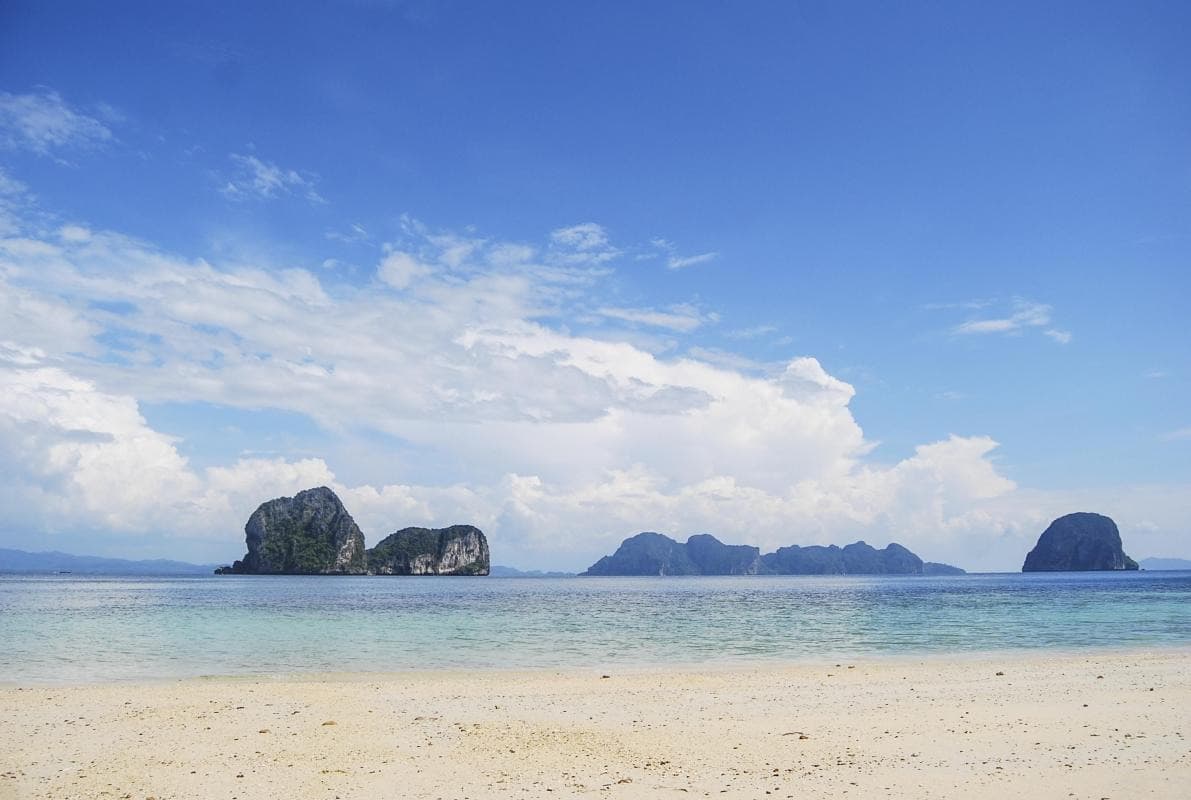
What the day feels like
The first thing you notice about Koh Kradan is the sound the island makes beneath your feet: a soft, delicate squeak as powder-fine sand compresses under each step. Early in the morning, when longtail boats still cut silver ribbons across a calm sea and the heat is a promise rather than a fact, the beach stretches out like a private runway—unfurling pale white sand, a scattering of casuarina trees, and water so clear you can read the bottom of the reef at ankle depth.
Koh Kradan (Ko Kradan), a small coral island off the coast of Trang in southern Thailand, is not dramatic the way limestone karsts are; it’s persuasive by temperament. It asks you to slow down. To snorkel slowly. To sit and let the tidal current nudge your legs while parrotfish pick at the coral and, if you’re lucky, a hawksbill turtle pops its head up like a ghost of the sea.
Geology and a short arc of human history explain the island’s demeanor. Kradan’s shoreline is formed from ancient coral and wind-blown sands, with an interior of low, scrubby woodland rather than anything alpine. It sits within the archipelago of Trang’s southern islands—neighbors include Koh Ngai, Koh Mook and Koh Chuak—and has long been used by fisherfolk and small-scale visitors rather than mass tourism. In recent years, day-trip itineraries from Koh Lanta and Krabi have made the island more reachable, but development remains minimal: a handful of bungalows and beachside restaurants rather than rows of resorts.
The best ways to experience Kradan are tactile and maritime. Most visitors come by boat as part of the classic 4-island circuits: speedboat options pack multiple snorkel stops and a transit through the Emerald Cave on Koh Mook; longtail itineraries trade a little speed for a slower, more traditional rhythm on the water and a beachfront lunch on Kradan’s sand. Both approaches place equal emphasis on what really matters here—snorkeling the vibrant coral gardens, wandering long quiet beaches, and taking the occasional sprawl under the trees as the sun tips toward afternoon.
On the reef you find the island’s primary storyline: a working relationship between shallow coral bommies, schools of reef fish—clownfish included—and anemone neighborhoods that look like miniature alien gardens. Guides will point out clownfish and the occasional moray; with luck the slower, more patient snorkelers see green turtles grazing on seagrass in the lagoons. Off-peak visits and small-boat operators help keep crowds down, which preserves both experiences and reefs.
Practicalities are simple but important. Kradan is compact and essentially flat—there are no hikes to summit, and walking the main beach from tip to tip will only take 20–40 minutes at a stroll. Access usually comes via boat from Koh Lanta, Trang or Krabi; expect transfers to include an island hop of 45–90 minutes depending on boat type and pier. If you’re booking a day tour from Koh Lanta, you’ll typically join a 4-island tour that pairs Kradan with Koh Ngai, Koh Chuak and Koh Mook (home to the Emerald Cave). Longtail boats offer a more leisurely pace and a closer, more personal connection to the crew and coastline; speedboats shave travel time and allow more snorkeling stops.
Timing matters. Aim to be on the water before the late-morning rush: visibility on the reef is best in the calm, protected hours after first light and before winds pick up. Bring reef-safe sunscreen, a basic snorkel kit (many tour operators provide masks and fins but fit varies), and a lightweight cover for the walk back through town at sunset when the sand cools. Cash is king on Kradan—there are few, if any, ATMs—so bring enough baht for lunch, cold drinks and small beach bar purchases.
For the more curious traveler: explore the island’s peripheral trails at low tide where sandbars and tidal pools reveal juvenile fish and crustaceans; sit with a local fisherman’s coffee and ask about the changing seasons of the sea. Conversations are where you learn how the Emerald Cave’s hidden lagoon pulses with visitors during the dry season, how currents shift the best snorkel spots between months, and why many locals prefer longtail boats for their gentler wake.
Safety and conservation are straightforward responsibilities. Don’t stand on coral; swim slowly near reef edges to avoid damaging fragile colonies; dispose of trash or bring it off-island with you. The coral ecosystems around Koh Kradan are resilient but fragile—tourism can be a partner in protection if visitors choose reef-safe products and support small local operators who adhere to no-anchoring zones.
Where to stay and how to plan matters depending on how you want your day to feel. For a day trip, combine Kradan with a visit to the Emerald Cave and one other island—this gives a balanced day of snorkeling, swimming through the cave’s mouth into a hidden lagoon, and a leisurely beachfront lunch. If you want to breathe slower and take sunrise walks, stay the night in a bungalow: evening tides thin the day-trippers’ numbers and the beach reclaims a more private, contemplative mood.
Koh Kradan is not a bold, blockbuster landscape; it’s a finely finished piece of the Andaman coast meant for readers of small details—the granular sand, the precise blues of the shallows, the hush of the night sky. For anyone who likes their islands quiet, their reefs healthy, and their boat rides a mix of adrenaline and composure, this is a short, satisfying pilgrimage to one of southern Thailand’s gentlest shores.
How to get there: book a 4-island tour (speedboat or longtail) from Koh Lanta for a full-day excursion, or arrange a van transfer to Trang and a longtail hop if you prefer a quieter approach. Pack reef-safe sunscreen, bring a snorkel or rent one, and arrive early to drink the place in before the shoreline fills with visitors.
Trail wisdom
Small choices, better day.
Bring reef-safe sunscreen
Use SPF that’s labeled reef-safe to protect coral; apply before you board the boat and reapply after swimming.
Prefer longtail for relaxed pace
Choose a longtail boat if you want longer beach stops and a more intimate local experience; speedboats are better for fitting in extra snorkel sites.
Carry small change in baht
There are few ATMs on the island—bring cash for lunch, tips, and small purchases.
Time your snorkels early
Morning light and calm seas usually offer the best underwater visibility and calmer currents.
Local knowledge
Read the place, not just the route.
Watch for native species including Green and hawksbill turtles, Clownfish and parrotfish in the reef gardens.
Keep an eye out for wildlife during the transition between areas and habitats. Respect distance guidelines.
Visitors are encouraged to use reef-safe products, avoid anchoring on coral, and bring trash off-island; support small operators who follow no-anchoring and reef-monitoring practices.
Follow the guide's instructions on size limits, ethical handling, and leave-no-trace practices.
Walk the northern tip at low tide to find tide pools and juvenile reef fish. Small beachfront restaurants serve family recipes—try the grilled fish with southern chili paste
Locally recommended viewpoints and quiet spots known best to local operators.
Koh Kradan has traditionally been used by local fishing communities and forms part of Trang Province’s island network; its slow growth in tourism has preserved much of its natural shoreline character.
Maritime roots and regional tradition shape the waterways and working coasts.
Seasonal guide
Four versions of the same landscape.
Spring
Best forcalm seas · clear snorkel conditions · shoulder-season value
Challengesoccasional rain showers · higher humidity
Spring (March–May) brings warming temperatures and excellent visibility for snorkeling; short rains may appear later in the season.
Summer
Best forwarm water · marine life sightings · less crowded afternoons
Challengesmonsoon onset later in season · rougher seas for boat transfers
Summer can be hot with increasingly choppy water—book flexible transfers and watch for local weather advisories.
Fall
Best forquiet beaches · discounted stays · migratory bird-watching
Challengesintermittent storms · reduced water clarity after heavy rain
Fall sees fewer tourists and lower prices but occasional storms can reduce snorkeling quality and alter boat schedules.
Winter
Best forcalm seas · peak visibility · ideal transfer conditions
Challengeshigher visitor numbers · advance bookings required
Winter (Nov–Feb) is the island’s high season—clear seas and cool mornings make it the most reliable time for reef encounters.
Pack with intention
What to bring.
Good to know
Common questions.
Boat time varies by departure point: from Trang piers about 45–60 minutes by longtail, while speedboats from Koh Lanta can be 30–60 minutes depending on the route and stops.
Plan the edges
The details that make the day easier.
The nearby Emerald Cave on Koh Mook is accessed through an 85-meter sea tunnel at low tide leading to a hidden lagoon—one of the Andaman’s most unique coastal features.
Southern Thai flavors dominate: expect grilled seafood, spicy coconut-based curries, and small beachfront spots serving fresh fish straight off local boats—support family-run eateries for the most authentic bites.
- Get there
- day tours from Koh Lanta or transfers via Trang piers; timing: morning departures ideal; money: cash preferred; facilities: basic bungalows and restaurants, limited ATMs; bookings: reserve in high season (Nov–Feb).
Choose operators who practice no-anchoring, use reef-safe sunscreen, and limit group sizes; bring reusable water bottles and remove all trash from the island to minimize tourism impact.
Explore by topic
Follow the threads.
Keep exploring
Make the story part of the trip.
Set out from Bass Harbor for a private, customizable day on Blue Hill Bay — lighthouses, puffins, seals, and the chance to feel Acadia from the water. Small groups, local captains, unforgettable views.
In four hours you can move from shaded canyon ferns to wind-scoured coastal ridgelines, guided by someone who knows where the light—and the hidden views—live. This private half-day hike on the Monterey Peninsula or Big Sur is compact, curated, and perfect for travelers who want depth without a multiday commitment.
 Related story
Beneath a sky of shifting light, Skaftafell’s ice reads like a map of time. This three-hour guided glacier hike mixes technical instruction with geology and culture: compact, safe, and unforgettable.