
What the day feels like
At 4:30 a.m. the road from Moni is a ribbon of headlights and the island’s breath is cold against your face. You climb higher and higher through a patchwork of corn terraces and low eucalyptus, the engine’s low thrum keeping time with your anticipation. When the minibus drops you at the park entrance there’s a hush—aside from the clack of boots on the stone steps and the occasional cough of a rooster—and you begin the final push in the dark. Ahead, the slope opens and the horizon flushes with the first thin pink of sunrise; three crater lakes, each a different, impossible color, crouch like sleeping gods against a sky that brightens into molten gold.
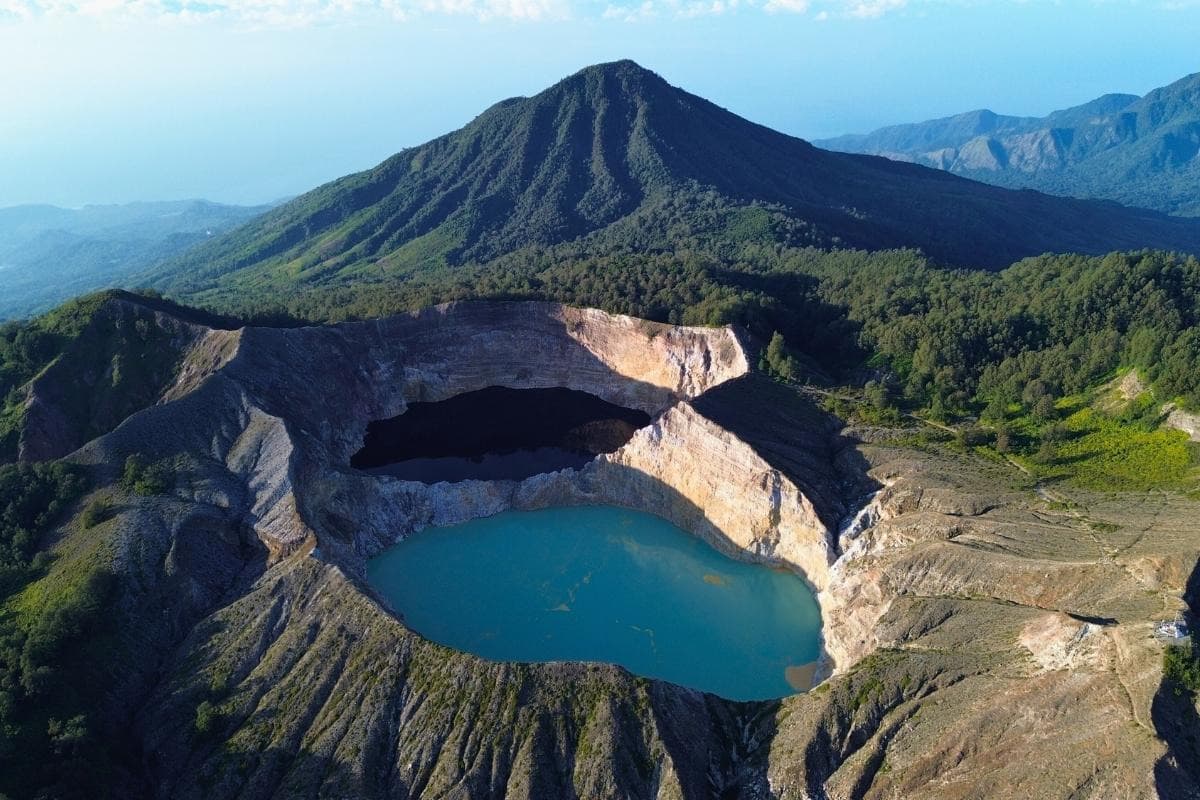
Kelimutu’s charm is simple and precise. There’s no long alpine approach, no multi-day slog—just a short, steep ascent (roughly 1–1.5 km one way from the park lot) that gains about 150–220 meters and deposits you at an exposed rim with panoramic views stretching over Flores’ spine. The three lakes—Tiwu Nuwa Muri Koo Fai (younger women and men), Tiwu Ata Mbupu (ancestor’s lake), and Tiwu Ata Polo (enjoying lake)—are famed for their dramatic color shifts. Today they might sit emerald, ink-blue and rust; tomorrow, they could choose a different palette. Their moods change with mineral content and volcanic gas activity, and watching the color-still waters at sunrise makes you feel like an invited witness to an energy that predates human schedules.
Geologically, Kelimutu is uncomplicated but intriguing: the lakes sit in three volcanic craters atop a 1,639-meter summit. They’re not simply pretty—chemical reactions between dissolved minerals and gas plumes alter oxidation states and the apparent color. Locally, a spiritual explanation is equally strong: the Lio people revere the lakes as resting places for the souls of the dead, and small offerings at the rim underscore the site’s cultural depth. Flores is layered—geology, volcanic history and a living cultural practice folded together—and a morning at Kelimutu is where those layers read clearly.
Despite the short hike, arriving at the right moment makes all the difference. Sunrise is the order of the day; the low-angle light sharpens the crater rims and animates the colors. The best photography windows are the thirty minutes before and after sunrise, when steam can entwine with light and the chroma of the lakes pops. If you prefer solitude and a different light, late afternoon has its own gentle glow, though the crowds thin less decisively than at dawn.
Moni, the nearest village and the place most travelers use as a base, is twenty to thirty minutes down the mountain. It’s where you’ll find homestays, small cafés that serve robust local coffee and the occasional guide offering combined cultural walks and coffee-plantation visits. Guides are not mandatory but they are useful—their knowledge frames the lakes’ names, the local rituals, and the best angles for photos as the light moves.
Practical notes: the trail itself is a mix of loose volcanic scree, steps hewn into stone and well-trodden dirt. Good traction matters; trekking sandals won’t cut it if the ground is damp. Expect colder air at the summit—temperatures can drop quickly before sunrise—and wind that bites more than sunshine suggests. The hike from the park lot to the viewpoint is short, but steady. Plan two to four hours for the whole outing from Moni to return: factor in transport, the pre-dawn wait, and time at the rim.
Local life is part of the appeal. The Lio people maintain a gentle, stoic presence around Kelimutu; small shrines and occasional floral offerings at the rim are reminders that this is not merely a photo stop but a place of ongoing spiritual significance. When you visit, keep noise and litter to a minimum, ask before photographing people in traditional dress, and consider hiring a local guide or staying in a Moni homestay to help ensure your tourism dollars flow to the community.
For planning: arrive an hour before sunrise, bring a headlamp, dress in layers and pack a warm windbreaker. Because the lakes’ colors can shift with weather and chemistry, don’t expect a guaranteed Instagram palette—expect drama and variety. Entry is managed at the park gate; there’s a small park fee and a ranger presence to answer questions and monitor access. If you’re traveling from further afield, flights into Ende or Maumere connect to Flores, and a two-hour drive (or longer, depending on road conditions) brings you to Moni.
Kelimutu isn’t about conquering a peak. It’s an exercise in timing and attention: the ritual of an early wake, the quiet climb, the payoff of light and color, and the humbling sense of standing at the lip of an active geological conversation. For travelers who value short, high-impact excursions—where sensory payoffs far outweigh distance—Kelimutu delivers.
If you’re building an Flores itinerary, pair Kelimutu with a village homestay in Moni, a day exploring nearby rice terraces, and a longer coastal foray to see Komodo or the snorkeling reefs that reward a few extra days on the island. You’ll remember the sunrise on Kelimutu not because you finished a long approach, but because you arrived on time and watched the mountain decide its colors.
Trail wisdom
Small choices, better day.
Arrive for sunrise
The lakes are most vivid in the 30 minutes before and after sunrise—arrive at least 45–60 minutes early to secure a viewpoint and settle in.
Layer up and bring a headlamp
Temperatures can be near-chill before dawn; a headlamp makes the pre-sun approach safer and easier.
Good footwear matters
Sturdy trail shoes with good grip handle loose volcanic scree and wet steps far better than sandals.
Hire a local guide or stay local
Guides add cultural context, improve route choices and funnel income back into Moni’s economy.
Local knowledge
Read the place, not just the route.
Watch for native species including Tropical mountain birds (various flycatchers and bulbuls), Butterflies and mountain insects common at dawn.
Keep an eye out for wildlife during the transition between areas and habitats. Respect distance guidelines.
Kelimutu is managed to balance visitor access and cultural rites; staying on trails, avoiding plastics and hiring local services supports protection efforts.
Follow the guide's instructions on size limits, ethical handling, and leave-no-trace practices.
Early-morning walk through Moni’s coffee plots for close cultural contact. Short detour to nearby village viewpoints for different crater angles and quieter perspectives
Locally recommended viewpoints and quiet spots known best to local operators.
The Lio people consider the lakes sacred—each crater is associated with specific ancestral spirits and local rituals accompany important life events.
Maritime roots and regional tradition shape the waterways and working coasts.
Seasonal guide
Four versions of the same landscape.
Spring
Best forQuieter trails · Lush scenery · Cool mornings
ChallengesStart of wet season showers · Muddy approaches
March–May sees transitional weather; days can be lush after rains but sudden showers are possible.
Summer
Best forDry trails · Clear sunrises · Easier travel logistics
ChallengesPeak visitor numbers (Jun–Aug) · Hot daytime temps in lowlands
June–August is Flores’ dry window—most reliable for sunrise views and road travel.
Fall
Best forColor shifts in calm weather · Fewer crowds than peak months · Comfortable nights
ChallengesIntermittent rain (Sept–Nov) · Variable visibility
September–November can offer stable mornings with fewer visitors but occasional cloud cover.
Winter
Best forDramatic cloud-scapes · Lush post-monsoon landscape · Lowland cultural visits
ChallengesHeavy rain in monsoon months · muddy access roads (Dec–Feb)
December–February are wetter and less predictable; expect travel delays and sporadic closures.
Pack with intention
What to bring.
Good to know
Common questions.
From the park parking area to the main viewpoint the walk is roughly 1–1.5 km one way with about 150–220 m of elevation gain—short but steep in places.
Plan the edges
The details that make the day easier.
The three crater lakes of Kelimutu change color due to chemical reactions between volcanic gases and dissolved minerals—colors can shift dramatically over months or years.
Moni’s simple homestays serve strong Flores coffee and stick-to-the-ribs banana pancakes; Lio weaving and small-scale farming keep community rhythms steady—support local guides and artisans.
Respect sacred sites, avoid single-use plastics, stay on marked paths and prioritize local guides and homestays to ensure tourism benefits the community.
Explore by topic
Follow the threads.
Keep exploring
Make the story part of the trip.
Set out from Bass Harbor for a private, customizable day on Blue Hill Bay — lighthouses, puffins, seals, and the chance to feel Acadia from the water. Small groups, local captains, unforgettable views.
In four hours you can move from shaded canyon ferns to wind-scoured coastal ridgelines, guided by someone who knows where the light—and the hidden views—live. This private half-day hike on the Monterey Peninsula or Big Sur is compact, curated, and perfect for travelers who want depth without a multiday commitment.
 Related story
Beneath a sky of shifting light, Skaftafell’s ice reads like a map of time. This three-hour guided glacier hike mixes technical instruction with geology and culture: compact, safe, and unforgettable.