
What the day feels like
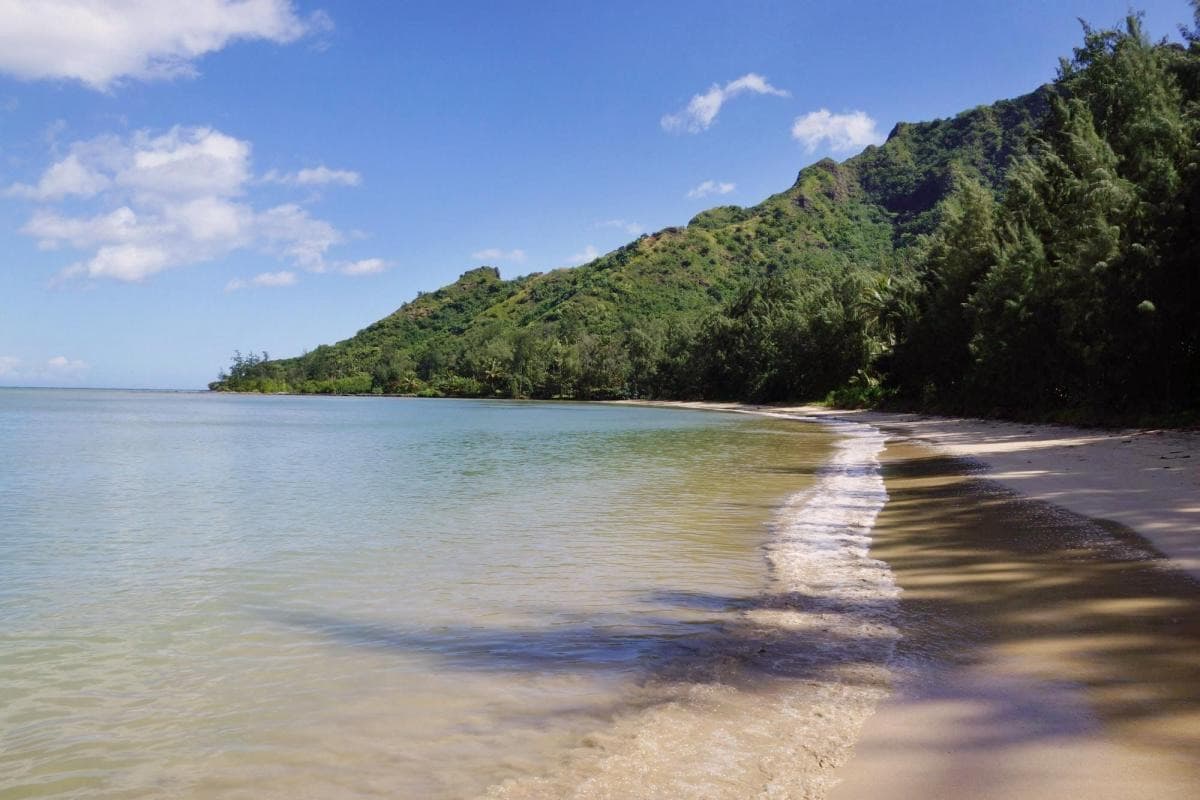
You pull off Kamehameha Highway where the pavement thins and a row of ironwood trees leans like sentries over a narrow strip of sand. The bay opens like a held breath: a wide, gently curving crescent of green-tinged water cupped by a backdrop of steep, fern-glassed ridgelines. At Kahana Bay Beach Park the Pacific doesn’t roar so much as invite you in — it dares you to slow down, step off the main island loop, and listen. The breeze smells of salt and kiawe smoke from a nearby barbecue; somewhere inland a rooster asserts ownership of the morning.
This park is not the manicured Waikiki tableau; it’s an unassuming, lived-in shore where local families gather under pandanus for picnics, fishers mend nets on the rocks, and kayaks launch beneath a sky that often turns that particular Hawaiian blue made for long photographs and longer silences. For paddlers, Kahana offers a paradox: the bay itself is calm and approachable for first-time kayakers and snorkelers, while the adjacent Kahana River — a rainforest ribbon that unspools inland — pulls you toward a quieter, greener world threaded with native plants and ancient taro terraces.
Geology and history meet here in small, readable ways. The bay sits on a windward shelf of coral and volcanic outwash; reefs lie close enough to cause the shallow, warm water to shimmer emerald in the shallows. Above, the pali — the steep cliffs of windward Oahu — are old lava flows steeped in a fast human history. Kahana Valley is home to one of the island’s last intact ahupuaʻa, a traditional Hawaiian land division where upland forests, taro patches, streams, and the sea were managed as a single resource. You can still see stone walls, irrigation channels, and cultivated loʻi kalo (taro patches) that speak to centuries of ʻōiwi (Native Hawaiian) stewardship.
Culture here is quiet but present. Elder residents keep the pace and season of the place: children learn to fish off the rocks, and afternoons smell of simmering laulau or grilled fish. A short walk into the valley reveals a living system — taro fields clack with water, small fishponds reflect the sky — and reminds you that Kahana is more than a scenic stop on a circle-island tour. It’s a neighborhood with a long memory and active guardians.
For the adventurous visitor, the practical draw is straightforward: launch a kayak, follow the bay’s curve, or paddle upriver into the green throat of the valley. The Kahana River Kayak (self-guided) is an ecology-first experience; the waterway is calm, the current manageable, and the scenery rewards a slow, steady stroke. Because the river narrows and tree limbs arc close overhead, the trip feels intimate in a way ocean paddles rarely do. You’ll hear birds that prefer the windward side of the island — white-rumped shamas and the occasional ʻapapane — and might catch sight of native waterfowl in the more sheltered channels.
Timing is practical. Start early to avoid trade-wind gusts that pick up in the afternoon and to have the bay and river to yourself before families roll up with coolers. Bring reef-safe sunscreen, a hat, and a dry bag for your phone. If you’re self-guiding on a rented kayak, plan for two to three hours on the water for a relaxed paddle and beachside time; if you’re combining a swim or snorkel, add thirty to sixty minutes. Don’t underestimate tides: low tide reveals tidepools and makes for more walkable sand but can expose reef that’s easy to nick your feet on. High tide makes launching easiest but can also bring stronger currents at the mouth.
Logistics are blunt and useful: the park has parking and basic facilities but is not a full-service resort. There’s no lifeguard on duty most days; bring a PFD and keep an eye on changing conditions. Respect the taro terraces and private properties as you explore inland trails. If you want a guided option, local outfitters offer pancake-flat bay paddles and guided river trips that include cultural interpretation — a particularly smart choice if you want the deeper backstory of the valley’s ahupuaʻa system.
Wildlife is unobtrusive but present: green sea turtles slip in the shallows and are commonly spotted along the windward littoral, and seabirds ride the thermals above the pali. On a good day you might watch a surfer ride a distant point or see spinner dolphins patrolling farther offshore. Above all, move with quiet curiosity; these are working landscapes with wildlife that has learned to avoid loud, unpredictable humans.
Practical tips for a good visit: pack water and shade, start early, and go reef-safe. If you paddle upriver, leave no trace — don’t trample the loʻi, and take your trash with you. The reward is immediate: a secluded river corridor framed in dripping ferns, a long, slow drag of the paddle that turns your shoulders and clears your head, and a shoreline that feels somehow more honest than postcard-perfect beaches.
Kahana Bay is not about conquering a landscape; it’s about aligning with a place’s rhythm. It’s a stop that asks you to listen — to the hum of insects in the taro, the chatter of families on the shore, the steady whisper of the wind across the bay. For travelers who want a break from the polished circuits of Oahu and a chance to paddle where land and sea were always worked together, this is a measured, memorable detour. You leave cleaner, quieter, and a little more acquainted with a small but vital piece of Hawaii’s coastline.
Trail wisdom
Small choices, better day.
Launch at high tide for easy entry
High tide makes launching and returning by kayak simpler and reduces the chance of scraping reef; check local tide charts before you go.
Use reef-safe sunscreen
The bay’s reef and marine life are fragile — choose reef-safe sunscreen and apply before you launch.
Wear water shoes for rocky shorelines
Kahana’s shoreline has reef and rocky points; lightweight water shoes protect feet when entering or exploring the intertidal zone.
Respect private land and taro loʻi
Keep to public paths and avoid walking through taro terraces; these are cultural sites actively tended by local families.
Local knowledge
Read the place, not just the route.
Watch for native species including Honu (Hawaiian green sea turtle), Native windward birds such as ʻapapane and ʻamakihi.
Keep an eye out for wildlife during the transition between areas and habitats. Respect distance guidelines.
Visitors should use reef-safe sunscreen, avoid trampling taro loʻi, and pack out all trash — the valley’s cultural sites and reef ecosystems are sensitive and actively stewarded by the community.
Follow the guide's instructions on size limits, ethical handling, and leave-no-trace practices.
Morning paddle upriver into the shaded Kahana River channels. Small tidepools and rocky coves at the eastern end of the bay for quiet snorkeling
Locally recommended viewpoints and quiet spots known best to local operators.
Kahana Valley was historically an active ahupuaʻa with intact taro terraces and fishponds; remnants of this agricultural system are still visible and cared for by local families.
Maritime roots and regional tradition shape the waterways and working coasts.
Seasonal guide
Four versions of the same landscape.
Spring
Best forcalmer seas · river paddling · birdwatching
Challengesoccasional swell · trade-wind variability
Spring brings steadily warming water and manageable winds — a good season for kayaking the bay and spotting migratory birds inland.
Summer
Best forbeach swimming · snorkeling · gentle ocean days
Challengesstronger afternoon sun · busier weekends
Summer typically offers the warmest, calmest sea conditions ideal for snorkeling and relaxed paddling, but expect more local visitors and intense sun.
Fall
Best forgolden light photography · fewer crowds · calm mornings
Challengesoccasional storm swell from the north · cooler evenings
Fall often delivers beautifully clear mornings and softer light for photos; keep an eye on swell advisories that can arrive from the north.
Winter
Best fordramatic waves on exposed points · storm-watching · surf photography
Challengeslarge north swells · strong currents · not recommended for novice paddlers
Winter brings big surf to exposed north-facing breaks; the bay can be calm some days but is more likely to experience choppier seas and stronger currents.
Pack with intention
What to bring.
Good to know
Common questions.
Yes — the bay’s sheltered waters are suitable for beginners, especially on calm mornings; avoid upriver sections unless you’re comfortable with basic paddling and navigation.
Plan the edges
The details that make the day easier.
Kahana Valley contains some of Oahu’s last intact taro loʻi and was historically managed as an ahupuaʻa — a traditional Hawaiian land system integrating upland forests, farms, and the sea.
Windward Oahu cuisine emphasizes fresh fish, poke, and locally grown taro; nearby food trucks and family-run stands serve shave ice and garlic shrimp on the north shore, and local markets in Kaneohe offer fresh fruit and coffee.
- Parking
- limited; Facilities: basic restrooms; Lifeguard: usually no; Best launch: high tide morning; Rentals: local outfitters provide kayaks and guided trips.
Respect taro fields and private property, use reef-safe products, and pack out all waste; support community-led tours that contribute to local stewardship.
Explore by topic
Follow the threads.
Keep exploring
Make the story part of the trip.
Set out from Bass Harbor for a private, customizable day on Blue Hill Bay — lighthouses, puffins, seals, and the chance to feel Acadia from the water. Small groups, local captains, unforgettable views.
In four hours you can move from shaded canyon ferns to wind-scoured coastal ridgelines, guided by someone who knows where the light—and the hidden views—live. This private half-day hike on the Monterey Peninsula or Big Sur is compact, curated, and perfect for travelers who want depth without a multiday commitment.
 Related story
Beneath a sky of shifting light, Skaftafell’s ice reads like a map of time. This three-hour guided glacier hike mixes technical instruction with geology and culture: compact, safe, and unforgettable.