
What the day feels like
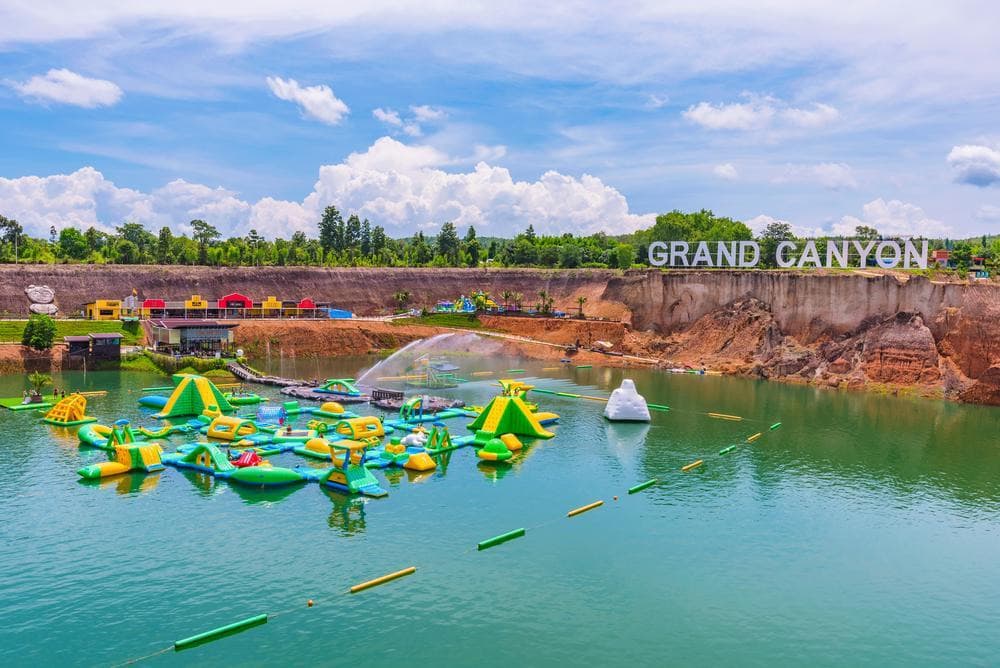
A warm wind lifts the dust off a gravel road and carries the laughter across a bowl of water that used to be stone. From the lip of the quarry you can see the water glitter—an improbable pocket of cool blue tucked into Chiang Mai’s rolling green hills—ringed by jagged, weathered cliffs and a small forest that looks like it’s holding the place together. At the edge, teenagers line up to leap from a 14‑metre platform, palms slapping into the water in cartoon arcs. Out in the middle, an inflatable obstacle course puckers and bobs like some oversized, neon sea creature daring you to take it on.
This is Grand Canyon Water Park—Grand Canyon Chiang Mai—a flooded rock quarry repurposed as one of Thailand’s most playful adventure parks. It’s not slick like a commercial waterpark with steel towers and manufactured landscaping. You can still see the quarry’s scars: strata in the cliffs, places where the rock fell away and left the pool that now attracts swimmers, cliff jumpers, wakeboarders and families who want a day outside of town. The place has grit and good humor, and that’s part of its draw.
Geology and history are literally on display here. The lake began as a rock quarry; heavy rains and the local water table eventually turned the pit into a swimming hole. Over time locals started jumping the cliffs, and what began as backyard cliff-jumping culture evolved into an organized outdoor playground. The current park layers a floating inflatable course—think Wipeout—with safe, supervised cliff-jumping, wakeboarding lines, kayaks and giant slides. Life jackets are mandatory; lifeguards’ whistles thread through the ambient noise like a safety net.
Culturally, visiting the Grand Canyon feels like joining a local ritual. It’s popular with Chiang Mai residents on weekends and with travelers who value energetic, outdoorsy downtime. Vendors and a small riverside café provide familiar Thai food—grilled skewers, cold drinks, sticky rice—and the mood stays relaxed and communal. Nearby attractions such as the Royal Flora Rajapruek gardens make it easy to stitch the day into a broader northern Thailand itinerary if you’re pairing nature and culture.
Why come? The park lets you pick your intensity. Bring kids to the kid zone and smaller slides, bring friends to race the giant inflatable course, or bring your courage to the cliff-jumping platform and taste vertigo. For water‑sports nuts there are wakeboarding rigs and kayak options that add technical interest beyond just splashing. Packages often include round‑trip transfers from Chiang Mai, lunch, lockers, and sometimes accident insurance—conveniences that matter if your trip is short on time.
Practicalities you should know before you go: the park sits roughly 20–30 minutes from central Chiang Mai depending on traffic (arrange hotel pickup or a short Grab/taxi ride). Expect gravel paths and some uneven footing around the cliff edges; water shoes are recommended. Wakeboard and zipline availability varies by season and crowding—book those packages in advance on busy weekends. The park enforces life jackets and has changing rooms and showers; lockers are available but bring a small padlock if you want extra peace of mind.
A recommended game plan: get there in the morning when the water is glassy and the inflatable course is quieter; take the obstacle course while you’re fresh, then rotate in wakeboarding and kayaking. Save your cliff jump for later in the day once you’ve watched others and settled into the rhythm of the place. If weather turns—heavy rain is possible in the wet season—the staff will restrict certain activities, so build flexibility into your schedule.
Safety and preparation are straightforward. Bring a lightweight daypack with a dry bag for your phone and wallet, sunscreen (reef‑safe if you’re conscientious about water chemistry), and a reusable water bottle. The park’s lifeguard presence is robust but personal responsibility matters—don’t push past your comfort zone on the cliffs, and make sure kids are supervised even when they’re in the kid zone.
For photographers the site is a study in contrast: raw, vertical cliffs; neon inflatable shapes; swimmers creating concentric ripples. Aim for late afternoon for softer side light on the cliffs, use a fast shutter to freeze jumps, and consider a splashproof housing or a camera strap that’ll let you get low to the water without losing your gear.
The Grand Canyon Water Park is not for those seeking pristine wilderness silence or a curated resort vibe. Its strengths are immediacy and variety—an outdoor gymnasium that puts you in the water and in the air in the same afternoon. It’s a place to make a little mess, feel a little thrill, and end the day with sand between your toes and a plate of grilled chicken in hand. For travelers in Chiang Mai who want to punctuate temple visits and jungle treks with a few hours of high-energy play, this quarry-turned-waterpark is the kind of pragmatic, slightly raucous day that becomes the trip story everyone remembers.
If you go: respect the rules, book the wakeboard or zipline in advance if they’re high on your list, and leave room to wander to nearby Royal Flora Rajapruek—its manicured gardens offer a calming counterpoint to the quarry’s exuberance. The Grand Canyon doesn’t pretend to be anything other than a joyful, unpolished place to play in water. That honesty is part of its charm, and why, on a hot Chiang Mai day, it keeps calling people back.
Trail wisdom
Small choices, better day.
Start early for calmer water
Arrive at opening to avoid crowds on the inflatable course and get smoother water for wakeboarding and kayaking.
Wear water shoes
The paths and cliff edges are rocky and uneven—grippy water shoes protect feet on land and lend traction on inflatables.
Bring a small dry bag
Pack your phone, wallet, and keys in a waterproof pouch you can take on and off the water easily.
Book wakeboard/zipline in advance
Popular add-ons sell out on weekends—reserve time slots with your entry or through the park package.
Local knowledge
Read the place, not just the route.
Watch for native species including Common kingfisher, Monitor lizard (harmless if left alone).
Keep an eye out for wildlife during the transition between areas and habitats. Respect distance guidelines.
The park enforces life jacket rules and lifeguard patrols; visitors are encouraged to avoid single-use plastics and use designated areas to dispose of trash to protect local water quality.
Follow the guide's instructions on size limits, ethical handling, and leave-no-trace practices.
Royal Flora Rajapruek botanical gardens—combine a morning at the gardens with afternoon waterplay for contrast.. Local weekend markets near Chiang Mai—perfect for sampling northern Thai snacks after a day at the park.
Locally recommended viewpoints and quiet spots known best to local operators.
The site began as a rock quarry that filled with water over time; locals turned the flooded pit into a popular swimming and jumping spot before it was formalized into a water park.
Maritime roots and regional tradition shape the waterways and working coasts.
Seasonal guide
Four versions of the same landscape.
Spring
Best forwarmer swimming temperatures · smaller crowds on weekdays
Challengesoccasional heat and high sun exposure · increasing algae growth in stagnant spots
Spring heats up in Chiang Mai, making the water especially inviting—bring strong sun protection and hydrate frequently.
Summer
Best forfull aqua-park operations · perfect conditions for wakeboarding
Challengeshighest temperatures and UV · peak visitor numbers on holidays
Summer is peak water-play season; expect busy weekends and book transfers or packages to secure preferred activities.
Fall
Best forclearer skies after monsoon · ideal late-afternoon light for photos
Challengescooler mornings · variable water temperatures
Fall offers comfortable weather and great light; late afternoons are especially photogenic as the sun slants across the cliffs.
Winter
Best forcool, dry days for outdoor exploration · pairing with nearby cultural visits
Challengescooler water temperatures · reduced demand may alter staffing/hours
Thailand's 'winter' is mild and dry—ideal for a day trip—though water can feel chilly, so plan accordingly.
Pack with intention
What to bring.
Good to know
Common questions.
The park is roughly a 20–30 minute drive from central Chiang Mai depending on traffic; many visitors arrange hotel transfers or book package transport.
Plan the edges
The details that make the day easier.
Grand Canyon Chiang Mai is an old flooded quarry and features a supervised 14‑metre cliff jump that has become one of the park's signature attractions.
Pair your water day with local Lanna flavors—order khao soi or grilled chicken from on-site stalls, and consider a visit to Royal Flora Rajapruek to experience Chiang Mai’s horticultural pride.
- Location
- ~20–30 min from Chiang Mai; Essentials: life jacket required, lockers and showers available; Booking: packages often include transfer and lunch; Best time: morning to early afternoon.
Visitors are encouraged to use refillable water bottles, avoid single-use plastics, and follow park guidance to minimize impact on water quality and local habitats.
Explore by topic
Follow the threads.
Keep exploring
Make the story part of the trip.
Set out from Bass Harbor for a private, customizable day on Blue Hill Bay — lighthouses, puffins, seals, and the chance to feel Acadia from the water. Small groups, local captains, unforgettable views.
In four hours you can move from shaded canyon ferns to wind-scoured coastal ridgelines, guided by someone who knows where the light—and the hidden views—live. This private half-day hike on the Monterey Peninsula or Big Sur is compact, curated, and perfect for travelers who want depth without a multiday commitment.
 Related story
Beneath a sky of shifting light, Skaftafell’s ice reads like a map of time. This three-hour guided glacier hike mixes technical instruction with geology and culture: compact, safe, and unforgettable.