
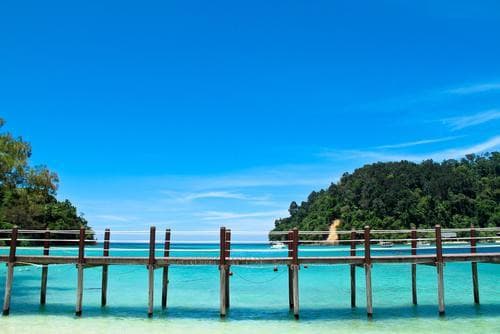
What the day feels like
The morning starts with a metallic tang from the jetty and the soft staccato of boat engines cutting across Likas Bay. Kota Kinabalu’s skyline shrinks behind you, replaced by an archipelago of forested ridges knifing up from the South China Sea. By the time the city becomes a smear of rooftop and traffic, the islands of Tunku Abdul Rahman National Park are already close enough to make out the heat shimmer on their beaches. The air smells of salt and damp leaf mold; the water around the hull is a glassy green that promises coral gardens close beneath.
Tunku Abdul Rahman National Park (TARP) is five islands—Gaya, Sapi, Manukan, Mamutik and Sulug—stitched into a marine reserve less than 20 minutes by speedboat from Jesselton Point in Kota Kinabalu. Each island has a character of its own: Gaya’s limestone cliffs and village ruins, Manukan’s tree-canopied shoreline and hiking trail to Sunrise Point, Sapi’s sandbar and snorkel drop-offs. The islands are compact, but their marine life is not. Coral bommies, seagrass meadows and shallow reefs host hawksbill turtles, schools of damselfish, parrotfish that scrape the reef like landscapers, and the occasional white-tip reef shark cruising in the blue.
Geologically, these islands are low-relief outcrops of sandstone, shale and limestone that survived sea-level changes and now act as living museums of Borneo’s coastal ecology. Historically the park is named after Malaysia’s first prime minister, Tun Abdul Razak, and was designated in 1974 to protect both reef and shoreline—one of the country’s earlier moves toward marine conservation. Culturally, the islands are stitched to Sabah’s coastal life: fishermen launch before dawn, and on the larger islands you can still find traces of old village sites and mangrove edges where local communities once harvested shellfish and sea cucumbers.
What travelers come for here is uncomplicated: water that invites movement. Snorkeling trips run three to five hours and drop you on reefs abundant with color and curious life. Discover Scuba Diving experiences let beginners take controlled breaths under a PADI instructor’s watch, while certified divers head deeper—some local sites drop to 20–30 meters, with visibility that can reach 15–25 meters on a good day. Island-hopping fills the day: a morning snorkel at Sapi or Mamutik, lunch on Manukan’s shaded beach (often a charcoal BBQ of fresh fish and rice), then a walk up to Sunrise Point for views back toward Kota Kinabalu as the light slides low.
Practical details matter here. Boats depart from Jesselton Point Jetty; standard transit time is about 15–20 minutes depending on sea state. Most operators include transfers, snorkeling or dive gear, park entrance fees and a beach lunch in the price—carry reef-safe sunscreen and a small amount of cash for extras. When the monsoon sets in (typically November through February) services are reduced and afternoons can turn windy; boat captains choose islands based on conditions, and safety comes first.
For planning: if you’re a snorkeler, aim for calm seas and mornings, when the water is at its clearest and fish are active near the shallow reefs. Certified divers will appreciate the variety of dive sites: sloping reefs, bommies, and sandy channels where larger pelagics appear. Beginner divers can complete two Discover Dives in a day, while the PADI Open Water course stretches over three days and covers theory, confined water skills and open-water dives—ideal if you want to turn an island day trip into a new skill.
The islands are small but the park’s footprint means rules apply—don’t take coral, don’t feed fish, and follow guide instructions. The park uses small entrance and conservation fees to fund patrols and reef restoration projects; your compliance helps the reef endure. Bring a lightweight rain jacket any time of year—tropical squalls are sudden—and plan sunscreen and hydration carefully: shade is scarce on beaches between mangroves.
If you’re seeking pace, a half-day snorkeling + island picnic is perfect. For immersion, book a full-day leisure scuba trip or a three-day Open Water course. For golden hour, the sunset cruises that loop around Gaya Island and Likas Bay are an easy, scenic way to close a day in Kota Kinabalu, with narration on local history and coastal landmarks.
This is an accessible marine escape: short boat rides, clear logistics, and wildlife that is both abundant and approachable. It’s also a reminder that coral gardens need quiet stewardship. Go ready to move—mask on, fins snug—and to respect the slow, patient lives under the surface that will reward you with close-up color and the kind of quiet that reconfigures a vacation into a small, durable memory.
Trail wisdom
Small choices, better day.
Go early
Morning departures offer the calmest water and best visibility for snorkeling and diving.
Use reef-safe sunscreen
Protect coral by choosing reef-safe formulas and reapplying sparingly before getting on the boat.
Bring a reef hook or vest if diving
Surface currents can be stronger than expected—use a reef hook or SMB if you’ll be stationary on dives.
Pack cash for extras
Small island vendors or extra services often accept only cash—bring local currency for tips or snacks.
Local knowledge
Read the place, not just the route.
Watch for native species including Hawksbill and green sea turtles, Schools of parrotfish and damselfish.
Keep an eye out for wildlife during the transition between areas and habitats. Respect distance guidelines.
A small park fee funds patrols and reef programs; visitors should use reef-safe sunscreen, avoid touching coral, and follow guide instructions.
Follow the guide's instructions on size limits, ethical handling, and leave-no-trace practices.
Sunrise Point on Manukan Island—short forest walk with panoramic views. Night snorkeling off designated beaches (with guides) to see nocturnal reef life
Locally recommended viewpoints and quiet spots known best to local operators.
Tunku Abdul Rahman National Park was gazetted in 1974 to protect coastal and marine habitats and is named after Malaysia’s first prime minister.
Maritime roots and regional tradition shape the waterways and working coasts.
Seasonal guide
Four versions of the same landscape.
Spring
Best forcalm seas · snorkeling visibility · island hikes
Challengesintermittent rain · higher humidity
March–May often bring stable, warm conditions ideal for snorkeling and short hikes; expect humidity and occasional showers.
Summer
Best forextended diving ops · island-hopping · sunset cruises
Challengesstrong sun · crowds on weekends
June–August is peak season with long, dry stretches and the best visibility—book boats in advance for weekend trips.
Fall
Best forclear water · less crowded beaches · marine life viewing
Challengesoccasional squalls as monsoon approaches
September–November offers excellent water clarity with fewer tourists, though weather becomes less predictable toward November.
Winter
Best forquieter islands · off-season discounts
Challengesmonsoon-season rough seas · reduced boat services
December–February is the monsoon window: waves and rain can cancel day trips, so plan flexibility into your schedule.
Pack with intention
What to bring.
Good to know
Common questions.
Most operators run 15–20 minute speedboat transfers from Jesselton Point to the nearest islands, depending on sea conditions.
Plan the edges
The details that make the day easier.
Tunku Abdul Rahman National Park was established in 1974 and protects five islands off Kota Kinabalu’s coast.
Expect beach BBQ lunches of grilled fish, rice and sambal on island excursions; Kota Kinabalu’s food scene reflects Malay, Chinese and indigenous Kadazan-Dusun influences—try seafood markets in town after a day on the water.
- Departure
- Jesselton Point Jetty | Typical transit: 15–20 min by speedboat | What’s included: transfers, gear, lunch (varies by operator) | Park fees usually included.
Choose operators who use reef-safe practices, follow no-touch rules, and contribute park fees to conservation—small behavior changes protect coral for future visitors.
Explore by topic
Follow the threads.
Keep exploring
Make the story part of the trip.
Set out from Bass Harbor for a private, customizable day on Blue Hill Bay — lighthouses, puffins, seals, and the chance to feel Acadia from the water. Small groups, local captains, unforgettable views.
In four hours you can move from shaded canyon ferns to wind-scoured coastal ridgelines, guided by someone who knows where the light—and the hidden views—live. This private half-day hike on the Monterey Peninsula or Big Sur is compact, curated, and perfect for travelers who want depth without a multiday commitment.
 Related story
Beneath a sky of shifting light, Skaftafell’s ice reads like a map of time. This three-hour guided glacier hike mixes technical instruction with geology and culture: compact, safe, and unforgettable.