
What the day feels like
The trail begins before dawn, when the mountain still wears its cloud cloak and the air has the clean, wet bite of tropical forest. A chorus of insects hums somewhere in the understory and, from the direction of the rice terraces below, a rooster marks the day. You shoulder your pack and step onto a narrow path that threads between ferns and moss-draped tree trunks; every footfall sinks into loam that smells of leaf mold and coffee. That first hour of ascent—through a cathedral of roots and lichened trunks—feels like walking into a living history of the island. The jungle here is not just backdrop; it talks back. Monkeys call from the canopy. Streams, invisible until you cross them, insist you pay attention.
Mt. Batukaru (Gunung Batukaru) sits on Bali’s western spine and rises to about 2,276 meters, making it the island’s second-highest volcano. From the lowland terraces of Jatiluwih to the crater lakes of Bedugul, Batukaru governs a landscape of water, stone and ritual. Geology shows its hand in the shape of steep ridgelines formed from volcanic flows and deep erosion, while centuries of human settlement have coaxed terraces and temples from its flanks. The mountain is sacred to local Balinese Hindus; shrines and offerings along forest trails are reminders that any trip here is as much cultural pilgrimage as it is outdoor adventure.
This is not a summit-for-speed experience. The best ways to know Batukaru are patient: jungle treks that take you through the sacred forest to remote temple sites; e-bike rides that relax into the rhythm of rice terraces at the mountain’s base; and small-group 4WD outings that thread back roads to vantage points where the island opens wide. Guided jungle treks are often led by local rangers who move with the map of native plants in their heads, pointing out medicinal roots, birdcalls, and the small cliffside shrines that few travelers see. An experienced guide also helps navigate the spiritual etiquette—when to step aside for offerings, where to leave small donations, how to behave at temple sites.
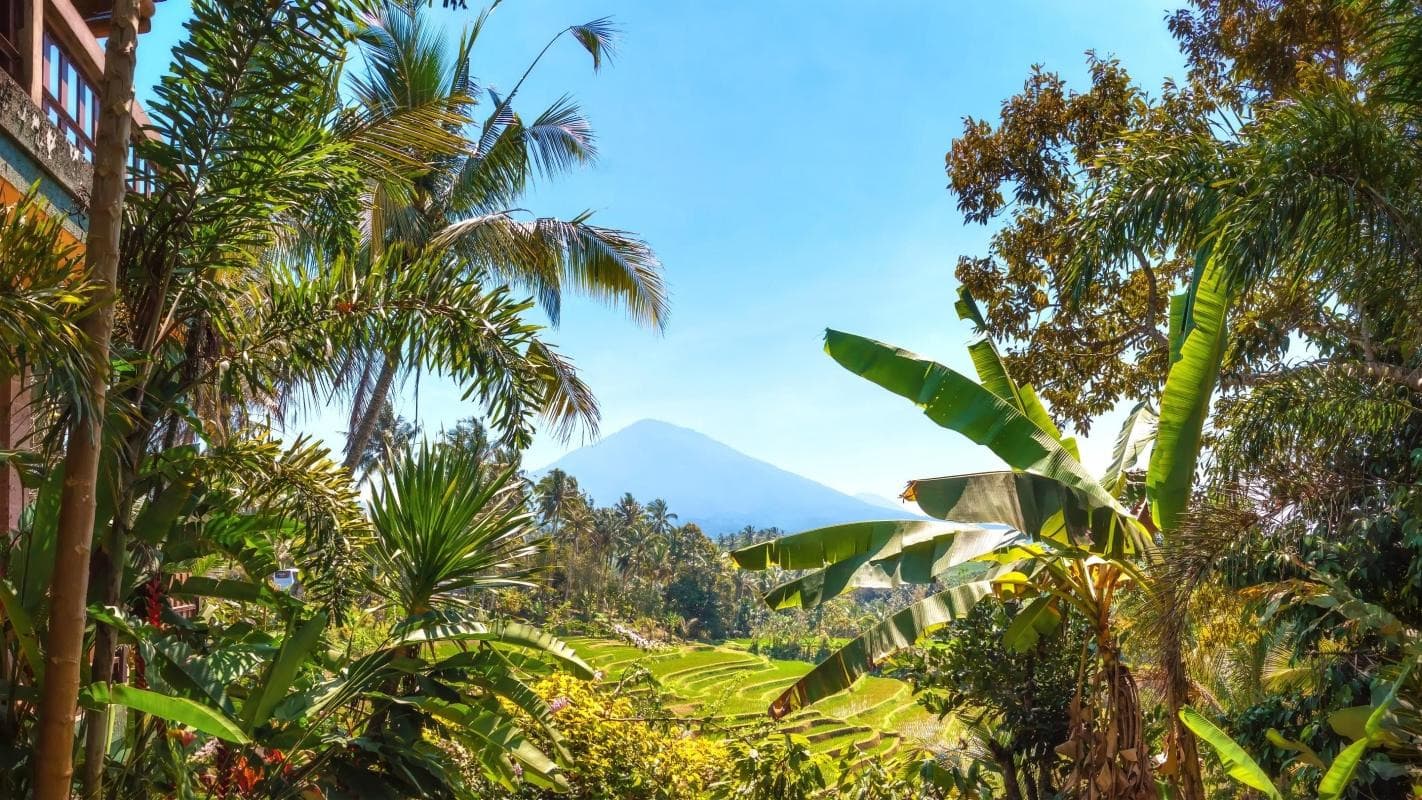
Walk with a ranger and you’ll notice how the mountain’s personality changes with elevation. Lower slopes are cultivated: banana, coffee and spice gardens stitched to the hills. Mid-elevation swathes host the famous Jatiluwih rice terraces—UNESCO-recognized tessellations of green carved into volcanic soil and fed by ancient irrigation. Above them, the forest tightens; moss, ferns and towering emergent trees mute the light. Streams here are assertive, cutting gullies and forming small waterfalls that dare you to pause and photograph. On clear days, ridgeline vistas extend across the island to the jagged silhouette of Mount Agung.
For travelers who want motion with their scenery, the e-bike circuit through Jatiluwih is perfectly suited to the rolling slopes below Batukaru. It turns what could be a long pedal into a contemplative glide, with battery assistance letting you cruise between terraces and village stops without collapsing in a sweaty heap. For adventurers who prefer a more remote feel, a WakaLand 4WD day brings you into the island’s backcountry—hot springs, tiny hamlets, and vantage points where lunch is served with a view.
Practicalities are straightforward but deserve attention. Weather is the defining variable: the dry season (roughly May–September) gives cleaner air and more reliable views; the wet season brings dramatic cloudscapes and slippery trails. Trails can be muddy, roots are omnipresent, and short, steep sections require a steady step. Guide-supported treks and tours are recommended not only for navigation but for cultural context and safety—many of the most interesting temple sites and forest passages are best visited with a local who understands the mountain’s customs.
What to expect on a typical guided jungle trek: half- to full-day outings that cover uneven terrain, creek crossings, and intermittent steep pitches; time at remote temples for quiet observation; an informative stop in a mountain village for a home-cooked lunch or a brief massage. On the e-bike circuit, plan for 3–5 hours including stops, hill climbs aided by pedal-assist, and multiple photo breaks across terraces. 4WD backcountry trips often run full-day and mix short walks with cultural stops and scenic lookouts.
Stay flexible with your pacing. The mountain rewards those who slow down—listen for hornbills, watch a farmer move water through a terraced field, and let the jungle’s humidity sink into your clothes and your rhythms. Respect is the practical currency here: keep to trails, don’t disturb offerings, ask before photographing people at temples, and pack out what you bring in. On a stewardship level, choose operators that pay local guides fairly and avoid cutting new routes through fragile forest.
Batukaru’s reward is not a single postcard view; it’s layered: the scent of frangipani at a village gate, a temple bell sounding in the mist, terraces catching late-afternoon gold, and the honest exertion of a trail that asks you to keep paying attention. For a day, or for a sequence of days spent between terraces, temple shrines and the cool shoulder of the mountain, Batukaru offers something rare in Bali: the kind of green that organizes your trip around quiet and curiosity, and the kind of travel that leaves you with a practiced eye for how people and place shape each other.
Plan well, travel respectfully, and you’ll leave the mountain carrying more than photos—you’ll carry an understanding of why this green, wet backbone of Bali still matters to the island’s life and its people.
Trail wisdom
Small choices, better day.
Hire a local ranger or guide
Guides know the cultural protocols at temple sites, the safest jungle routes, and local plant and birdlife—essential for a safe, insightful day out.
Wear grippy, broken-in trail shoes
Trails are rooty and can be muddy; approach shoes or light hikers with good traction reduce slips on wet climbs.
Bring 1–2 liters of water and snacks
Humidity and steady climbing deplete energy fast; hydrate regularly and snack to maintain steady energy on multi-hour treks.
Respect offerings and shrines
Step around, don’t step over, and ask guides about photography etiquette at sacred sites to avoid cultural missteps.
Local knowledge
Read the place, not just the route.
Watch for native species including long-tailed macaques, various tropical birds and forest-dwelling butterflies.
Keep an eye out for wildlife during the transition between areas and habitats. Respect distance guidelines.
Stick to established trails to avoid erosion, support tour operators that employ local guides, and avoid introducing single-use plastics into village areas.
Follow the guide's instructions on size limits, ethical handling, and leave-no-trace practices.
Pura Luhur Batukaru temple tucked in the misty forest. Jatiluwih rice terraces for sunset and local farming demonstrations
Locally recommended viewpoints and quiet spots known best to local operators.
Batukaru is sacred in Balinese Hinduism; Pura Luhur Batukaru is one of the island’s important mountain temples and draws devotees during ritual cycles.
Maritime roots and regional tradition shape the waterways and working coasts.
Seasonal guide
Four versions of the same landscape.
Spring
Best forfewer crowds · wildflower displays · early dry vistas
Challengesoccasional showers · muddy lower paths
Spring (Mar–May) is a transition toward the dry season: cooler mornings, emerging greenery, and improving trails—pack a light rain shell.
Summer
Best forclear summit views · reliable trail conditions · e-bike rides
Challengesstrong sun at lower elevations · busy weekends
June–August is the driest and clearest time to visit—ideal for long views and terrace photography, but carry sun protection.
Fall
Best forgolden light on terraces · fewer tourists · cooler hikes
Challengesspotty rains as monsoon approaches · slick roots after showers
September–November offers dramatic light and quieter trails; expect occasional tropical downpours as the season shifts.
Winter
Best forlush rainforest imagery · powerful waterfalls · wet-season green
Challengesheavy rain, muddy and slippery trails · limited visibility on ridgelines
December–February is the wet season—spectacularly green but technically more demanding for foot travel; waterproof gear is necessary.
Pack with intention
What to bring.
Good to know
Common questions.
Guides are highly recommended; they provide safe routing, cultural context for temple visits, and local biodiversity knowledge.
Plan the edges
The details that make the day easier.
Mt. Batukaru rises to about 2,276 meters and is Bali’s second-highest volcano; Pura Luhur Batukaru on its slopes is an important temple in Balinese Hindu tradition.
Pair a mountain day with a meal in a Jatiluwih homestay—rice-field lunches include local vegetables, lawar (spiced salad), and freshly brewed Balinese coffee; chat with farmers to learn about subak irrigation systems.
- Closest tourist base
- Ubud (1–2 hour drive). Permit: none generally required, but guided access is customary. Duration: half- to full-day options. Currency: Indonesian Rupiah. Phone service: patchy in high forest.
Choose operators that hire local guides and practice leave-no-trace. Support village economies by buying snacks or crafts locally and avoid single-use plastics on trails.
Explore by topic
Follow the threads.
Keep exploring
Make the story part of the trip.
Set out from Bass Harbor for a private, customizable day on Blue Hill Bay — lighthouses, puffins, seals, and the chance to feel Acadia from the water. Small groups, local captains, unforgettable views.
In four hours you can move from shaded canyon ferns to wind-scoured coastal ridgelines, guided by someone who knows where the light—and the hidden views—live. This private half-day hike on the Monterey Peninsula or Big Sur is compact, curated, and perfect for travelers who want depth without a multiday commitment.
 Related story
Beneath a sky of shifting light, Skaftafell’s ice reads like a map of time. This three-hour guided glacier hike mixes technical instruction with geology and culture: compact, safe, and unforgettable.