
What the day feels like
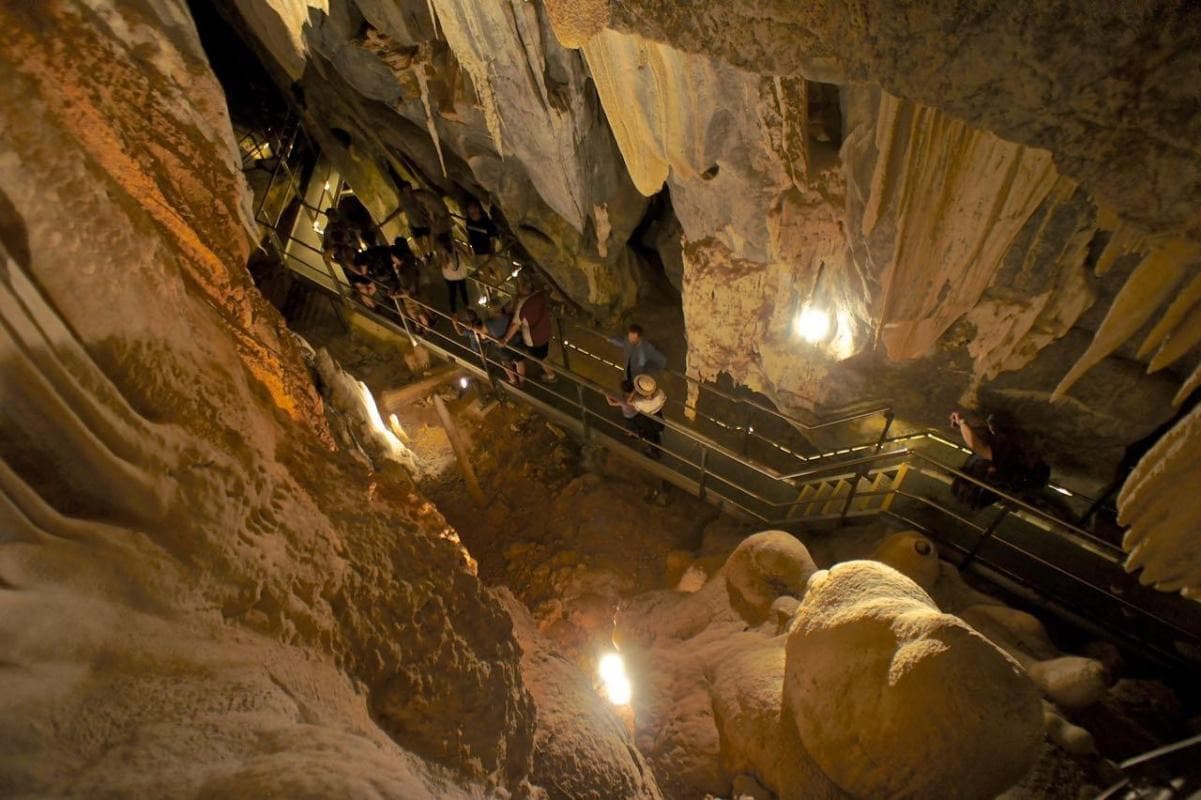
By the time the 4WD drops you at the roadside, the outback looks as if someone has taken an ochre watercolor and left it to dry under a fierce sun: weathered bluffs, checkerboard plains and a horizon that seems to breathe heat. A stone’s throw beyond the carpark, the ground folds inward—an entrance yawns, cool and damp. Inside, the silence is different from the open air: it is dense, deliberate, and it holds the footprints of time. Stalactites and stalagmites lean toward each other like conspirators; curtains of calcite shimmer when the ranger’s torch crosses them. This is Chillagoe-Mungana Caves National Park, an underworld stitched into Queensland’s red earth, and the most compelling reason to take the road inland from Cairns.
Chillagoe is not one single cavern but a landscape of karst—limestone that dissolved, collapsed and sculpted itself over millions of years. The caves are part geology lesson, part theater. Walkways thread through caverns that were once tidal flats, and fossilized marine life peeks from the rock, a reminder that this land was once submerged. Above ground the story shifts to human hands: the area was the site of early 20th-century mining booms, camps and claims that left ghostly traces—old shafts, rusted machinery and a mining town stamp of history that sits beside the natural drama.
The park’s scale requires a slow hunger. A standard day trip—like the popular Chillagoe Caves and Outback Day Trip from Cairns—makes the most of the region: a 4WD journey through the McAllister Ranges and Great Dividing Range, guided cave tours led by a local ranger, a drive by wetlands that attract wading birds, and a stop at the Skybury Coffee Plantation for morning tea before lunch at a timeworn Chillagoe pub. For travelers with more time, the 2 Day Daintree Rainforest and Chillagoe Outback Tour or the expansive 3 Day Reef Cruise, 4WD Rainforest and Outback Chillagoe Package stitch the caves into a bigger north Queensland mosaic—where reef, rainforest and outback touch in surprising ways.
What makes the park special to photographers and serious hikers alike is contrast. Walk out of the cave into a landscape that is brusque and bright; the same day can mean standing beneath dripping, cool stone and later scanning for rock wallabies perched on boulder shelves. The park’s lesser-known features—Granite Gorge’s sculpted tors and the mosaics of seasonal wetlands—add variety, so a day here never feels repetitive.
Cultural context is part of the guide’s commentary. Local Aboriginal connections to karst country are complex and deep; many rock shelters and cave entrances carry stories and are cultural sites. European settlement brought mining and pastoral ventures, which reshaped both economy and landscape. Today the national park is managed to balance access with protection: guided tours are recommended because rangers know the stories, the safe routes and the fragile formations.
Practicalities are straightforward but important. Most visitors arrive on organized tours from Cairns—full-day itineraries are the norm and include 4WD transit, ranger-guided cave entry and meals or planned stops. If you self-drive, expect a long day; sealed roads give way occasionally to gravel, and cell service can be patchy. Inside the caves, paths are typically short and family-friendly—some walks take 15–20 minutes, others can extend to an hour—but the surfaces are uneven and can be slippery. Expect low ceilings in places and a steady coolness that makes a light jacket welcome.
Gear and timing matter: visit in the dry months to avoid the monsoon’s sudden road closures and the insect surge that follows wet weather. In winter (June–August) mornings are crisp, days are clear and visibility is excellent; in the build-up to summer the heat intensifies and storms become more likely.
For food and drink, the Skybury Coffee Plantation stop is more than a caffeine fix; it’s a taste of the region’s small-scale agriculture and a good place to stretch legs. Lunch at the Chillagoe Pub is classic Australian outback—hearty, simple and sociable, a place to swap notes with other travelers and your guide. Wildlife viewing often happens in thickets and around water: bring binoculars for birdlife and patience for wallabies that warm themselves on sunlit rocks.
Leave no trace is literal in the caves. Touching fragile formations oils the stone and halts their growth; flash photography can disturb nocturnal cave species; and stray footsteps off the track risk damaging delicate surfaces. Respect ranger instructions and consider a guided tour—rangers not only interpret the place but protect it.
If you’re planning the trip, use these quick rules: take a tour if you want the most context and the easiest logistics; self-drive only if you’re comfortable on remote roads and carrying extra water; pack layers for the cave-to-sun swing; and give the day space for slow movement—sit on a rock, listen to the cave’s quiet, and let the outback sun recalibrate your pace.
Chillagoe-Mungana isn’t about conquering a summit. It is about shrinking down into a cool limestone room and then emerging into a scrub-scented country that has been shaped by water, wind and human hands. The payoff is an intimate kind of awe: it’s not the panoramic Instagram peak, but a procession of smaller revelations—a calcite veil, a fossil seam, an old mine shaft that smells of oil and history. It’s a place that rewards attention.
Recommended entry points are the ranger-led tours and the day trips from Cairns; for photographers, timing the cave light with the afternoon sun outside produces the richest palettes. And if you leave with one lasting impression, let it be this: Chillagoe is a country of thresholds—the border between ancient sea-floor and dusty outback, between subterranean hush and the broad-sky outback—a place that asks you to listen as much as to look.
Trail wisdom
Small choices, better day.
Bring layers for cave-to-sun swings
Caves are cool and damp while above-ground temperatures can be hot; pack a lightweight jacket to stay comfortable during guided tours.
Wear grippy footwear
Paths inside caves are uneven and can be slippery—sturdy hiking shoes with good tread reduce the risk of slips.
Hydrate and sun-protect
Outback driving and breaks between cave visits mean long sun exposure—carry water, sunscreen and a hat.
Respect cave formations
Avoid touching stalactites and stalagmites—oils from skin halt calcite growth and damage delicate formations.
Local knowledge
Read the place, not just the route.
Watch for native species including Rock wallabies, Wedge-tailed eagles.
Keep an eye out for wildlife during the transition between areas and habitats. Respect distance guidelines.
Park management balances access with protection: stick to marked trails, join ranger-led tours and avoid touching cave formations to preserve them for future generations.
Follow the guide's instructions on size limits, ethical handling, and leave-no-trace practices.
Granite Gorge rock formations—great for sunset light. Skybury Coffee Plantation—morning tea amid local agriculture
Locally recommended viewpoints and quiet spots known best to local operators.
The Chillagoe area has a layered history of Aboriginal occupation, European exploration and early 20th-century mining—remnants of mines and smelters dot the landscape.
Maritime roots and regional tradition shape the waterways and working coasts.
Seasonal guide
Four versions of the same landscape.
Spring
Best forWildflowers · Birdwatching · Mild temperatures
ChallengesVariable rains · Increased insects
Spring brings blooming shrubs and active birdlife; expect warmer days and the possibility of late-season storms.
Summer
Best forLush wetlands · Long daylight · Evening wildlife activity
ChallengesHigh heat · Tropical storms · Road closures after heavy rain
Summer is hot and humid with sudden storms—plan for heat management and possible itinerary changes after heavy rain.
Fall
Best forClear skies · Stable driving conditions · Comfortable hiking
ChallengesWarm days still possible · Some insect activity
Autumn offers stable weather and pleasant days—great for combining cave tours with daytime outback exploration.
Winter
Best forDry roads · Crisp mornings · Best visibility
ChallengesCool cave temperatures · Higher demand from visitors
Winter is the optimal season: dry conditions and clear skies make for reliable travel and excellent wildlife viewing.
Pack with intention
What to bring.
Good to know
Common questions.
Most visitors take an organized 4WD tour departing Cairns; if self-driving, expect a long day on sealed and unsealed roads—plan for limited services and check road conditions.
Plan the edges
The details that make the day easier.
Chillagoe-Mungana Caves are carved from marine sediments and host fossilized remains of ancient sea life; the nearby Mungana mines were once an important multi-metal mining center in the early 20th century.
Taste local Skybury coffee, share a meal at the Chillagoe Pub and listen to ranger stories—this is an outback community where hospitality and history are blended with the landscape.
- Departure point
- Cairns for most tours; duration: full-day (or multi-day packages); fitness: light–moderate; ranger-guided cave entry recommended; cell coverage limited—plan accordingly.
Stay on trails, avoid touching formations, take all rubbish with you and follow ranger instructions—these simple actions protect fragile karst ecosystems and cultural sites.
Explore by topic
Follow the threads.
Keep exploring
Make the story part of the trip.
Set out from Bass Harbor for a private, customizable day on Blue Hill Bay — lighthouses, puffins, seals, and the chance to feel Acadia from the water. Small groups, local captains, unforgettable views.
In four hours you can move from shaded canyon ferns to wind-scoured coastal ridgelines, guided by someone who knows where the light—and the hidden views—live. This private half-day hike on the Monterey Peninsula or Big Sur is compact, curated, and perfect for travelers who want depth without a multiday commitment.
 Related story
Beneath a sky of shifting light, Skaftafell’s ice reads like a map of time. This three-hour guided glacier hike mixes technical instruction with geology and culture: compact, safe, and unforgettable.