
What the day feels like
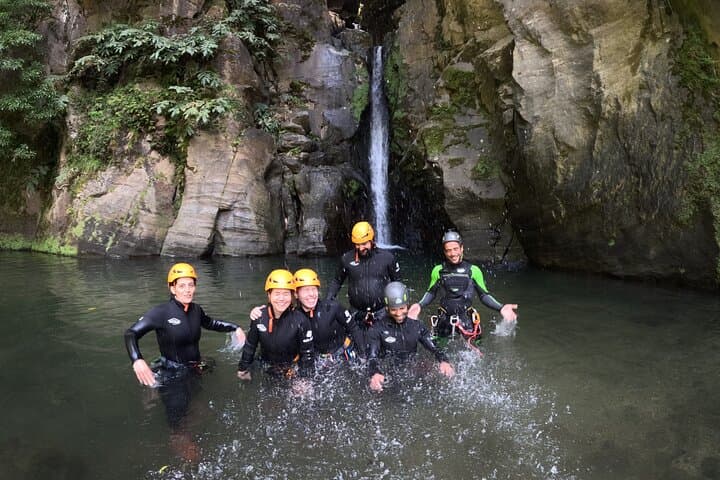
The first time the canyon opens up you feel it like a lung filling — a narrow throat of granite and moss that suddenly becomes a cathedral of water. Sun threads down through fern fronds, spray beads on your helmet, and the canyon seems to breathe around you. Guides brief you once more, the rope rattles like a second heartbeat, and the first waterfall dares you forward. Canyoning at Salto do Cabrito is not showy; it’s immediate and intimate. You move with the water, not against it, stepping off ledges into emerald pools, lowering yourself down curtains of volcanic run-off, and threading through a landscape that was shaped by subterranean heat and relentless rain.
São Miguel — the largest island in the Azores archipelago — is a place where geology and habit have conspired to make adventure compact and accessible. Salto do Cabrito sits tucked into the island’s steep interior valleys where old hydroelectric works meet geothermal vents and laurel forests. The canyon itself threads through basalt and palagonite laid down by ancient eruptions and honed by centuries of rain. In spring and after autumn storms the flows are full and loud; in late summer they slacken to reveal pools you can step into and swim across. The result is a canyoning route that reads like a condensed primer in island geology: volcanic rock, quicksilver streams, and the persistent green of endemic plants.
Local history surfaces in small ways. Near the trail you’ll find remnants of hydroelectric projects and water channels — a reminder that these streams were once harnessed to power island life. The human story here is cooperative with the wild: communities on São Miguel have long harvested the island’s thermal energy and timber, while slowly learning to conserve the fragile habitats that support trout, endemic invertebrates, and the laurel forests.
What makes this particular canyoning trip work for a wide range of travelers is the balance between thrill and accessibility. The operator provides full equipment after a concise safety briefing; the entire experience runs roughly four hours, including a 30-minute walk through verdant trails to reach the canyon mouth. You’ll abseil modest drops, scramble over slick stone, and swim through subterranean pools. Groups are intentionally small—designed to minimize impact and ensure individual attention—so you spend less time waiting and more time moving with the water.
Practicalities that matter: expect wet shoes, a good thermal core, and a sense of spatial rhythm. The canyon likes to compress time — short pitches, quick swims, bursts of adrenaline — so steady breathing and an ability to hinge at the hips on slippery rock will serve you better than raw strength. Guides carry ropes, anchors, and dry bags; novices are taught basic abseil technique and supported every step of the way. The tour lists a duration of four hours and a price point starting near $90 USD; it is an accessible way to experience the Azores’ wilder heartbeat without committing to multi-day logistics.
Plan your day around water and weather. In spring, the canyon is loud and full — spectacular but more technical. Summer dries the flows enough to open more swimable pools and reveal low cascades suitable for less-experienced participants. Fall returns the canyons to a more dramatic, storm-fed state, while winter is quieter and colder but still possible for experienced adventurers with thicker neoprene and a tolerance for chill.
Safety and sustainability are as much a part of the experience as the rope work. The operator emphasizes small groups to reduce trail erosion and disturbance to riparian habitats. You’ll be briefed on how to move without scuffing moss, how to avoid suction-prone holes, and why rinsing boots between watercourses matters. Leave-no-trace is more than a slogan here; it’s practical stewardship of an island ecosystem that’s both resilient and vulnerable.
For travelers, canyoning Salto do Cabrito is a concentrated way to feel the Azores’ dual identities: volcanic force and oceanic tenderness. After the final swim and the return hike, many of us find ourselves quieter, wetter, and oddly well-tempered — the kind of tired that’s part thrill, part education. Back in Ponta Delgada that evening, the island’s flavors feel earned: grilled limpets, a local beer, and a conversation about the weird joy of stepping off a rock into cold green water.
If you go: bring footwear that grips when wet, invest in a thin insulating midlayer you don’t mind getting damp, and be honest about your swimming comfort. Book with small, locally based operators who explain anchors and maintenance—this is where safety and conservation meet. Whether you’re a hiker wanting to try something new or an experienced canyoner seeking the compact drama of an Atlantic-island gorge, Salto do Cabrito rewards curiosity, carefulness, and a willingness to let the canyon lead.
Trail wisdom
Small choices, better day.
Trust the Briefing
Guides provide ropes and anchors and will teach safe abseil technique—listen closely even if you’ve rappelled before.
Footwear Matters
Wear closed-toe water shoes or sticky-soled canyoning shoes for traction on wet basalt.
Pack Minimal Dry Gear
Keep a dry bag at the trailhead with a warm change of clothes and a towel for after the canyon.
Know Your Swim Comfort
Some sections require short swims; be candid with guides about your comfort in deeper pools.
Local knowledge
Read the place, not just the route.
Watch for native species including Azorean bullfinch (locally endemic, may be heard in laurel forests), Brown trout in the streams and occasional herons near watercourses.
Keep an eye out for wildlife during the transition between areas and habitats. Respect distance guidelines.
Operators run small groups to limit erosion and disturbance—respect ropes, stay on established trails, and rinse gear between watercourses to prevent invasive species spread.
Follow the guide's instructions on size limits, ethical handling, and leave-no-trace practices.
Stop at the nearby hydroelectric ruins and water channels for quiet photography and history. Visit a local tea plantation (Gorreana or Porto Formoso) on the drive back to taste Azorean tea
Locally recommended viewpoints and quiet spots known best to local operators.
Small hydroelectric projects and water channels near Salto do Cabrito highlight São Miguel’s early 20th-century efforts to harness stream power for local communities.
Maritime roots and regional tradition shape the waterways and working coasts.
Seasonal guide
Four versions of the same landscape.
Spring
Best forHigh water flows · Lush forest photography · Dramatic waterfalls
ChallengesStronger currents · Cooler water temperatures
Spring brings full, dramatic flows that amplify the canyon’s scale—expect lively water and robust scenery, but dress for colder conditions.
Summer
Best forSwim-friendly pools · Warmer temperatures · Lower technical difficulty
ChallengesHigher visitor numbers · Potentially lower flow in dry spells
Summer offers the most comfortable swims and approachable drops, making it the most popular season for canyoning.
Fall
Best forStorm-fed drama · Rich autumnal hues · Quieter trails
ChallengesVariable weather · Colder water
Autumn can return the canyon to a more intense state after rains—great for experienced participants seeking drama.
Winter
Best forSolitude · Intense lighting for photos · Technical challenges
ChallengesCold water and air · Reduced daylight
Winter trips are colder and more technical; thicker neoprene and experience with colder conditions recommended.
Operator details
What the booking data adds.
Included
- ✓Photos/Videos of the experience
- ✓Professional guides
- ✓Insurance
- ✓All necessary canyoning equipment (wetsuit, helmet, equipped harness, boots)
Not included
- —Private transportation
- —Swimwear (to be worn under the wetsuit)
- —Towel
- —Hair tie for those with long hair
Good to know
- ✓Not recommended for travelers with spinal injuries
- ✓Not recommended for pregnant travelers
- ✓Not recommended for travelers with poor cardiovascular health
- ✓Suitable for all physical fitness levels
- ✓Bring your personal medication if necessary (e.g., for diabetes, asthma, etc...)
Pack with intention
What to bring.
Good to know
Common questions.
No—this tour is suitable for beginners; guides teach abseil technique and manage the technical rigging, though you should be comfortable with short swims and heights.
Plan the edges
The details that make the day easier.
The Azores sit along the Mid-Atlantic Ridge; São Miguel’s landscape is the product of repeated volcanic activity and is still shaped by geothermal heat and frequent rainfall.
After the canyon, head back to Ponta Delgada for fresh seafood—try grilled limpets (lapas) and local queijo fresco. For a quieter stop, visit a tea plantation (Gorreana) or a coastal restaurant in Caloura for sunset and a local craft beer.
- Closest airport
- João Paulo II Airport (Ponta Delgada). Typical drive to trailhead: 30–60 minutes from Ponta Delgada. Cell service: intermittent in the canyon. Permits: none, but book the guided tour in advance; equipment provided.
Tours run in small groups to reduce impact on fragile riparian habitats—pack out everything, avoid disturbing moss and ferns, and rinse footwear between sites to prevent invasive species transmission.
Explore by topic
Follow the threads.
Keep exploring
Make the story part of the trip.
Set out from Bass Harbor for a private, customizable day on Blue Hill Bay — lighthouses, puffins, seals, and the chance to feel Acadia from the water. Small groups, local captains, unforgettable views.
In four hours you can move from shaded canyon ferns to wind-scoured coastal ridgelines, guided by someone who knows where the light—and the hidden views—live. This private half-day hike on the Monterey Peninsula or Big Sur is compact, curated, and perfect for travelers who want depth without a multiday commitment.
 Related story
Beneath a sky of shifting light, Skaftafell’s ice reads like a map of time. This three-hour guided glacier hike mixes technical instruction with geology and culture: compact, safe, and unforgettable.