
What the day feels like
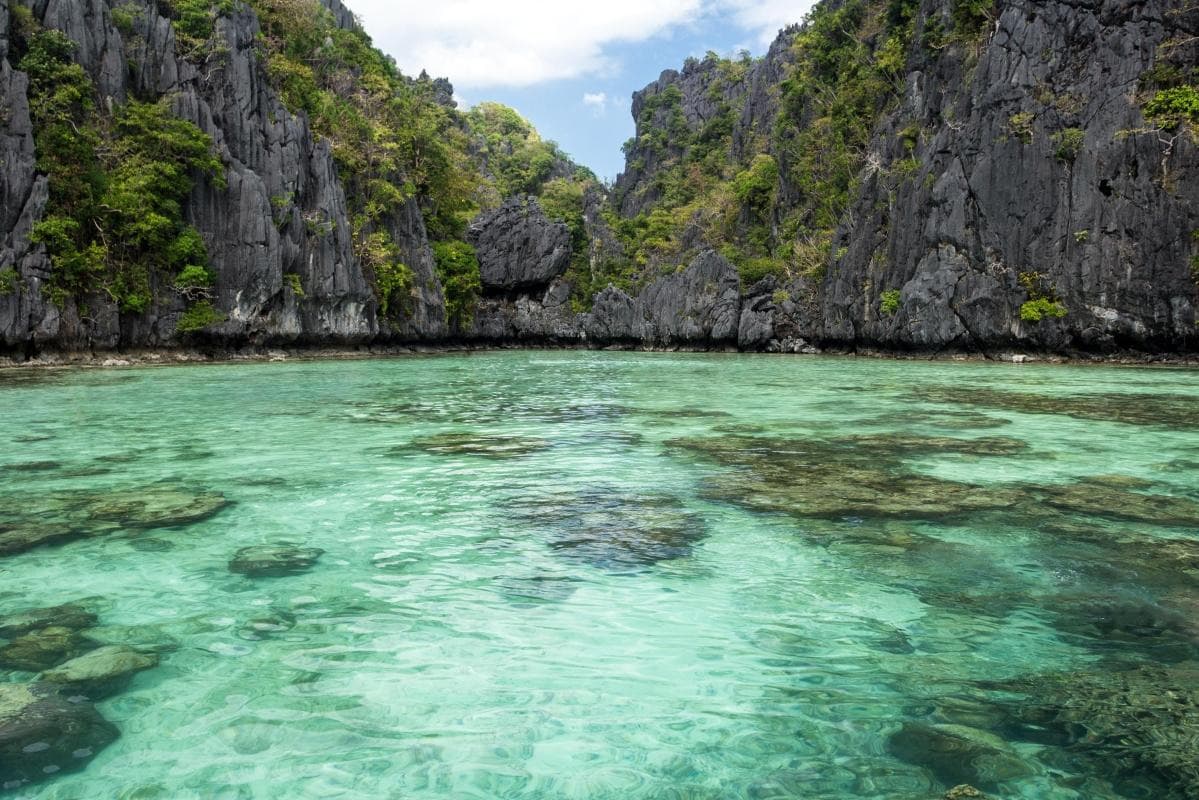
You push off from a banca while the morning sun still slants gold across limestone teeth. The boat motor sighs, leaves you and a half dozen other travelers to the hush. Around you the karst walls of Miniloc Island rise, slick with shadows and streaked with tropical green. A narrow gap—no wider than a doorway at high tide—beckons, and the water beyond is a deeper, impossible turquoise, as if someone has folded a piece of sky into a sheltered pocket. Welcome to Small Lagoon.
This is one of those places where scale and intimacy collide. The lagoon is not enormous—the distance from the entrance to the inner cove is measured in minutes—but the experience feels vast. You’ll often transfer from your boat into a kayak or paddleboard to slip through the opening, or clamber over the gunwale and swim the shallow channel if the tide allows. Inside, the water trades its bright surf blues for a jewel-like calm. Mangrove roots and stalactites cling to the walls; light sifts through water and limestone to paint the sandy bottom with stencils.
Geology and history are stitched into every face of the bay. Bacuit Bay is a drowned karst landscape—uplifted coral and limestone sculpted by sea and wind over millions of years. Those vertical cliffs aren’t just dramatic scenery; they’re a record of a slow planetary patience that frames present-day adventure. The local Tagbanwa people and other indigenous groups have fished and navigated these coves for generations, and El Nido’s modern tourism scene grew around the simple draw of these limestone arenas.
Small Lagoon’s personality is quiet and deliberate. Unlike the open seas that dare you with wind and chop, this place invites slow exploration. You’ll likely find yourself pausing—listening to water lap like fingers, watching a reef fish flick under a rock, or tracing the shadow-line where sunlight meets shade. Guides know the micro-seasons of the lagoon: the best light for photography, the tides that open narrow passages, and the brief windows when the lagoon is entirely yours before the mid-day tour boats arrive.
Practicalities are straightforward but worth planning. Small Lagoon is most commonly visited on El Nido’s classic island-hopping Tour A, a half-day loop that pairs it with Big Lagoon, Secret Beach, and Shimizu Island. Expect a boat transfer of 20–50 minutes from El Nido town depending on seas and your boat’s routing. Tours typically run 4–6 hours; your active time inside the lagoon—paddling, snorkeling, short swims—will be 30–90 minutes, depending on how much you dawdle.
Tide and timing matter. At high tide the entrance swells and your kayak passage is a smooth, doorway glide; at low tide some guides will ask you to swim a narrow channel or wait for the tide to lift. Morning light is thinner and bluer, late afternoon saturates the cliffs with warmth—both are photogenic. Wear reef-safe sunscreen, bring a dry bag, and be prepared to swap from boat to paddle or to a short swim.
Safety and etiquette are simple: respect the coral, keep a hand off the limestone, and follow your guide when navigating shallow reefs. Local operators collect environmental fees and are increasingly conscious of capacity limits—support responsible outfitters who invest in local conservation and fair wages for boat crews.
Why go? Small Lagoon condenses the thrill of a wider Palawan itinerary into a focused, intimate experience. For kayakers it’s an easy, low-stakes paddle that rewards technique with silence and close-up geology. For snorkelers it’s a calm, shallow classroom of reef life. For anyone who simply wants to stand in waist-deep water and watch light through limestone, it’s hard to beat.
Tips to shape your day: book the earliest tour you can—morning silence is a premium. If you want photos without floating tour group backdrops, ask your operator about private or first-boat options. Bring a compact dry bag and wear shoes that grip wet decks and coral. Finally, leave time: the lagoon’s charm is cumulative; a little more time on a kayak lets the place unfurl.
Small Lagoon is not about conquering distance; it’s about registering detail. You’ll notice the way the water leans into the cliff face, how a single reef fish flashes neon, or how the limestone seems to listen. It’s an exercise in slowing—an island-pocket that rewards patience with a clarity that’s both visual and mental. For travelers who want the punch of a dramatic landscape without hours of hiking, or for paddlers seeking an elegant, technical micro-adventure, Small Lagoon does more with less.
Practical snapshot: expect a half-day tour, bring reef-safe sunscreen and a charged camera, budget a small environmental fee (paid locally in cash), and favor an operator who runs lighter passenger loads and uses skilled local crews. Whether you’re planning a day trip from El Nido or weaving Small Lagoon into a longer Palawan route, it’s a stop that lingers—the kind of place you conjure later when you need to remember stillness.
Get there early, move slowly, and let the water close around you. The lagoon is patient; it will reveal itself on the paddleset of its choosing.
Trail wisdom
Small choices, better day.
Go first-boat
Book the earliest island-hopping slot to enjoy calm water and avoid mid-day crowds when multiple boats converge.
Tide-check before you paddle
Ask your guide about tide conditions—entrance width and ease of kayak passage depend on it.
Wear water shoes
Sharp coral and slippery boat decks make grippy water shoes a smart choice for getting in and out of the lagoon.
Use reef-safe sunscreen
Protect coral and your skin—choose reef-safe sunscreen and reapply from a dry bag on the boat.
Local knowledge
Read the place, not just the route.
Watch for native species including green sea turtle, parrotfish and other reef fish.
Keep an eye out for wildlife during the transition between areas and habitats. Respect distance guidelines.
Bring reef-safe products, avoid standing on coral, and choose operators who contribute to local conservation and limit daily visitor numbers.
Follow the guide's instructions on size limits, ethical handling, and leave-no-trace practices.
Paddle the inner coves at dawn when tour boats haven’t arrived for a nearly private experience. Snorkel the lagoon edges where shallow reefs host colorful reef fish and macro life
Locally recommended viewpoints and quiet spots known best to local operators.
Small Lagoon sits within Bacuit Bay, a drowned karst formed from uplifted coral and limestone over millions of years; the bay’s caves and cliffs have supported local fishing communities for generations.
Maritime roots and regional tradition shape the waterways and working coasts.
Seasonal guide
Four versions of the same landscape.
Spring
Best forLow crowds · Clear mornings · Kayaking
ChallengesIncreasing heat · Occasional afternoon showers
March–May is hot and dry—excellent for paddle clarity but bring sun protection and hydrate often.
Summer
Best forLush scenery · Warm water · Snorkeling
ChallengesHigher chance of rain · Rougher seas
June–August sees more humid conditions and intermittent rains; boat rides can be bumpier but the reefs thrive.
Fall
Best forGreen landscapes · Fewer tourists · Flexible pricing
ChallengesTyphoon season peaks; possible cancellations
September–November can bring storms—check forecasts and allow flexible scheduling.
Winter
Best forCalm seas · Dry weather · Crystal visibility
ChallengesCooler early mornings · High season crowds December–February
November–February is the prime dry season—best visibility but expect more visitors and book ahead.
Pack with intention
What to bring.
Good to know
Common questions.
Small Lagoon is reached by boat on island-hopping tours (commonly Tour A), with transfers typically 20–50 minutes depending on your boat and sea conditions.
Plan the edges
The details that make the day easier.
Small Lagoon is on Miniloc Island in Bacuit Bay, a karst landscape formed from uplifted coral limestone—these dramatic cliffs are remnants of ancient reefs.
El Nido’s cuisine is coastal and simple—expect freshly caught fish grilled or served kinilaw (Filipino ceviche), coconut-forward desserts, and small seaside eateries run by island families. Patronize local restaurants and hire local guides to keep money in the community.
- Access
- boat from El Nido town (Tour A). Time: half-day (4–6 hrs). Fees: local environmental fee payable locally. Mobility: light paddling
- swimming required. Best light
- morning or late afternoon.
Favor operators who limit passenger counts, pay fair wages, and practice leave-no-trace; use reef-safe sunscreen and avoid touching coral to minimize damage to fragile marine ecosystems.
Explore by topic
Follow the threads.
Keep exploring
Make the story part of the trip.
Set out from Bass Harbor for a private, customizable day on Blue Hill Bay — lighthouses, puffins, seals, and the chance to feel Acadia from the water. Small groups, local captains, unforgettable views.
In four hours you can move from shaded canyon ferns to wind-scoured coastal ridgelines, guided by someone who knows where the light—and the hidden views—live. This private half-day hike on the Monterey Peninsula or Big Sur is compact, curated, and perfect for travelers who want depth without a multiday commitment.
 Related story
Beneath a sky of shifting light, Skaftafell’s ice reads like a map of time. This three-hour guided glacier hike mixes technical instruction with geology and culture: compact, safe, and unforgettable.