
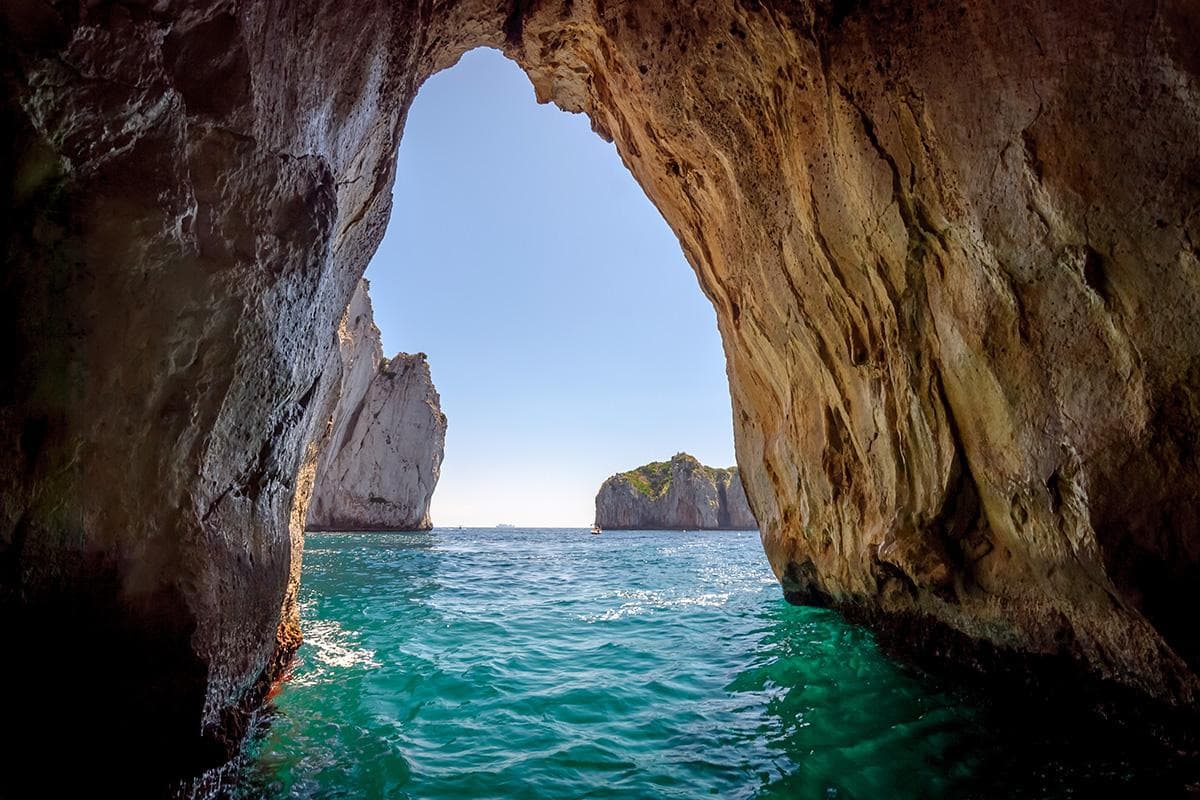
What the day feels like
By dawn the sea is a sheet of glass. A small gozzo slips close to the jagged Capri coastline, and for a beat the island seems to hold its breath. Then the guide slows; the captain points to a dark mouth cut into limestone, no bigger than the prow of our boat. Light folds and refracts like a trick of memory as we edge in. Inside, the water stops being water and becomes a liquid sky—an impossible, saturated blue that pushes outward and illuminates the cave. The Blue Grotto (Grotta Azzurra) is less a place than a cinematic effect of sea, stone, and sun, a natural theater where the Mediterranean shows off its most theatrical trick.
The grotto’s show depends on timing and temperament. Its famous blue comes from sunlight filtering through a submerged opening: solar rays bend through dense seawater, reflect off the pale cave floor, and flood the chamber with the luminous color that travelers have been flocking to see for two centuries. The Romans knew the spot—Imperator Tiberius built a seaside villa nearby—and local fishermen used the cave for centuries before it became a must-see for Grand Tourers in the 19th century. That collision of ancient leisure and later tourism is still visible: marble steps hewn into the rock, the wooden rowing boats that ferry visitors, and the souvenir kit typical of an island that learned to sell its shoreline.
Geology is simple and dramatic here. Capri’s limestone, carved by waves and time, produces a coastline of sheer cliffs and arches, and the grotto is one of the island’s most concentrated demonstrations of coastal erosion. The shallow undercut near the grotto’s surface is small; only when the Mediterranean is calm and light is right can the tiny entrance be navigated by the rowboats that take you inside. That fragility is part of the charm—and part of the reason the Blue Grotto never feels like a private experience.
The ritual of visiting is as much a local choreography as a natural spectacle. Boats queue in the small bay; a local rower takes over from the motorized boat to paddle you through the cave’s low throat. Visitors are asked to lie back and lower their heads as the rower slides the boat inside. The interior is often pulsing with the hum of different languages and camera shutters, but the effect remains uncanny: water that seems lit from within, shadows that curve like a living thing, and a hush that feels almost devotional.
That said, the Blue Grotto is also part of a larger Capri experience. A typical day that includes the grotto will pair it with cruising around the Faraglioni rock stacks, a stop for a dip near Marina Piccola, and time ashore in La Piazzetta for coffee and people-watching. Many of the local boat operators—offering everything from half-day private charters to sunset aperitif cruises—arrange flexible itineraries that combine water and land: the Private Exclusive Capri Boat and Land Tour from Naples hooks a classic boat ride into a full-day immersion including the funicular to La Piazzetta and the Augustus Gardens; family-friendly options like the Private Capri Blue Grotto No Stress Tour With Kids add a convertible ride and a chairlift up Monte Solaro to balance sea time with kid-sized adventures.
Practicalities matter here. The entrance to the Blue Grotto is tide- and weather-dependent; rough seas or low light often close access. Tickets for entry are typically purchased on-site and may require cash; waiting times can be long during peak season. If the grotto is unavailable, many tours pivot to a scenic circumnavigation of the island that includes the Green Grotto and the White Grotto, or a stop beneath the Faraglioni for a swim.
When to go: early morning is the best bet for calm water and fewer boats. Late afternoon cruises—especially the sunset and aperitif tours—offer softer light and a quieter island as day-trippers depart. High summer is peak time for traffic and warmth; shoulder seasons deliver more comfortable temperatures and clearer waters for swimming and snorkeling around lesser-known coves.
What to bring: a small dry bag for your camera, reef-safe sunscreen, and water shoes if you plan to hop in for a swim from a tender. Bring some cash for grotto tickets, and modest layers for evenings that can turn breezy off the water.
Beyond the blue: Capri’s cultural mix is part of the value of a visit. La Piazzetta’s micro-society—cafés, fashion boutiques, and locals who still collapse a day’s gossip into an espresso break—contrasts with Anacapri’s quieter lanes and Villa San Michele’s sleepy gardens. If you’re combining the grotto with a day trip from Naples or Sorrento, factor in transfer times: a jetfoil from Naples takes 40–50 minutes to Capri but add lines and logistics and you’ll want a full day.
The Blue Grotto remains one of those experiences that rewards a pragmatic attitude. Expect queues and the odd disappointment if conditions aren’t right; go anyway with a plan B: a private boat can pivot to quieter coves and include stops for snorkeling, Faraglioni passages, and framed views from the Augustus Gardens. With the right expectations, the grotto doesn’t disappoint: even when busy, that moment when the chamber opens and the water becomes a sky is worth the logistical choreography of getting there.
Whether you come for the blue, the boat ride, or the wider rhythm of Capri—the lazed lunches, the clack of heels in the Piazzetta, the lemon scent in the air—the grotto makes a concise case for why people cross the sea. It’s not just a cave; it’s a carefully curated collision of light, geology, and local craft, and it rewards travelers who approach it with curiosity and preparation.
Trail wisdom
Small choices, better day.
Go early for calm seas
Morning light and slack water give you the best chance to enter the grotto and avoid long queues.
Carry cash for grotto tickets
Entrances and some on-site fees are cash-only; bring small bills to avoid delays.
Pack a small dry bag
Protect cameras and phones from spray during boat transfers and optional swims.
Be ready to lie back
You’ll need to lower your head to pass through the grotto’s low entrance—be prepared and remove hats or loose items.
Local knowledge
Read the place, not just the route.
Watch for native species including Mediterranean monk seal sightings are rare but historically recorded, local shoals of anchovies and schools of colorful fish near the island’s coves.
Keep an eye out for wildlife during the transition between areas and habitats. Respect distance guidelines.
Capri’s marine environment is protected by local regulations; choose operators that limit group sizes, avoid fuel-heavy idling near delicate coves, and use reef-safe products.
Follow the guide's instructions on size limits, ethical handling, and leave-no-trace practices.
Anacapri’s lesser-known paths and quiet terraces for panoramic views. A short swim-stopping cove near the Faraglioni used by local captains for snorkeling
Locally recommended viewpoints and quiet spots known best to local operators.
The grotto was used in Roman times and rediscovered for modern tourism in the 19th century when it became a signature stop on the Grand Tour.
Maritime roots and regional tradition shape the waterways and working coasts.
Seasonal guide
Four versions of the same landscape.
Spring
Best forfewer crowds · mild temperatures · wildflower-scented walks
Challengesunpredictable sea conditions · occasional rain showers
Spring offers pleasant temperatures and thinner crowds, though unsettled weather can sometimes close the grotto.
Summer
Best forcalm seas (early AM) · swimming and snorkeling · long daylight
Challengeshigh tourist numbers · hot midday sun
Summer is peak season—spectacular light and warm water but expect crowds and book early for private boats.
Fall
Best forclear water · golden light at sunset · off-peak tranquility
Challengesshorter days · some businesses reduce hours late season
Fall balances warm sea temperatures with fewer visitors and crisp light—ideal for photographers and swimmers.
Winter
Best forquiet island walks · lower prices
Challengesmany tours suspended · rough seas often close grotto access
Winter is quiet and moody; the grotto may be closed, but the island’s bones and views are compelling without the crowds.
Pack with intention
What to bring.
Good to know
Common questions.
Grotto tickets are usually purchased on site at the cave entrance and are often cash-only; many boat tours include a grotto visit but not the entry ticket.
Plan the edges
The details that make the day easier.
The Blue Grotto was a favorite of Roman Emperor Tiberius, who had a villa nearby; it later became widely known after 19th-century travelers publicized it in European travel literature.
Capri’s culinary personality is lemon-forward: try a limoncello after a boat day and sample island specialties like ravioli Capresi and fresh seafood in Marina Grande.
- Getting there
- Jetfoil or hydrofoil from Naples or Sorrento (40–50 minutes); grotto access depends on weather; on-site entry often cash-only; many boat operators offer private half- or full-day charters.
Choose operators that limit group sizes and use local crews; avoid single-use plastics and choose reef-safe sunscreens to minimize impact on marine habitats.
Explore by topic
Follow the threads.
Keep exploring
Make the story part of the trip.
Set out from Bass Harbor for a private, customizable day on Blue Hill Bay — lighthouses, puffins, seals, and the chance to feel Acadia from the water. Small groups, local captains, unforgettable views.
In four hours you can move from shaded canyon ferns to wind-scoured coastal ridgelines, guided by someone who knows where the light—and the hidden views—live. This private half-day hike on the Monterey Peninsula or Big Sur is compact, curated, and perfect for travelers who want depth without a multiday commitment.
 Related story
Beneath a sky of shifting light, Skaftafell’s ice reads like a map of time. This three-hour guided glacier hike mixes technical instruction with geology and culture: compact, safe, and unforgettable.