
What the day feels like
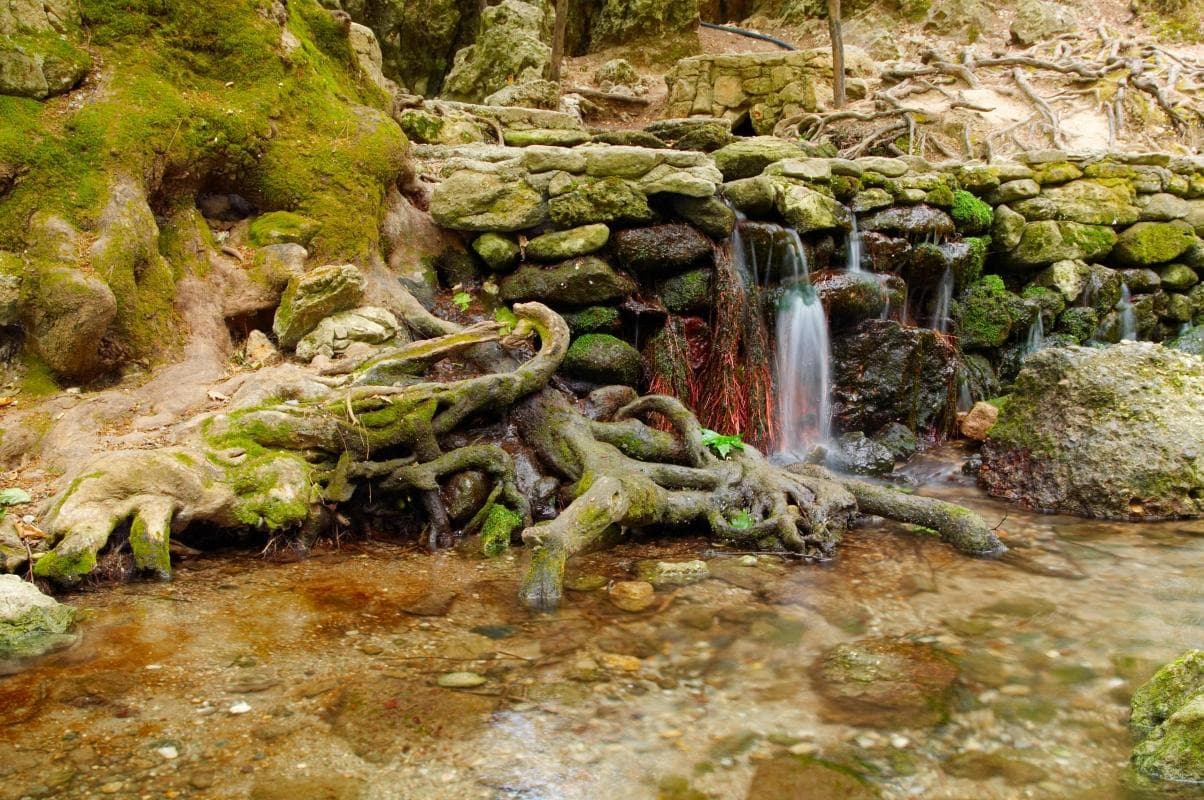
You duck under the canopy and the temperature drops by several degrees as the forest swallows the Aegean glare. Sunlight threads through pine needles, the air smells faintly of resin and wet stone, and somewhere ahead the steady voice of water calls you on. This is Seven Springs—Epta Piges—the island’s secret that moves rather than sits still. The springs insist you slow down: footsteps soften, voices lower, cameras are pointed through a dim tunnel that opens to a small, still lake where peacocks preen like feudal courtiers.
The approach feels like a deliberate change of mind. From the scrubby limestone ridges around Rhodes, the landscape bends and funnels into a narrow green corridor where groundwater finds relief at the surface. In the summer, travelers arrive sweaty from coastal heat and leave shivering from the cool, groundwater-fed air. The path is short—mostly flat with tree-rooted steps and a brief climb near the snack tavern—but the experience stretches time. People linger. They cup their hands and sip from rumor: drink from the seven springs, and you’ll be seven years younger, say the old stories.
Epta Piges, literally “Seven Springs,” is as much folklore as it is place. The name signals the millennia-old relationship between people and water across the Aegean: wells and fountains mark settlements, shared life-giving resources that dictate where villages cluster and roads run. Geologically, the springs are the visible expression of Rhodes’ fractured limestone. Rain and winter runoff sink into karstic rock inland, travel through underground channels, and re-emerge where the strata allow. The site’s most theatrical feature is a narrow, 186-meter tunnel—manmade as a channel for access—that leads you through cool darkness to the sheltered lake beyond. Walking it is part spelunking and part meditation; the drip of water becomes a metronome.
Culturally, Seven Springs stitches together the island’s other attractions. Many full-day tours pair Epta Piges with Lindos’ whitewashed maze or the verdant Butterfly Valley—and there’s a reason these itineraries exist. One minute you’re breathing salt and sea at a cliff-top acropolis, the next you’re listening to freshwater trickle and watching a spill of green that feels impossibly inland for a Greek island. Local guides will also point out the peacocks—escaped or kept, they’ve become part of the place—and call attention to the traditional tavernas clustered under the trees. Try a small pour of local wine or a glass of souma to compare island flavors: sea and forest, fermented and fresh.
Practicalities matter here because the magic of Seven Springs rides on simple logistics. The core loop is short—most visitors spend 45 minutes to 2 hours exploring, longer if you linger at the lake or eat at the tavern. The trail is roughly flat with minimal elevation gain, though roots and occasional stone steps require steady footing. The famous tunnel is about 186 meters long; it’s dark, damp, and often slick. Bring a small flashlight or use your phone’s light and wear shoes with grip. In summer, the tunnel and the lake offer a welcome, chill respite; in spring the whole gorge is lush, and in winter the springs run strongest.
Access and timing: the site sits about a 30–45 minute drive from Rhodes Town depending on traffic. Small buses, guided coaches, and self-drive 4x4 safaris all stop here—many island tour operators fold Seven Springs into full-day circuits that include Lindos, Butterfly Valley, and wine tastings in Embonas. If you’re driving, parking is limited and can fill early in high season, so aim for an early-morning arrival to enjoy the quiet. Afternoon light through the pines is gorgeous for photos but also coincides with tour-group arrivals.
The tunnel is the draw, but the reasons to linger are details: understand how the forest feels alive with sound—birds arguing the daylight, water daring you to come closer—and watch local ducks negotiate the lake. Respect signage; swimming is possible in some seasons but rules and conditions change. If you want to cool off, verify with the local taverna or staff whether a dip is safe and permitted that day.
Preparation is straightforward. Footwear with tread, a small headlamp or torch, water, and a lightweight rain shell will take you through most conditions. Bring cash for the small tavern—credit isn’t always accepted—and a camera that performs well in low light for the tunnel and reflections. If you’re sensitive to confined spaces, prepare for the tunnel’s squeeze; it’s not claustrophobic for most, but it’s damp and narrow.
Sustainability here is practical and civic-minded: the springs are a fragile groundwater-dependent ecosystem. Stay on paths, don’t feed wildlife (peacocks and ducks become aggressive if habituated), and take your trash with you. Local businesses rely on respectful visitors—the tavern beneath the trees, the guides who shuttle people in by minibus, and small farms in nearby Archipoli that sell honey, olive oil, and seasonal fruits—so leave the place as good as you found it.
For planners who want to build a day, pair Seven Springs with Lindos for architecture and beaches, or with a wine tasting in Embonas for a slower cultural counterpoint. Off-road 4x4 safaris that include Epta Piges give you a taste of Rhodes’ interior backroads, and small-group tours make logistics painless if you don’t want to drive. No matter how you get there, allow time to move at the springs’ pace: quiet, deliberate, and always leaning toward the water.
Seven Springs is not a headline-grabbing cliff or kilometer-long trail; it’s a composed interlude on a busy island. For that reason it rewards a particular type of traveler—one who wants to exchange ultraviolet glare for filtered light, who values an intimate landscape over one more postcard view. If you come prepared, you’ll leave refreshed, perhaps a little cooler, and with a clearer sense of Rhodes’ inland personality: a place where the island’s geology and human story meet in running water.
Trail wisdom
Small choices, better day.
Bring a light for the tunnel
The 186-meter tunnel is dark and damp—carry a headlamp or use your phone light to navigate slippery surfaces safely.
Wear grippy shoes
The trail has roots and wet stone; closed-toe shoes with tread are better than sandals for stability.
Arrive early
Morning visits beat the tour-bus rush and offer softer light and fewer crowds at the lake and tavern.
Respect wildlife
Do not feed the peacocks or ducks; habituation leads to aggressive behavior and ecological imbalance.
Local knowledge
Read the place, not just the route.
Watch for native species including Peacocks (often seen near the lake), Ducks and forest birds.
Keep an eye out for wildlife during the transition between areas and habitats. Respect distance guidelines.
The springs are a groundwater-dependent ecosystem—stay on trails, don’t feed wildlife, and pack out any trash to protect the spring-fed habitat.
Follow the guide's instructions on size limits, ethical handling, and leave-no-trace practices.
Archipoli village—local shops and artisanal honey and olive oil tastings. Butterfly Valley—combine for a day of inland nature contrasts
Locally recommended viewpoints and quiet spots known best to local operators.
Epta Piges (Seven Springs) reflects Rhodes’ karst geology and long human reliance on freshwater sources; the 186-meter access tunnel is a notable manmade feature to reach the secluded lake.
Maritime roots and regional tradition shape the waterways and working coasts.
Seasonal guide
Four versions of the same landscape.
Spring
Best forwildflower displays · lush forest walking · cool temperatures
Challengesmuddy trails after rain · more insects in warm spells
Spring brings the richest vegetation and comfortable hiking temperatures—expect verdant trails and stronger spring flows.
Summer
Best forcool respite from the coast · short nature escape · combining with nearby beaches
Challengestour-group crowds midday · limited parking
Summer is perfect for escaping coastal heat but plan for crowds; early mornings or late afternoons are best.
Fall
Best formilder weather · photography of autumn light · fewer tourists
Challengesshorter daylight hours · potential rainfall
Fall offers beautiful light and fewer visitors; the forest remains green and the water flow is steady after late-summer rains.
Winter
Best forstrong spring flows · a quiet, atmospheric visit · birdwatching
Challengescooler temperatures · some facilities or taverns may have reduced hours
Winter is quiet and atmospheric, with robust water flow—pack layers and expect damp, cool conditions.
Pack with intention
What to bring.
Good to know
Common questions.
Most visitors spend 45 minutes to 2 hours exploring the paths, tunnel, lake, and nearby taverna—plan more time if you want to dine or swim.
Plan the edges
The details that make the day easier.
The site’s access tunnel is approximately 186 meters long; Epta Piges literally means “Seven Springs,” a name that references the multiple freshwater outlets that feed the lake.
Under the pines, family-run tavernas serve locally produced honey, olive oil, fresh fruits, and island spirits like souma and tsipouro—sample them to taste the inland Rhodes that contrasts with the seaside.
- Distance
- ~30–45 min from Rhodes Town by car; time to allocate: 1–2 hours; tunnel length: ~186 m; facilities: small taverna and parking; accessibility: short uneven trails, not fully wheelchair accessible.
Respect the springs by staying on marked paths, avoiding feeding wildlife, and supporting local vendors—small purchases help communities that steward the site.
Explore by topic
Follow the threads.
Keep exploring
Make the story part of the trip.
Set out from Bass Harbor for a private, customizable day on Blue Hill Bay — lighthouses, puffins, seals, and the chance to feel Acadia from the water. Small groups, local captains, unforgettable views.
In four hours you can move from shaded canyon ferns to wind-scoured coastal ridgelines, guided by someone who knows where the light—and the hidden views—live. This private half-day hike on the Monterey Peninsula or Big Sur is compact, curated, and perfect for travelers who want depth without a multiday commitment.
 Related story
Beneath a sky of shifting light, Skaftafell’s ice reads like a map of time. This three-hour guided glacier hike mixes technical instruction with geology and culture: compact, safe, and unforgettable.