
What the day feels like
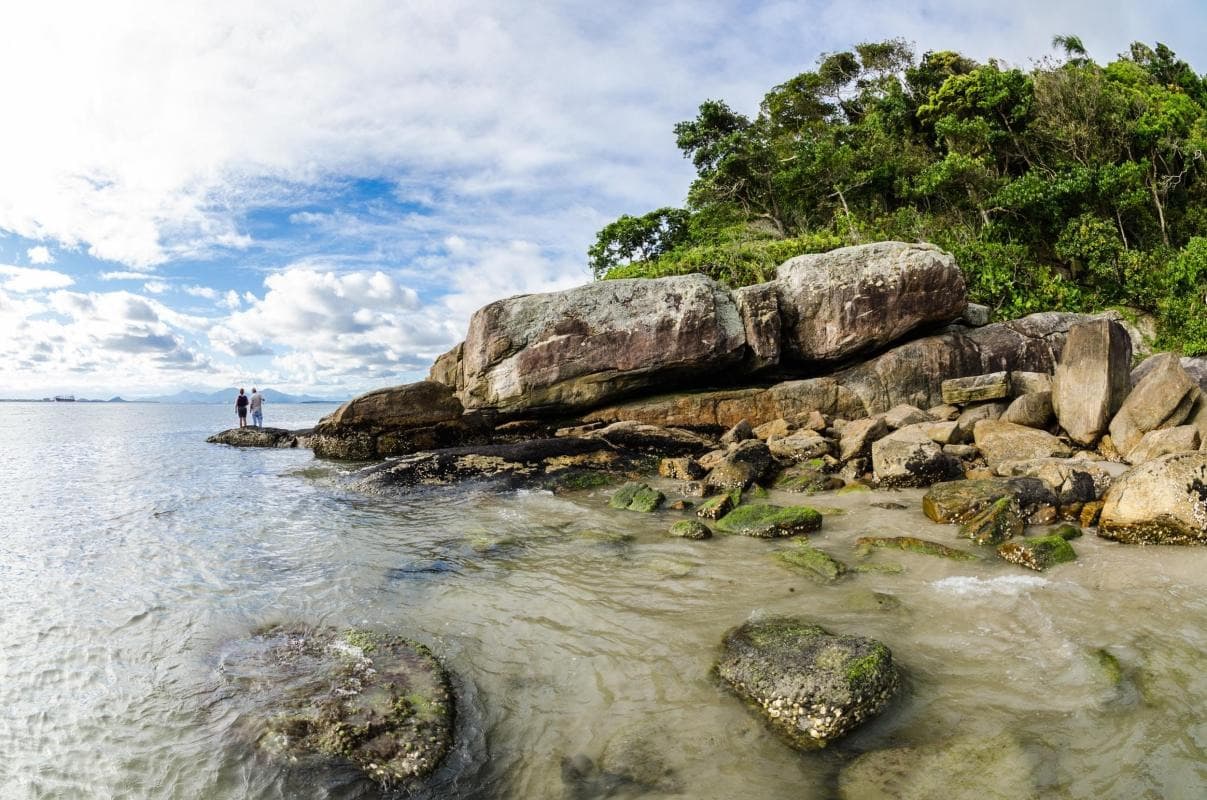
The ferry spits you out like an invitation. One moment you are watching the coastline of Paraná recede, the next you’re threading a narrow pier into a pocket of sand and scrub where the only noise is surf, gulls and the slow creak of a wooden signboard. Ilha do Mel—Honey Island—doesn’t so much announce itself as make itself necessary: a place to slow down where foot traffic is the only traffic and the landscape negotiates your pace. Walkers arrive here intent on beaches and lighthouses; they stay for wind-sculpted dunes, Atlantic Forest fragments and a slow-motion coastal culture that still fishes by hand and cooks over wood fires.
The island is small but diverse. Trails stitch beaches to forest and to the two human landmarks most people come for: Farol das Conchas (the Conchas Lighthouse) and the tiny, cave-wrapped Gruta das Encantadas. Paths range from short shoreline strolls of less than a kilometer to loops across dunes and shaded paths that can stretch 3–7 km. Elevation is modest—this is an island of rolling dunes and low headlands rather than alpine climbs—so the work is measured in sand and sun rather than steep grades. That makes Ilha do Mel ideal for hikers who prefer technical ease but want sensory compensation: wind that pushes against you, salt on your skin, and the landscape changing from scrubby dune to dense greenery in under a mile.
Geologically the island is a coastal accumulation of sand and shell, sculpted by tides and Atlantic storms. The dunes act as living architecture—mobile, fragile and essential to the island’s ecology. Botanically, remnants of the Atlantic Forest cling in patches, hosting a surprising birdlife: terns and gulls on the beaches give way to tanagers and woodpeckers inland. Humans have lived on and around Ilha do Mel for centuries; the island preserves a hybrid maritime-caiçara culture—small-scale fishing, boat-building and a hospitality economy of pousadas (guesthouses) and beachside kiosks. The Farol das Conchas, its white tower marking the outer edge of Paranaguá Bay, is more than a photo subject: it’s a maritime touchstone that guided ships into the port of Paranaguá for generations.
Ilha do Mel is also conservation in practice. Most of the island sits inside the Ilha do Mel State Park (Parque Estadual Ilha do Mel), and motorized vehicles are banned—there are no paved roads, no ATVs, no cars—so walking becomes the connective tissue. That rule shapes everything: accommodations are human-scale, supplies come by boat, and visitors quickly adapt to a slower logistics rhythm. The prohibition on vehicles is a powerful conservation tool—protecting dunes, nesting birds and the island’s fragile freshwater lens.
For travelers, the island’s appeal is practical as much as poetic. There are a handful of small settlements—Nova Brasília and Encantadas are the most familiar bases—each with pousadas, simple restaurants and the kinds of amenities that fit a walking holiday. You can do three things well here in a day: hike to the lighthouse for the view, explore the Gruta das Encantadas and then find a beach for a late afternoon swim. Or take it slow: breakfast on the veranda of a pousada, a morning walk through forest for birdwatching, an afternoon in a hammock while the tide collects shells along the shore.
Preparation is straightforward but essential. Because there are no cars and services are modest, bring cash and basic supplies, especially outside high season. Footwear matters: trails switch rapidly from hard-packed sand to soft dunes and tree roots; a good pair of trail shoes or sturdy sandals with grip will save you sore feet. Hydration and sun protection are non-negotiable—there is little shade on many of the island’s best viewpoints and UV reflection off sand and water intensifies exposure.
Timing is everything. Spring (September–November) is often the quietest sweet spot: mild weather, fewer mosquitoes than summer and strong wildflower displays inland. Summer fills the island with people—if you want company, come then; if you want solitude, come in shoulder season. No matter when you visit, plan your boat back-tickets: ferry schedules are fixed and missing the last run means an unexpected night in a very charming guesthouse—or a logistical headache.
For practical itineraries: a half-day loop to Farol das Conchas covers beaches and lookouts with minimal ascent and pays off at a narrow promontory where the ocean spills into a deep blue channel. A full-day option links multiple beaches, the Gruta das Encantadas and a picnic stop beneath native trees—expect 4–6 hours on trails and sand. If you’re bringing a tent, note that overnight camping is regulated within the state park; check current rules and permitted zones before you go.
Ilha do Mel’s rhythm rewards attention. Watch for bird flocks that move like punctuation in the sky; pause where the sound of surf changes tempo and you realize a current is scouring a channel; listen to local fishermen mend lines in the late afternoon. These are the markers of a coast that resists speed and encourages a slow, deliberate curiosity.
Whether you favor a day trip from the mainland or a multi-night escape, plan for simplicity: reliable footwear, a refillable bottle, sun protection and a readiness to ask locals where the best tide pools or sunset ledges are. Leave no trace, respect nesting sites and remember that on Ilha do Mel, the most valuable rhythm is your own slow stride along sand and shade.
Trail wisdom
Small choices, better day.
Book boats and lodging ahead
Ferries have fixed schedules and high season fills the island’s small pousadas; reserve in advance and confirm return crossings.
Footwear for sand and roots
Choose trail shoes or grippy sandals—routes alternate between soft dunes, packed sand and rooty forest paths.
Carry cash and essentials
Many kiosks and pousadas accept only cash or have limited card connectivity; bring small bills and basic supplies.
Respect nesting and dunes
Stay off marked nesting zones and walk established trails to protect turtle nesting and dune vegetation.
Local knowledge
Read the place, not just the route.
Watch for native species including Coastal seabirds and terns, Atlantic Forest birds such as tanagers and woodpeckers.
Keep an eye out for wildlife during the transition between areas and habitats. Respect distance guidelines.
Most of the island is part of Ilha do Mel State Park; visitors are expected to keep to trails, avoid disturbing nests and follow park rules to protect dunes and coastal habitats.
Follow the guide's instructions on size limits, ethical handling, and leave-no-trace practices.
Gruta das Encantadas (a small, photogenic cave and rock shelter). A narrow promontory near Farol das Conchas for dramatic ocean views at low tide
Locally recommended viewpoints and quiet spots known best to local operators.
Long inhabited by caiçara fishing communities, Ilha do Mel’s lighthouse and maritime role made it an important coastal landmark for ships entering Paranaguá Bay.
Maritime roots and regional tradition shape the waterways and working coasts.
Seasonal guide
Four versions of the same landscape.
Spring
Best formild temperatures · fewer crowds · wildflowers and birding
Challengesoccasional rain · variable ferry schedules
Spring (Sep–Nov) offers comfortable weather, fewer tourists and strong bird activity—ideal for hikers and nature lovers.
Summer
Best forbeach swimming · long daylight · lively local scene
Challengeshot sun · more mosquitoes · crowds
Summer fills the island with swimmers and families; expect busy beaches, strong sun and limited quiet spots.
Fall
Best forgentle weather · photography · peaceful walks
Challengesshorter days · some businesses reduce hours
Fall is calm and photogenic—good for golden-hour lighthouse shots and longer shoreline walks.
Winter
Best forlow-season solitude · storm-watching · off-season rates
Challengeschiller sea and wind · reduced services
Winter brings fewer visitors and introspective beach walks; prepare for cooler winds and sparser amenities.
Pack with intention
What to bring.
Good to know
Common questions.
Departures are by ferry or private boat from the mainland—common launch points are Pontal do Sul (Pontal do Paraná) and Paranaguá; check schedules in advance.
Plan the edges
The details that make the day easier.
Ilha do Mel is largely vehicle-free and much of the island is protected as the Ilha do Mel State Park (Parque Estadual Ilha do Mel), helping preserve its dunes, beaches and Atlantic Forest fragments.
Caiçara culture shapes the island—pousadas serve fresh grilled fish, coconut water and simple seafood stews; evenings often end with quiet conversations on porches and the smell of wood-fired cooking.
- Access
- ferry from Pontal do Sul
Travel light, pack out your trash, avoid single-use plastics and follow all park rules—these measures help protect nesting turtles, dune plants and the island’s freshwater lens.
Explore by topic
Follow the threads.
Keep exploring
Make the story part of the trip.
Set out from Bass Harbor for a private, customizable day on Blue Hill Bay — lighthouses, puffins, seals, and the chance to feel Acadia from the water. Small groups, local captains, unforgettable views.
In four hours you can move from shaded canyon ferns to wind-scoured coastal ridgelines, guided by someone who knows where the light—and the hidden views—live. This private half-day hike on the Monterey Peninsula or Big Sur is compact, curated, and perfect for travelers who want depth without a multiday commitment.
 Related story
Beneath a sky of shifting light, Skaftafell’s ice reads like a map of time. This three-hour guided glacier hike mixes technical instruction with geology and culture: compact, safe, and unforgettable.