
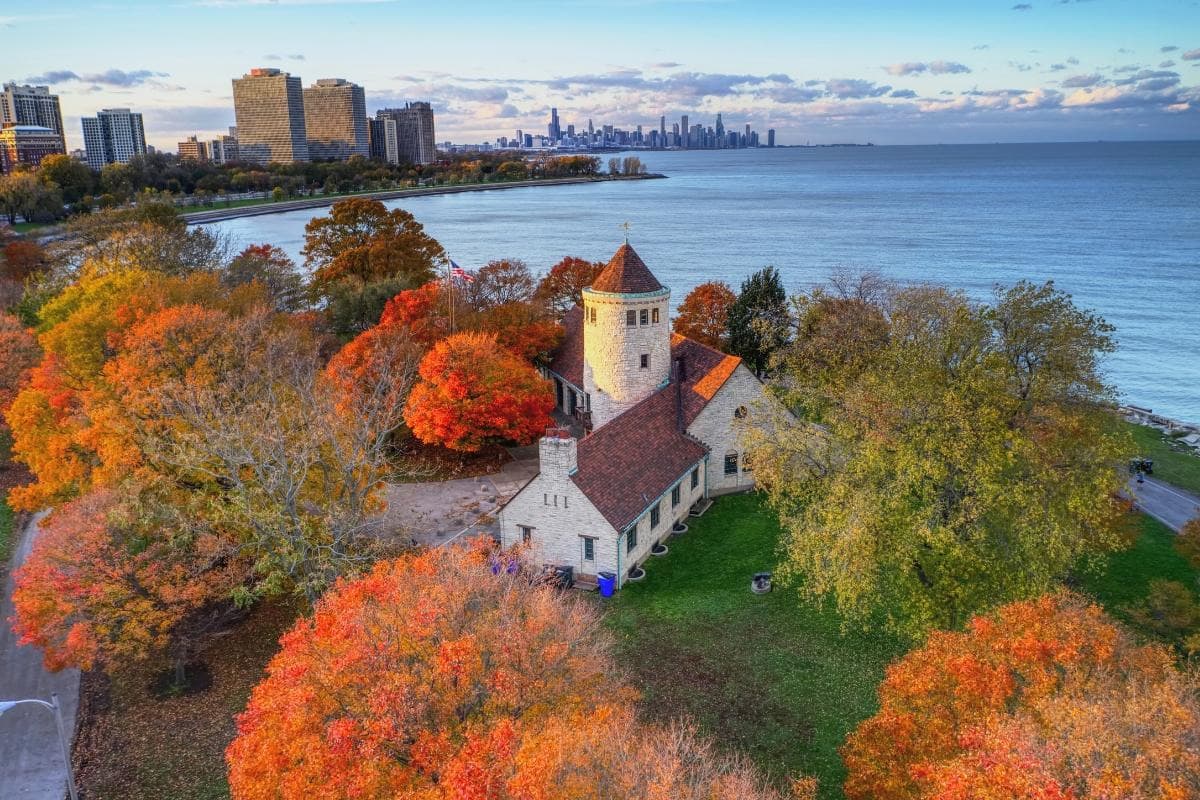
What the day feels like
You arrive in Hyde Park the same way the wind arrives off Lake Michigan — slow at first, then with authority. It slips under the elevated tracks and moves through the University of Chicago’s Gothic arches, nudges the oaks in Jackson Park, and pushes you along the Lakefront Trail toward Promontory Point. In this corner of Chicago the city unfurls more like a neighborhood than a skyline: academic quads, quiet museum facades, barbeque smoke mixing with the lake’s salt air. It’s a place where history sits down beside recreation and tells you how to enjoy both.
Hyde Park’s cues for activity are subtle and civic-minded. Frederick Law Olmsted’s landscapes at Jackson Park and the Midway Plaisance create long green rooms for running, biking, and people-watching. The Museum of Science and Industry anchors the neighborhood with exhibits that lure families from across the region; a short ride south and the beaches and breakwalls of the lake give paddlers protective water for a calm skyline view. The neighborhood’s streets are flat, wide, and forgiving — perfect for the casual cyclist, the family on a food-and-bike tour, or the electric-bicycle rider who wants to cover more ground without breaking a sweat.
Biking is the natural mode here. Local operators like Bobby’s Bike Hike have built tours around what Hyde Park does best: offer a gentle, exploration-friendly geography that links the academic, the historic, and the waterfront. Tours vary — you can do a 3-hour Lakefront Neighborhoods loop, a 13-mile food-and-brews sampler, or a shorter e-bike landmarks trip that hangs on Buckingham Fountain and the Museum Campus — but they all share a common character: close-up city touring without the car, with guide-led context that points out moments you’d otherwise miss.
Geology and history are never far from view. The lake itself is the region’s great sculptor — its shoreline shaped over millennia and reinforced in spots with limestone breakwalls. Hyde Park’s cultural geology has been formed faster: the 1893 World’s Columbian Exposition left a lasting imprint in nearby Jackson Park and on the Midway, and the University of Chicago established the area as a center of scholarship and architecture in the early 20th century. Walk the campus and you’ll see collegiate Gothic masonry and modernist interventions, all threaded with the social history of Chicago’s South Side.
Culturally the neighborhood is a nuanced mosaic. Hyde Park is home to a diverse network of restaurants, bookstores, and music venues, and it’s a place where community institutions — the University, local museums, and longtime small businesses — balance visitor traffic with neighborhood life. That makes the area ideal for guided experiences that don’t just show you murals and monuments, but explain them: why a particular building sits where it does, how the lakefront was reclaimed for public use, and where to find the best late-afternoon coffee after a long ride.
Practically, Hyde Park is forgiving. Terrain is mostly paved, elevation gain is minimal, and the Lakefront Trail is a nearly car-free ribbon that stretches for miles — ride north toward Evanston or south toward the South Shore Cultural Center and you can easily string together a half-day outing. Typical guided rides clock in at 2 to 4 hours and cover 8–15 miles at a leisurely pace. If you want to add water, passes that bundle bike rental with kayak time and a swim make for a balanced outdoor day: 2-hour kayak windows at spots like Ohio Street Beach provide calm water close to the skyline, ideal for photographers or people nervous about open water.
Safety and timing matter. Wind off the lake can be a tailwind on the way out and a headwind on the return; check the forecast and plan to ride into the wind early, or embrace an e-bike for the return leg. Weekends in summer bring families and joggers to the Lakefront Trail; midweek mornings give you quieter pathways and lesser crowds at museum stops. Hydration is simple: bring a refillable bottle — there are water stations at some parks and public facilities — and plan food stops with your guide if you’ve booked a food-and-bike tour.
Why travel here? Hyde Park condenses a lot of Chicago into accessible pieces: significant architecture, waterfront access, world-class museum experiences, and routes that suit beginners and seasoned urban cyclists alike. It’s a neighborhood that rewards slow attention — look beyond the Bean and you’ll find a South Side locale where the curbs are welcoming, the guides know the stories, and the lake dares you to push a little harder on the pedals.
If you go: book a guided tour to learn the context (and get a helmet and local tips). Pick a morning ride for cooler air and cleaner light. Save an afternoon for a museum or a quiet paddle: kayaking the lake with the skyline on the horizon is the kind of city memory that keeps you returning.
Whether you arrive to study halls or shoreline, Hyde Park hands you routes and stories in equal measure — and asks only that you move through them with curiosity and a good pair of pedals beneath you.
Trail wisdom
Small choices, better day.
Time your ride for morning light
Start early to avoid weekend crowds on the Lakefront Trail and to get cleaner, softer light for photos along the shoreline.
Dress for wind off the lake
Layer a lightweight windbreaker over breathable cycling clothes — the lake breeze can feel much colder than inland temperatures.
Use a good helmet and a bell
Trails are shared with pedestrians; a helmet is required for some rentals and a bell or polite voice prevents surprises.
Hydrate and plan snack stops
Carry a refillable bottle and plan to stop at neighborhood cafés or tour food stops to refuel, especially on longer rides or combined bike-and-kayak passes.
Local knowledge
Read the place, not just the route.
Watch for native species including Canada goose, Red-tailed hawk.
Keep an eye out for wildlife during the transition between areas and habitats. Respect distance guidelines.
Chicago’s lakefront is protected as a public trust; stick to established trails, pack out trash, and respect nesting areas and shorelines to minimize impact.
Follow the guide's instructions on size limits, ethical handling, and leave-no-trace practices.
Promontory Point for a low-key sunset with skyline views. Oriental Institute Museum tucked into the University of Chicago campus
Locally recommended viewpoints and quiet spots known best to local operators.
Hyde Park sits adjacent to Jackson Park and the Midway Plaisance, sites shaped by the 1893 World's Columbian Exposition and designed in part by landscape architects including Frederick Law Olmsted.
Maritime roots and regional tradition shape the waterways and working coasts.
Seasonal guide
Four versions of the same landscape.
Spring
Best forWildflower blooms in the parks · Quiet early morning rides
ChallengesUnpredictable winds · Occasional muddy park paths after thaw
Spring brings brisk air and budding greenery; trails are less crowded but watch for wind and soft spots in park paths.
Summer
Best forSun-soaked lake swims · Long daylight for bike + kayak combos
ChallengesCrowded trails and beaches · Hot afternoons and strong UV
Summer is peak activity — ideal for combined bike, kayak, and swim passes, but expect crowds and bring sun protection.
Fall
Best forCrisp rides with changing leaves · Fewer tourists and pleasant temperatures
ChallengesShortening daylight · Cooler evenings by the lake
Fall is ideal: cooler temps and fall color make Hyde Park rides particularly scenic and comfortable.
Winter
Best forSnow-dusted architecture photos · Quiet neighborhood walks
ChallengesCold winds off the lake · Icy patches on trails and sidewalks
Winter is quiet and striking visually, but cold, gusty lake winds and icy surfaces make biking more challenging.
Pack with intention
What to bring.
Good to know
Common questions.
Yes — most guided tours in Hyde Park are leisure-paced, on flat terrain, and designed for families and casual riders; e-bike options are available for less experienced cyclists.
Plan the edges
The details that make the day easier.
Jackson Park and the Midway Plaisance were central sites of the 1893 World's Columbian Exposition, a landmark event that shaped Chicago’s architectural and cultural legacy.
Hyde Park blends collegiate rigor with South Side culture — from Museum of Science and Industry exhibitions to local soul-food and coffee shops. A post-ride stop might include a neighborhood café, a visit to the university bookstore, or a late-afternoon museum walk.
- Getting there
- CTA Green Line or Metra to University of Chicago stops; meeting points often near the Museum Campus or Lakefront Trail. Booking: reserve bikes
- kayaks ahead in summer. Accessibility
- paved trails and some accessible museum entries; check operator details for adaptive equipment.
Favor public transit and bike- or paddle-based travel to reduce emissions. Support local small businesses and follow Leave No Trace principles along the lake and in parklands.
Explore by topic
Follow the threads.
Keep exploring
Make the story part of the trip.
Set out from Bass Harbor for a private, customizable day on Blue Hill Bay — lighthouses, puffins, seals, and the chance to feel Acadia from the water. Small groups, local captains, unforgettable views.
In four hours you can move from shaded canyon ferns to wind-scoured coastal ridgelines, guided by someone who knows where the light—and the hidden views—live. This private half-day hike on the Monterey Peninsula or Big Sur is compact, curated, and perfect for travelers who want depth without a multiday commitment.
 Related story
Beneath a sky of shifting light, Skaftafell’s ice reads like a map of time. This three-hour guided glacier hike mixes technical instruction with geology and culture: compact, safe, and unforgettable.