
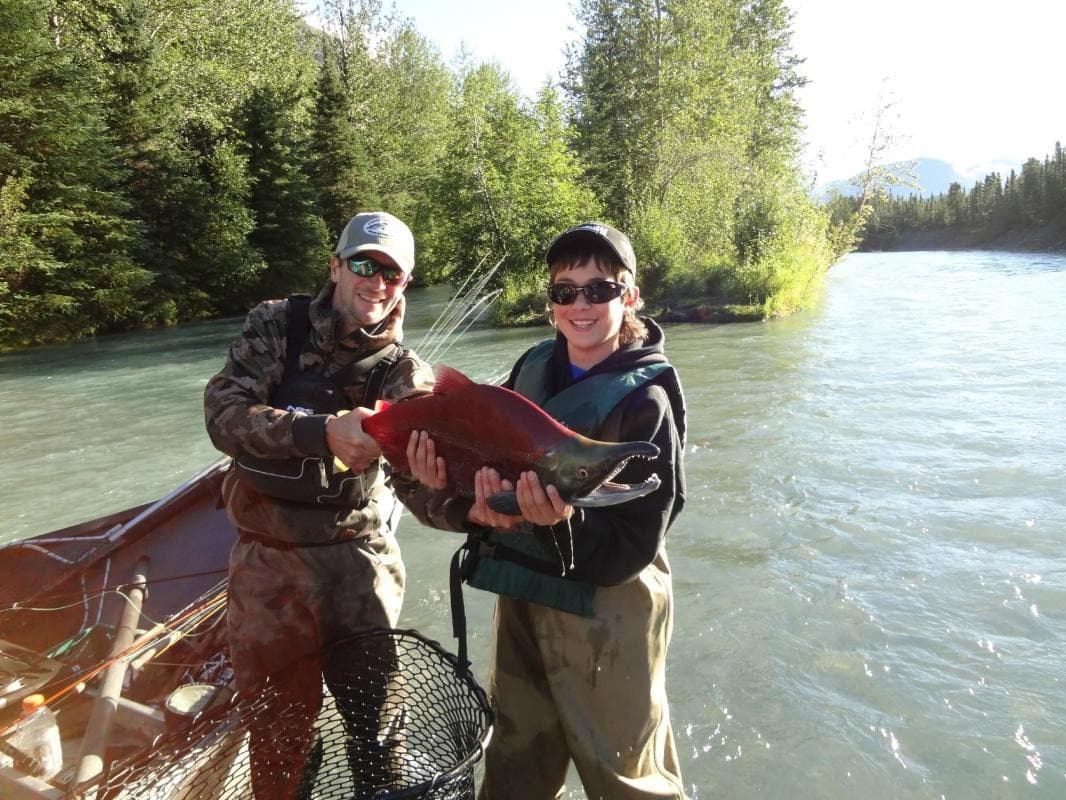
What the day feels like
The boat slips away from the bank with a soft sigh, oars cutting a mirror of blue that shivers under the Chugach Range. A cold breeze comes off the river and the first scent you notice is not pine or diesel, but salt and salmon—the metallic tang that means life moving upriver. You sit low in a 20‑foot Willie boat, knees warm beneath a windbreaker, eyes peeled for the sudden slap of a tail. Here, on the Kenai River, the landscape is part theater, part laboratory: glacially carved valley walls, braided sandbars, and a current that seems to have its own personality—sometimes languid and generous, sometimes quick and insistent, daring you to read it right.
The Kenai is not a lake pretending to be a river. It is Alaska’s great salmon conveyor—an 82‑mile ribbon from Kenai Lake through the Kenai Peninsula and out to Cook Inlet. Its fame is simple and well earned: enormous runs of sockeye (red) and coho (silver), potent Chinook (king) salmon, and healthy populations of rainbow trout, dolly varden, and char. Guides on this river don’t just fish; they curate an experience where timing, river read, and local knowledge matter as much as casting technique.
That marriage of place and practice has a history as raw as the fish it turns up. The Dena’ina people have long read the water and relied on these salmon runs for subsistence. Russian traders and American settlers later turned the peninsula into a patchwork of commercial fishing, canneries, and small towns—yet the river has remained stubbornly alive. Geologically, the Kenai traces its character to glacial sculpting: steep valley walls and broad outwash plains create the sandbars that become prime salmon staging areas. The river’s mood changes with seasonal flows, but the central truth never changes—this water is a machine for migrating fish.
Fishing trips here come in many flavors. Guides run full‑day drift‑boat charters that give you the whole rhythm of the river—launch at dawn, drift through riffles, stop on sandbars only accessible by boat, and wade into slow seams where reds hold. On the upper river around Cooper Landing, anglers chase resident rainbows and dolly varden, using both fly and spin techniques. Downriver, when the sockeye pulse in mid‑summer, it’s common to see whole stretches of water alive with flashing red bodies; on some days you’ll hear guides joke that you can’t cast without hooking a fish.
Logistics are straightforward but worth thinking through. Full‑day guided trips typically run 8 hours from pickup to dropoff and use purpose‑built drift boats with experienced captains; half‑day or targeted king and silver charters are also common. Guides supply rods and tackle, but bring your own polarized sunglasses, layered clothing, and a willingness to stand (and sometimes get splashed) for long stretches. The Kenai’s weather can flip from bright to sideways rain fast; timing is everything—sockeye often peak in July, king runs arrive earlier in late May and June, and coho stage late summer into early fall.
Beyond the practical details, the Kenai is a place of small, intense moments. A fish that flips the surface and launches into the air embarrasses you into laughter; a bald eagle draped over a spruce seems to time its stoop with your line; and on quieter stretches the river will simply let you breathe. Guides know where the fish like to rest—behind boulders, in seams between currents, or on the lee side of sandbars—and they’ll teach you how to present a bait or fly so the salmon don’t see it as a nuisance but as a natural choice.
Safety and stewardship go hand in hand here. The Kenai is regulated—permits, bag limits, and conservation measures protect runs and ensure sustainable angling. Responsible guides practice catch‑and‑release for certain species, help you handle fish carefully, and often offer filleting and shipping services when you keep your catch for the table. Respect private property along the banks, keep noise low where wildlife congregates, and pack out everything you bring in.
For planning: book a guided trip through a reputable operator that runs licensed Willie boats and carries up‑to‑date safety gear; full‑day charters maximize your chances across multiple habitats, while shorter trips are perfect if you have limited time or a specific target species. Early morning and late afternoon are the best light for both fishing and photography; water levels matter—higher spring flows mean faster drift but less concentrated holding water, whereas summer’s lower flows bunch fish into predictable seams.
What you’ll remember isn’t just the fish, though they are reason enough to come. It’s the geography moving around you—the river carving through forests and wetlands, the mountains that stand like sentinels, and the community of guides and anglers who read the water as if it spoke a language. The Kenai is brutally honest: it rewards preparation, curiosity, and patience. Come expecting a day of work, a little frustration, and the occasional, unforgettable moment when everything lines up and the salmon throws itself clear of the water.
If you want to leave with dinner in hand, be clear with your guide about filleting and shipping options; if your aim is to learn to read a river like a local, ask for hands‑on instruction. Either way, you’ll find that the Kenai doesn’t just give you fish—it gives you a sharper sense of how landscapes and species move and depend on one another. That, in the end, is the most Alaskan thing about it: the feeling of being a small, engaged participant in a vast, ongoing migration.
Trail wisdom
Small choices, better day.
Pick the right season
Plan around target species—king salmon peak in late May–June, sockeye in June–July, and coho in late summer through September.
Wear quick‑dry layers and waders
Water temperatures are cold and spray is constant; breathable waders and layered insulation keep you comfortable for long days.
Bring polarized sunglasses
Polarizers cut glare so you can see fish, seams, and submerged structure—vital for both casting and safety.
Book a licensed guide
Local guides know permit restrictions, best runs for the day, and how to safely land big salmon in a drift boat.
Local knowledge
Read the place, not just the route.
Watch for native species including bald eagle, brown bear.
Keep an eye out for wildlife during the transition between areas and habitats. Respect distance guidelines.
Strict harvest limits, guide permitting, and seasonal closures help sustain salmon runs—support operators who follow best practices and educate clients.
Follow the guide's instructions on size limits, ethical handling, and leave-no-trace practices.
Sandbars only reachable by boat that concentrate reds in mid-summer. Upper Kenai pockets near Cooper Landing for rainbow trout and dolly varden
Locally recommended viewpoints and quiet spots known best to local operators.
The Dena’ina Athabascan people historically relied on the Kenai’s salmon runs; later Russian and American fishing industries shaped local settlements.
Maritime roots and regional tradition shape the waterways and working coasts.
Seasonal guide
Four versions of the same landscape.
Spring
Best forearly-season king salmon · low-traffic boat runs
Challengeshigh, fast flows · cold, changeable weather
Snowmelt raises flows and brings early Chinook runs; expect crisp days and swifter currents—good for anglers chasing big kings but not for beginners.
Summer
Best forsockeye (red) salmon · full-day drift trips
Challengescrowded hotspots · variable river levels
Mid‑summer is peak sockeye season and prime for full‑day charters—long daylight and steady runs make it the most popular time to visit.
Fall
Best forcoho (silver) salmon · scenic photography
Challengescooler temperatures · shortening days
Late summer into fall brings acrobatic silver salmon and crisp light for photography, but weather turns cooler and trips may be shorter.
Winter
Best forriver scenery · off-season solitude
Challengesriver closures · limited services
The river quiets down and many guides stop regular operations; winter is for viewing and planning, not for salmon fishing.
Pack with intention
What to bring.
Good to know
Common questions.
Sockeye peak in June to July, with the busiest weeks typically in mid‑July—book early for peak season charters.
Plan the edges
The details that make the day easier.
The Kenai River stretches roughly 82 miles from Kenai Lake to Cook Inlet and is renowned for its world-class sockeye and Chinook salmon runs, drawing anglers from around the globe.
The Kenai Peninsula’s towns—Cooper Landing, Soldotna, Kenai—serve up freshly smoked salmon, local craft beers, and mountain hospitality; the region also honors Dena’ina heritage through cultural sites and community events.
- Nearest major hub
- Anchorage (2–3 hour drive); common launch towns: Cooper Landing, Soldotna, Kenai; trip length: 4–8 hours; book licensed guides—bring layers, polarized sunglasses, and waterproof storage.
Choose guides who follow bag limits, practice careful fish handling, and minimize bank erosion by using designated access points—small choices keep runs healthy for future anglers.
Explore by topic
Follow the threads.
Keep exploring
Make the story part of the trip.
Set out from Bass Harbor for a private, customizable day on Blue Hill Bay — lighthouses, puffins, seals, and the chance to feel Acadia from the water. Small groups, local captains, unforgettable views.
In four hours you can move from shaded canyon ferns to wind-scoured coastal ridgelines, guided by someone who knows where the light—and the hidden views—live. This private half-day hike on the Monterey Peninsula or Big Sur is compact, curated, and perfect for travelers who want depth without a multiday commitment.
 Related story
Beneath a sky of shifting light, Skaftafell’s ice reads like a map of time. This three-hour guided glacier hike mixes technical instruction with geology and culture: compact, safe, and unforgettable.