
What the day feels like
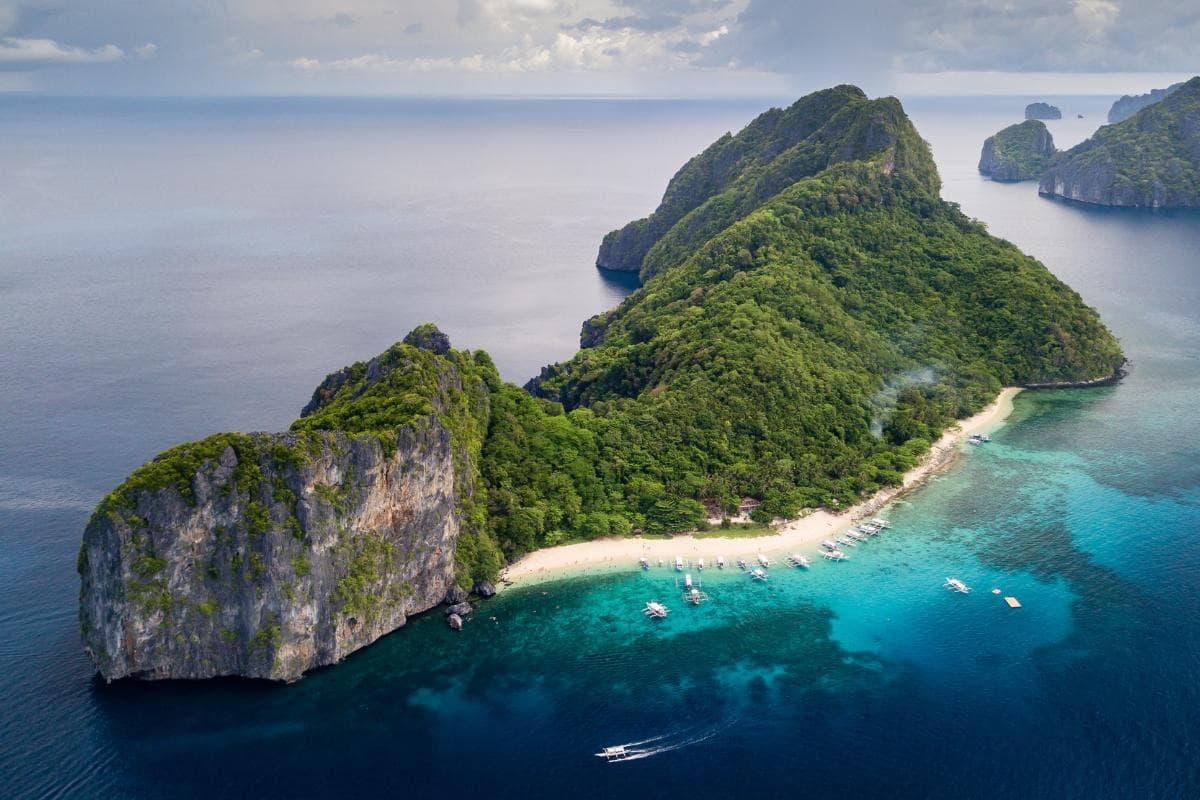
You step out of the outrigger with sand sucking at your ankles and the sun—already busy—pressing warm patterns across the bay. Helicopter Island sits like a small thought in the water: a low, helmet-shaped ridge of limestone crowned with a fringe of palms, its flanks falling abruptly into aquamarine that deepens to cobalt where coral shelves begin. The island’s outline is the reason for the nickname—seen from above it resembles a rotor blade—and from the shoreline its personality is immediate and direct. The water dares you in clear, cool tones; the current nudges, inviting a swim past coral bommies alive with spiny sea urchins and darting parrotfish.
Helicopter Island, locally known as Dilumacad, is one of Bacuit Bay’s modest stars. It doesn’t offer long hikes, towering cliffs, or cathedrals of rock; it offers the very specific pleasure of shoreline simplicity: a crescent of white sand, a reef that’s accessible from a shallow entry, and views that keep giving as boat engines bob past the horizon. Most visitors meet the island as part of El Nido’s famous Tour C—an island-hopping route that strings together Hidden Beach, Secret Beach, Matinloc Shrine and other marine pockets of wonder. For those with less time or a taste for privacy, private speedboat charters can carve a more deliberate day out—longer snorkel stops, a quiet lunch on the sand.
Geologically, Dilumacad is a younger cousin of El Nido’s towering karst islands. Like its neighbors, it rose from coral and limestone uplift, then wore its surfaces into caves, ridges and small coves. The cliffs here are modest, but underwater you’ll find terraces and ledges where soft corals and anemones hang like underwater gardens. That complex substrate supports reef fish in brightly painted schools; if you’re quiet, a hawksbill or green sea turtle might surface nearby to breathe before returning to nibble the sponges.
The human story of El Nido and its islands is layered. Indigenous Tagbanua people have lived in Palawan for millennia, drawing on the bay’s abundance. More recent visitors—fishermen, adventurers and conservationists—have shaped what tourism looks like here: small homestays in El Nido town, family-run boat crews, and a growing awareness that the reefs the bay depends on are fragile.
A day at Helicopter Island is deceptively simple but worth planning. Most shared Tour C itineraries leave El Nido town by pump boat mid-morning and return late afternoon; private speedboats can depart earlier to catch softer light and calmer seas. From the harbor, Helicopter Island is typically a 20–45 minute run depending on wind and your boat’s speed. Once ashore, the island asks for minimal effort—no trails to climb, just sand, sun and reef. Snorkeling is the main activity: bring a mask that seals well and fins if you want to cover ground. Reef topography here means snorkelers see a cross-section of reef life within an easy swim from shore, though currents around the island can strengthen near deeper channels.
What to expect practically: arrive early or mid-morning for the best light and calmer waters; afternoon winds can pick up and make transfers choppy. Expect moderate crowds on popular shared tours—Helicopter Island is compact, and the best quiet times are early morning or on a private charter. There’s no infrastructure beyond a stretch of sand and a shaded spot to drop a towel; pack everything you need, including water and reef-safe sunscreen. Locals running the boats often offer simple beach lunches—grilled fish, rice, fresh fruit—served on banana leaves. Tipping the crew is customary and appreciated.
Safety and stewardship go hand in hand here. The reefs are resilient but under pressure from climate impacts and careless tourism. Stay off the corals, don’t touch the anemone beds, and use biodegradable sunscreen. If you want to see more marine life, ask your boat guide where the quieter snorkeling spots are; they often know where turtles or larger schools linger.
For travelers, Helicopter Island offers the kind of uncomplicated joy that’s easy to underestimate: the slow pleasure of scanning patterns on the reef, of a cyclonic school of silver fish that parts to reveal a clownfish tucked into an anemone, the smell of coconut smoke from the grill. It’s not the most dramatic island in El Nido, but that’s its point. It’s a place for long, unhurried floats, for shallow dives where you don’t need to be an expert, and for a quick escape from town that feels both intimate and purely seaside.
If you’re planning a trip, pair a visit to Helicopter Island with other stops on Tour C to get a full feel for Bacuit Bay’s variety—the denser limestone forests of Matinloc, the secretive coves that require a small swim to access, and the broader coral gardens a little farther out. Choose a morning launch for calm water and better underwater visibility; book a private speedboat if you have a small group and want more time to snorkel; and bring a reusable water bottle and reef-safe sunscreen—two small choices that have an outsized effect on the place.
In the end, daytripping to Helicopter Island is not about conquering a peak or ticking off a long list of attractions. It’s about slowing to read a reef, trading dense itinerary for focused attention, and understanding an island on its own modest terms. The sea here has a habit of being politely insistent: it pulls you in, loosens the day, and leaves you with a quietness that’s hard to find in busier spots. That’s why, even among El Nido’s superstar lagoons and vertiginous cliffs, Dilumacad keeps drawing people back.
Trail wisdom
Small choices, better day.
Go early for calm water
Morning departures typically have the best visibility and gentler seas for snorkeling.
Use reef-safe sunscreen
The reefs are fragile—choose biodegradable sunscreen and apply it before entering the water.
Bring a dry bag and cash
There are no facilities on the island; pack water, snacks, and small bills for crew tips or beach lunches.
Respect marine life and don’t touch coral
Keep fins up in shallow reef areas and avoid standing on corals to prevent damage.
Local knowledge
Read the place, not just the route.
Watch for native species including Green sea turtles, Schools of parrotfish and damselfish.
Keep an eye out for wildlife during the transition between areas and habitats. Respect distance guidelines.
El Nido’s reefs are under pressure from tourism and climate change; supporting responsible operators and using reef-safe products helps protect the ecosystem.
Follow the guide's instructions on size limits, ethical handling, and leave-no-trace practices.
Snorkel the eastern reef edge for quieter fish life. Combine a stop at nearby Talisay Beach for a longer shoreline walk
Locally recommended viewpoints and quiet spots known best to local operators.
The islands of Bacuit Bay rise from coral and limestone uplift, and indigenous Tagbanua communities have long fished and navigated these waters.
Maritime roots and regional tradition shape the waterways and working coasts.
Seasonal guide
Four versions of the same landscape.
Spring
Best forCalmer seas · Good underwater visibility · Early-season greenery
ChallengesOccasional rain squalls · Higher visitor numbers around holidays
Spring (March–May) in El Nido brings warm, calm conditions ideal for snorkeling and beach time, though popular dates can be busier.
Summer
Best forWarmest waters · Long daylight hours · Peak coral activity
ChallengesStronger afternoon winds · Higher humidity
Summer months offer warm water and long days for boating, but expect breezier afternoons that can make crossings choppier.
Fall
Best forFewer crowds · Pleasant temperatures · Good visibility on calm days
ChallengesOccasional monsoon shifts · Shorter daylight
Autumn sees fewer tourists and often calm windows—good for those seeking quieter visits—but weather can be less predictable.
Winter
Best forDry-season clarity · Stable sea conditions · Extended boat access
ChallengesPeak tourist season · Higher prices and full bookings
Dry-season months (Nov–May) bring consistent sea conditions and excellent visibility, but they’re also the busiest—book ahead.
Pack with intention
What to bring.
Good to know
Common questions.
Most boats take 20–45 minutes depending on wind and whether the vessel is a shared pump boat or a private speedboat.
Plan the edges
The details that make the day easier.
Dilumacad is commonly called 'Helicopter Island' because its aerial outline resembles a helicopter—its local name is Dilumacad.
Taste fresh grilled fish and kinilaw (Filipino ceviche) served by local boat crews; small family-run operators and Tagbanua cultural heritage shape El Nido’s hospitable island rhythm.
- Departure
- El Nido town pier. Time: half-day (3–4 hrs) to full-day (7–8 hrs). Best for: snorkeling and beach lounging. Book: shared Tour C or private speedboat. Essentials: reef-safe sunscreen, water, cash.
Choose operators who limit group sizes, use mooring buoys instead of anchors, and follow local conservation fees—small choices help protect reefs and local livelihoods.
Explore by topic
Follow the threads.
Keep exploring
Make the story part of the trip.
Set out from Bass Harbor for a private, customizable day on Blue Hill Bay — lighthouses, puffins, seals, and the chance to feel Acadia from the water. Small groups, local captains, unforgettable views.
In four hours you can move from shaded canyon ferns to wind-scoured coastal ridgelines, guided by someone who knows where the light—and the hidden views—live. This private half-day hike on the Monterey Peninsula or Big Sur is compact, curated, and perfect for travelers who want depth without a multiday commitment.
 Related story
Beneath a sky of shifting light, Skaftafell’s ice reads like a map of time. This three-hour guided glacier hike mixes technical instruction with geology and culture: compact, safe, and unforgettable.