
What the day feels like
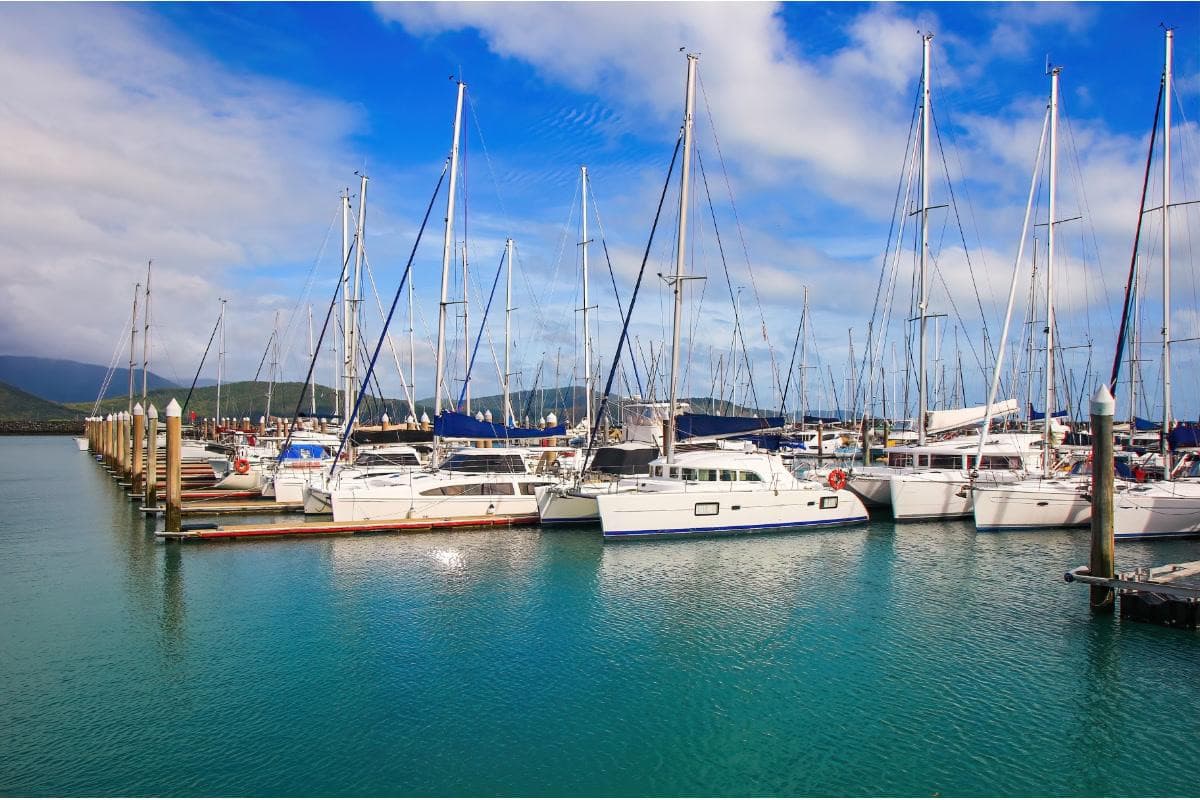
The sun has not yet surrendered to the horizon when the marina wakes up. Along the Coral Sea Marina quay — a neat line of pylons, polished teak and lazy ropes — crews make last-minute checks while anglers fold down umbrellas and a hush settles like a skin over Pioneer Bay. You can smell diesel and salt and something floral from the frangipani trees on the esplanade; gulls argue above; reef boats rock like slow, deliberate breathing. When a catamaran slips free and arcs toward the islands, the air carries the faint, distinct thump of adventure: engines, laughter, and the splash of sterns parting water. This is the gateway to a chunk of coastline that reads like an atlas of Australian sea travel — the Coral Sea Marina at Airlie Beach, where the Whitsundays begin in earnest.
Coral Sea Marina is not a single experience so much as an organizing principle: the place where a thousand Whitsunday itineraries begin. Historically, the Whitsunday Islands were charted by European navigators in the late 18th and early 19th centuries, but the islands’ true stories are older — lived by the Ngaro and Gia peoples whose seasonal fishing and island craft predate tourist brochures. Geologically, the coast here is a meeting of currents, continental shelf and coral: the islands are volcanic and granitic cores but the surrounding shallow seas are where the Great Barrier Reef’s coral gardens take form. From the pier, those layered geologies read as turquoise steps — deep blue funneling to reefs and then to the silica-white hairline of Whitehaven Beach.
The marina’s calendar is dominated by boats, which explains the diversity of tone. For a slow-winding, social sunset you’ll find the Sundowner catamaran — a local favorite that’s been carrying people into the last light for 16 years. It’s a practical, convivial boat: fully covered, flat deck, a long central table that begs for convivial plates and conversation. Meet 15 minutes early; in winter the cruise runs 4:30–6:30pm, in spring and summer the schedule shifts later. If you want quieter luxury, Lady Enid — a 72-foot Australian classic — runs adults-only sails, offering a small-group vibe and crew commentary about the islands’ flora and fauna. For a full-day fix of sand and reef, super-fast Whitehaven Beach tours run from the marina, delivering unlimited boat-to-beach transfers and the chance to walk to the South Whitehaven Lookout.
If you prefer the water with a pulse, the marina is also home to high-adrenaline options. The 800hp jet-boat thrill ride spins and drifts around Pioneer Bay for a condensed surge of speed. For explorers who want to feel the sea beneath their feet, guided Sea-Doo jet-ski tours let you chase turtles near fringing reefs or punch across to Daydream and South Molle islands — no license required, no prior experience necessary. Each operator has a different rhythm: one day it’s champagne and antipasto on deck, the next it’s a blast of salt and spray.
Beyond the boats there’s an Airlie Beach note: a small-town hospitality softened by international travelers and the seasonal rhythms of the reef. Local cafes pour good coffee; seafood is fresh and often local — mangrove oysters, coral trout, Moreton Bay bugs when in season. And the town’s infrastructure leans into the marine: dive shops, charter desks, sunscreen that labels itself “reef-safe.”
Practical edge: this place rewards a little advance thought. The Whitsundays are subtropical; mornings can be glassy and perfect, and afternoons can develop wind. If you want calm snorkeling conditions and a better chance of glassy water for photography, take the earliest departures. For sunsets, select a vessel that matches the tone you prefer — party catamaran or quiet sail — and note the Sundowner’s explicit meet times. Book Whitehaven Beach trips in advance if you’re going in dry season (June–November); they sell out on busy days. Jet-ski tours are thrilling but physical: wear secure footwear for transfers, listen to the briefing, and pack reef-safe sunscreen.
On the subject of wildlife and conservation, operators here increasingly partner with reef managers to minimize impacts. Snorkeling is best when you understand the rules: don’t touch coral, don’t stand on it, and use only approved sunscreens. Turtles, reef fish, and rays are common sights; the right guide will point them out and explain how each trip supports local conservation measures.
If you’re planning a visit, think about rhythm: a morning snorkeling or jet-ski tour, an afternoon swim at Whitehaven, and a sundowner sail to close the day. Leave the heavy luggage in Airlie Beach and travel light on the boat — a small daypack, camera or phone in waterproof housing, a light layer, reef-friendly sunscreen and a hat. And bring curiosity: the difference between a passable day on the water and a memorable one is often the guide you’ve chosen.
Coral Sea Marina is, in short, a departure lounge for whatever you want the Whitsundays to be: a place to move fast across the sea, to disconnect on silica sand, or to watch the last light melt over a particular constellation of islands. It’s a place where the tide sets the tempo and the boats speak in the idiom of the ocean. Show up with practical gear and modest expectations, and the sea will repay you with clarity, color and a kind of slow astonishment that belongs only to coastal places where the map still feels like a promise.
Trail wisdom
Small choices, better day.
Arrive early for sunset cruises
Most sunset boats ask you to meet 10–15 minutes early; arriving late can mean missing safety briefings and departure windows.
Use reef-safe sunscreen
Choose sunscreen labeled 'reef-safe' and reapply sparingly; it protects both your skin and the coral you’ll snorkel over.
Secure footwear for transfers
Wear water shoes or secure sandals for stepping on and off boats—no flip-flops during fast transfers or rocky ramps.
Hydrate and pack a wind layer
Even short boat trips dehydrate; bring water and a light windproof layer for cooler evenings on the water.
Local knowledge
Read the place, not just the route.
Watch for native species including Green sea turtle, Giant Maori wrasse (reef fish).
Keep an eye out for wildlife during the transition between areas and habitats. Respect distance guidelines.
Operators increasingly follow Great Barrier Reef Marine Park rules; visitors are asked to use reef-safe sunscreen and avoid touching coral to reduce impact.
Follow the guide's instructions on size limits, ethical handling, and leave-no-trace practices.
Nara Inlet on Hook Island — a quiet fjord-like inlet accessed by select sails. South Whitehaven Lookout — a short guided walk that reframes the beach’s scale
Locally recommended viewpoints and quiet spots known best to local operators.
The Whitsunday Islands are on the traditional lands and seascapes of the Ngaro and Gia peoples; European charting began in the 18th century.
Maritime roots and regional tradition shape the waterways and working coasts.
Seasonal guide
Four versions of the same landscape.
Spring
Best forcalmer seas · snorkelling visibility · wildlife sightings
Challengesoccasional wind shifts · increased boat traffic on holidays
Spring (Sept–Nov) brings warming water and excellent visibility—great for snorkel trips and island hikes, but expect more boats on popular routes.
Summer
Best forwarm water · extended daylight · full-day island swims
Challengestropical showers · higher humidity · stinger season (jellyfish) in some months
Summer offers hot, long days ideal for beaching and snorkeling; pack a stinger suit and plan for sudden rain showers.
Fall
Best forcalmer winds · value travel · comfortable evenings
Challengesvariable visibility early in the season · some operator maintenance windows
Autumn brings steady conditions and pleasant evenings—often a sweet spot between busy peak season and tropical summer heat.
Winter
Best forclear skies · low rainfall · best sailing conditions
Challengescooler mornings · occasional swell from south
Winter (June–Aug) is dry and crisp with excellent sailing and snorkeling days; mornings are cooler so bring a layer for dawn departures.
Pack with intention
What to bring.
Good to know
Common questions.
No — the Whitsunday guided jet-ski operators run licensed, guided tours that require no prior personal license.
Plan the edges
The details that make the day easier.
Whitehaven Beach’s silica sand is about 98% pure silica, giving it the famous, powdery white appearance.
Airlie Beach balances laid-back Queensland beach culture with international visitors: seaside cafes serve fresh reef fish and tropical fruit smoothies; local markets sell artisan goods and island-made coral-safe skincare.
- Meeting point
- Coral Sea Marina, Airlie Beach. Currency: AUD. Best transport: walk from Airlie centre or short taxi. Bookings: reserve sunset and Whitehaven tours in advance during dry season. Time buffers: arrive 15 minutes early for most cruises.
Choose operators that brief passengers on reef-safe practices; use reef-approved sunscreen, avoid single-use plastics onboard, and respect marine park no-take zones to protect coral and marine life.
Explore by topic
Follow the threads.
Keep exploring
Make the story part of the trip.
Set out from Bass Harbor for a private, customizable day on Blue Hill Bay — lighthouses, puffins, seals, and the chance to feel Acadia from the water. Small groups, local captains, unforgettable views.
In four hours you can move from shaded canyon ferns to wind-scoured coastal ridgelines, guided by someone who knows where the light—and the hidden views—live. This private half-day hike on the Monterey Peninsula or Big Sur is compact, curated, and perfect for travelers who want depth without a multiday commitment.
 Related story
Beneath a sky of shifting light, Skaftafell’s ice reads like a map of time. This three-hour guided glacier hike mixes technical instruction with geology and culture: compact, safe, and unforgettable.