
What the day feels like
The boat should have been a slow-moving silhouette, but the early light turned everything electric. On a glassy morning in the Gulf of Cagliari, the limestone cliffs of Sella del Diavolo—Devil’s Saddle—cut a clean profile against a sky the color of washed denim. The sea around us breathed in long, turquoise pulls; shoals of fish flashed beneath the surface like scattered coins. A pod of common dolphins streaked away, curious and quick, and for a few seconds the world narrowed to wind and water and the soft slap of waves against the hull.
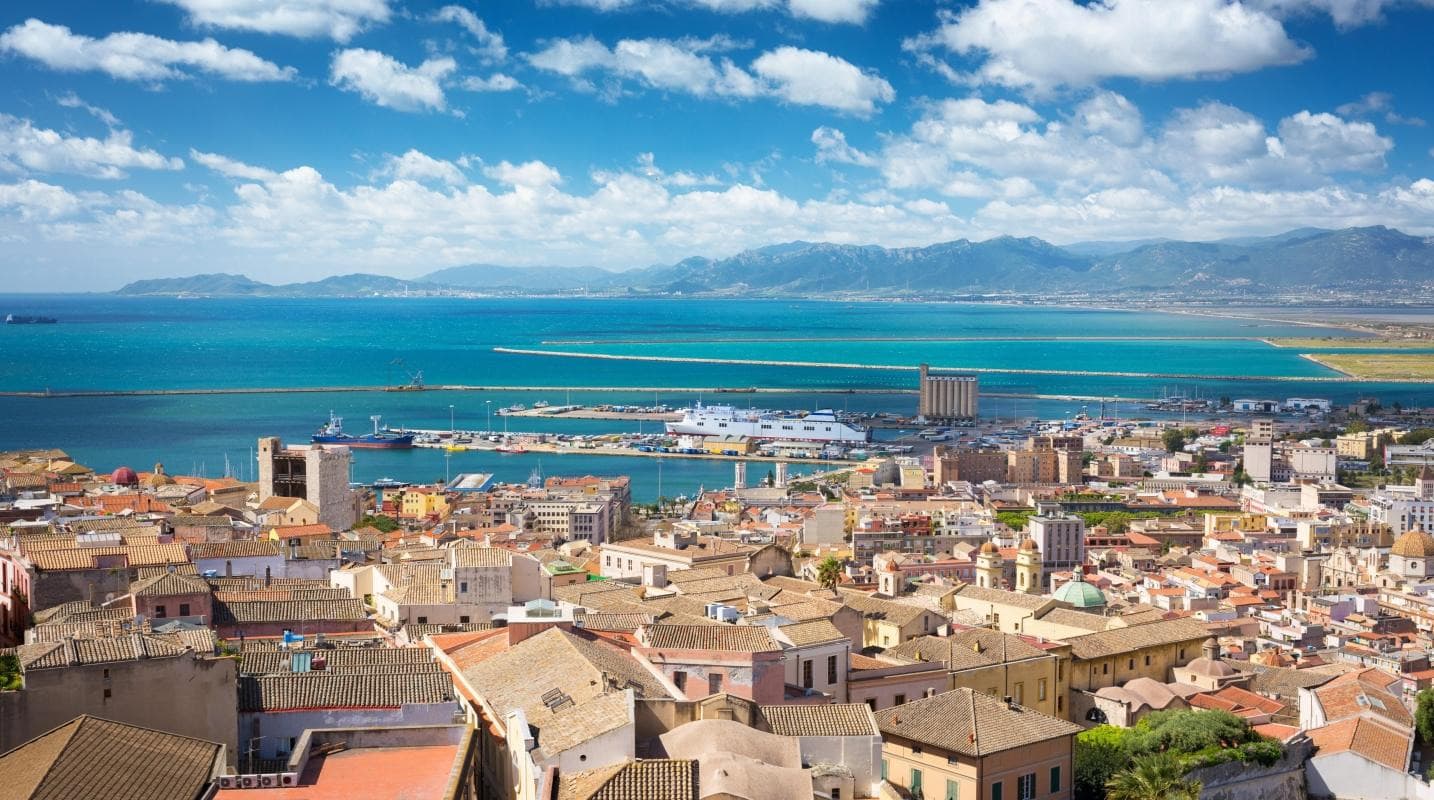
This is a place that insists on being noticed. The Gulf of Cagliari (Golfo di Cagliari) wraps around Sardinia’s southern rim, a stitched curve of beaches, promontories and salt pans anchored by the city of Cagliari. Here, human history rubs shoulders with the sea: Phoenicians and Romans used these waters as a gateway, leaving behind ruins such as Nora; more recently, fishing villages and the sprawling Poetto beach have made the gulf both working coast and public commons.
Geology and sea meet in dramatic ways. The shoreline is composed of Miocene limestone and marl, crisscrossed by coves cut into the coastal rock. Beneath the surface, thick meadows of Posidonia oceanica—an endemic seagrass—hold clarity and life like a living reef, supporting everything from juvenile fish to octopus and drawing cetaceans that feed in the deeper channels. On land, the Sella del Diavolo ridge rises to roughly 150 meters and hosts a short but rewarding network of trails that offer panoramic views over the gulf and the port of Cagliari.
Culture here is maritime and seasonal: markets in Cagliari, like the historic San Benedetto fish market, show you what the sea provides; restaurants around Poetto and in the small towns serving the gulf specialize in fresh, simply prepared seafood, often finished with Sardinian bottarga or a squeeze of local lemon. The Molentargius salt pans—just north of Cagliari—are more than industrial history: they’re a protected wetland where flamingos gather by the hundreds, their slow, deliberate ballet an unexpected counterpoint to the quick, bright life offshore.
There are smart ways to feel this place. A half-day boat charter around the gulf gives you close views of caves, the Sella del Diavolo cliffs, and pockets of clear water for snorkeling; many 2–4 hour trips include stops for a dip and time to float above Posidonia meadows, which are best observed without disturbing them. For a land-to-sea perspective, hike the Sella del Diavolo loop: roughly 4 km with about 150 m of elevation gain, offering a compact, steep-sided trail with switchbacks and rocky footing. If you want history with your swim, a boat out to Nora—site of Phoenician and Roman ruins at the west edge of the gulf—pairs archaeology with a salty plunge.
Practicalities matter here. Boat charters typically run 2 hours for short highlights, 4 hours for a relaxed morning, and full-day options for longer coastal cruises that reach Nora and more hidden coves. Water is warm from June through September—perfect for snorkeling but also meaning strong sun; wear reef-safe sunscreen and a hat. The sea floor depth near snorkel sites ranges from 2 to 15 meters; bring or rent a mask and snorkel and avoid anchoring in Posidonia meadows to protect the habitat.
Timing is an advantage. Early mornings and late afternoons are when the light is best and the sea is calmest for photography; sunset cruises are common and memorable, the cliffs and city burning low-gold. Shoulder seasons—May–June and September—offer warm water and fewer crowds. In the high summer (July–August), Poetto fills up, dayboat traffic increases, and prices climb.
Safety and sustainability are straightforward: choose operators that brief you on marine protected zones, avoid touching archaeological sites, and be careful when jumping from cliffs—tides and underwater rocks change by season. If you plan to drive, the port and marina areas have paid parking; public transit and ferries connect Cagliari with smaller towns but a boat or private transfer is the best way to access remote coves.
Why travelers should go now: the Gulf of Cagliari is compact enough to sample in a few good days and varied enough to satisfy divers, snorkelers, hikers and culture seekers. A single itinerary can mix a morning hike on Sella del Diavolo, a midday dip off a quiet rock, an afternoon among the Nora ruins, and an evening listening to street life in Cagliari over a plate of grilled fish. The gulf offers immediacy—the sea is always within earshot—and an approachable sense of discovery. It’s a place where you can read the geology with your eyes and the history with your feet, and then let the water reset your mood.
If you plan to come: pack light but deliberately. Breathable layers for wind on the deck, sturdy shoes for rocky ridges, reef-safe sunscreen, and a compact snorkel set will maximize your days. Book your boat or guided trips a day or two ahead during July and August, and consider a sunrise or sunset slot to avoid midday heat. Bring a camera and a willingness to slow down; the gulf rewards people who look and listen.
The Gulf of Cagliari is not a single attraction but a handful of complementary ones—salt pans that host pink flamingos, ancient ruins sitting at water’s edge, a city whose market is still loud and honest, and a sea that insists you get in. For travelers seeking a coastal adventure that blends swimming, wildlife, hiking and history, this gulf is a tight, satisfying loop: fast to reach, slow to exhaust, and generous with surprises.
Trail wisdom
Small choices, better day.
Respect Posidonia meadows
Avoid anchoring in seagrass areas; ask your captain to use designated moorings or drift and return for swimmers.
Timing for calm seas
Book morning trips for the calmest water and best snorkeling visibility, or late afternoons for dramatic light and cooler temperatures.
Footwear for Sella del Diavolo
Use sturdy hiking shoes with good grip—trail sections are short but rocky and can be slippery after rain.
Hydration & sun protection
Bring at least 1–1.5 L of water per person on hikes and sunscreen rated for marine use; shade is limited on cliff trails.
Local knowledge
Read the place, not just the route.
Watch for native species including Common dolphin, Greater flamingo.
Keep an eye out for wildlife during the transition between areas and habitats. Respect distance guidelines.
Posidonia meadows are key ecosystems here; local operators avoid anchoring on seagrass and regional parks protect wetlands like Molentargius.
Follow the guide's instructions on size limits, ethical handling, and leave-no-trace practices.
Calamosca Bay—a small, sheltered cove with clear water and fewer crowds. Caves along the Sella del Diavolo shoreline—visible from sea and rewarding for calm-water swims
Locally recommended viewpoints and quiet spots known best to local operators.
The gulf hosted Phoenician and Roman settlements—Nora is one of Sardinia’s oldest archaeological sites, with ruins that meet the sea.
Maritime roots and regional tradition shape the waterways and working coasts.
Seasonal guide
Four versions of the same landscape.
Spring
Best forWildflower-dusted coastal hikes · Mild-water snorkeling · Birdwatching at Molentargius
ChallengesUnpredictable winds · Water a bit cool for long swims
Spring offers comfortable hiking temps and active birdlife in the salt pans; the sea warms gradually, so bring a short wetsuit if you plan long swims.
Summer
Best forWarm-water snorkeling · Full-day boat charters · Evening beach life at Poetto
ChallengesCrowds on Poetto · Strong midday sun and higher prices
Peak season provides the warmest sea and longest days—ideal for swimming and boating—but expect crowds and book services in advance.
Fall
Best forClear water and fewer tourists · Extended hiking days · Dolphin and seabird sightings
ChallengesCooler water late in season · Some services reduce schedules after September
Early fall—especially September—combines warm sea temperatures with thinner crowds and consistently good visibility for snorkeling.
Winter
Best forBirdwatching in wetland areas · Off-season cultural visits in Cagliari · Storm-watching from protected vantage points
ChallengesRough sea conditions · Limited boat operations and cooler temperatures
Winter is quieter and good for birding and city visits; many boat operators pause services and sea conditions can be rough for small craft.
Pack with intention
What to bring.
Good to know
Common questions.
No—there are accessible coastal trails like Sella del Diavolo and beaches such as Poetto; however, a boat opens access to hidden coves, snorkeling spots, and the Nora ruins from the water.
Plan the edges
The details that make the day easier.
The Molentargius–Saline Regional Park just north of Cagliari supports large flocks of greater flamingos and is an important stopover for migratory birds—these wetlands are protected as a regional park.
Taste the gulf: Cagliari’s San Benedetto market offers the day’s catch, try grilled local red mullet or spaghetti alla bottarga, and pair meals with Vernaccia di Oristano or a crisp Vermentino.
- Nearest airport
- Cagliari Elmas (12 km). Main hub: Cagliari city with hotels and transport. Boat charters depart from Marina di Cagliari and Portus Karalis. Best currency: euro; local language: Italian (Sardinian dialects present).
Choose operators who follow no-anchor practices over Posidonia meadows, respect bird nesting zones in Molentargius, and support local guides and fisheries that follow seasonal catch limits.
Explore by topic
Follow the threads.
Keep exploring
Make the story part of the trip.
Set out from Bass Harbor for a private, customizable day on Blue Hill Bay — lighthouses, puffins, seals, and the chance to feel Acadia from the water. Small groups, local captains, unforgettable views.
In four hours you can move from shaded canyon ferns to wind-scoured coastal ridgelines, guided by someone who knows where the light—and the hidden views—live. This private half-day hike on the Monterey Peninsula or Big Sur is compact, curated, and perfect for travelers who want depth without a multiday commitment.
 Related story
Beneath a sky of shifting light, Skaftafell’s ice reads like a map of time. This three-hour guided glacier hike mixes technical instruction with geology and culture: compact, safe, and unforgettable.