
What the day feels like
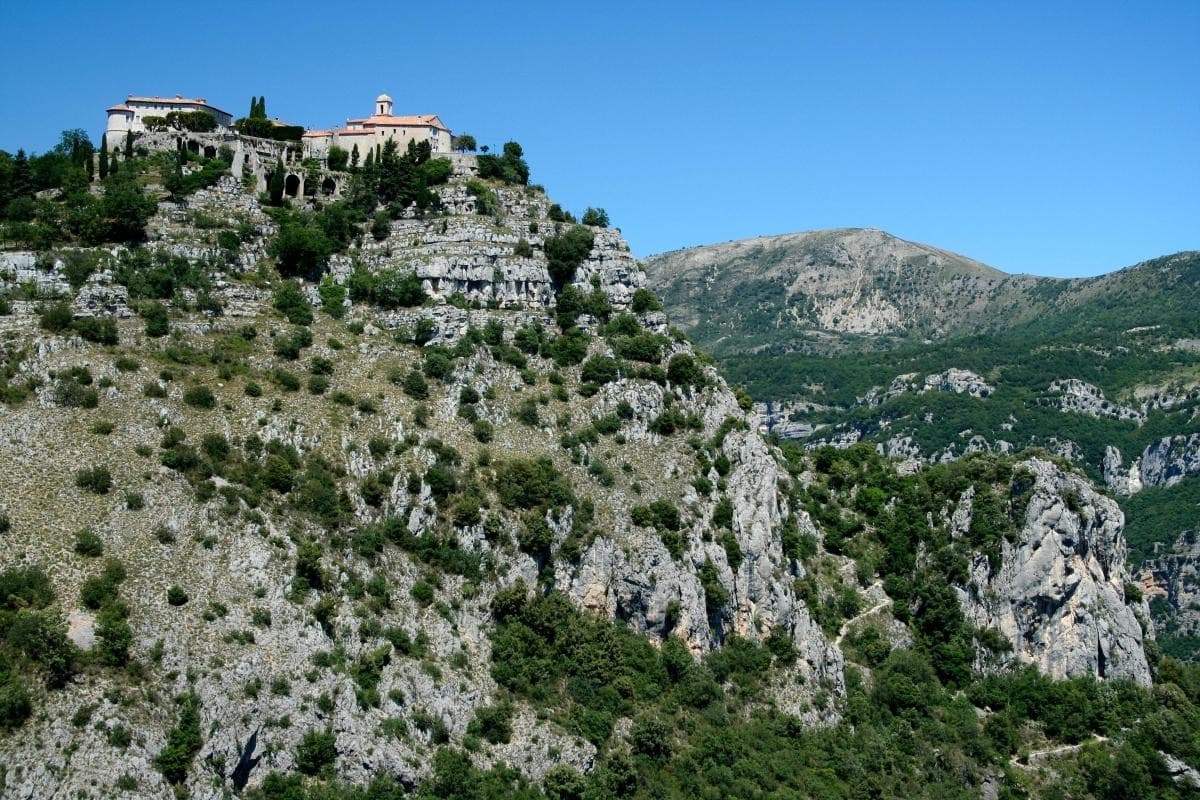
You arrive by a narrow road that peels off the coastal motorway and climbs, switchback after switchback, into limestone ridges dusted with rosemary and low scrub. The Mediterranean drops away beneath you—a postcard-blue horizon interrupted by the gleam of Antibes and the Scène of Cannes—and then, like the set of a period film, Gourdon appears: a cluster of honey-colored stone, defensive walls, a bell tower and terraces clinging to a rocky promontory. Locals call it the “Balcony over the Riviera,” and standing on the village parapet you can feel why. The place demands attention: wind tugs at clothes and voices, the sun angles differently at 760 meters, and you sense the history in stairways cut into the rock and shuttered houses that lean toward the sky.
Gourdon’s appeal is straightforward and immediate. It’s small—measured in narrow lanes and vantage points, not kilometres—but it rewards the kind of slow travel that transforms a stop into a memory. Wander the cobbled streets and you’ll pass ateliers selling artisanal soaps, galleries with local canvases, and tables of candied fruit and lavender-stuffed sachets. Gardens spill bougainvillea into stairways. Where the village ends, the panorama begins: the Loup valley folds below you, the Alps sketch the inland silhouette and, on clear days, the Mediterranean mirrors the sky. The natural and cultural collide here: an inland hamlet whose view insists you remember the sea.
The story of Gourdon is the story of perched villages across Provence. Strategically sited in the Middle Ages for defence and surveillance, these stone settlements leveraged geology—limestone cliffs and karst terraces—to control routes and watch for invaders. Over centuries, they evolved from fortresses to market towns, their ramparts softened by time and commerce. Gourdon’s narrow alleys, small squares and the Maison du Baroque echo that layered past, while the surrounding terrain—limestone shelves, chestnut copses and maquis—models a geological history shaped by uplift and erosion.
Gourdon is also a practical waypoint in a Provençal itinerary. It belongs to a circuit that includes Grasse, the world capital of perfume; the Gorges du Loup and its waterfalls; and Saint-Paul-de-Vence, a magnet for modern art. Many guided experiences from Cannes, Nice or Antibes stitch these stops together—perfumeries in Grasse where the scent industry’s chemistry meets old-world craft, the violet shops of Tourettes-sur-Loup, and the cliffside viewpoints at Gourdon that feel like a final act.
For travelers who want to do more than admire the view, Gourdon offers short hikes and exploration routes that are accessible yet stirring. A loop around the town, including the Chapel of Notre-Dame de Vie and several lookout terraces, is less than 2 km but includes steep steps and exposed ledges—expect about 30–60 minutes of active walking if you take photos. For a fuller day, combine Gourdon with a drive (or a guided minivan tour) through the Gorges du Loup, stop at Saut du Loup waterfall, and finish with an afternoon in Grasse’s perfumeries. Many operators offer half- and full-day private tours that balance transportation logistics and local context; if you’re starting from Cannes, plan for 40–60 minutes each way by car depending on traffic.
The practical side: shoes, water and timing matter. Path surfaces are stone and uneven; slip-resistant footwear is non-negotiable. The sun is strong on the terraces midday—arrive early or late to avoid heat and crowds and to find the best light for photos. If you’re a hiker, treat the village as a high-point reward on a longer inland loop that includes trails through chestnut forests and down to the Loup river. Driving requires patience: roads are narrow and often single-lane in places with passing points, and rental cars can feel oversized on hairpins.
Culture here is tactile. Sample local honey, buy a jar of confit de citron, and stop at a boulangerie for fougasse or a slice of cake with lavender. The hinterland’s farming rhythms—olive groves, terraced vineyards and market days—are part of Gourdon’s charm. And while Gourdon’s terraces look as if they were made for lingering, respect private spaces: many alleys are residential and life goes on behind shutters.
If you’re planning, use these practical rules: pair Gourdon with Grasse for perfumery workshops or Saint-Paul-de-Vence for galleries; avoid peak summer traffic by traveling in shoulder seasons; and choose guided transfers if you prefer not to navigate mountain roads yourself. Photographers should favor golden hour when the stone warms and the sea takes on saturated blues; hikers should pack layers for the altitude change; families will find the village engaging, but supervise children near cliffs.
Gourdon can be a quick highlight or the core of a leisurely day on the Riviera’s inland edge. Whether you’re chasing scent in Grasse, following the river in Gorges du Loup, or simply standing at the parapet with wind in your hair, this perched village rewards attention. It’s a concise, layered experience—part natural viewpoint, part historical touchstone—where the Mediterranean’s blue and Provence’s stone meet with a simplicity that invites repeat visits and slower discovery.
Trail wisdom
Small choices, better day.
Wear grippy shoes
Streets and lookouts are cobbled and often steep—sturdy, slip-resistant footwear will make your visit safer and more comfortable.
Visit at golden hour
Sunrise or late afternoon light warms the stone and reduces crowds—perfect for photos and cooling breezes.
Combine with Grasse & Gorges du Loup
Book a half- or full-day tour to include perfumery visits in Grasse and a stop at the Saut du Loup waterfalls for a complete hinterland experience.
Mind the narrow roads
If driving, expect tight hairpins and single-lane stretches—consider a guided transfer if you’re uncomfortable on mountain roads.
Local knowledge
Read the place, not just the route.
Watch for native species including Bonelli’s eagle (occasionally seen soaring above ridgelines), Mediterranean tortoise and chaffinches in scrubby areas.
Keep an eye out for wildlife during the transition between areas and habitats. Respect distance guidelines.
Visitors are encouraged to stick to paths, avoid trampling fragile maquis vegetation and to support local artisans to help maintain traditional economies.
Follow the guide's instructions on size limits, ethical handling, and leave-no-trace practices.
The viewpoint at the Château terrace just west of the village for uninterrupted sunrises. The lower path to snack stalls where local honey and candied fruit are sold by producers
Locally recommended viewpoints and quiet spots known best to local operators.
Gourdon developed as a medieval lookout village, leveraging its limestone promontory for defence; its narrow alleys and ramparts reflect centuries of strategic occupation.
Maritime roots and regional tradition shape the waterways and working coasts.
Seasonal guide
Four versions of the same landscape.
Spring
Best forwildflowers and blossom · pleasant hiking temps · low crowds
Challengesoccasional rain · muddy trails after storms
Spring brings flowering thyme and lavender shoots, mild temperatures ideal for exploring lanes and short hikes; bring a light rain layer for sudden showers.
Summer
Best forlong daylight hours · clear coastal views · open shops and cafés
Challengespeak crowds · hot midday sun
Summer offers bright, cloudless panoramas and lively village stalls, but travel early or late to avoid heat and tour-bus crowds.
Fall
Best forrich autumn colours inland · harvest events · cooler walking conditions
Challengesshorter daylight · possible early storms
Autumn cools the air and sharpens the views—an excellent season for vineyard visits and quieter lanes, with crisp evenings to layer up for.
Winter
Best forclear, crisp vistas · fewer tourists · mild Mediterranean winters
Challengescolder mornings · some businesses may have reduced hours
Winters are mild compared with inland Europe; expect clear visibility and quieter streets but bring warm layers for the elevated exposure.
Pack with intention
What to bring.
Good to know
Common questions.
Most visitors spend 1–2 hours exploring the village and viewpoints; combine with nearby stops for a full half- or full-day excursion.
Plan the edges
The details that make the day easier.
Gourdon is commonly called the “Balcony of the Riviera” and sits at about 760 meters (2,493 feet) above sea level, offering panoramic views across the Côte d'Azur.
Pair a visit with lunch in Grasse to taste Provençal staples—olives, tapenade, soups and pastries—and look for local violet sweets and lavender products sold by village artisans.
- Nearest airport
- Nice Côte d'Azur (≈45–60 min by car). Parking: limited near village; expect short uphill walks. Accessibility: uneven surfaces and steps; not wheelchair-friendly. Average visit time: 1–2 hours.
Support local shops, avoid single-use plastics, and keep to established paths to protect fragile scrubland and archaeological features.
Explore by topic
Follow the threads.
Keep exploring
Make the story part of the trip.
Set out from Bass Harbor for a private, customizable day on Blue Hill Bay — lighthouses, puffins, seals, and the chance to feel Acadia from the water. Small groups, local captains, unforgettable views.
In four hours you can move from shaded canyon ferns to wind-scoured coastal ridgelines, guided by someone who knows where the light—and the hidden views—live. This private half-day hike on the Monterey Peninsula or Big Sur is compact, curated, and perfect for travelers who want depth without a multiday commitment.
 Related story
Beneath a sky of shifting light, Skaftafell’s ice reads like a map of time. This three-hour guided glacier hike mixes technical instruction with geology and culture: compact, safe, and unforgettable.