
What the day feels like
You lift from Broome while the Indian Ocean still glitters—the plane mere inches above the water at first, then climbing, the town shrinking into a pearling map of mangroves and tin roofs. From the window the Kimberley unspools like a folded map being opened: red-brown escarpments, a scatter of remote cattle stations, and the ragged teeth of the Buccaneer Archipelago far offshore. By mid-morning you are crossing a sky that announces the country’s rhythms: sharp, ancient rock formations that time has slowly peeled into gorges and creeks. On the <a href="https://app.advcollective.com/local-experts/gorgeous-gorges-scenic-flight-and-gorge-hike-windjana-bell-gorge-horizontal-falls">Gorgeous Gorges</a> flight, the land moves like a story being told, and the plane the narrator’s voice—clear, steady, and thrilling.
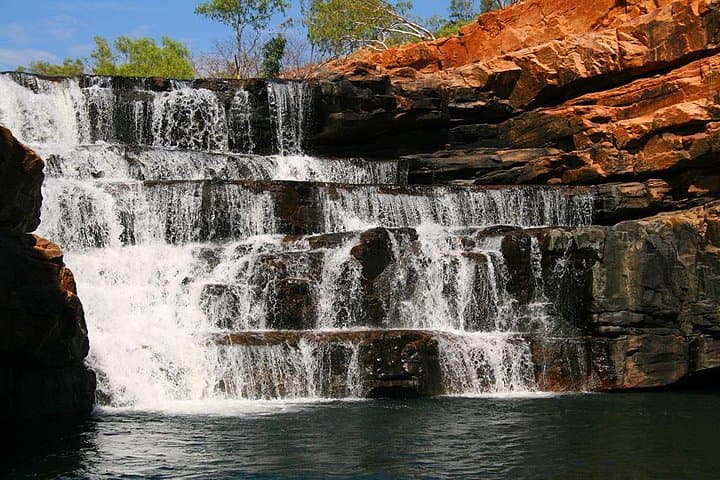
The day threads fixed-wing perspective with grounded exploration. You’ll skim to the Horizontal Falls where tidal forces “move like a living hinge,” then down to Windjana Gorge where the Lennard River dares you to follow its shadowed pools. Bell Gorge’s waterfall hands you a cool, obvious reward after a short, rocky descent at Mt Hart. Each stop is a different chapter of Kimberley geology—ancient reef limestone folded into ranges, tidal channels that produce temporary waterfalls at Talbot Bay, and waterfalls fed by wild, seasonal creeks.
This is partly a sightseeing trip and partly a working lesson in Kimberley natural history. Windjana Gorge slices through a Devonian reef—an undersea structure frozen in rock above which freshwater pools reflect boab trees like time-limited mirrors. The Horizontal Falls are a tidal trick of narrow gaps in the McLarty Range; as the tide pushes into and out of the gaps, water rushes with such force it resembles waterfalls for minutes at a time. The Aboriginal Custodians—traditional owners including Bunuba and Ngarinyin people—have lived here for millennia; rock art, place names, and stories layer human meaning onto the country’s dramatic, shifting features.
Culturally the trip is anchored to Broome, a pearling town that still carries multicultural echoes—Japanese, Malay, and Indigenous influences are visible in food, street names, and history museums. Broome is a practical base: flights depart from small airfields here that connect you quickly to remote gorges and coastal chains that would otherwise take days by four-wheel-drive.
Why book this as a single-day experience? The value is perspective and access. A fixed-wing flight compresses the Kimberley’s scale—the coast, the tidal labyrinths, the inland ranges—into one arc. On the ground, short but purposeful hikes put you in crevices and pools you can’t get to from the highway. For many travelers the combination—sweeping aerial views with hands-on gorges—is the only practical way to sample the best of the region in a day from Broome. For wildlife watchers, the mosaics of habitat attract freshwater crocodiles at Windjana and rock-wallabies clinging to cliff faces. For photographers, the light—especially late morning or early afternoon in the dry season—sharpens every contour.
Practical edge: the tour runs as a long full day (about 11 hours) and is best taken in the Kimberley dry season (roughly May–October). Expect early starts from Broome and a long, satisfying return. Flights are weather-dependent; wet-season storms turn the region green but also make many sites inaccessible. If you’re prone to motion sickness, the flight segments are relatively smooth but bright horizons and small planes can still be unsettling—plan accordingly.
How to prepare: wear sturdy, closed-toe hiking shoes and bring sun protection and at least 2–3 liters of water. Pack a lightweight daypack with insect repellent and a rain shell even in the dry season—desert weather can flip quickly. If you want to swim in gorge pools, bring quick-dry clothing and water shoes with good grip. Photography buffs should secure lenses and have spare batteries; the rapid transitions between bright coast and shaded gorge make exposure tricky.
On the ground, respect cultural signage and avoid photographing marked sacred sites. Wildlife is part of the experience—observe crocodiles from a distance and never enter murky water where visibility is low. The tour operator manages logistics and permits for the day, which simplifies planning. Still, leave no trace: the Kimberley is fragile, visitation concentrated, and even the most remote-feeling places have ecosystems that can be easily damaged.
If you fly this route, time it for the dry season’s clear skies and accessible tracks. Bring curiosity and a modest level of fitness: the hikes are not technical climbs but involve uneven terrain, river rock, and sometimes scrambling. The reward is direct—cool cliff pools, the thunder of a falls seen from a ridge, and the small, profound detail of a boab tree’s silhouette against a wide sky.
To book and learn specifics, the operator’s trip page explains the itinerary and inclusions; it’s the practical next step after you decide the Kimberley fits your travel appetite: <a href="https://app.advcollective.com/local-experts/gorgeous-gorges-scenic-flight-and-gorge-hike-windjana-bell-gorge-horizontal-falls">Gorgeous Gorges scenic flight and gorge hike</a>.
This is a day that telescopes time: geology in the morning, coastline at midday, and human history stitched in between. If you want a concentrated taste of the West Kimberley—airborne perspective and knees-on-rock immersion—this is how you get it.
Trail wisdom
Small choices, better day.
Hydrate for the long day
Carry at least 2–3 liters of water in a bladder or bottles; water isn’t reliably available between stops.
Choose sturdy footwear
Trail sections are uneven and can be slippery near pools—closed-toe hiking shoes with good grip are recommended.
Protect against sun and flies
Bring a wide-brim hat, high-SPF sunscreen and a lightweight neck buff; during the shoulder months flies can be persistent.
Respect cultural sites
Follow guides’ instructions about photography and avoid venturing onto marked sacred areas.
Local knowledge
Read the place, not just the route.
Watch for native species including Freshwater crocodiles (Windjana Gorge), Short-eared rock-wallabies and abundant birdlife.
Keep an eye out for wildlife during the transition between areas and habitats. Respect distance guidelines.
Respect Indigenous cultural protocols, stay on trails, avoid drone use near sacred sites, and pack out all waste—operators aim to minimize impacts through managed access.
Follow the guide's instructions on size limits, ethical handling, and leave-no-trace practices.
Tunnel Creek (a nearby subterranean tunnel with Aboriginal cultural significance). Gantheaume Point at sunset for coastal rock formations and dinosaur footprints (exposed at low tide)
Locally recommended viewpoints and quiet spots known best to local operators.
The region includes sites of long Aboriginal occupation and European pearling history centered on Broome; Windjana Gorge was carved from a Devonian reef.
Maritime roots and regional tradition shape the waterways and working coasts.
Seasonal guide
Four versions of the same landscape.
Spring
Best forWildflowers and transition-season light · Fewer tourists than peak months
ChallengesIncreasing temperatures · Variable insect activity
Spring (Sept–Nov) brings warming days and excellent light for photography; expect more flies as temperatures rise.
Summer
Best forLush, dramatic landscapes after rain · Fierce tidal displays
ChallengesMonsoon storms, heat, and site closures · High humidity and buggy conditions
Summer (Dec–Feb) is the wet season—spectacular if accessible, but many roads and trails close and flights can be affected.
Fall
Best forStable weather and clear skies · Peak dry-season access to all sites
ChallengesBusy tourist season in peak months · Cooler nights in late season
Autumn (Mar–May) overlaps the shoulder to dry season; visibility improves and access becomes more reliable.
Winter
Best forCool, dry days ideal for hiking · Reduced flies and clear air for aerial views
ChallengesEarly starts feel chilly before the sun warms the gorges · Higher demand—book early
Winter (Jun–Aug) is prime—cool mornings, dry tracks, and the best overall conditions for a full-day flight-and-hike loop.
Pack with intention
What to bring.
Good to know
Common questions.
The tour runs about 11 hours (full day) including flight time and on-the-ground exploration; exact timings depend on weather and final itinerary.
Plan the edges
The details that make the day easier.
Windjana Gorge was cut through a Devonian-era reef—rocks exposed in the gorge are around 350 million years old, and tidal flows at the Horizontal Falls can reach speeds up to about 10–12 knots.
After the tour return to Broome for a cold brew at Matso’s Brewery, sample local seafood in Chinatown (try the mud crab when in season), and learn more about pearling and Indigenous culture at the Broome Historical Museum.
- Closest airport
- Broome Airport; Departure point: Broome airfield; Driving to isolated sites by road can take several hours—this is a fly-in tour; Cell service: patchy to none in gorges; Permits: operator-managed permits included—independent visitors should check WA Parks and Indigenous access rules.
Operators work under Indigenous land agreements—respect cultural sites, avoid drone disturbance, stay on designated paths, and pack out all rubbish to protect fragile ecosystems.
Explore by topic
Follow the threads.
Keep exploring
Make the story part of the trip.
Set out from Bass Harbor for a private, customizable day on Blue Hill Bay — lighthouses, puffins, seals, and the chance to feel Acadia from the water. Small groups, local captains, unforgettable views.
In four hours you can move from shaded canyon ferns to wind-scoured coastal ridgelines, guided by someone who knows where the light—and the hidden views—live. This private half-day hike on the Monterey Peninsula or Big Sur is compact, curated, and perfect for travelers who want depth without a multiday commitment.
 Related story
Beneath a sky of shifting light, Skaftafell’s ice reads like a map of time. This three-hour guided glacier hike mixes technical instruction with geology and culture: compact, safe, and unforgettable.