
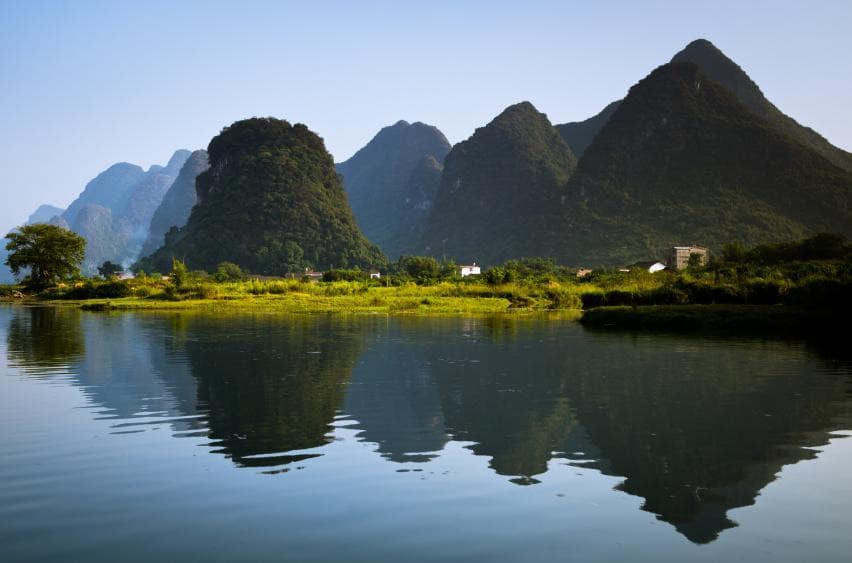
What the day feels like
A bamboo raft nudges off the bank before dawn, its pilot a weathered figure who knows this water like an old street. Mist clings to the river, and the karst towers rise from the rice paddies like slow-breathed sentries—graceful, immovable, and oddly watchful. As your raft slips forward, the river seems to test your pace, urging you to quiet your breathing, slow your thoughts, and read the landscape around you. This is the Little Li River, locally the Yulong River, a gentle tributary of the Li River that threads through Yangshuo’s signature karst country. For travelers who want scenery that feels cinematic but accessible, a bamboo-raft glide here is the essential low-impact way to meet southern China’s limestone giants up close.
The Yulong’s appeal is both immediate and geological. Those steep, rounded pinnacles—the same formations that line the Li River—are karst towers carved by millions of years of water dissolving limestone. In plain language: this is a landscape shaped by patience and chemistry, not sudden drama. The result is a pastoral stage set where farmers work terraces and water buffalo wallow, where fishermen still use long poles and, occasionally, the dramatic silhouette of a cormorant on a raft appears—an image that has defined postcard visions of the region for generations.
Yangshuo’s human story is woven into that landscape. West Street in town hums with travelers and teahouses; further out, villages like Jiuxian and Xingping keep threads of millennia-old lives. Historically, these waterways were trade and communication routes, and today they are livelihoods—tourism included. That has meant both opportunity and pressure. The best river experiences support local pilots and small operators, and favor electric- or human-powered bamboo rafts that keep noise and wakes low.
There are two practical ways most travelers experience the Yulong: a two-hour bamboo-raft float through narrow reaches of the river, or a longer day that pairs a Li River cruise from Guilin with cycling and a short Yulong raft on arrival. The shorter raft trips are deceptively restful: the water is calm, the current mild, and the terrain along the banks alternates between open rice paddies and tree-lined, intimate corridors where shafts of light slant through leaves. Pilots will often point out landmark peaks—Moon Hill, Xianggong—and sometimes steer toward local livelihoods: a water buffalo crossing, a farmer planting seedlings, or a family tending mulberry trees.
For those who want to complicate the calm, combine the raft with a sunrise climb of Xianggong Hill for a panoramic view, or a late-afternoon cycle around the countryside that takes you down narrow lanes past ginger and banana trees. Moon Water Cave and other grottoes offer a cool subterranean counterpoint; their stalactites and echoing chambers are a short drive from the river.
Practicalities matter here. A typical Yulong bamboo-raft ride is 1.5–2 hours, mostly flat and easy; the Li River cruise from Guilin to Yangshuo can take 4–5 hours. The best time to be on the river is early morning or late afternoon—light is softer, temperatures are lower, and tour traffic thins. In summer the karst towers trap humidity; in winter the river can wear a ghostly fog that makes for moody photographs.
What to expect on the water: bamboo rafts are open, often with a shaded woven canopy. Many operators now use electric motors at the start or end of a float to reduce paddling strain, but the feel is still intimate and slow. Wear quick-drying clothes and shoes you don’t mind getting damp. Bring sun protection and a light windbreaker for early starts. Cash is handy for park fees, small food stalls, and tipping a favorite raft pilot.
Safety is straightforward but real: the Yulong is shallow in parts; life jackets are typically available but not always standard—ask before you board. If you’re prone to motion sickness, the slow, steady motion is usually fine, but stay near the center of the raft and face forward. Respect the riverbanks—don’t litter, don’t feed wildlife, and choose operators who limit group sizes and use low-wake boats.
For photographers and people who appreciate small rewards for modest effort, the Little Li River is generous. Early light catches the limestone faces; reflections create mirror doubles of peaks and paddies; candid shots of farmers and net-casting fishermen add human scale. If you’re after a postcard-perfect composition, aim for the narrow sections where the river frames a single towering peak.
Booking options are varied: a quick private transfer and 2-hour bamboo-raft package is a popular pick from Guilin or Yangshuo; longer itineraries pair the Yulong float with Li River cruises, Xianggong Hill, and village cycling. If you’re short on time, choose the shorter raft for a high-impact hour-and-a-half; if you want an immersive day, pick a full-day Li River + Yulong itinerary that includes local villages and a guided walk.
A trip here rewards slow attention. The river doesn’t shout; it seduces—layer by layer—until the peaks, the water, the farmers, and the sky come into focus. For anyone who travels for landscape, for quiet encounters with a place’s geology and people, the Little Li River is a clear, low-barrier promise: gentle adventure, dramatic scenery, and a chance to move at the river’s pace. Plan to show up early, pick a small-boat operator who treats the river like a partner, and leave both the raft and the banks a little cleaner than you found them.
Trail wisdom
Small choices, better day.
Book early-morning slots
Morning light softens the karst and crowds are smaller—aim for the first raft departures to capture reflections and cool temperatures.
Bring a light waterproof layer
Dawn fog and river spray can chill you; a thin windbreaker keeps you comfortable without bulk.
Confirm life jacket availability
Not all operators automatically provide life jackets—ask and insist if you need one for peace of mind.
Choose small-group or private rafts
Smaller rafts leave less wake and offer better photo opportunities and local interaction with the pilot.
Local knowledge
Read the place, not just the route.
Watch for native species including egret and heron species along the banks, (occasionally) cormorant fishing rafts in traditional displays.
Keep an eye out for wildlife during the transition between areas and habitats. Respect distance guidelines.
Choose operators that limit group sizes and use electric or human-powered rafts; avoid feeding wildlife and carry out all trash to protect river habitats.
Follow the guide's instructions on size limits, ethical handling, and leave-no-trace practices.
Cycle the back lanes near Jiuxian Village for quiet rice-paddy views. Sunrise at Xianggong Hill—short climb, expansive panorama of Li and Yulong valleys
Locally recommended viewpoints and quiet spots known best to local operators.
The rivers around Yangshuo were traditional transport and irrigation routes; the karst peaks have shaped local agriculture and settlement patterns for centuries.
Maritime roots and regional tradition shape the waterways and working coasts.
Seasonal guide
Four versions of the same landscape.
Spring
Best forwildflower-fringed paddies · mild temperatures · comfortable cycling
Challengesoccasional heavy rains · muddy trails · river levels can rise
Spring brings green terraces and comfortable days, but expect sudden showers—pack a light rain shell and flexible plans.
Summer
Best forlush greenery · long daylight hours · late sunsets for golden light
Challengeshigh humidity · heat · peak tourist crowds
Summer is lush but hot and humid; early starts beat the heat, and expect more tourist traffic on the river.
Fall
Best forclear skies · cool temperatures · ideal photographic light
Challengesshorter days than summer · some travel demand around holidays
Fall is the sweet spot: crisp air and clear visibility make for the best floats and vistas of the karst peaks.
Winter
Best formisty atmospheric shots · fewer crowds · cooler hiking conditions
Challengeschilly mornings · possible fog limiting distant views · some operators reduce services
Winters are cooler and moodier, with mist and low clouds that can create dramatic images but sometimes obscure distant peaks.
Pack with intention
What to bring.
Good to know
Common questions.
Most bamboo-raft floats last 1.5–2 hours; full-day packages that include other sites can run 6–10 hours.
Plan the edges
The details that make the day easier.
The Yulong River is often called the Little Li River and is a quieter tributary of the Li River, favored for bamboo-raft tours because of its shallow, calm waters and intimate karst scenery.
Yangshuo’s West Street offers late-afternoon bustle, local specialties like beer fish and Guilin rice noodles, and plenty of guesthouses where local families host travelers—support neighborhood eateries for authentic flavors and livelihoods.
- Where
- Yulong River, near Yangshuo; Getting there: 30–60 minute drive from Yangshuo town or a 1.5–2 hour Li River cruise from Guilin; Typical time: 1.5–2 hour raft or full day with extras; Cost: budget to moderate—small private raft and transport cost more but reduce crowds; Book: reserve early for mornings.
Prioritize operators using electric or hand-powered rafts, avoid single-use plastics, and respect riverbanks to minimize disturbance to birds and aquatic life.
Explore by topic
Follow the threads.
Keep exploring
Make the story part of the trip.
Set out from Bass Harbor for a private, customizable day on Blue Hill Bay — lighthouses, puffins, seals, and the chance to feel Acadia from the water. Small groups, local captains, unforgettable views.
In four hours you can move from shaded canyon ferns to wind-scoured coastal ridgelines, guided by someone who knows where the light—and the hidden views—live. This private half-day hike on the Monterey Peninsula or Big Sur is compact, curated, and perfect for travelers who want depth without a multiday commitment.
 Related story
Beneath a sky of shifting light, Skaftafell’s ice reads like a map of time. This three-hour guided glacier hike mixes technical instruction with geology and culture: compact, safe, and unforgettable.