
What the day feels like
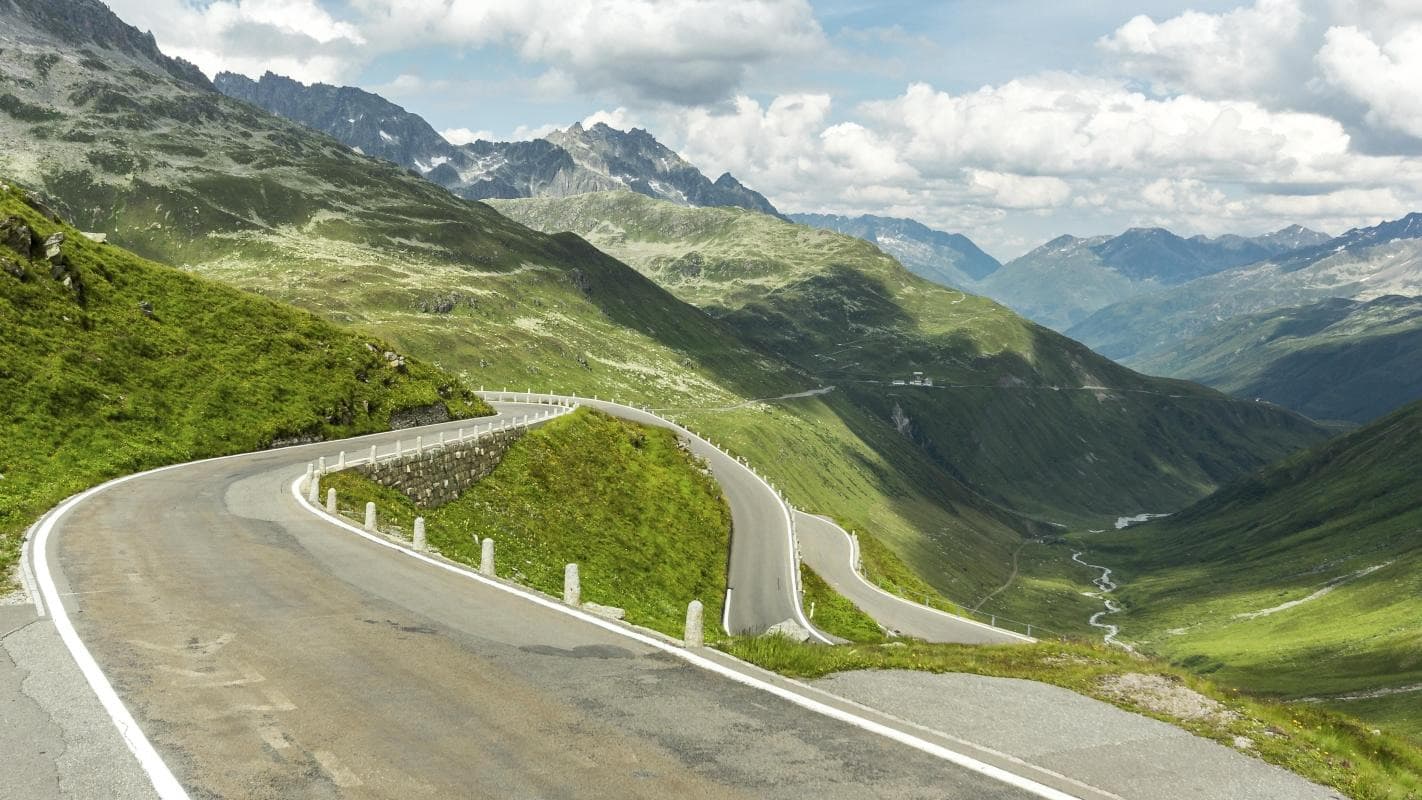
The road climbs like an old story — hairpins turning a low, familiar valley into a ledger of switchbacks that write their way up to sky. At 2,429 meters, Furka Pass sits between sunlit Valais and the craggy heart of Uri, a high-alpine ribbon of asphalt that demands attention. You feel it before you see it: the air thins, the wind shapes itself against your jacket, and the mountains, personified, lean in to study the newcomer.
Pull over at one of the wide, gravel shoulders and the view rearranges your sense of scale. Glaciers hold court on distant ridgelines, water finds a thousand new ways down, and the pass’s most famous curve — the run used in Goldfinger — still tightens like a cinematic inhale. This is a drive that doubles as a landscape lesson: geology carved steep amphitheaters here over millennia, and humans, with a taste for both engineering and spectacle, threaded the road through it all.
Furka isn’t just a motor route. It’s an alpine corridor where hiking trails fan out, where late-summer wildflowers edge the roadside, and where weather moves through with theatrical timing. Tour companies sell it as a scenic link between Andermatt and the lakes of Interlaken or Bern, but the pass repays anyone willing to step out of the car. Walk a short spur and you find solitary viewpoints. Hike a longer ridge and you get the real alpine freight: moraine, scree slopes, and that heady, high-country silence.
History and film lie close here. The Belvédère Hotel, above the Rhone Glacier, became famous when a certain Bond film shot its winding curves and dramatic precipices. Local guides still point out the exact hairpins used on screen; on clear days the panorama looks like a postcard that someone stretched and sharpened. Closer to the road’s bones is the Grimsel region, with its hydroelectric dams and dramatic waterfalls — places that tell the story of Swiss relationship with high-water power and engineering confidence.
Geologically, the Furka sits on the collision-scarred crust of the Alps. Rocks that were once seabed now wear snowfields and glaciers. The sculpting work of ice is obvious: U-shaped valleys, erratics, and polished bedrock show where glaciers once cradled mountains. Culturally, this pass is where cantons meet and where mountain communities still honour seasonal rhythms — dairy huts, sun-browned farmers fixing fences, and the smell of melted cheese drifting from huts as summer chores begin.
Why go? For the glassy sweep of alpine views, yes, but also for the manageable wildness. The high road is accessible: private tours from Andermatt or Bern make it simple to experience multiple passes in one day, and multi-day packages out of Lucerne weave hikes, lakeside villages and cogwheel railways into a compact Swiss sampler. Furka’s high elevation offers quick weather relief on hot days and, in early summer, pockets of late snow that the landscape wears like a badge of resilience.
Practical edge: timing is everything. The pass is typically open late spring to early fall — conditions dictate everything. If you’re driving, pick a dry, clear day and allow time for stops — each hairpin is a chance for a new angle. If you’re hiking, bring layered clothing and expect sudden wind or cloud. For photographers, early morning or late afternoon gives the light that sculpts the mountains without washing out distant blue.
Tours that include Furka are purpose-built for travelers who want variety: the classic Goldfinger route strings together Lake Thun, Lake Brienz, Grimsel and Furka, while private transfers from Andermatt to Interlaken let you pick stops like Giessbach or the Aare Gorge. Longer private packages based from Lucerne mix a day on Furka with hikes among less-traveled valleys and, if you like mechanical panache, the Golden Round Trip up Mount Pilatus or the glacier visit at Titlis.
On the road, your engagement decides the experience. Sit back and enjoy a narrated ride that highlights dams, waterfalls and film locations. Or, step out to test a pair of boots on an alpine trail that rises from the pass and rewards you with an unhurried view. Either way, bring curiosity — the pass gives you geology, cinema, and the steady work of alpine life in one compact package.
At day’s end, descend toward villages that serve up Valais raclette and Uri-style rosti — food that anchors you after the altitude’s thin air. Furka is not a single attraction; it’s a place-making spine for an Alps itinerary. It’s a high road meant to be driven slowly, hiked thoughtfully, and tasted fully.
Trail wisdom
Small choices, better day.
Time your crossing
Furka Pass is usually open late spring to early fall—check local road conditions and avoid low-visibility weather for the best experience.
Bring layers
Weather turns fast at high elevation—pack a windproof shell and an insulating midlayer even on warm days.
Plan photo stops
Pull over at designated lay-bys to admire views safely; many of the best vistas are a short walk from the road.
Respect alpine meadows
Stick to paths to protect fragile plants and avoid disturbing grazing livestock in summer pastures.
Local knowledge
Read the place, not just the route.
Watch for native species including Alpine marmot, Ibex.
Keep an eye out for wildlife during the transition between areas and habitats. Respect distance guidelines.
High-alpine ecosystems are fragile; stick to established paths, pack out waste, and prefer low-emission tour operators when possible.
Follow the guide's instructions on size limits, ethical handling, and leave-no-trace practices.
Little-viewpoint trails off the main road—short, steep walks reward you with panoramic solitude. Nearby hydroelectric viewpoints around Grimsel with dramatic dams and waterfalls
Locally recommended viewpoints and quiet spots known best to local operators.
The Furka route has been used for centuries as a mountain crossing and gained international fame after scenes from the 1964 James Bond film Goldfinger were shot in the area.
Maritime roots and regional tradition shape the waterways and working coasts.
Seasonal guide
Four versions of the same landscape.
Spring
Best forlate-snow panoramas · quiet trails · watching thawing streams
Challengesresidual snow · variable access · cold nights
Spring brings melting snow and dramatic runoff; some high trails and services may still be closed, but the pass can offer dramatic thaw-time scenery.
Summer
Best forfull access to the pass · wildflower meadows · multi-pass drives
Challengescrowds on clear weekends · afternoon storms · strong sun at altitude
Summer is prime for driving and hiking — long days, open roads, and alpine flowers — but plan around midday weather and tourist traffic.
Fall
Best forautumn light and color · quieter roads · crisp hiking conditions
Challengesshorter daylight · early snows possible · reduced services
Fall brings crisp air and fewer crowds; views are sharp but services start to wind down and snow can arrive early at high elevations.
Winter
Best forsnowbound landscapes · photography of snowfields · seasonal solitude
Challengesclosed roads · dangerous driving · limited access
Winter transforms Furka into a snow-swept highland; most roads close and travel becomes technical — suitable only for experienced winter operators.
Pack with intention
What to bring.
Good to know
Common questions.
The pass is typically open from late spring through early fall; exact dates vary with snowpack and road crews—check canton road services before traveling.
Plan the edges
The details that make the day easier.
Furka Pass (elevation 2,429 m) and the Belvédère Hotel above the Rhone Glacier were featured in the 1964 James Bond film Goldfinger — a fact often cited in travel histories of the pass.
Stop in Andermatt or nearby Valais villages for raclette or Valais-style dried meats; seasonal alpine dairies produce cheeses that are a direct expression of high-pasture life.
Choose operators that use low-emission vehicles or carbon-offset programs, keep to marked routes to protect alpine flora, and avoid single-use plastics at high-altitude stops.
Explore by topic
Follow the threads.
Keep exploring
Make the story part of the trip.
Set out from Bass Harbor for a private, customizable day on Blue Hill Bay — lighthouses, puffins, seals, and the chance to feel Acadia from the water. Small groups, local captains, unforgettable views.
In four hours you can move from shaded canyon ferns to wind-scoured coastal ridgelines, guided by someone who knows where the light—and the hidden views—live. This private half-day hike on the Monterey Peninsula or Big Sur is compact, curated, and perfect for travelers who want depth without a multiday commitment.
 Related story
Beneath a sky of shifting light, Skaftafell’s ice reads like a map of time. This three-hour guided glacier hike mixes technical instruction with geology and culture: compact, safe, and unforgettable.