
What the day feels like
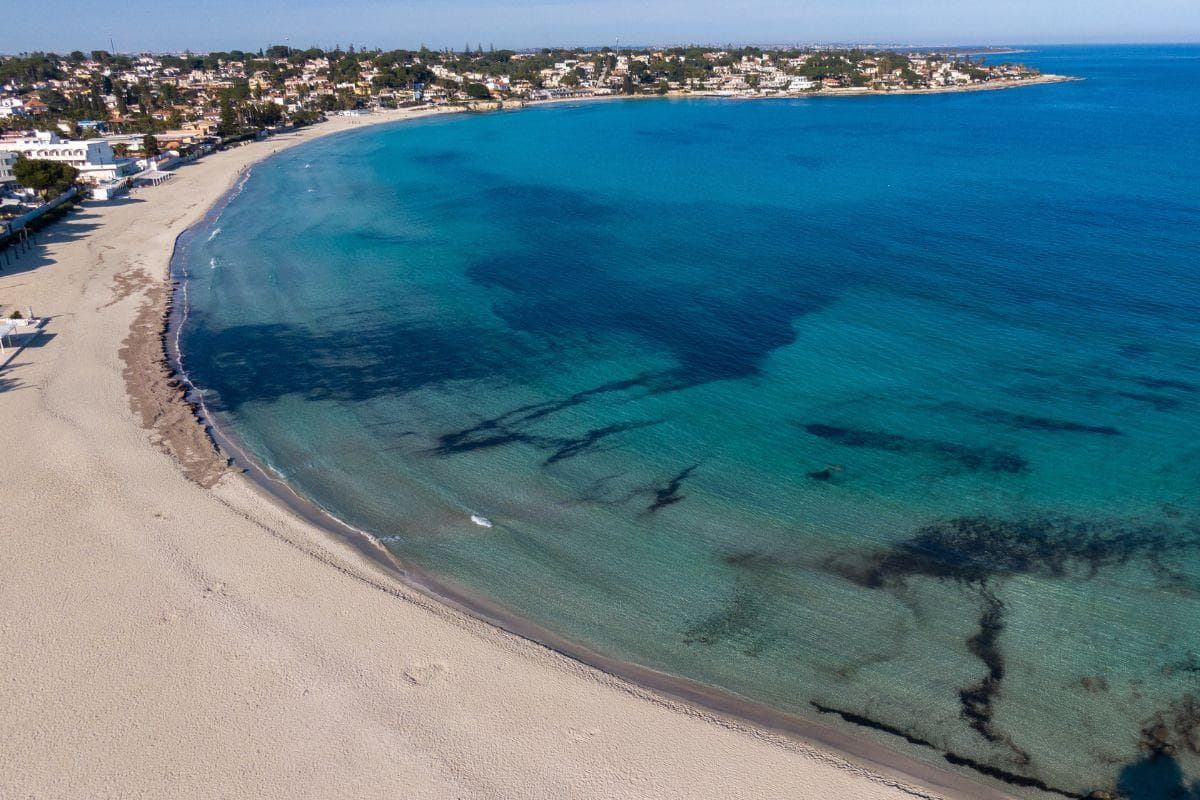
The Mediterranean doesn’t announce itself at Fontane Bianche; it simply lays itself out — a long, low exhale of white sand and water so clear you can count the pebbles under the shallows. Early in the morning the sea is glassy, a pale turquoise that deepens to cobalt by noon. Fishermen push off in small boats, their silhouettes tiny against the horizon; cats weave through beach bars that are slowly setting up for the day. The place hums with a measured, sunlit energy: families unpacking umbrellas, couples walking the shore, and skippers prepping for the day’s coastal runs. If you stand at the water’s edge and face east, the coast lines up like a procession of stone and pine, and the currents seem to dare you to follow them.
Fontane Bianche Beach sits on the southeastern flank of Sicily, a short drive from Syracuse (Siracusa) and a natural jumping-off point for the Plemmirio Marine Reserve and the coves of the larger Syracuse coastline. It’s a beach that makes practical sense — soft sand for long stretches and shallow, warm water for easy swimming — but it’s also a starting point for a more curious sort of exploration. Boats launch here and from nearby Avola, carrying snorkelers, photographers, and people who want to trade the crowded strip for the hollow, sun-drenched caverns that punctuate this seaboard.
The region’s shape is a product of geology and time. Limestone and dolomite cliffs have been sculpted by wind and sea into small bays and natural arches; underwater, the seabed alternates between sand and Posidonia meadows, habitats that sustain a bright array of fish and invertebrates. The Plemmirio area, just north of Fontane Bianche, is a marine protected area where underwater caverns and seagrass beds give the sea a distinct, vivid clarity that invites snorkelers to peer into another world.
Culturally, this stretch of coast is tethered to Syracuse — a city layered with Greek, Roman, Byzantine, and Baroque history. The sea has always been central: ancient salt pans, tuna-trap towers, and fishing traditions are part of a living coastal economy. Food remains a decisive local draw. After a morning in the water, expect grilled fish, caponata, and a rustic aperitif in Ortigia — Sicilian flavors that feel like an extension of the coastline: bright, salted, and rooted in place.
Practicality answers the romance here. If your plan is to move beyond the beach, book a boat tour. There are several options that use Fontane Bianche as a swim stop or launch point. A popular short option is the Plemmirio 4-hour excursion from Avola, which covers roughly 26 nautical miles (about 48 km) and includes multiple swim and snorkel stops in crystalline coves. For a full-day immersion, the 10-hour Avola-to-Syracuse loop travels nearly 55 nautical miles (about 101 km), threading together Tonnara ruins, Capo Murro di Porco, Castello Maniace, Ortigia, and returns with a cooling stop in Fontane Bianche. Private cruises tailored to your wishes are common; skippers often stock prosecco and local snacks, and can time a sunset back in the port of Syracuse for a cinematic finish.
On the water, the mood shifts from lazy to purposeful. Snorkeling in Plemmirio feels like being invited into a secret; schools of damselfish and the darting shimmer of wrasse patrol rocky ledges, while patches of Posidonia sway as if breathing. The marine reserve accentuates the clarity of the water — it’s less about big pelagics and more about colorful density: anemones, small reef fish, and the occasional octopus tucked into crevice or cave.
Safety and preparation are straightforward but essential. Bring reef-safe sunscreen and a properly fitting snorkel mask; water shoes help when launching from pebbly beaches or hopping on and off a skiff. Boat-based itineraries vary — half-day (4 hours) runs are lively and efficient, while full-day (10 hours) cruises let you move at the sea’s pace. If you’re prone to seasickness, time your trip for calmer morning conditions and consider a small dose of preventative medication. Hydrate; pack light layers — the sun on deck and a cool breeze offshore can flip rapidly.
Local logistics: Fontane Bianche is an easy drive from Syracuse (about 15–25 minutes depending on traffic) and requires nothing formal to visit the beach itself; for marine reserves and protected coves, follow the skipper’s guidance and local regulations. Many boat operators depart from Avola or Syracuse and include stops at Fontane Bianche as part of longer coastal tours — ideal for combining snorkeling with a cultural stop in Ortigia.
For photographers and keen observers, the light is raw and honest. Early morning and late afternoon provide the best color and softer shadows; midday intensifies those tropical tones but flattens texture.
Why go? Fontane Bianche is not a single “must-see” cliff or summit; it’s an accessible coastal hub that unlocks some of Sicily’s best marine scenery without the commitment of a long boat passage. It suits travelers who want soft-sand beach time and the option to step onto a boat and explore caves, reserves, and Ortigia’s skyline in a single day. It’s a spot where the sea invites you outward and the town reels you back with food, history, and an easy Sicilian rhythm.
If you’re planning a trip, treat it like a series of short plans: an early swim, a late-morning boat run, a lunch in Ortigia, and an afternoon nap on the sand. Pack for sun and movement, respect the protected areas, and let the coast set the tempo. The sea here doesn’t shout; it persuades. And when it does, you’ll want to be ready to answer.
Trail wisdom
Small choices, better day.
Time your boat trip for morning calm
Sea conditions are usually calmer early in the day—book 8–10am departures for smoother rides and clearer snorkeling.
Use reef-safe sunscreen
Protect marine life and your skin—choose reef-safe SPF and reapply after swimming.
Bring water shoes
Many swim stops involve rocky shelves or pebbly beaches—water shoes protect feet and help board dinghies.
Reserve a mixed itinerary
Pick a tour that combines snorkeling with a stop in Ortigia to balance marine time with cultural exploration.
Local knowledge
Read the place, not just the route.
Watch for native species including Mediterranean wrasse, Octopus.
Keep an eye out for wildlife during the transition between areas and habitats. Respect distance guidelines.
Plemmirio is a marine protected area—respect buoyed zones, avoid touching seabed and use reef-safe sunscreen to reduce impact.
Follow the guide's instructions on size limits, ethical handling, and leave-no-trace practices.
The small rocky coves at Plemmirio for quiet snorkeling away from crowds. An evening aperitivo along Ortigia’s seafront for sunset views and local seafood
Locally recommended viewpoints and quiet spots known best to local operators.
This coastline is part of the maritime landscape of Syracuse, a city that was a major Greek colony and naval center in antiquity.
Maritime roots and regional tradition shape the waterways and working coasts.
Seasonal guide
Four versions of the same landscape.
Spring
Best forcalmer seas · wildflower coastal walks · early-season snorkeling
Challengescooler water temperatures · unpredictable wind days
Spring brings fewer crowds and comfortable air temps; the sea can still be cool for extended snorkeling sessions.
Summer
Best forfull-day boat trips · swimming and snorkeling · long daylight hours
Challengeshigh temperatures · busy beaches and harbors
Summer is peak season—perfect for swimming and marine visibility but expect crowds and book trips in advance.
Fall
Best forwarm water leftover from summer · photography at golden hour · pleasant boat conditions
Challengesshortening days · sporadic storms late season
Autumn often delivers warm seas and stable weather—great for longer cruises and quieter beaches.
Winter
Best forquiet coastal walks · budget travel · birdwatching along the shore
Challengescooler temperatures · many operators reduce services
Winters are mild but quieter; many boat tours operate on a reduced schedule and water is too cold for casual swimming.
Pack with intention
What to bring.
Good to know
Common questions.
It’s a 15–25 minute drive south from central Syracuse; local buses and taxis run the route in high season.
Plan the edges
The details that make the day easier.
The Plemmirio Marine Reserve, north of Fontane Bianche, protects important Posidonia seagrass meadows that are crucial nursery areas for Mediterranean marine life.
Sicilian coastal life centers on the sea: try marinated anchovies, baked swordfish, and a caffè or granita in Ortigia’s market after a morning on the water.
- Access
- 20 minutes from Syracuse by car; Best times: mornings for calm seas and late afternoon for sunset cruises; Permits: none for beach access—obey protected-area rules when snorkel sites are inside Plemmirio.
Use reef-safe sunscreen, avoid anchoring on seagrass, carry out plastic waste, and choose operators that follow protected-area guidelines.
Explore by topic
Follow the threads.
Keep exploring
Make the story part of the trip.
Set out from Bass Harbor for a private, customizable day on Blue Hill Bay — lighthouses, puffins, seals, and the chance to feel Acadia from the water. Small groups, local captains, unforgettable views.
In four hours you can move from shaded canyon ferns to wind-scoured coastal ridgelines, guided by someone who knows where the light—and the hidden views—live. This private half-day hike on the Monterey Peninsula or Big Sur is compact, curated, and perfect for travelers who want depth without a multiday commitment.
 Related story
Beneath a sky of shifting light, Skaftafell’s ice reads like a map of time. This three-hour guided glacier hike mixes technical instruction with geology and culture: compact, safe, and unforgettable.