
What the day feels like
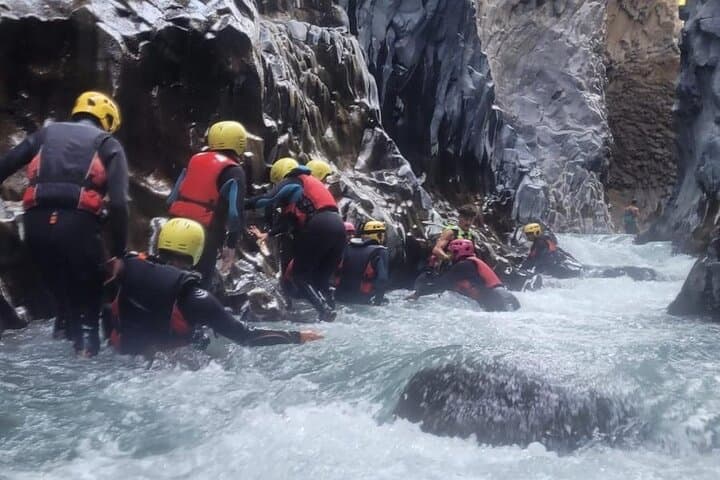
You step off the riverbank and into a place that looks as if someone froze the movement of flame. Towering columns of basalt stand like stacked organ pipes, their hexagonal faces dark and damp, and the Alcantara River threads through them, quick and bright. The guide fits your helmet and wetsuit with an economy of motion—the same tidy gestures that mean attention to safety—and asks you to read the river. It doesn’t take long: the current nudges at your calves, the water invites you forward, and the gorge does what good wilderness does best—it makes negotiating it feel like a conversation rather than a conquest.
Canyoning in the Alcantara Gorges is as much about geology as it is about adrenaline. The cliffs you move through are the memory of Mount Etna’s temper: ancient lava flows cooled and fractured into vertical columns, and over millennia the river carved a narrow corridor. Sunlight slices through gaps in the basalt, throwing quick panels of light on slick rock and foam. In two hours you’ll hike, wade, slide, and float through pools and rapids, following a guide who knows which potholes are safe to jump into and which drops require a controlled descent. It’s intimate—the canyon narrows and the world compresses to the sound of water and the hiss of your wetsuit.
The Alcantara is as much cultural landscape as geological one. The gorge sits on the northern slopes of Sicily near Taormina, a region layered with history: Greek and Roman ruins lace the coast, medieval villages perch above vineyards irrigated by the same river that powers the gorge’s abrupt drama. For locals, the Alcantara has long been a practical artery—its waters fed irrigation canals and its basalt served as building stone—long before it became a playground for adventurers.
What makes this canyoning trip appealing beyond the obvious spectacle is how efficiently it blends accessibility with authenticity. The activity is guided, typically runs about two hours, and does not require weeks of training; that said, it’s not merely a walk. Expect wet hiking, some swimming, and negotiating current. Guides provide helmets, life jackets, and wetsuits; your job is to bring curiosity and reasonable fitness.
The route brings contrasts: glassy emerald pools mirror the basalt before an eddy becomes a playful current that dares you to float on your back; narrow slots funnel you between rock walls and then open onto a bright amphitheater where sunlight warms you through neoprene. If the river is higher after rain or snowmelt, rapids feel more animated; in low water the gorge exposes more of its basalt architecture and makes for longer scrambles.
Practicalities are straightforward. The Viator offering runs as a roughly 120-minute guided activity and usually departs from meeting points near the park entrance; many travelers use Taormina or Castiglione di Sicilia as a base. Bring footwear that can get wet but that grips—neoprene booties or sturdy water shoes—and a small daypack for essentials. Expect the guides to brief you on technique for entering currents, floating safely, and making controlled jumps. Because the experience often includes sections of still water, layering matters: a short neoprene sleeve or thin thermal underlayer keeps you comfortable when you stop to listen to the canyon hush.
Safety is handled in a calibrated way. The guides are local, versed in the specific hydraulics of the Alcantara, and the route is designed to balance thrills with accessibility: optional jumps, controlled rapids, and assisted climbs. If you have limited swimming experience, tell your guide up front—life jackets are standard and guides will adapt. For photographers, waterproof housings or small dry bags work better than trying to lug a big camera; the most striking images are often made in the quiet, shadowed stretches where the basalt’s geometry is strongest.
Beyond the gorge, the region rewards a slower itinerary. Taormina and nearby hill towns have trattorie where you can unroll a towel of grilled fish, arancini, or a robust Etna red. Local winemakers coax citrus and volcanic-mineral notes from vines grown on Etna’s slopes—the same fire that made the gorge also lends an unmistakable terroir to the table.
For planning: mornings are often the calmest time for canyoning, with cooler air and fewer visitors in the gorges; summer brings warmer water but more people; spring and fall can be pleasantly empty but may require thicker wetsuits. Travel from Catania Airport is reasonable (about an hour by car to the general area), and commercial operators typically include transfer options. The gorge can have spotty cell service, which is part of the charm—put your phone away and listen for the water.
If you go, approach the Alcantara like you would a fine meal: with appetite and respect. Let the basalt speak; let the current insist a little; let the guides translate the river’s whims into a route that’s memorable for the right reasons.
Trail wisdom
Small choices, better day.
Wear grippy water shoes
Sturdy neoprene booties or water shoes with a firm sole reduce slips on mossy, wet basalt.
Layer under your wetsuit
A thin thermal top or swimwear beneath the wetsuit keeps you comfortable between cold pools and sunlit breaks.
Listen to your guide
Guides select safe jump spots and lines through currents—follow their instructions to avoid hidden hydraulics.
Protect small electronics
Use a waterproof case or leave devices with a non‑wet companion; pockets and straps can be awkward in rapids.
Local knowledge
Read the place, not just the route.
Watch for native species including European otter (Lutra lutra), Peregrine falcon.
Keep an eye out for wildlife during the transition between areas and habitats. Respect distance guidelines.
The Alcantara area is protected and visitor impact is managed—stick to marked paths, avoid introducing soaps into the water, and follow guide instructions to minimize erosion and disturbance.
Follow the guide's instructions on size limits, ethical handling, and leave-no-trace practices.
Castiglione di Sicilia—hilltop village with panoramic terraces and Etna wine tastings. Riverside pools below the park entrance for a quiet post‑trip soak
Locally recommended viewpoints and quiet spots known best to local operators.
The gorge’s basalt columns are the product of lava flows from Mount Etna; over millennia the Alcantara River eroded these flows into the dramatic gorges seen today.
Maritime roots and regional tradition shape the waterways and working coasts.
Seasonal guide
Four versions of the same landscape.
Spring
Best forHigher water flow · Fewer crowds · Wildflowers nearby
ChallengesCooler water temperatures · Unpredictable rains
Spring brings lively flows that add drama to rapids—pack a thicker underlayer and expect chillier water.
Summer
Best forWarmer air and water · Longer daylight · Easy travel connections
ChallengesHigher visitor numbers · Hot sun at trailheads
Summer is comfortable in the wet sections but busier; book ahead and start early to avoid crowds.
Fall
Best forMilder temperatures · Fewer tourists · Rich autumn light for photos
ChallengesCooling water · Occasional storms
Fall offers quiet canyons and beautiful light; wetsuits will feel necessary as temperatures drop.
Winter
Best forLow visitor numbers · Stark basalt contrasts · Off‑season rates
ChallengesCold water even with wetsuits · Some operators may pause runs
Winter is the quietest season; only consider canyoning if the operator runs trips and you’re prepared for cold conditions.
Operator details
What the booking data adds.
Included
- ✓Guide
- ✓Wetsuit and helmet included
Not included
- —Private transportation
Good to know
- ✓Not recommended for travelers with spinal injuries
- ✓Not recommended for pregnant travelers
- ✓Not recommended for travelers with poor cardiovascular health
- ✓Travelers should have at least a moderate level of physical fitness
Pack with intention
What to bring.
Good to know
Common questions.
No—guided trips are designed for beginners; guides provide instructions and safety gear, but basic swimming comfort helps.
Plan the edges
The details that make the day easier.
The Alcantara Gorge’s striking basalt columns formed when lava from Mount Etna cooled and fractured roughly 3,000 years ago, creating the hexagonal pillars visible today.
After canyoning, head to Taormina or Castiglione di Sicilia for grilled seafood, arancini, and a glass of Etna red. Seek a small trattoria with terrace views and pair local ricotta‑based desserts with a citrusy limoncello for a proper Sicilian finish.
- Closest airport
- Catania–Fontanarossa (CTA); Typical drive: ~50–70 minutes from airport, ~30–45 minutes from Taormina; Cell service: patchy in the gorge; Permits: none for visitors—commercial operators manage passes and park access.
This river corridor is ecologically sensitive—avoid stepping on vegetation, pack out all trash, and follow guides to reduce erosion and wildlife disturbance.
Explore by topic
Follow the threads.
Keep exploring
Make the story part of the trip.
Set out from Bass Harbor for a private, customizable day on Blue Hill Bay — lighthouses, puffins, seals, and the chance to feel Acadia from the water. Small groups, local captains, unforgettable views.
In four hours you can move from shaded canyon ferns to wind-scoured coastal ridgelines, guided by someone who knows where the light—and the hidden views—live. This private half-day hike on the Monterey Peninsula or Big Sur is compact, curated, and perfect for travelers who want depth without a multiday commitment.
 Related story
Beneath a sky of shifting light, Skaftafell’s ice reads like a map of time. This three-hour guided glacier hike mixes technical instruction with geology and culture: compact, safe, and unforgettable.