
What the day feels like
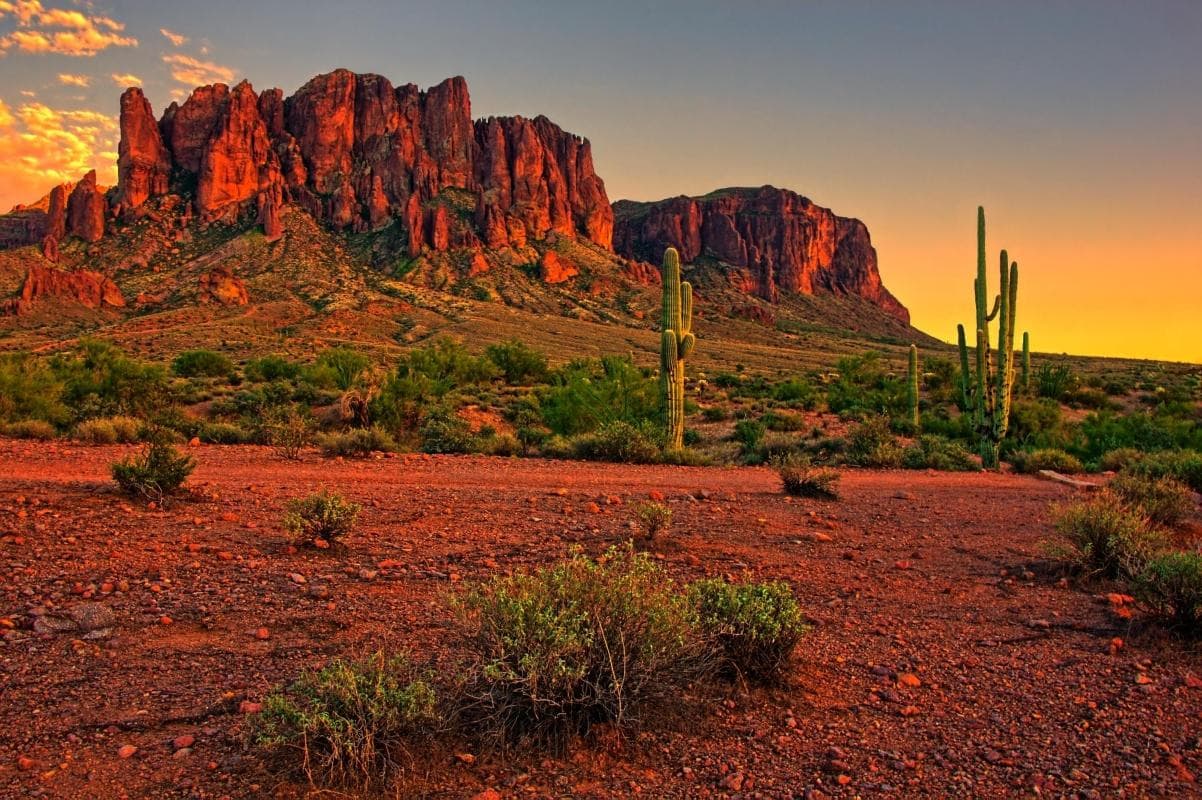
The first light strips the rims of the Superstition Mountains like a slow burn, and the world narrows to the sound of my boots on gravel and the rasp of a cactus spine brushing my sleeve. Lost Dutchman State Park sits at the doorstep of the Superstitions, where weathered rhyolite cliffs and broken talus rise from an ocean of creosote and prickly pear. You feel both exposed and held—desert space that stretches toward Phoenix, but also a mountain range that wards off easy answers. Hikers come for the challenge, photographers for the geometry of the rock, families for the short loops, and legend-seekers for the mine that refuses to be found.
Trail work and geology leave clear fingerprints here. The Superstition volcanic field is the result of violent eruptions and uplift millions of years ago; the jagged ridgelines are the bones of that violence, sheared and eroded into cliffs, fins, and boulders. Trails thread through washes and along terraces of volcanic tuff and rhyolite that glow copper at sunrise. The park's most famous route, Siphon Draw to Flatiron, climbs from the arroyo up a ragged drainage and then traverses a narrow saddle to the Flatiron’s slabby summit. It's a desert scramble—steep, exposed in places, and rewarding in panoramic views that include the Valley of the Sun and the labyrinthine canyons of the Superstitions.
History here sits next to the trailhead. The Superstition Mountains are sacred to the Apache and a focal point of local folklore. In the late 19th century a German prospector named Jacob Waltz—referred to locally as the "Dutchman"—became the center of a gold legend after his death. Stories of a lost mine have attracted prospectors and puzzle-hunters ever since. The landscape still feels like a place that holds secrets, and small markers and the modest Lost Dutchman Museum at nearby Apache Junction offer a tidy primer on those fables.
The park itself is practical and accessible. Short trails like the Treasure Loop (about 2.4 miles round-trip) are wide, well-signed and ideal for families or people wanting a quick desert immersion. Siphon Draw to Flatiron is a different proposition: expect roughly 6–7 miles round-trip with roughly 1,800–2,200 feet of gain depending on your route, plus steep scrambling and loose rock as you near the summit. That means trail shoes with traction, poles for the climb and descent if you want to save your knees, and a sober respect for desert heat. For people less inclined to hike, the park works well as a base for other area experiences: guided ATV or UTV tours into the Sonoran Desert, private photography sessions that target the best angles on the volcanic cliffs, and longer day trips that follow the historic Apache Trail, with stops at Goldfield Ghost Town and a steamboat ride on Canyon Lake.
Practical logistics shape the day. Start early in warmer months—the desert will warm quickly—and bring more water than you think: two to three liters per person for a half-day hike, more for strenuous ascents. The approach to Flatiron becomes exposed and loose above the saddle; once you leave established trail tread, route-finding can be tricky. Cell service is spotty in the canyons, so download maps and let someone know your plan. Park rangers patrol the area; adhere to posted closures and respect posted signs aimed at protecting fragile soils and cacti.
Guided options change the rhythm. A two-hour desert UTV or ATV tour is a practical way to see saguaro forests and learn plant and wildlife identification without committing to a big hike—these are family-friendly, high-value options for photographers or folks on limited time. Private photography sessions based in the park are ideal if you want pro-level images of the Flatiron’s silhouette at golden hour—photographers often use the park’s washes and cactus foregrounds to frame dramatic foreground-to-background perspectives. For a broader day out, full-day Apache Trail tours pair the range with human history: Dolly Steamboat rides on Canyon Lake, visits to Tortilla Flat and Goldfield, and a stop at the Lost Dutchman Museum create a readable arc from geology to gold rush to modern recreation.
Wildlife is subtle: mule deer pick their way through the mesquite, Gambel’s quail dart under bushes, and coyotes sometimes yip at dusk. Look carefully and you might spot the black-and-white flash of a collared road runner or the slow blink of a desert tortoise. Plants dominate the show—the classic saguaro, barrel cactus, and a surprising variety of succulents that catch the light.
When to go depends on your tolerance for heat and crowds. Spring and fall offer the mildest temperatures; winter hikes can be cold but crisp and relatively uncrowded. Summer is brutally hot and requires early starts or nighttime travel. The park is busiest on weekends and holidays, so a weekday morning will buy you solitude and smoother parking.
Lost Dutchman State Park is not a place for bluffing your way through. It rewards preparation. But when you reach a ridge and the valley opens below, the payoff is immediate: desert geometry, light that sculpts the rock, and the feel of a place that keeps a few of its secrets. Whether you come to hunt the mine in folklore or to stand quietly on Flatiron and watch light move across ancient lava, this is a destination that asks you to pay attention—and then gives back in scale and quiet intensity.
Trail wisdom
Small choices, better day.
Hydrate beyond thirst
Carry at least 2–3 liters of water per person for half-day hikes and more for strenuous climbs—desert heat dehydrates faster than you expect.
Choose traction over style
Sturdy hiking shoes with good tread and ankle support are vital—expect loose talus and steep sections near the Flatiron.
Start early or late
Hike before 8 a.m. in summer to avoid peak heat; in winter aim for midday warmth and bring warm layers for chillier mornings.
Respect fragile desert soils
Stay on established trails, avoid trampling cryptobiotic crust, and pack out all trash to protect plants and seedlings.
Local knowledge
Read the place, not just the route.
Watch for native species including mule deer, javelina (collared peccary).
Keep an eye out for wildlife during the transition between areas and habitats. Respect distance guidelines.
The Sonoran Desert’s cryptobiotic soil is fragile—staying on trail and packing out waste helps protect plant regeneration and local wildlife habitats.
Follow the guide's instructions on size limits, ethical handling, and leave-no-trace practices.
Siphon Draw viewpoint just below the Flatiron saddle—less crowded and excellent for sunrise silhouettes. Short washes off the Treasure Loop that collect wildflowers in spring
Locally recommended viewpoints and quiet spots known best to local operators.
The park and range are wrapped in the Lost Dutchman legend, tied to Jacob Waltz, a 19th-century prospector whose purported discovery of a rich gold mine launched decades of searches.
Maritime roots and regional tradition shape the waterways and working coasts.
Seasonal guide
Four versions of the same landscape.
Spring
Best forwildflower displays · moderate hiking · photography at golden hour
Challengesoccasionally busy weekends · variable spring storms
Spring brings wildflowers and mild temps—ideal for longer hikes and sunrise photography, though expect more visitors on weekends.
Summer
Best forUTV/ATV tours in early morning · stargazing after dark · short, shaded walks
Challengesextreme heat · limited water availability
Summer is hot—plan very early starts, keep hikes short and avoid strenuous ascents mid-day.
Fall
Best forcomfortable hiking conditions · less crowded trails · vivid sunsets
Challengescooler nights · brief holiday crowd spikes
Fall mirrors spring with pleasant temperatures and excellent light for late-afternoon photos and extended ridge walks.
Winter
Best forcrisp clear days · less crowded trails · sensitive wildlife viewing
Challengescold mornings · possibility of icy patches in shade
Winters are cool and clear—bring layers for morning cold and enjoy quieter trails and long, crisp vistas.
Pack with intention
What to bring.
Good to know
Common questions.
Expect about 6–7 miles round-trip with roughly 1,800–2,200 feet of elevation gain; the upper sections include exposed scrambling and loose rock.
Plan the edges
The details that make the day easier.
Legend holds that a 19th-century prospector named Jacob Waltz (the “Lost Dutchman”) revealed the existence of a rich gold vein in the Superstition Mountains—his story inspired decades of treasure hunting and local lore.
Apache Junction and nearby Goldfield offer a small-town Western vibe and Sonoran cuisine—think carne asada and hearty breakfasts; local outfitters provide guided tours and photography sessions that connect visitors with regional history and landscape.
- Where
- Lost Dutchman State Park, Apache Junction, AZ. Park hours vary by season; fees apply. Trails range from short loops (2–3 miles) to the challenging Siphon Draw
- Flatiron route. Bring 2–3L water, sun protection, and sturdy shoes. Nearest services
- Apache Junction and Mesa.
Protect cryptobiotic soils by staying on trails, packing out waste, avoiding off-trail driving, and supporting park conservation fees and local guide services that practice Leave No Trace.
Explore by topic
Follow the threads.
Keep exploring
Make the story part of the trip.
Set out from Bass Harbor for a private, customizable day on Blue Hill Bay — lighthouses, puffins, seals, and the chance to feel Acadia from the water. Small groups, local captains, unforgettable views.
In four hours you can move from shaded canyon ferns to wind-scoured coastal ridgelines, guided by someone who knows where the light—and the hidden views—live. This private half-day hike on the Monterey Peninsula or Big Sur is compact, curated, and perfect for travelers who want depth without a multiday commitment.
 Related story
Beneath a sky of shifting light, Skaftafell’s ice reads like a map of time. This three-hour guided glacier hike mixes technical instruction with geology and culture: compact, safe, and unforgettable.